UNHRC: China Urged to End Harassment of Tibetan Intellectuals and Rights Advocates[Wednesday, 15 September 2010, 2:30 p.m.]
 |
|
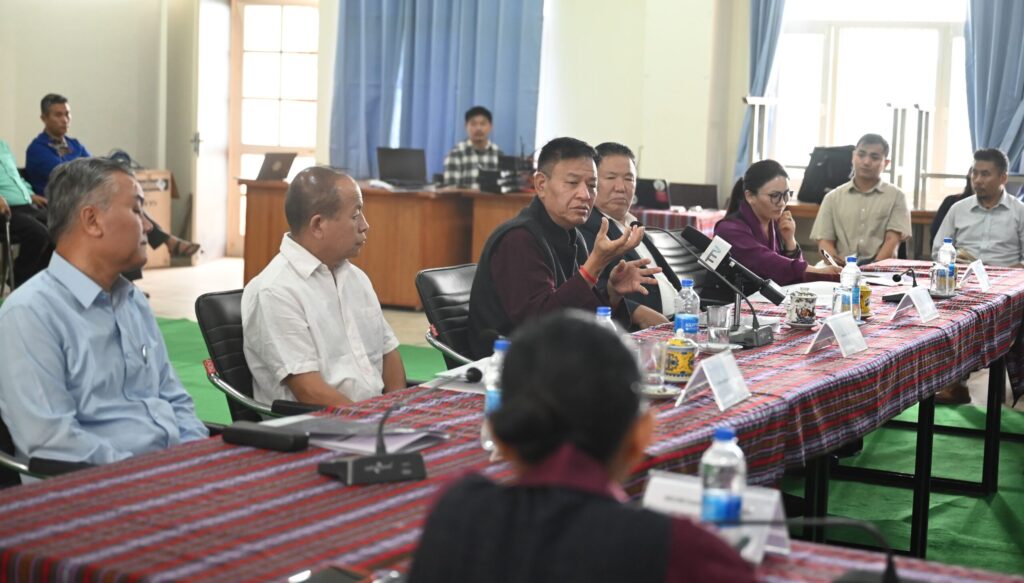
Mr Tenzin Samphel Kayta (1st L) speaks on behalf of Society for Threatened Peoples at the ongoing session of the UN Human Rights Council in Geneva
|
Dharamshala:
The issues of human rights abuses perpetrated against the Tibetan
intellectuals and human rights defenders in Tibet have been raised at
the 15th session of the UN Human Rights Council in Geneva, which opened
on 13 September and is due to last until 1 October.The High
Commissioner for Human Rights, Ms Navi Pillay, stressed the “pressing
need for protection of human rights defenders”, pointing out that “some
countries use restrictive measures and ad hoc laws to curtail and
violently attack peaceful dissidents, human rights advocates,
journalists, lawyers, civil society’s scope of action and social
activism.”Ms Pillay strongly urged the UN Human Rights Council
and the international community to “support squarely and vocally human
rights defenders”.A representative of Society for Threatened
Peoples appraised the UNHRC about Karma Samdrup, a well-known Tibetan
businessman, philanthropist and environmentalist, who is serving a
15-year jail term on alleged charges of buying stolen relics in 1998.
He is the founder of the Snowlands Three Rivers Environmental
Protection Group.According to his lawyer Pu Zhiqiang, the charges were dropped by the Chinese government in 1998 after realising that Karma Samdrup had a license to buy the antiques.The
cause of Samdrup’s arrest in January this year was the Chinese
authorities’ vendatta against him for defending his two younger
brothers, Rinchen Samdrup and Chime Namgyal, who are in jail since
August 2009 for accusing a police official in Chamdo Prefecture of
illegal poaching. “By jumping to his brothers’ defense, Karma Samdrup
apparently angered some powerful people,” The New York Times reported.Speaking
on behalf of Society for Threatened Peoples, Mr Tenzin Samphel Kayta,
informed the UNHRC of how Karma Samdrup was “severely tortured by the
police during several months of interrogation and the court’s dismissal
of his testimony as irrelevant”.Mr Kayta briefed the Council on
the debilitated health condition of Karma Samdrup as described by her
wife as unrecognisable and emaciated. “… I just didn’t recognise him.
How could his tall and upright body become thin and small? The body
that passed me looked like one of a slim and fragile college student,”
Samdrup’s wife wrote in a blog.He also informed the Council
that six family members of Karma Samdrup were arrested, sentenced and
reportedly tortured within a span of one year. Four of them are
undergoing “re-education through labour” in prison, while the
whereabouts of two remain unknown.Urging the Chinese government
to implement the recommendation put forward by the UNHRC High
Commissioner, Special Rapporteur on Human Rights Defenders and the
Committee Against Torture, Mr Kayta called for an “end to harassment
against human rights defenders and Tibetan intellectuals in Tibet”.The
Chinese delegation at the Council used their oft-repeated tactic to
avoid NGOs speak on their rights record by interrupting Mr Kayta in
making his statement.A US delegate defended the NGOs by saying
“whether delegates agree or not we should hear NGOs statement as they
are accredited to this institute”. Despite the Chinese
delegation’s objection, Mr Kayta managed to complete his statement and
was able to draw more attention from delegates and NGOs participants on
the issues.