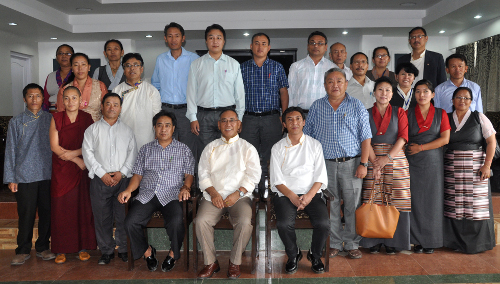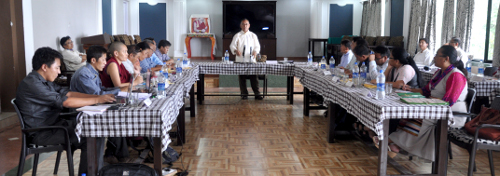
DHARAMSHALA: The Department of Education of the Central Tibetan Administration today concluded its two-day special meeting on the Basic Education Policy for Tibetan schools in exile.
The two-day meeting resolved to enhance the quality of teachers through professional development trainings; encourage parental involvement in children’s education; intensify focus on language proficiency and upgrade educational facilities in schools etc.
Mr. Ngodup Tsering, Secretary of the Department of Education, in his concluding remarks, called the formulation of the Basic Education Policy, a landmark in the history of Tibetan education system.
“It is almost ten years since the Basic Education Policy was implemented. However, this is the first meeting being held to review the effectiveness of the policy and discuss the obstacles faced during its implementation. The meeting was very constructive. We were able to exchange our views to reach a productive resolution,” he said, urging the participating school heads to effectively implement the resolutions passed in the two-day meeting.
The Education Secretary called upon the school principals and administrators of the Tibetan schools to use their resources effectively in creating a conducive atmosphere for learning. “School heads including principals and directors are central to the overall development of a school and their concerted effort is really significant in providing a robust education to Tibetan children,” he said.
He explained the education department’s efforts to boost reading among children through its various programs including the early grade reading series project. He acknowledged that more books and reading materials should be published in Tibetan language to revive children’s interest in reading.
The Basic Education Policy was formulated during the 12th Kashag.
The two-day meeting was convened by the education department to review and explore ways to overcome the barriers faced during implementation of the policy. Other agendas during the meeting include formulating a a bi-lingual teaching method for Tibetan high school students and enhancing the overall administration and effectiveness of Tibetan schools.