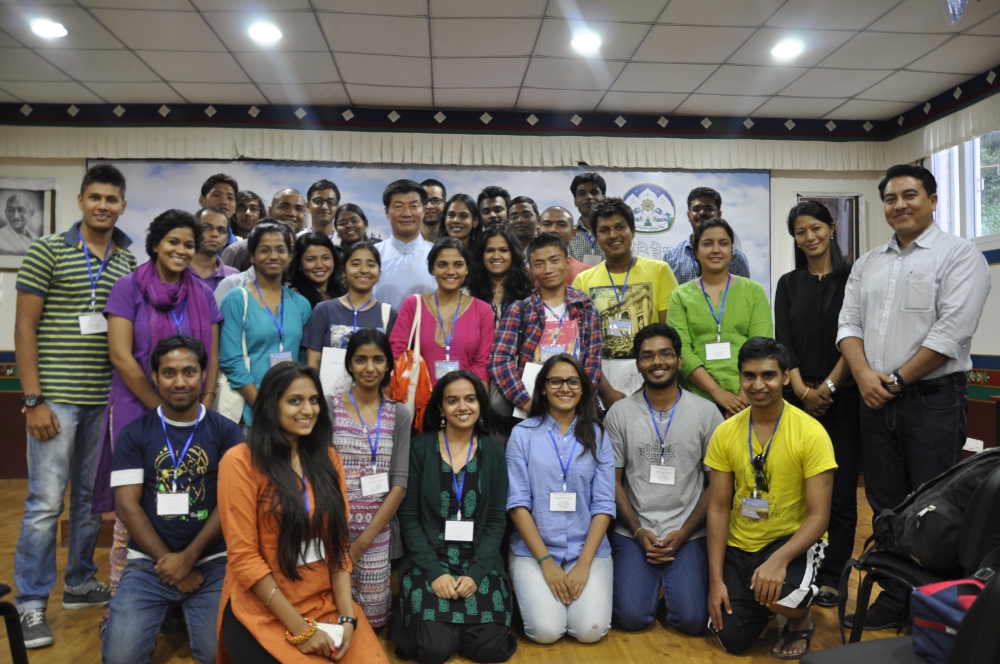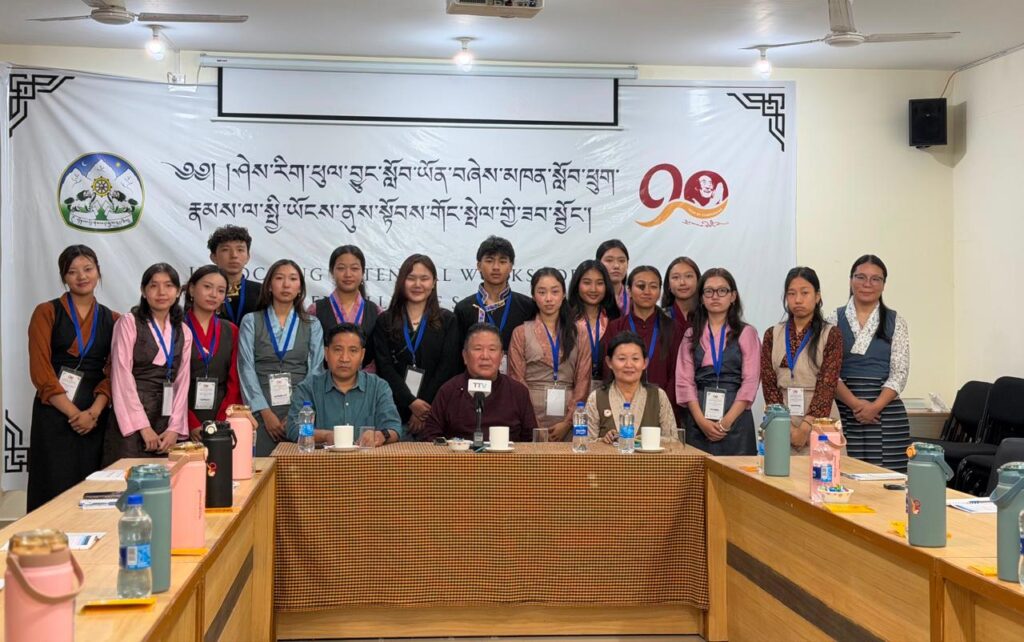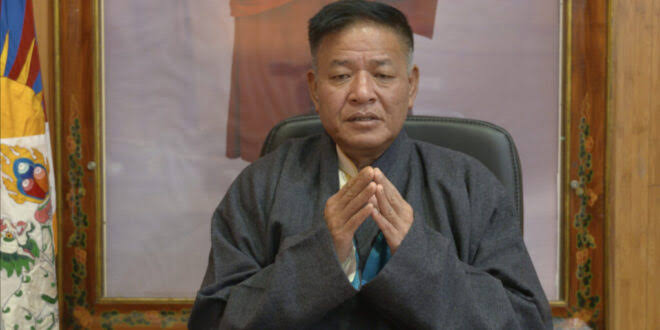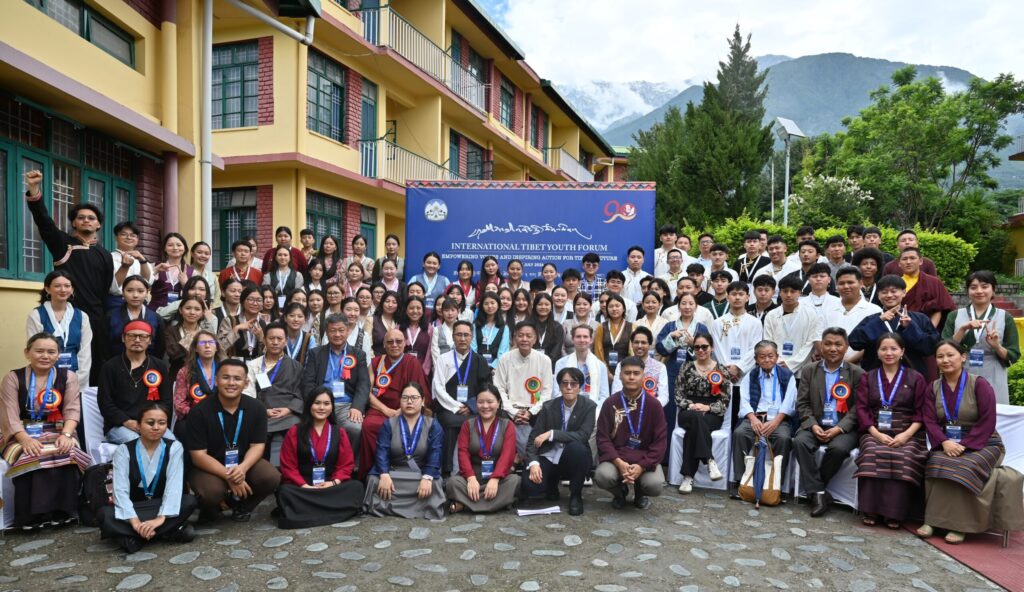

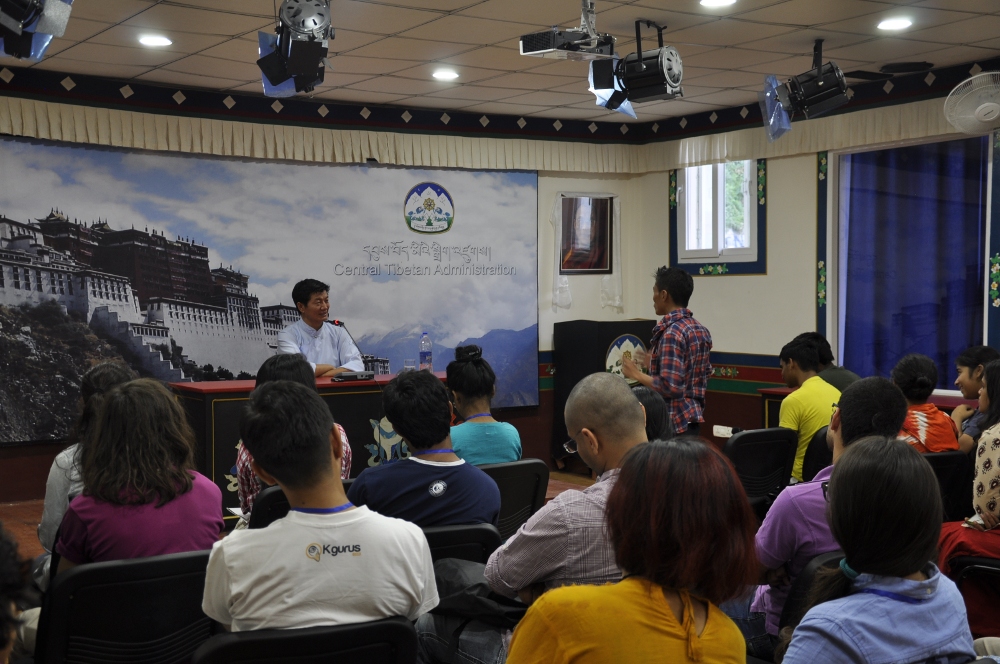
DHARAMSHALA: Sikyong Dr. Lobsang Sangay, the democratically elected political leader of Tibet, met a group of 33 students from 29 Indian colleges at the DIIR auditorium yesterday. The group comprising of 15 girls and 18 boys are in Dharamshala as part of the annual month-long Gurukul programme, organised by the Foundation for Universal Responsibility of His Holiness the Dalai Lama, to facilitate inter-community exchanges.
Sikyong Dr.Lobsang Sangay, in his address, spoke to the students about the political history of Tibet and the brutal occupation of Tibet by Chinese Communist forces. He talked about the origins of the Tibetan diaspora in India and abroad, following His Holiness the Dalai Lama’s exile into India after the Chinese occupation of Tibet in 1959.
Sikyong also talked about evolution of Tibetan democracy in exile. He said: “Tibetan democratic polity flourished under the guidance of His Holiness the Dalai Lama. Tibetan democracy in exile evolved over the years with major landmark decisions: establishment of Tibetan Parliament in 1960, the framing of the Constitution for future Tibet in 1963, the adoption of the Charter for Tibetans in exile in 1991 and the direct election of Kalon Tripa in 2001. Each of these accomplishments has prepared Tibetans for His Holiness the Dalai Lama’s devolution of political authority to the democratically elected leadership in March 2011.”
Sikyong Dr. Sangay also underlined the critical situation prevailing inside Tibet. He talked about the repressive policies of the Chinese government and the self-immolation protests of the Tibetan people.Over 130 Tibetans have set themselves on fire in Tibet calling for the return of His Holiness the Dalai Lama to Tibet and freedom for Tibetans, he said. He added that the policies implemented by China inside Tibet, particularly the construction of railway lines,etc. are aimed to serve the interest of the Chinese people rather than Tibetans, by promoting mass migration of Han Chinese into Tibet.
Speaking on the Middle Way Approach of the Central Tibetan Administration, Sikyong said the Middle Way Approach seeks for a genuine autonomy for the Tibetan people and is the only realistic solution to resolve the issue of Tibet. “The Middle Way Approach is a win-win proposition, which straddles the middle path between the status quo and independence – one that categorically rejects the present repressive and colonial policies of the Chinese government towards the Tibetan people while not seeking complete separation from the People’s Republic of China,” Sikyong said.
Sikyong also highlighted the Tibetan people’s immense gratitude towards the Indian Government and people for hosting His Holiness the Dalai Lama and the Tibetan community for the last fifty years.
The interaction lasted for about two hours with the students posing a varied range of questions and expressing their opinions.
The Gurukul programme is held annually for a month in Dharamsala. The programme aims to enrich the participants by providing an extended introduction to Tibetan culture and religion, by actively engaging the participants in daily activities of Tibetan life in the monasteries and nunneries, and with communities in exile.