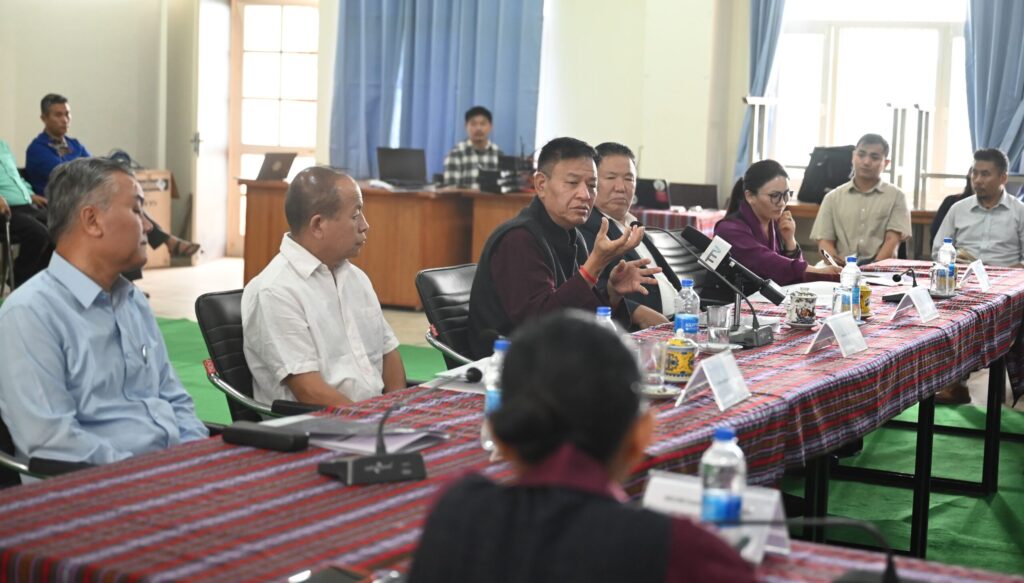

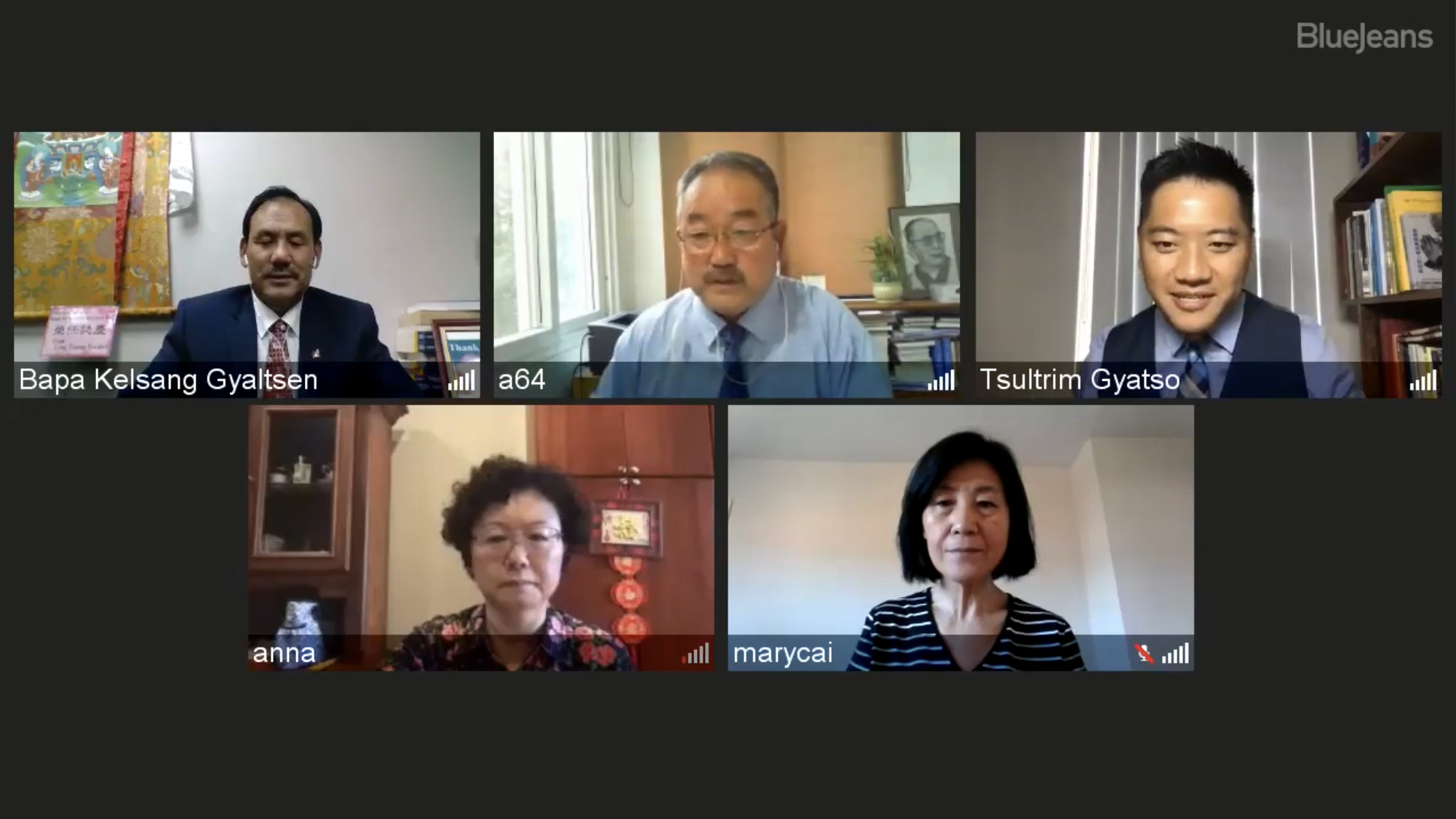
Washington: An online seminar on China’s destruction in Tibet was organised by the Office of Tibet, Washington DC, in collaboration with IPK media on 30 June, a day before the Chinese Communist Party marked its centenary on 1 July. This event was part of a hundred-hour discussion led by Chinese scholars around the world on the CCP’s destructive policies. Participants include Ms. Cai Xia, a dissident and scholar of political theory, who has taught high-ranking members and officials of the CCP, and Mrs. Wang Ruiqin, a former National People’s Congress Deputy of the People’s Republic of China. Representative Kalsang Gyaltsen of the Office of Tibet-Taiwan and Mr. Tenzin Dhetan Shartsong, head of the Central Tibetan Administration’s China desk also joined the discussion. Tsultrim Gyatso, the Chinese Liaison Officer at the Office of Tibet-DC, moderated the discussion.
The seminar began with a question on how Tibetans started to know about the CCP, and Mr. Gyaltsen explained that the initial Tibetan encounter with the CCP started during the Long March of the Red army. PLA troops escaped to the eastern part of Tibet in the 1930s when they were defeated by the Nationalist Party. In 1949, the CCP invaded Tibet and battles broke out on Tibetan soil, which led to severe destruction of Tibet that still continues to this day. Mr. Gyaltsen also highlighted the fact that the CCP forced the Tibetan delegation to sign the 17-Point Agreement although the CCP themselves did not comply with the tenets of the agreement. He also explained in detail the PLA’s attempt to capture His Holiness as a hostage in 1959 which led to the Tibetan National Uprising of 10 March 1959.
Ms. Cai Xia expressed the reason that she came across the Tibet issue was through her study of China’s ethnic minority autonomy policies. She never doubted Chinese propaganda on Tibet until she heard about the shocking events of Tibetans during March 1989. She later met with her Tibetan classmates and found them to be very sincere and kind-hearted. She later realized that the Sino-Tibetan conflict is not caused by a clash of religious or cultural traditions, but by the CCP’s policies of handling Tibetan issues. Mrs. Xia shared her experiences with an official, who sent her some propaganda document that states the Dalai Lama is a wolf in sheep’s clothing. It was supposed to be issued to monasteries, and the official expressed their rejection to disseminate such propaganda to Tibetans. A Chinese leader who usually follows the Tibet issue also told Mrs. Xia that the Tibet issue is not an economic problem that money could solve but by cultural assimilation.
Mr. Tenzin Dhetan Shartsong shared his research on the CCP’s destruction of Tibetan religion, language, and culture. He provided the data he gathered on the number of monks and nuns in monasteries, current and in the past, to prove the cruel policies implemented by the Chinese in Tibet. He also spoke on the importance of religion, language, and culture to maintain Tibetan identity. He expressed that the current assimilatory policies implemented by the CCP in Tibet are comparable to the Nazi destruction of Jewish identity. He discussed in great detail the language policy in Tibetan schools and monasteries, pointing out China’s project to bring Tibetan children to mainland Chinese and assimilate them in Chinese culture and language.
Mrs. Wang Ruiqin said that she believes her bond with Tibet is pre-destined. Her deskmate in school was a Tibetan from the Kyegudo area, and she learned about the violent history of the 1957-58 massacre of Tibetans in the eastern part of Tibet. This topic later became her research project—her focus was oral history. She mentioned that she was able to gather a lot of information from both official and non-official documents on the topic. Mrs. Wang was also an owner of a hotel in Qinghai, where she personally experienced the Chinese authorities giving orders to hotel management to prohibit Tibetans from hotels and public facilities—this was a policy implemented after the 2008 uprising of Tibetans across the whole Tibetan area. Mrs. Wang appealed to Chinese people to pay attention and learn about minority policies and their situation before passing judgment on the assimilation and unification of China.
Tsultrim Gyatso concluded the event by requesting the Chinese public to study the mutually beneficial Middle Way Approach proposed by His Holiness the Dalai Lama and unanimously adopted by the Tibetan parliament-in-Exile to resolve the Tibet issue.
– Report filed by OOT Washington DC