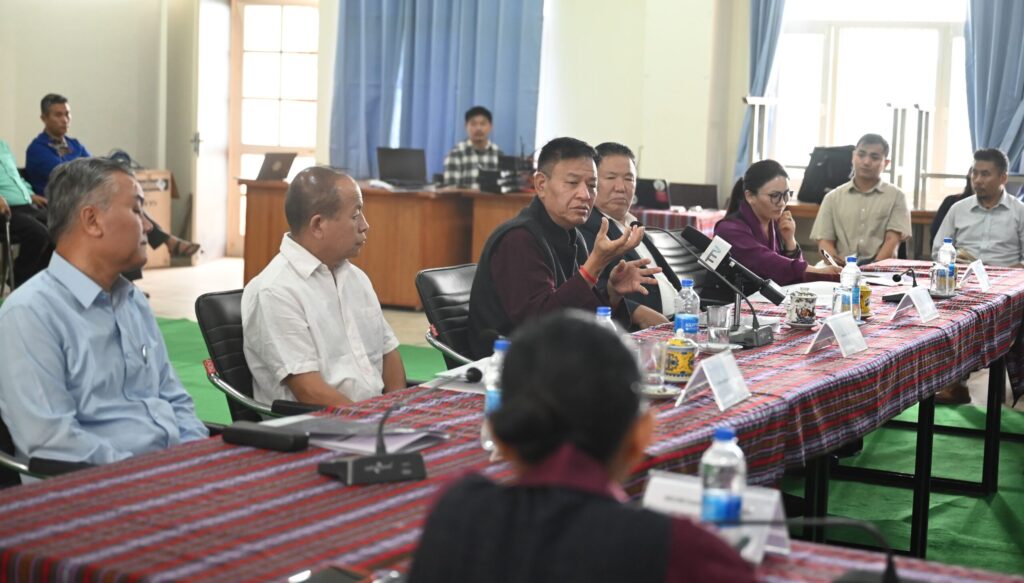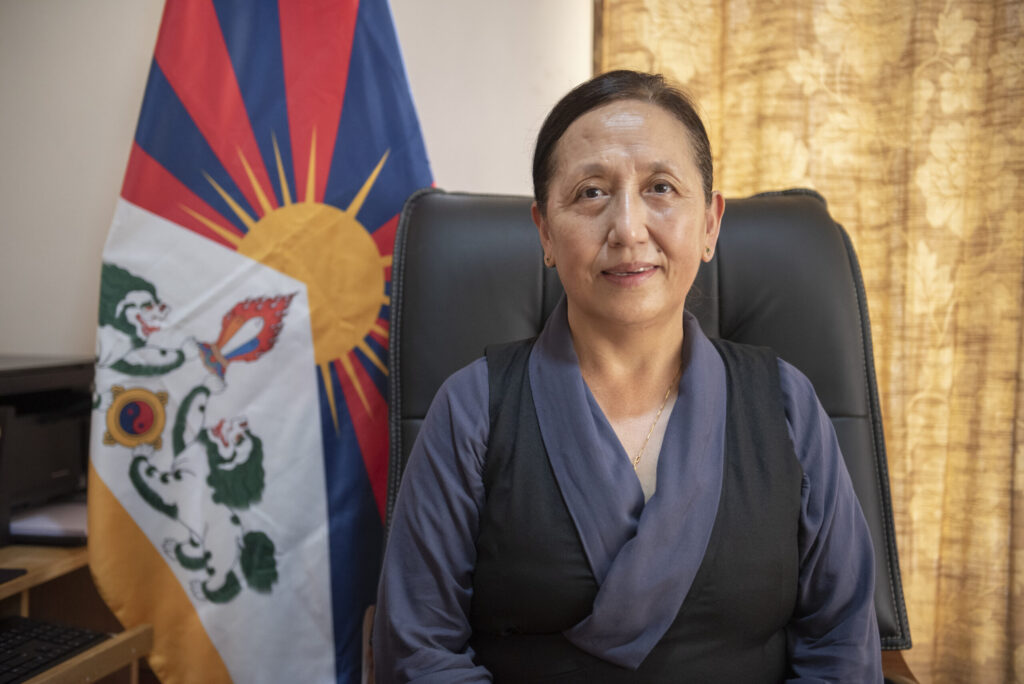

Dharamshala: In one of his first public U.S. interviews since taking office, Sikyong Penpa Tsering spoke with Josh Rogin, journalist and award-winning columnist for the Washington Post, on the key priority areas of his leadership: Sino-Tibetan relations and strengthen international outreach and advocacy.
The event was hosted by NED, National Endowment for Democracy and its president, Carl Gershman. NED is a congressionally supported grant-making institution with the mission to strengthen democratic institutions worldwide through nongovernmental efforts. President Gershman has led NED since its founding in 1984.
Sikyong Penpa Tsering opened his remarks by honouring Carl Gershman’s friendship and association of more than 27 years with the Tibetan people, particularly his long and endearing friendship with late Kasur Lodi Gyari.
Throughout Carl Gershman’s presidency, Sikyong said the CTA and the NED shared a powerful, cordial and mutually respectful relationship, that was further strengthened with Carl’s steadfast friendship and support for the Tibetan people.
“Thank you for introducing and sharing a lot of American values which are based on democracy, human rights and dignity for other human beings,” he said while revisiting the numerous meetings that NED hosted with His Holiness the Dalai Lama under NED’s presidency. He added that the CTA looks forward to continued friendship under the new NED leadership
Responding to Josh Rogin’s question on the ground situation in Tibet, restrictions and crackdown on Tibetan lives, Sikyong said: China’s “overall policy of Tibet is to consolidate all the powers to the Central government or the Communist Party, and that is very evident, in terms of its relations with the international partners, including the immediate neighbourhood where they are very belligerent and within China, including in Mongolia and Uyghurs [East Turkestan] and inside Tibet, in Hong Kong and also its relationship with Taiwan.”
He observed these as “not a good pointer” nor the right course for China.
Speaking on the recent image-building endeavours by the Chinese leadership, Sikyong argued that without resorting to the core values that the international community cherishes, it will not be possible to improve the image of China.
On the question of the Sino-Tibet dialogue and its prospects, Sikyong states firmly his commitment to “explore all kinds of channels to reach out to the Chinese government” and “to seek a lasting mutually beneficial nonviolent solution to the Tibet issue through the Middle Way Approach”.
He hoped that sooner than later, “better sense will prevail over the Chinese leadership that the Tibetan issue is, will be the easiest issue to be resolved”, citing the nonviolent and pragmatic approach of the Tibetan movement.
“We have addressed the main concern of not separating from China but willing to look within the framework of the constitution of the People’s Republic of China so with that basis. So far, the response from the Chinese government has mostly created more and more challenges and obstacles for the Tibetans and putting more conditions for the dialogue to move forward, so I think if better sense prevails over the Chinese leadership, there will definitely be a way forward.”
Sikyong added that it is one of His Holiness’ long-cherished wishes, one that His Holiness conveyed to the Sikyong during the recent virtual meeting, to make a pilgrimage to China. “He would also like to see his hometown in Takser, Amdo, also Lhasa”, adding, however, that it will not be possible for His Holiness to live or stay there till such a time that there is freedom in China and in Tibet. “That is a clear indication of where we intend to go.”
Commenting on the prospects of meetings between President Joe Biden and His Holiness the Dalai Lama, he said such matters are sensitive to time and situation. “I am sure that there are many issues that President Biden and His Holiness shares in common for the good of all people, not just the Tibetans because when His Holiness normally meets with leaders of different countries, his focus most of the time is for the benefit of humanity as a whole, not just the Tibetans; the Tibetan issue becomes just a part of that discussion.”
Josh Rogin referred to the protest and crackdown that set the tone for the 2008 Beijing Olympics, leading to increased surveillance, repression, and harsh conditions inside Tibet. He asked: “Do you believe the world should boycott the 2022 Olympics in Beijing as many in Washington are suggesting?”
Sikyong responded by saying any participation in the Beijing Olympics could be seen to a certain extent endorsing the CCP’s authoritarian regime and its repression.
He, however, advocated for a “more comprehensive approach” in terms of holding China to account.