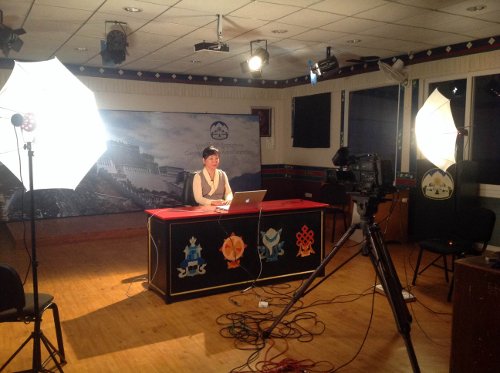
DHARAMSHALA:In an effort to bridge the communication gap imposed by geographical boundaries,the Department of Information and International Relations of the Central Tibetan Administration brought together students from a major Mexican university and Kalon Dicki Chhoyang, through the use of technology for an interactive web-based seminar yesterday.
The web-seminar was broadcast live to over 65 students including two faculty members of the Santa Fe campus of Tecnológico de Monterrey University, based in Mexico city. The video recordings of the seminar will be re-broadcast to other students of the University system which has over 30 campuses and more than a hundred thousand students. The seminar was organised as part of an outreach program towards international youth and students through the use of technology.
In her address to the students, Kalon Dicki Chhoyang talked about the current political situation of Tibet particularly the repressive policies of the Chinese government which have led over 129 Tibetans to self-immolate since 2009. Most of the Tibetan self-immolators have called for the return of His Holiness the Dalai Lama to Tibet and freedom for Tibetans.
She also talked about the mutually-beneficial Middle Way Approach of the Central Tibetan Administration to resolve the Tibet issue peacefully with the Chinese government. “The Central Tibetan Administration is not seeking independence. We are seeking a resolution to the issue of Tibet, through what we call genuine autonomy or the ‘middle way’ approach, within the framework of China’s constitution,” she said.
The seminar also included a brief talk on Tibet’s environment by Mr. Tempa Gyaltsen, an environmental researcher from the Tibet Policy Institute, a think-tank based in Dharamshala.
Mr. Tempa Gyaltsen talked about the impact of climate change on the Tibetan Plateau, the forced removal of Tibetan nomads, damning of Tibetan rivers, mining and resource extraction, and deforestation, followed by a question and answer session.
Webminars, as web-based seminars are called, allows real-time communication between individuals or from one sender to many receivers by creating a virtual platform for discussion.
“We think it’s very important to meet people who believe in social justice and want to learn more about the issue of Tibet. Therefore, through the use of technology, we have been able to present an honest representation of Tibet to the students through this seminar. It has created an intellectual forum in an informal and interactive environment where both parties can share their views and ideas about Tibet without actually going places,” Kalon Dicki Chhoyang said after the webminar.