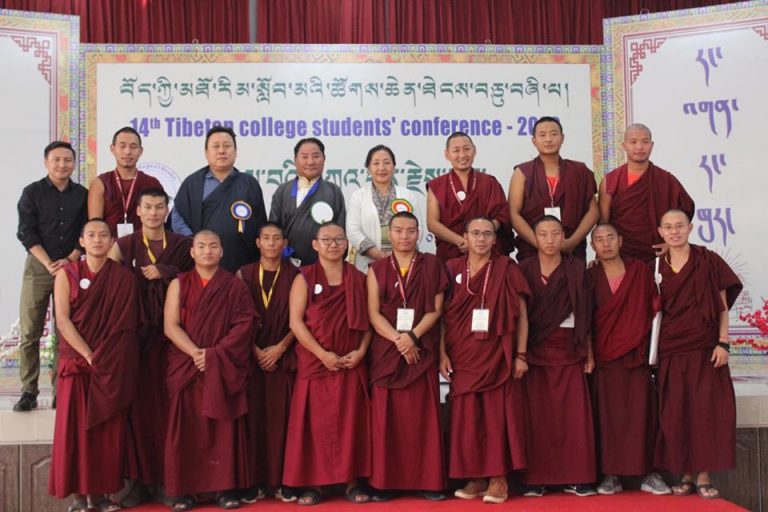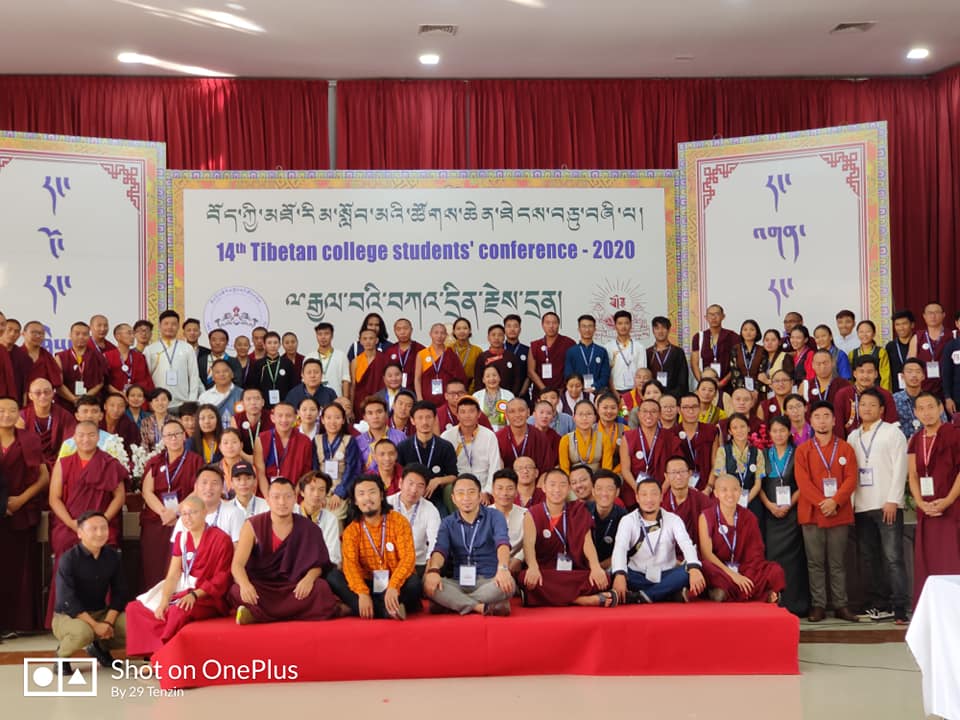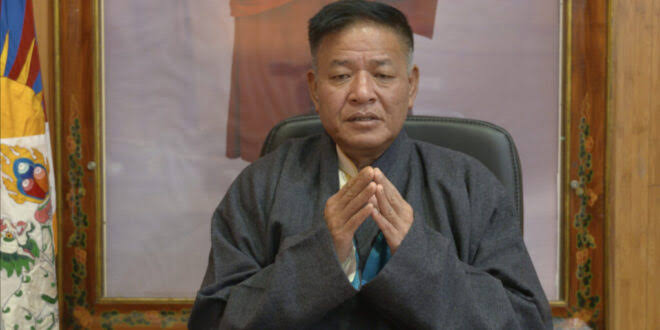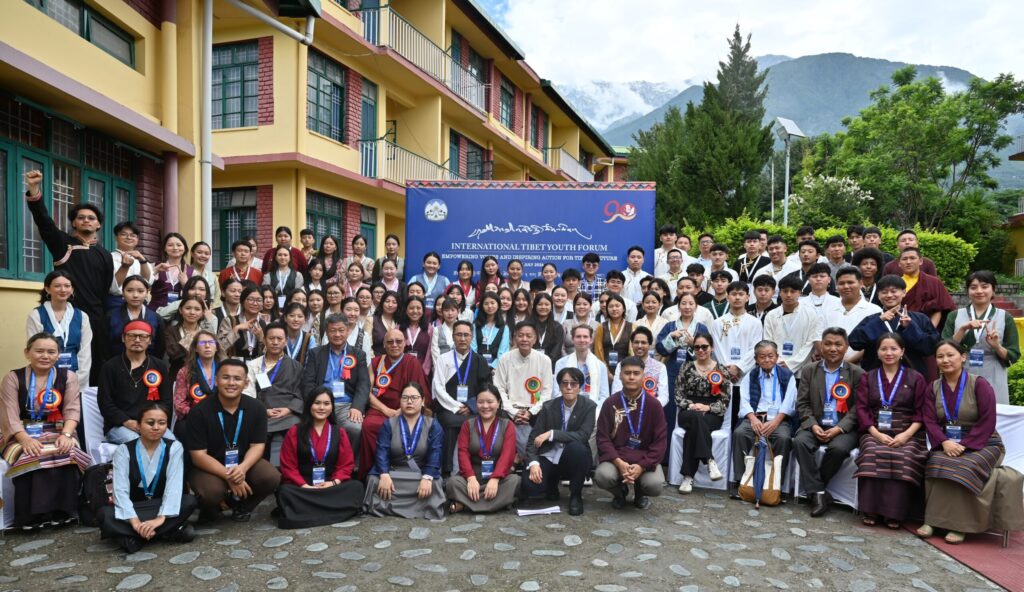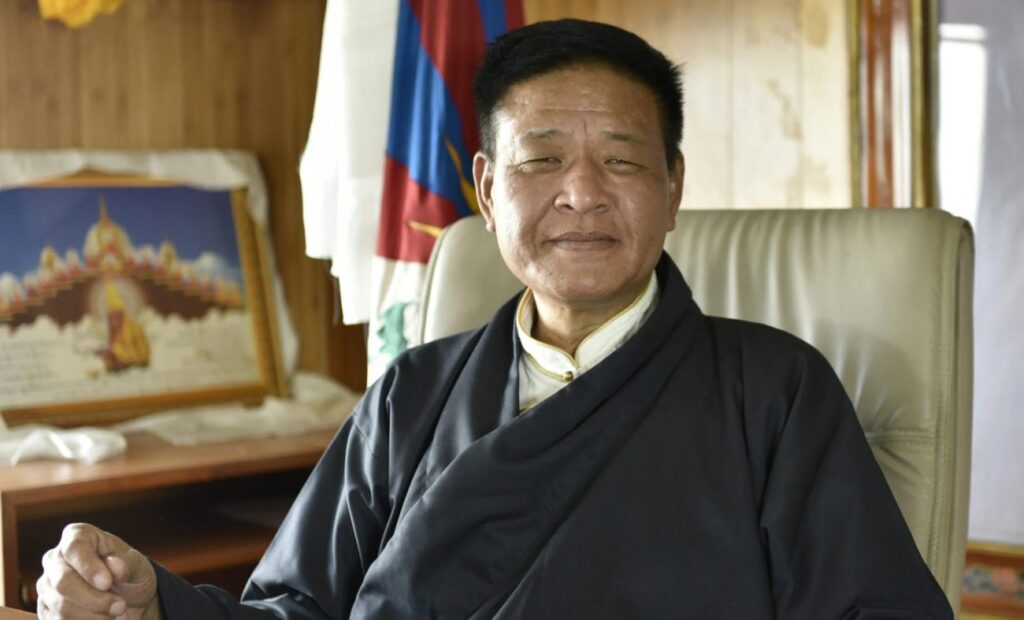

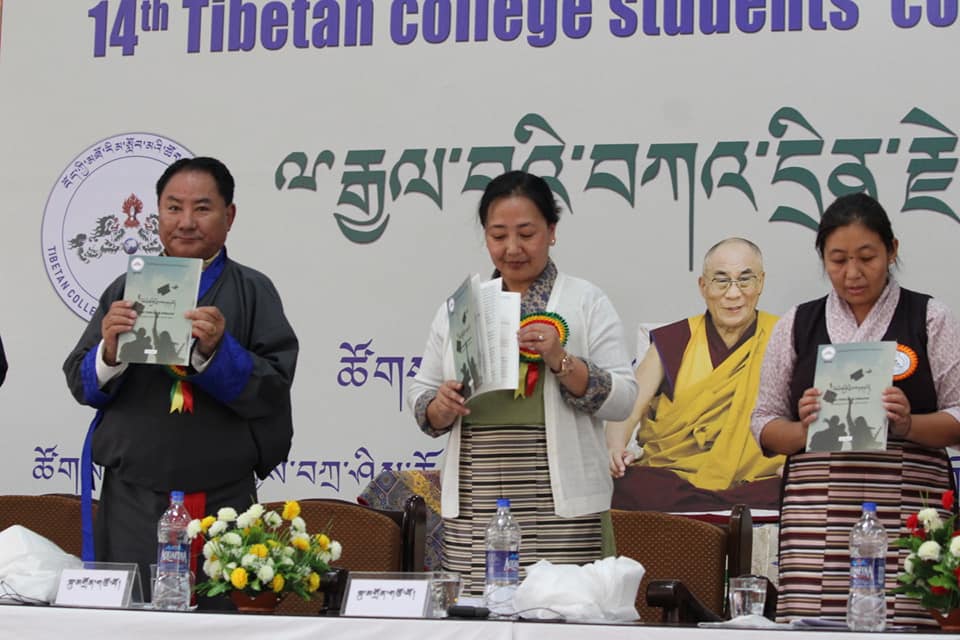
Bylakuppe: Speaker of Tibetan Parliament-in-Exile, Pema Jungney addressed the closing ceremony of the 14th Tibetan College Students’ Conference held at Sera Thekchenling as the Chief guest on 6 March.
Special guest Education Kalon Dr Pema Yangchen, representative of Sera Jey’s Chakzoe, and attendees from 27 different colleges were present at the closing ceremony.
Addressing the closing ceremony, Speaker Pema Jungney greeted the participants of the conference. He highlighted the significance of the conference, where participants were from both Tibetan traditional educational system and the modern education system. Students from the monastic education system and the modern education system attending the conference have different attributes to discuss and exchange ideas based on their respective areas.
Lauding the 18-point agenda of the 14th Tibetan College Students’ Conference, Speaker spoke on the importance of discussing the four commitments of the His Holiness the 14th Dalai Lama, which was one of the important agenda in the conference. He further stressed on educating others on the four commitments of His Holiness the 14th Dalai Lama by having proper knowledge about it by the attendees themselves and other students. At the same time, he appreciated the Tibetan college students’ determination to educating others similarly.
As students of today are future seeds of tomorrow, the cause of the Tibetan struggle and the future of Tibetans depend on them. Therefore, Speaker advised participants of the conference to concentrate on their studies to raise educated Tibetans in the future, who would be ready to serve Tibet on the day Tibetans in and outside of Tibet are reunited. Sufficient human resource is central to equip necessary modern machines in amplifying our call for genuine autonomy, so Speaker once again advised students to study diligently not just their individual lives but for the future and cause of Tibet.
Speaking of the four commitments of His Holiness the 14th Dalai Lama, Speaker focused mainly on the first commitment of His Holiness, i.e. promoting human values or ethics. He said, “The actions of the present generation will shape the future of the world which can either cause positive or adverse effects depending on those actions. So, it is extremely important to embrace good moral values and uphold ethical values to generate happiness for all sentient beings from the tiniest insect to humans. These days, as many of the animal habitats are affected by human actions, leading a virtuous life can positively affect animals also.”
Speaker further spoke on religious harmony, he spoke of the pointless conflicts happening in the name of religion which can be resolved through harmony amongst the religious communities. Similarly, he cited the example of Tibet, the difference between now and then when it was an independent country due to the kindness of His Holiness the 14th Dalai Lama which needs to be carried on by one and all.
Speaking on the importance of Tibet’s culture, religion, and language (spoken and written), the Speaker further said, “It is a shame if Tibetans can not speak or write in the Tibetan language, however, Tibetans having knowledge of their own mother tongue and additional languages is ornamental and glorious. We need to know as many languages as possible but should always prioritize the Tibetan language.”
“As I had already mentioned last year, Tibetan college students are representatives of Tibet. You should take responsibility and speak on the situation of Tibet, problems faced by Tibetans living in Tibet, the approach taken to solve the problems, etc. to spread awareness of Tibet’s issue to others, at informal settings without having to summon for a meeting. As fellow students of different nationalities are also the future seeds of their own respective nations, who will be leaders and officials in the future. So, it is extremely important to educate them on Tibet’s issue for the long run,” said the Speaker.
Speaking on the agenda and passing of the resolution by the conference, Speaker advised participants to consider letting the students take the responsibility instead of leaving it with the Departments of Education or Home. He further said that when two representatives of Tibetan college students’ conference came to enquire about the executed resolutions from the previous conference, Speaker mentioned the same thing to them as the resolutions were related to the department of education or home or other departments. So, he advised that It would be beneficial if students can be responsible for what they can execute and if not discuss how it can be executed in the next meeting.
Speaker then lauded Sera Jey for facilitating conference hall, accommodation, etc. to make the conference a success. He further lauded the monasteries for the facility as the previous one was held in Drepung Loseling and the next one will be held in Menri Ling. Finally, he urged for the continuity of the conference and at the same time prayed for the long life of His Holiness the Dalai Lama and resolution of Tibet’s issue soon. He also prayed for the successful execution of the resolution passed in the conference.
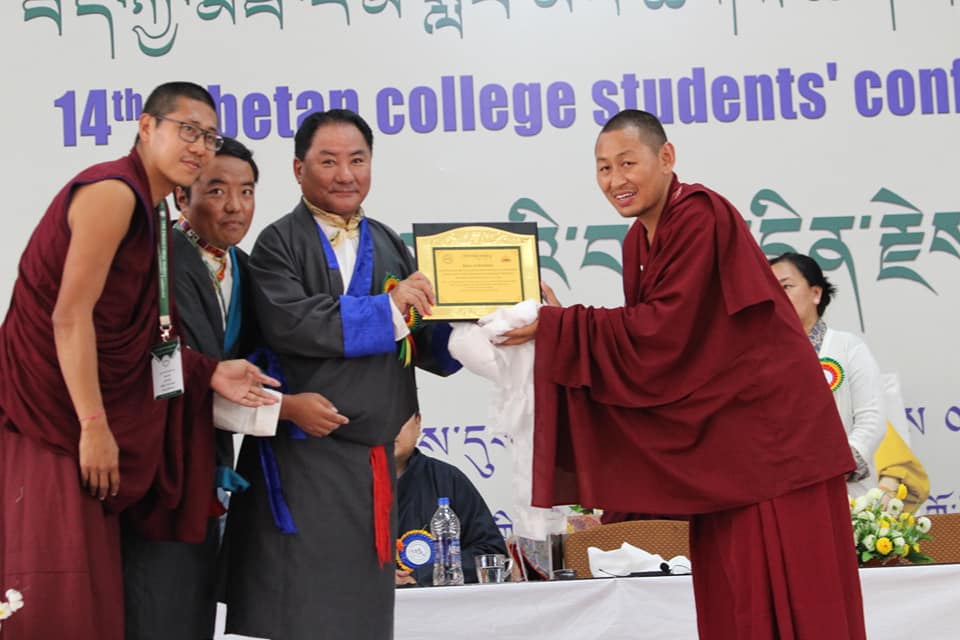
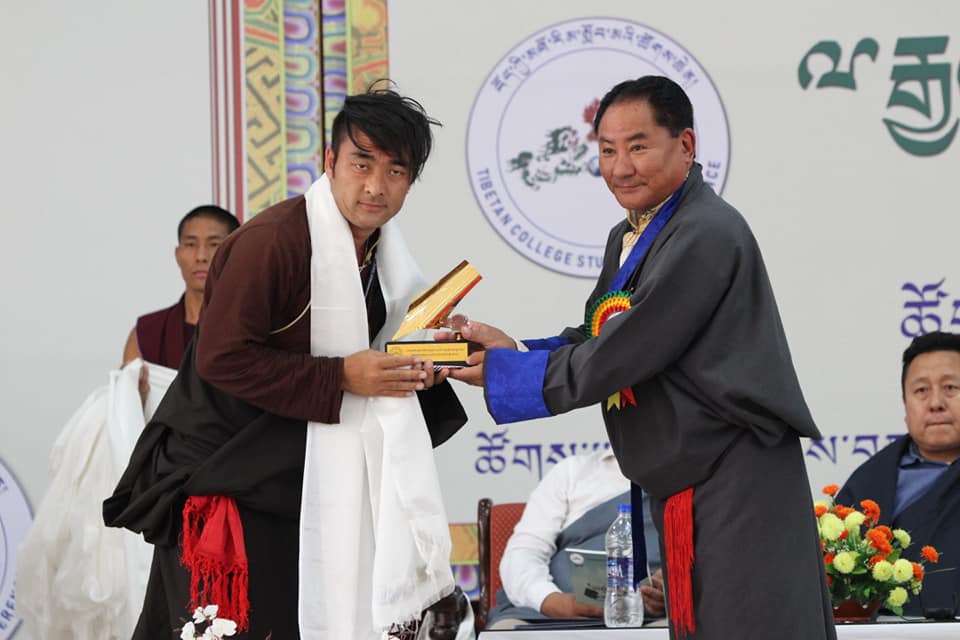
In the closing ceremony, Chief Guest Speaker Pema Jungney and special guest Education Kalon Dr Pema Yangchen launched a book on the 14th Tibetan College Students’ Conference entitled ‘Lobchen ghi Myilam Karpo’ loosely translated as ‘ White dream of University.’ Speaker then presented awards to the winners of the essay competition and appreciation award to Sera Jey Kenyin monastery and Mysore University. Speaker then distributed certificates to the participants of the conference while Education Kalon presented awards to the winners of the annalistic essay competition, organizing committee and others. The organizing committee also thanked Speaker and Education Kalon for their presence and offered mementoes of gratitude.
In addition, Special guest Education Kalon’s remarks and statement of Sera Jey Chakzoe were delivered. President of the 14th Tibetan College Students’ Conference concluded the event with a vote of thanks.
–Filed by Tibetan Parliamentary Secretariat