At starry dawn blanketed by a peaceful ambience, we set foot on deserted Mall road on October 14, 2018 at 5:55 am, welcomed by Shimla’s brisk cold pre-winter weather. Walking down the street where white tents were already installed on the empty ground in front of the famous Christ Church, we paced ahead to find a shelter, to escape this frigid breeze and entered the YMC hostel. After we were given our rooms, we found solace under the thick blanket, and shortly afterward breakfast was served.
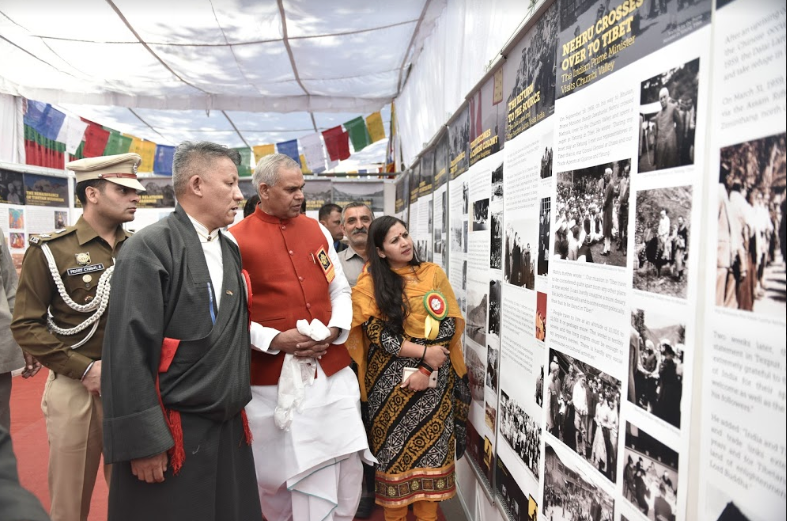
The day started, so did the phase of exploration also began. The morning was for exploration and adaptation to digest that ‘yes, we were in Shimla,’ the capital of the northern Indian state of Himachal Pradesh. We were there to install and conduct the Tibet Museum travelling exhibition in accordance with the celebration of Thank You Himachal. After lunch, we gathered at the event venue where the deserted morning scenario was replaced by the hustle and bustle atmosphere of locals and tourists. We, the three Tibet Museum members started the panel installation. Initially, we prepared three themes; Journey to Exile, Escape, and Indo-Tibet Ties, but due to the lack of space, concluded to carry on with Indo-Tibet Ties and Journey to Exile, displaying sixty-four panels.
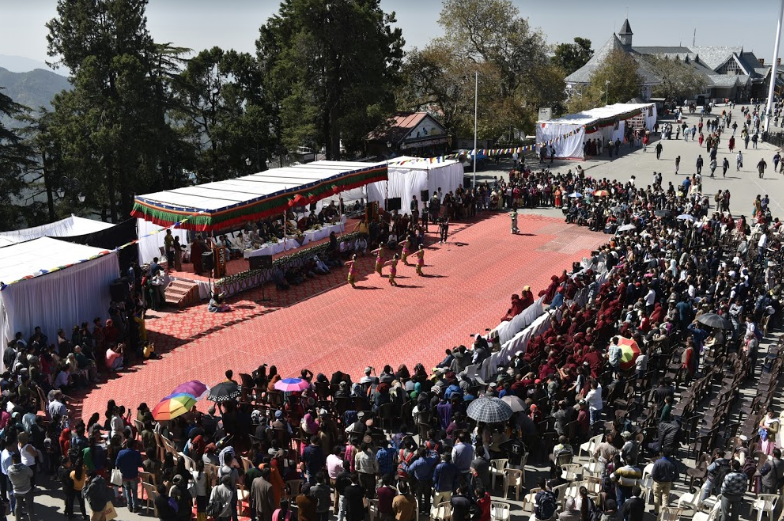
October 15, 2018, Monday, the blossoming celebration day arrived. The song citing ‘Thank You India’ sung by a Tibetan woman artist can be heard a mile far and the sensation of an important day can be witnessed with the epic sight on the ground. Tibetan flag banners were flown around the respective tents, Tibetan women in Chupa moving forth while adoring the different hues present on the very spot and curious tourists inspecting the situation asking each other what was happening.
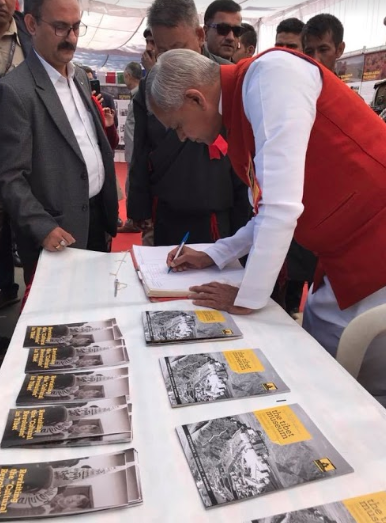
The event officially began at exact 10 in the morning at the Ridge ground when Sikyong Dr. Lobsang Sangay along with Governor of Himachal Pradesh arrived with other officials at the event ground. His Holiness the Dalai Lama’s video message thanking Himachal rolled on the screen first and later Sikyong narrated how grateful India is to Tibetans.
The Governor of Himachal Pradesh Shri Acharya Dev Vrat made a heart-touching speech proclaiming, “Tibetans are family and India will always stand beside Tibet.”
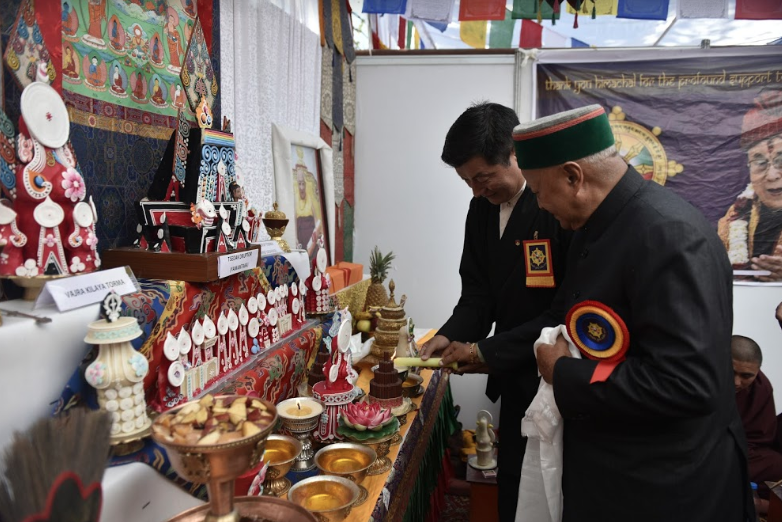
Apart from the main stage, the festivity was a congregation of all the aspects representing and reflecting the essence of Tibetan culture, tradition, art and crafts. Tents mounted with different Tibetan themes; Tibetan Buddhist cultural exhibition consisting of various Tibetan butter sculpture and religious articles along with the live display of Sand Mandala left the visitors in awe. Other than that, different Tibetan household items like Tibetan design bed sheets, hand-woven carpets, and tapestries were also showcased. Moreover, the free medical consultation at Men-Tse-Khang tent displaying the Tibetan herbal medicine and healing methodology.
The Tibetan cultural performances by the artists of Tibetan Institute of Performing Arts (TIPA) left the audience rapt by the richness of Tibetan culture.
The ambience of a real life scenario of a monastery conducting rituals has overwhelmed the local and tourists coming from every nook and corner of the world. The audience were particularly more attracted to the art of sand mandala. Mandala means ‘circle’ representing the cosmogram of Buddha or Bodhisattva. According to Buddhist Scripture, Sand Mandala transmits positive energies to the surrounding and to the people who view them and is also believed to have the healing and purification effect. It was pure delight and bliss to witness this sacred holy sight.
The Tibet Museum’s showcasing of a pictorial exhibition on the two themes; Indo-Tibet Ties and Journey to Exile, drew attention and admiration for the unbreakable bond between the ‘Guru’ and the ‘Chela.’ Each photo panel showcased the real story of Tibet’s history and the ancient ties and current bonds shared between India and Tibet.
The event ‘Thank You Himachal’ in Shimla organized by Central Tibetan Administration and Tibetans in Shimla, as a part of the year-long ‘Thank You India’ campaign, gave a successful run of Tibetan culture, traditions, history, literature and creative arts, that continues to be under threat in homeland Tibet but was preserved and continues to thrive on the Indian soil.
Indeed, we owe India a debt of gratitude.