FEATUREDharamsala and Central Tibetan Administration through the eyes of an Indian studentby Abhay Anturkar
“Greetings my dear
friends! May His Holiness bless you”. This is how we are normally
greeted everywhere. This land, this country owes a lot to the Dalai
Lama and his people. Dharamshala or Dhasa (Lhasa? rings a bell?) as it
is called by the locals was a small town in the northern part of
Himachal Pradesh post independence. Whatever little habitation there
was here was destroyed by a very strong earthquake in 1905. The
earthquake not only destroyed the infrastructure of the place, but also
left the economy in doldrums. No one would have come to Dhasa had it
not been for His Holiness. As a matter of fact, for once, even the
Indians in the area seem to be admitting the fact. If you go to any of
the restaurants here, be it owned by an Indian or a Tibetan, there
would be a “Thank you” note to the Dalai Lama hanging somewhere in the
room. He is no longer a God only for the Tibetan, he is respected by
one and all here.Those of you who love the mountains would fall
in love with Dhasa. Although Dhasa is situated on the lower Himalayas
in the lap of the Dhualadhar ranges. It carries with it the charm of
being a typical Himalayan town. We (I and my friend) had been allotted
a full-fledged flat in McLeod Ganj, a small town close to Dharamshala.
McLeod is like any other Himalayan tourist town with lots of Western
tourists, Indians and locals walking around aimlessly. The main square
of McLeod is where most of the “social activities” happen. There are
quite a few restaurants spread across the main market street serving
everything from Indian to Japanese to (obviously) Tibetan food. There
is a wide variety of choice as far as the cuisine is concerned. As we
are at the office from 9am to 5pm, we have lunch at a place called
“Nechung cafe” near the Nechung monastery, right next to the
Parliament, in the premises of the Tibetan Government in exile. The
choice for lunch however is limited to either a thali of rice, dal and
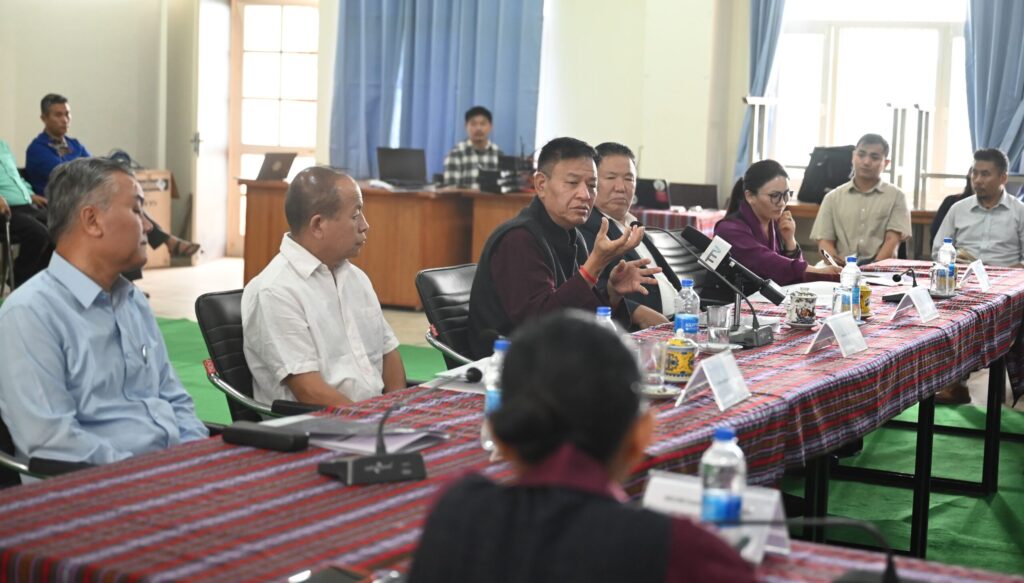
potatoes or chowmein.The people at the office are extremely
sweet. They make you feel more important than you actually are. And I’m
guessing this is the only place in the world where they feel bad about
not paying stipend to their interns. That is not it, because they are
not paying us anything, they don’t expect us to come to office
everyday! This place is just filled with powerful but extremely humble
people. This was the scenario when I came in. One of my colleague came
over and walked with me to the office and introduced me to my
co-ordinator. When I went and met my co-ordinator, she personally
introduced me to each and every person in the office. Not only that,
she told all of them individually about my background what I was going
to be working on with the DIIR and how long I would be working with
them. After that, I was taken to the Secretary of International
Relations of the Central Tibetan Administration (formerly known as the
Tibetan Government in Exile) to discuss my work with him. If you see
him on the road, you would not believe he holds such an important post,
extremely humble, very simple and has immense interest in what you are
working on. Work after that was good. As far as my work was
concerned, being a Law under-graduate from India, my first assignment
was titled “A study on inclusion of Tibetan Refugees in the services of
the Union of the Indian Republic” which was a study on whether or not
the Tibetan refugees are eligible to join the Indian Government’s
Services such as the Indian Administrative Services, Indian Foreign
Services, Indian Police Services etc. After the completion of my first
assignment, I made a proposal on a study of the socio-legal
implications of Tibetans taking up Indian citizenship to improve their
quality and standard of living. It was accepted by the Secretary of the
DIIR and I was given the permission to proceed. Considering the vast
areas of the study though, I took the decision to work on it from my
town, as I had a lot of relevant legal literature available there. This
decision of mine was not only understood by my seniors at the CTA but
also well supported, something that is very rare in today’s contract
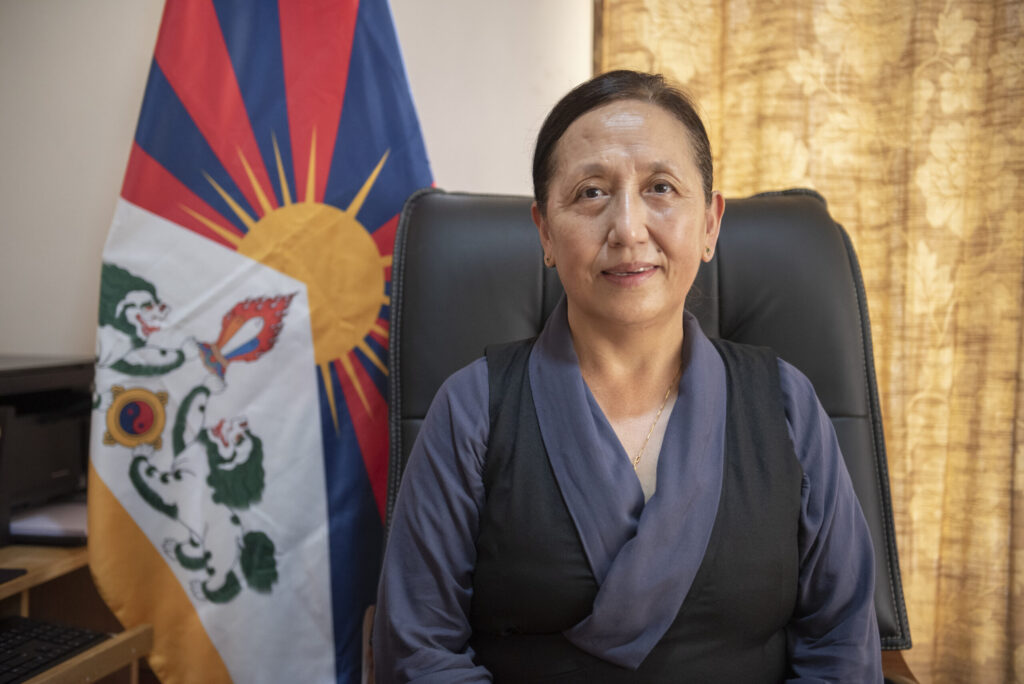
based world. The highlight of the experience was when I got
the opportunity to meet the Cabinet Minister of International Relations
of the CTA (post similar to the External Affairs minister of the
Central Government of India). Again, in this case too, the coordinator
was kind enough to come with us to the Honourable Minister and
introduce us all personally and inform the Minister about or work at
the DIIR. Working at the DIIR of the CTA was an experience
that I will cherish for the rest of my life. The organization and all
its members are humble enough to tell me that they gained a lot from
the work I did for them, but I in my heart’s heart know, that I am the
one who has gained a lot more from this experience. The Honourable
Minister put it perfectly when she said to us interns that it was a
state of interdependency that we were in, we had something to offer to
the CTA, and the CTA had lot in store for us. As I mentioned before, I
am not only impressed by the way the DIIR works, but also overwhelmed
by the experience of being a part of it for the little time that I was.
I will always be grateful to all the people in the DIIR for welcoming
me with such warmth and love and allowing me to not only grow
professionally but also personally through their medium.–The writer is a a law under-graduate at Symbioisis International University, Pune, Maharashtra, India