
Young Indians should preserve ethos of non-violence: His Holiness
[indianexpress.com, Saturday, 2 April 2011]

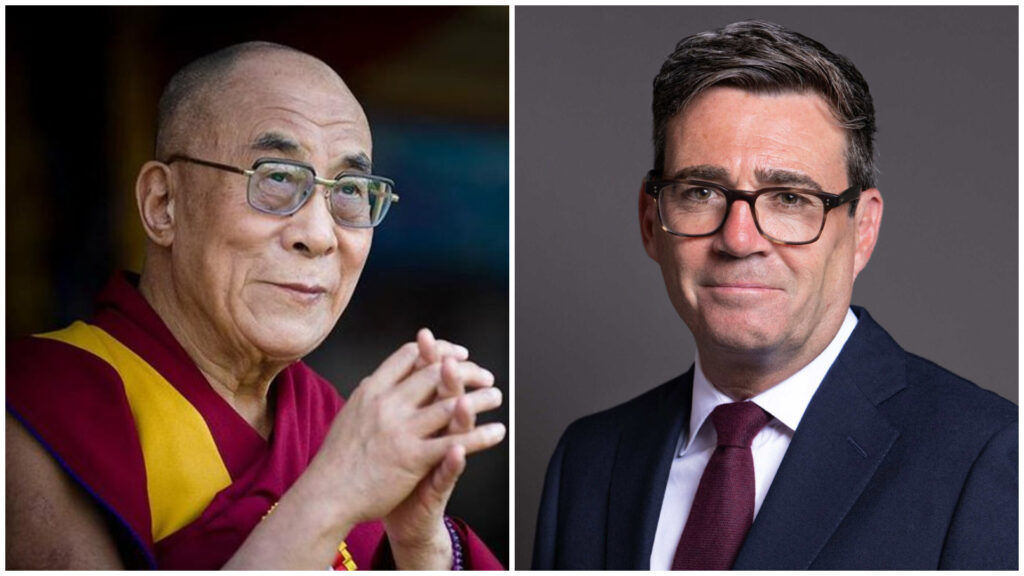
| His Holiness the Dalai Lama in New Delhi to deliver the a lecture in honour of former Indian President R Venkataraman on “Non Violence and Spiritual Values in a Secular India” on 2 April 2011 |
NEW
DELHI: With centuries of tradition behind them, Tibetan spiritual
leader His Holiness the Dalai Lama believes young Indians should be
playing a more active role in preserving their ethos of non-violence
and propagating it to the outside world.
DELHI: With centuries of tradition behind them, Tibetan spiritual
leader His Holiness the Dalai Lama believes young Indians should be
playing a more active role in preserving their ethos of non-violence
and propagating it to the outside world.
Praising
India’s democratic traditions, His Holiness said it was India which
introduced him to the true meaning of democracy and young Indians
should do everything to keep alive their rich traditions developed over
thousands of years through overlapping of cultures.
India’s democratic traditions, His Holiness said it was India which
introduced him to the true meaning of democracy and young Indians
should do everything to keep alive their rich traditions developed over
thousands of years through overlapping of cultures.
“On
non-violence and spirituality I have nothing to say to Indians, you
already know these things for at least the last 2000 modern years,” he
told a gathering here at a discussion on ‘non-violence and spirituality
in India’ as part of a series of events at the Nehru Memorial Museum to
mark the birth centenary of former president R Venkataraman.
non-violence and spirituality I have nothing to say to Indians, you
already know these things for at least the last 2000 modern years,” he
told a gathering here at a discussion on ‘non-violence and spirituality
in India’ as part of a series of events at the Nehru Memorial Museum to
mark the birth centenary of former president R Venkataraman.
“But
to the younger generation of Indians, who have a lot of interest in
technology and science, I feel it is worthwhile to remind them of their
traditions, I would say develop your country and also maintain these
traditions,” he said.
to the younger generation of Indians, who have a lot of interest in
technology and science, I feel it is worthwhile to remind them of their
traditions, I would say develop your country and also maintain these
traditions,” he said.
Recalling
his meetings with India’s first prime minister Jawaharlal Nehru, His
Holiness the Dalai Lama said he found the fact that he could disagree
with him without annoying him a testament to the tradition of healthy
criticism in India.
his meetings with India’s first prime minister Jawaharlal Nehru, His
Holiness the Dalai Lama said he found the fact that he could disagree
with him without annoying him a testament to the tradition of healthy
criticism in India.
“At
a meeting with Nehru in Delhi (way back in 1950s), we disagreed on some
issue at some point… after that when I met him I was a little scared
but I found him completely normal,” he said, recalling the time.
a meeting with Nehru in Delhi (way back in 1950s), we disagreed on some
issue at some point… after that when I met him I was a little scared
but I found him completely normal,” he said, recalling the time.
“I
thought in China, leaders were not like that, I have learnt this
dealing with the Chinese leadership for nine years. Gen Mao (Zedong)
though was an exception, but I later found his words were not reflected
in reality or implemented on the ground,” he said.
thought in China, leaders were not like that, I have learnt this
dealing with the Chinese leadership for nine years. Gen Mao (Zedong)
though was an exception, but I later found his words were not reflected
in reality or implemented on the ground,” he said.
The
Dalai Lama quoted BJP leader L K Advani as telling him once that the
success of democratic practice in India was the existence of a thousand
year of tradition of criticism.
Dalai Lama quoted BJP leader L K Advani as telling him once that the
success of democratic practice in India was the existence of a thousand
year of tradition of criticism.
“So
for thousands of years this country has developed different views and
(imbibed) in its existing philosophies those of Buddhism, Islam
Christianity and later Sikhism… at grassroots this tradition is
centuries old and that is the real strength of India,” he said.
for thousands of years this country has developed different views and
(imbibed) in its existing philosophies those of Buddhism, Islam
Christianity and later Sikhism… at grassroots this tradition is
centuries old and that is the real strength of India,” he said.
Calling
himself a “messenger of India’s ancient thought” and describing his
relationship with India as that of a “chela and guru”, he said Indians
should take an active role in taking the message of non-violence
inherent in their tradition to the world on a human level.
himself a “messenger of India’s ancient thought” and describing his
relationship with India as that of a “chela and guru”, he said Indians
should take an active role in taking the message of non-violence
inherent in their tradition to the world on a human level.
He
also took a potshot at the rampant prevalence of corruption in India,
saying though many Indians practice religion in ritual, they often
don’t practice it in lives.
also took a potshot at the rampant prevalence of corruption in India,
saying though many Indians practice religion in ritual, they often
don’t practice it in lives.
“In
this country most people practice religion, they would recite shlokas
(and pay respects to idols), but whenever they find opportunity they
also take to corruption, when in reality true followers of religion
have to be honest,” he said.
this country most people practice religion, they would recite shlokas
(and pay respects to idols), but whenever they find opportunity they
also take to corruption, when in reality true followers of religion
have to be honest,” he said.
The
Tibetan spiritual leader also asked young Indians to pay greater
attention to eradicating the ills of their society — “like the caste
system, the dowry system and other discriminations that are prevalent
in your society”.
Tibetan spiritual leader also asked young Indians to pay greater
attention to eradicating the ills of their society — “like the caste
system, the dowry system and other discriminations that are prevalent
in your society”.
Noting
that all major Indian rivers originate from the Himalayan glacier
region, the Dalai Lama said the country should also play a role in
raising concerns on the ecological degradation of the Tibetan plateau
which is a very sensitive area.
that all major Indian rivers originate from the Himalayan glacier
region, the Dalai Lama said the country should also play a role in
raising concerns on the ecological degradation of the Tibetan plateau
which is a very sensitive area.
“I
am convinced with every major disaster, that things are turning bad due
to global warming. The Tibetan plateau region is ecologically very
sensitive and major rivers in north India flow from the Himalayan
glaciers in the region.
am convinced with every major disaster, that things are turning bad due
to global warming. The Tibetan plateau region is ecologically very
sensitive and major rivers in north India flow from the Himalayan
glaciers in the region.
“You,
therefore, have reason to show concerns about the ecology of that
region,” he said, pointing out that the administration of China too has
in recent years become sensitive to the ecological conditions of the
region.
therefore, have reason to show concerns about the ecology of that
region,” he said, pointing out that the administration of China too has
in recent years become sensitive to the ecological conditions of the
region.
He
said while India might be behind China as far as economic progress in
concerned, India has rich values of democracy and freedom which place
it in a better position to play a positive and effective role in the
world.
said while India might be behind China as far as economic progress in
concerned, India has rich values of democracy and freedom which place
it in a better position to play a positive and effective role in the
world.
Talking
about his visit to Bihar last year, His Holiness the Dalai Lama also
recalled his meeting with Chief Minister Nitish Kumar.
about his visit to Bihar last year, His Holiness the Dalai Lama also
recalled his meeting with Chief Minister Nitish Kumar.
“At
the function, he (Kumar) said it is through Buddha’s blessings that the
state is now prospering, but I said Buddha’s blessings work only
through an able CM’s hand and karma,” he said.
the function, he (Kumar) said it is through Buddha’s blessings that the
state is now prospering, but I said Buddha’s blessings work only
through an able CM’s hand and karma,” he said.
Speaking
on the occasion, Minister of Water Resources and Minority Affairs
Salman Khurshid, wondered how secularism has often comes under a cloud
in a country that has centuries of culture of tolerance.
on the occasion, Minister of Water Resources and Minority Affairs
Salman Khurshid, wondered how secularism has often comes under a cloud
in a country that has centuries of culture of tolerance.
“When
secularism is such a part of our ethos one wonders why it often comes
under the cloud in our country. It is our good fortune that our
religious leaders have taken the lead in educating people, but their
work is not powerful enough to prevent us politicians from bringing the
idea of secularism under the cloud,” he said.
secularism is such a part of our ethos one wonders why it often comes
under the cloud in our country. It is our good fortune that our
religious leaders have taken the lead in educating people, but their
work is not powerful enough to prevent us politicians from bringing the
idea of secularism under the cloud,” he said.
Meanwhile,
speaking on the subject NCP leader P A Sangma, joked about cricket
fever going pitch high in a country which faces a number of problems in
society and politics.
speaking on the subject NCP leader P A Sangma, joked about cricket
fever going pitch high in a country which faces a number of problems in
society and politics.
“In
spite of all our problems, India continues to be a spiritual country…
In the middle east, people are on the streets but in India despite 2G,
despite CWG and Swiss banks we are enjoying cricket, but how long can
this tolerance persist is the question, we politicians have to wake
up,” he said.
spite of all our problems, India continues to be a spiritual country…
In the middle east, people are on the streets but in India despite 2G,
despite CWG and Swiss banks we are enjoying cricket, but how long can
this tolerance persist is the question, we politicians have to wake
up,” he said.