By Brendan Mcfadden, For original news click here.
- Hong Kong’ proposed extradition law change would make it easier to criminal suspects to mainland China
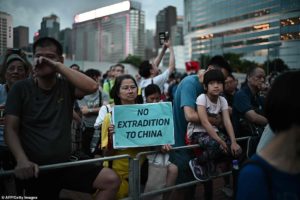
- Thousands of protesters marched through central Hong Kong in opposition to changes to the extradition law
- Many carried yellow umbrellas, a protest symbol in Hong Kong’s massive 2014 pro-democracy protests
- They also carried placards which accused Hong Kong leader Carrie Lam of ‘selling out’ the territory
Thousands of protesters have marched through central Hong Kong today in opposition to changes to an extradition law which would make it easier to send criminal suspects to mainland China.
Many protesters carried yellow umbrellas, a protest symbol which first appeared in Hong Kong’s 2014 pro-democracy protests, and placards which accused the territory’s leader Carrie Lam of ‘selling out’ and called on her to resign.
Hong Kong police said around 22,800 people took part the protest while organisers gave a much higher figure of more than 130,000.
Former British colony Hong Kong has a separate legal system to China through the ‘one country, two systems’ deal struck between Britain and China.
The territory was handed back to China in 1997 on the condition it would retain a ‘high degree of autonomy, apart from in foreign and defence affairs’ for 50 years.
Honk Kong has traditionally hesitated over mainland extraditions because of the opacity of China’s criminal justice system and its liberal use of the death penalty.
But earlier this year Hong Kong’s government announced plans to overhaul its extradition rules, allowing the transfer of fugitives with mainland China, Macau and Taiwan on a ‘case-basis’ for the first time.
Marcher, Amanda Wong, 40, said it was important to exercise those rights while they were under perceived attack.
‘We have to come out to march. It doesn’t matter if we can change the situation or not, we just have come out while we still have the chance,’ she said.
Marcher Roland Lo, 49, said: ‘Creating a loophole that could mean a Hong Kong person gets extradited to China to face prosecution there, that completely destroys the guarantee of human rights and legal protection of one country, two systems.’
Business, legal, human rights and journalists groups have expressed concerns over the proposed changes, saying they will damage Hong Kong’s reputation for legal independence.
The amendments expand the scope for the transfer of criminal suspects to China and remove the legislature’s right to scrutinise individual extradition decisions filed by Hong Kong’s chief executive.