
The Guardian. Read the article here.
Diaspora sceptical over claim most inmates released from Xinjiang detainment centres.
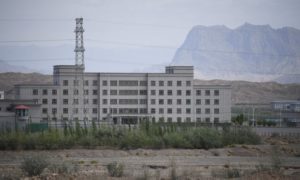
Most inmates have been released from mass detention centres in Xinjiang region has been met with scepticism by the Uighur diaspora, which has launched a social media campaign challenging Beijing to prove it.
Rights groups and experts say more than 1 million mostly Muslim ethnic minorities have been detained in internment camps in the tightly-controlled north-west region, home to China’s ethnic Uighur population.
On Tuesday, a senior Xinjiang official told reporters “most” people held in the camps had been “returned to society”, though no figures were shared to back up the claim.
“It’s absolutely not true,” said Guly Mahsut, 37, a Uighur based in Canada.
“One of my cousins and one of my tour guide friends, and my friend’s husband, they are still in the camps,” she told AFP.
Mahsut and other overseas Uighurs have responded to China’s claim with the hashtag “ Provethe90%”, featuring stories and photos of missing friends and family they have been unable to contact in Xinjiang.
The hashtag is a reference to remarks made by the Xinjiang chairman, Shohrat Zakir, who said “more than 90%” of those who “return to society … have work that they like and find suitable”.
“China does not need to say they released most if they really did so,” said Arfat Erkin, a Uighur student in the US who used the “ Provethe90%” hashtag to tweet about his missing father.
“All it needs is to give journalists normal access to those camps – not staged camps – and give official permission for Uighurs to contact their relatives abroad.”
Bahram Sintash, who has posted information about destroyed mosques and neighbourhoods in Xinjiang, also tweeted about his 69-year-old father, a retired editor who Sintash said was detained in December 2017.
The foreign ministry spokeswoman Hua Chunying said on Wednesday she was not aware of the “specific number” of people who had left the centres.
She said “the real Xinjiang is a lot different from what was depicted by certain Western media”, adding China had arranged trips to the region for diplomats and foreign journalists.
It is difficult to verify China’s claims, as the government has made independent reporting in Xinjiang extremely challenging.
“China is making deceptive and unverifiable statements in a vain attempt to allay worldwide concern for the mass detentions of Uighurs and members of other ethnic minorities in Xinjiang,” said Amnesty International’s director for East Asia, Nicholas Bequelin.
He said Amnesty had not received any reports of large-scale releases.
On a six-day trip to the region last month, AFP reporters were almost constantly followed by plainclothes officials. They also encountered roadblocks and were turned away by security forces upon nearing some camps.
For Uighur student Erkin, China’s claim most detainees had been released was not believable, given Beijing’s initial denial of the existence of what it subsequently called education centres.