
Time lists His Holiness among the 100 most influential people
Thursday, 1 May 2008, 3:05 p.m.

|
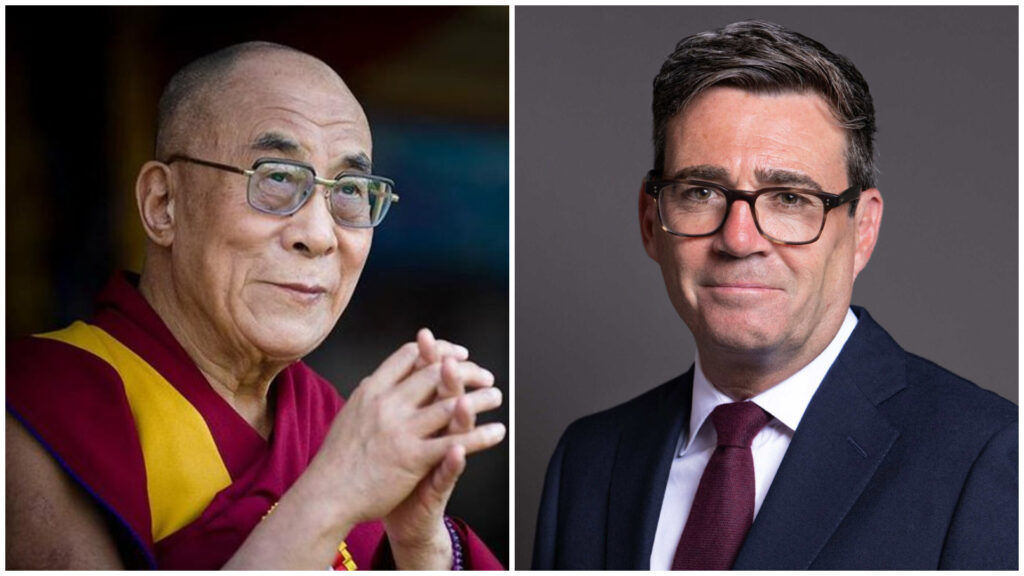
Dharamshala: Time magazine has
listed His Holiness the Dalai Lama, the spiritual and temporal leader
of Tibet, among the world’s 100 most influential people, under the
category of influential leaders and revolutionaries.
Time listed its influential people in five categories: Leaders and
Revolutionaries; Heroes and Pioneers; Scientists and Thinkers; Artists
and Entertainers; Builders and Titans.
It is His Holiness the Dalai Lama’s second time on Time’s 100
list, when in 2006, the magazine listed His Holiness as one of five
Asian heroes.
The 2008 list, appearing on the magazine’s Web site Thursday morning will hit the newsstands on Friday.
Former British Prime Minister Tony Blair, Chinese President Hu
Jintao, US presidential contenders Barack Obama, John McCain and
Hillary Clinton are among others on the list.
Paying tribute to His Holiness the Dalai Lama, Deepak Chopra,
the noted writer and speaker on spirituality, writes, “Millions of
people turn to the Dalai Lama for inspiration, but to whom does he
turn? He and his people have struggled all their lives with the
audacity of hopelessness. Oppression and exile are their daily bread.
Yet the Dalai Lama, 72, remains calm in the face of cruelty.”
Following is the full text of the article on His Holiness the Dalai Lama
The Dalai Lama

|
By Deepak Chopra
Millions of people turn to the Dalai Lama for inspiration, but
to whom does he turn? He and his people have struggled all their lives
with the audacity of hopelessness. Oppression and exile are their daily
bread. Yet the Dalai Lama, 72, remains calm in the face of cruelty.
What does he think of the human race? “We are the superior species on
Earth but also the biggest troublemakers,” he once told me.
China’s rulers aren’t like the British masters of colonial
India, and the Dalai Lama’s Gandhiesque nonviolent struggle won’t give
them twinges of conscience, leading to Tibet’s freedom. If anything,
Beijing has grown more ruthless in suppressing Tibetan aspirations, as
we’ve seen this Olympic year. And yet he has found a way to think
kindly of those who oppress his people and vilify his name. I found him
unwilling to show any harshness. He said to me, “I don’t dislike the
Chinese, only their actions.”
To me, the most mystical thing about him is also the most
ordinary: the Dalai Lama is happy. He’s happy in the midst of chaos and
turmoil. The most inspiring thing he ever told me was to ignore all
organized faiths and keep to the road of higher consciousness. “Without
relying on religion, we look to common sense, common experience and the
findings of science for understanding,” he said. I do the same thing,
but I still marvel at this model of calm and compassion. I’m sure
neuroscientists would love to know what’s going on inside that brain.
To whom, then, does the Dalai Lama turn for inspiration? It’s
not a person but a place-beyond I and thou, beyond self and nonself.
The wonder isn’t that such a place can be found. The wonder is that one
man makes it look so easy.
Chopra, author of more than 50 books on spirituality and medicine, has met the Dalai Lama several times.