
By Suswagata Roy / 10 December 2012
[National Law School of India University, Bangalore (NLSU), Bangalore]
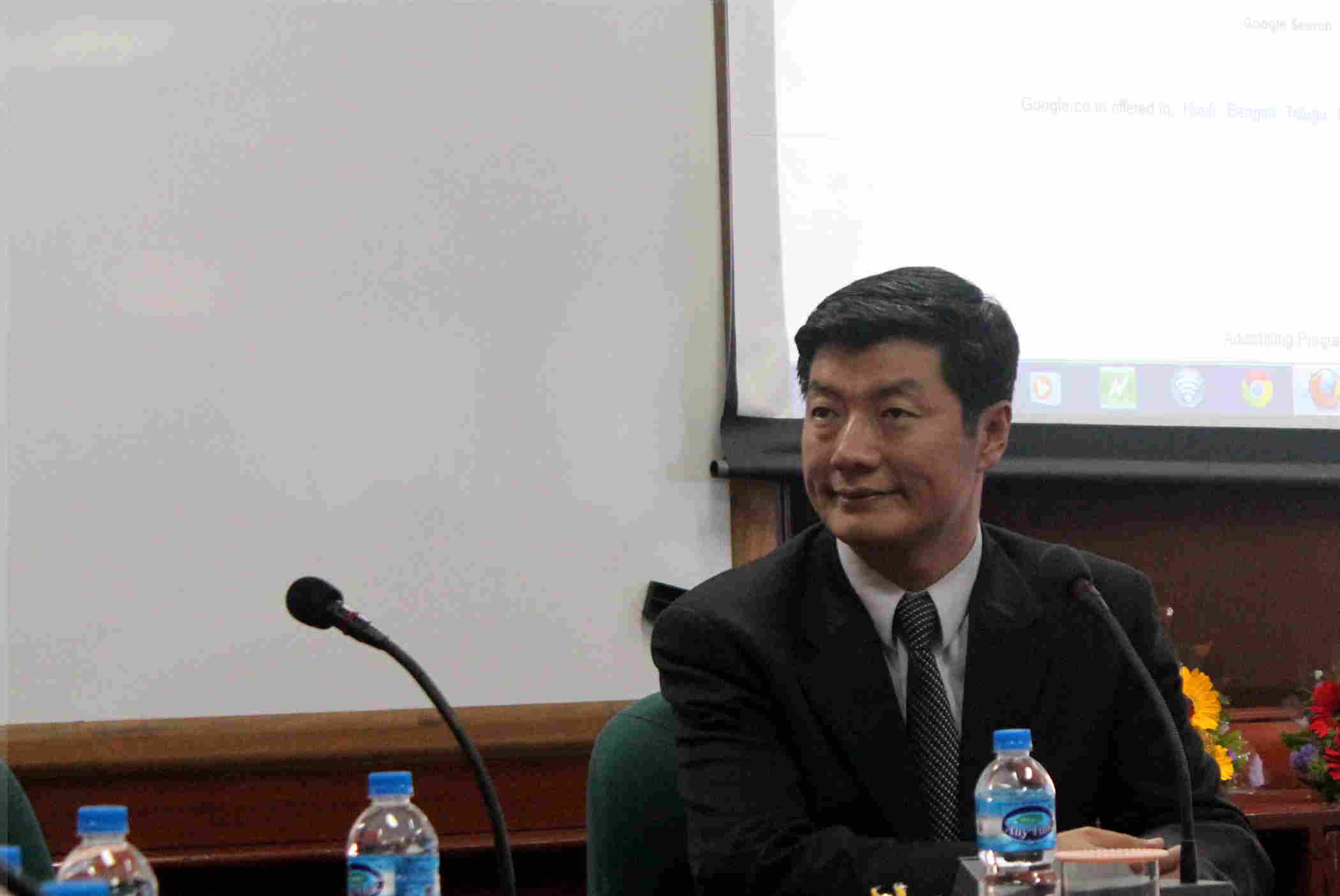
Tibetan Prime Minister-in-exile Lobsang Sangay paid a visit to the NLSIU campus at Nagarbhavi on 8th December, 2012. Usually to assemble people for a guest speech is a challenge, but for Labsang Sangay’s visit, we witnessed an overwhelming turnout. Mr. Sangay is a Campus Law Centre, Delhi and a Harvard Law School graduate with interests in public policy and governance. Being a dynamic and young representative of Tibetans worldwide, he surely understands the hopes and expectations pinned on him.
Mr. Sangay started his speech by outlining how Tibet had a sovereign identity in the past and had signed treaties in its independent capacity. The argument made by Mr. Sangay was that Tibet had in the past been a region autonomous of China. He outlined how Tibet demonstrated, from 1913 to 1950, the conditions of statehood as generally accepted under international law. In 1950, there was a people and a territory, and a government which functioned in that territory, conducting its own domestic affairs free from any outside authority. From 1913-1950, foreign relations of Tibet were conducted exclusively by the Government of Tibet and countries with whom Tibet had foreign relations are shown by official documents to have treated Tibet in practice as an independent state.
He further displayed for vagrant violations of law had been made on part of China to force the Tibetans out of their own homeland and seek asylum in India. During the course of his entire 90 minutes speech, he expressed his gratefulness towards India and its people for accommodating Tibetans as their own. Mr. Sangay ended with a note of hope towards a joint Tibetan cause. He sought support from Indians in establishing the rights of Tibetans. In light of International Human Rights Day, he has called for an International Tibetan Solidarity Day. He was ‘absolutely certain’ that as divested the community of Tibetans is all around the world, their bonds of solidarity will ensure that this new occasion would be celebrated enthusiastically.
While we ‘Law Schoolites’ expected a more debate-like setting with great political overtones from his meet, we were undoubtedly left amazed at the poise with which Mr. Sangay handled challenging questions thrown at him. Mr. Somali, a forth year student, speaking in praise for Mr. Sangay said that, ‘He has successfully proven why he was elected.’