
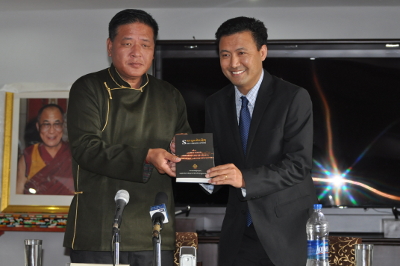
DHARAMSHALA: A book on the genesis of self-immolation protests in the world in general and Tibet in particular, written by Jamyang Soepa, a member of Tibetan parliament-in-exile, was launched in Dharamshala yesterday.
Jamyang Soepa said the interest to write the book came after Tibet witnessed unprecedented self-immolation by Tibetans as a form of protest.
He said the book traced the genesis of self-immolation, how the government dealt with the first self-immolator and whether the aspirations of the self-immolators have been fulfilled or not.
Understanding this, I focused on the occurrence of self-immolation protests in Tibet since 2009, how the Chinese government dealt with the self-immolators and their relatives with a heavy-handed approach and whether the self-immolators have been able to realise their wishes, he added.
The author attempted to make a comparative study of the nature of self-immolations in Tibet with that of those which occurred in other parts of the world.
The book has a detailed chronology of where and when the 132 Tibetans set themselves on fire, their last wishes and the status of their current well-being and whereabouts.
“The extraordinary nature of the self-immolation in Tibet is that it was started by monks and nuns, followed by elderly Tibetans and then the youth. I have tried to understand the reasons and motivations of Tibetans, especially monks, who respect the precious human life, when they set themselves on fire. And why the wishes expressed by some Tibetans who have set themselves ablaze not only for their own cause, but for the world peace, lend a unique characteristic to the self-immolation movement,” he said.
The author said the views expressed in the book are personal.