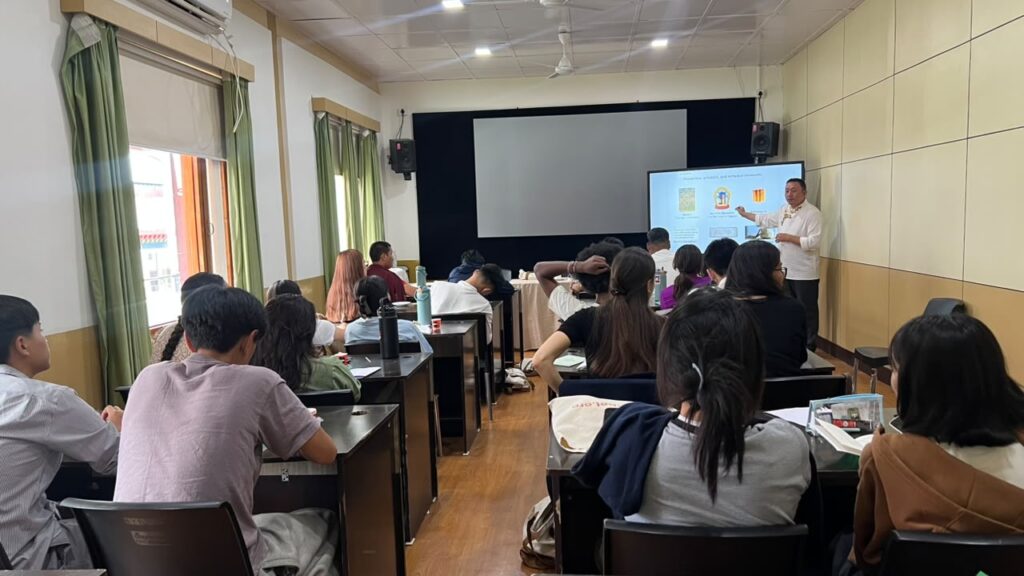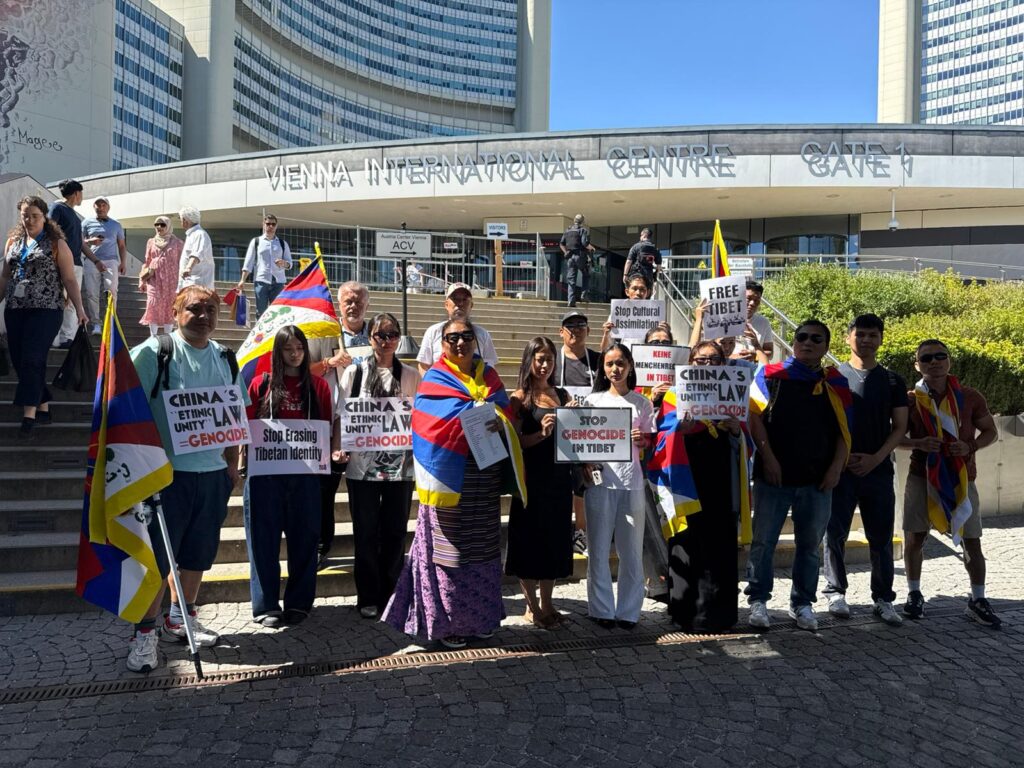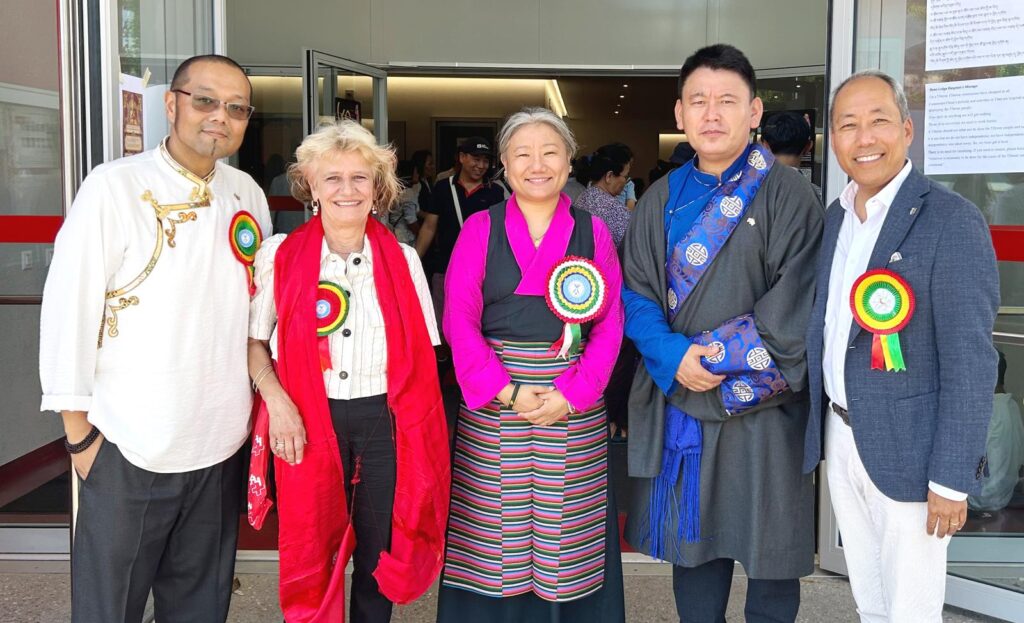


Melbourne, Australia, October 6, 2025: As part of the global Year of Compassion initiative, the Canberra-based Tibet Information Office (TIO) hosted a Chinese-language panel discussion on the newly released Chinese edition of Voice for the Voiceless, the latest political memoir by His Holiness the 14th Dalai Lama.
The event, held at Deakin Downtown, Deakin University, brought together Chinese scholars, writers, activists, and board members from the Victorian Tibetan community. Moderated by Dawa Sangmo, Chinese Liaison Officer of the TIO (also called Office of Tibet), the discussion featured an esteemed panel of speakers, including Dagpo Sonam Norbu, former TIO Representative and former Chief Justice Commissioner of the Tibetan Supreme Justice Commission; Professor Baogang He, Personal Chair in International Relations at Deakin University; Professor Chongyi Feng, newly elected President of the Tibet-China Friendship Association and Associate Professor of China Studies at UTS; Sangyal Kyap, Chinese Liaison Officer of the Europe Bureau of Tibet; Dr. Jinjiang Zhong, President of the Chinese Alliance for Democracy; and Shixin Yu, Executive Director of the China-Tibet Civil Promotion Association.
In his welcome address, Representative Karma Sengey of the TIO emphasised that ‘Voice for the Voiceless’ serves as a powerful reminder of Tibet’s unresolved political struggle and the ongoing suffering of the Tibetan people under Chinese rule. And the memoir is a testament to the resilience, courage, and hope of an entire nation.
Professor Baogang He highlighted His Holiness’s transformative contribution to Buddhism’s global presence, particularly in the West. “Since the 1970s, through his teachings, lectures, interfaith dialogues, and bestselling books, His Holiness has presented Buddhism not as a dogma but as a universal philosophy of compassion, mindfulness, and ethical living,” he noted. “His integration of Buddhism with modern science and advocacy for peace and secular ethics has made him the most globally recognised Buddhist leader of our time”.
During the panel, Dagpo Sonam emphasised the political significance of Voice for the Voiceless. He noted that while the Chinese government has long attempted to portray the Tibet issue as a personal matter concerning His Holiness the Dalai Lama, His Holiness has consistently made it clear throughout decades of advocacy for Tibetan freedom that the Tibetan struggle represents the aspirations of six million Tibetans inside Tibet, adding that Tibetans stand against the Chinese Communist regime, not the Chinese people.
He then outlined three pivotal periods in which His Holiness engaged with Chinese leaders. The first was in the early 1950s, when the 16-year-old Dalai Lama assumed political leadership of Tibet and the Chinese Communist Party failed to honor its promises to support Tibetan autonomy. The second was during the 1980s under Deng Xiaoping, when His
Holiness democratised the Tibetan constitution and Chinese leaders denied the existence of the Tibet issue, rejecting proposals to unify all Tibetan regions into a single autonomous entity. The third was the renewed Sino-Tibetan dialogue that began in 2002, during which His Holiness internationalised the Tibetan cause and advanced the Middle Way Approach — seeking genuine autonomy within the framework of the People’s Republic of China.
He concluded by noting that although the latter two periods were met with rejection by Beijing, which dismissed them as disguised calls for independence, they nonetheless represented His Holiness’s steadfast and non-violent efforts to resolve the Sino-Tibetan conflict and his enduring faith in the goodwill of the Chinese people.
Professor Yongyi Feng in his talk spoke about the Middle Way Approach, describing it as “a supreme expression of wisdom” designed to safeguard the Tibetan nation while promoting peaceful coexistence with China. He emphasised that this non-violent policy not only provides a pragmatic solution for Tibet but also serves as an inspiration for Chinese advocates working toward constitutional reform and the development of democracy in China.
Sangyal Kyap presented his research on Tibet’s centuries-old reincarnation system, an 800-year-old tradition central to Tibetan culture and spiritual continuity, refuting Beijing’s politicised narrative. He explained that the Golden Urn method was never the traditional standard and cited Chinese scholar Professor Liu Hancheng’s decade-long research, which disproves China’s claims about Tibetan reincarnations.
In her closing remarks, moderator Dawa Sangmo called on all attendees to use their platforms to further amplify the Tibetan voice and reach audiences in mainland China, while expressing gratitude for their presence and meaningful contributions to the panel discussion. The constructive session concluded with speakers receiving copies of the Chinese edition of Voice for the Voiceless. Later in the evening, a dinner reception was co-hosted by the TIO, the Chinese Alliance for Democracy, and the Melbourne China-Tibet Civil Promotion Association, celebrating both the 90th birth anniversary of His Holiness the Dalai Lama and the Chinese Mid-Autumn Festival.
-Report filed by Office of Tibet, Canberra