The Crisis in Tibet: Finding a Path to Peace
Friday, 25 April 2008, 10:41 a.m.
 Special envoy Lodi Gyari testifies during a hearing before the House Foreign Affairs Committee on Capitol Hill on 13 March 2007 in Washington, DC/Getty Images |
Washington, DC: Mr Lodi Gyari,
special envoy of His Holiness the Dalai Lama, gave his testimony on
“The Crisis in Tibet: Finding a Path to Peace”, at a hearing before the
US Senate Subcommittee on East Asian and Pacific Affairs, chaired by
Senator Barbara Boxer, on 23 April.
Mr Lodi Gyari informed the committee in his testimony that
His Holiness the Dalai Lama wrote to Chinese president Hu Jintao on 19
March offering to send emissaries to Tibet to try and calm tensions.
The response from Beijing made no mention of the His Holiness the Dalai
Lama’s offer however, and was instead “nothing concrete, just
rhetoric”, according to Mr Gyari.
He said that propaganda against His Holiness the Dalai Lama
was proving to be extremely divisive in Tibet and China: Tibetans
deeply resent the personal attacks on His Holiness the Dalai Lama, and
the propaganda was also serving to stoke rising nationalism in China,
largely fueled by ‘anti-Tibetan’ sentiments.
He also told the hearing that he and “friends of China knowledgeable
about Tibet” have long warned that Beijing’s policies were causing ever
heightened tensions in Tibetan areas of the PRC. “Beijing must now
reverse course. Chinese leaders must look to the underlying causes of
the problems, conduct whatever housekeeping may be necessary in their
personnel and policies, and reach out to His Holiness and the Tibetan
people in the spirit of inclusion and mutual benefit so that together
we can achieve peace in Tibet.”
US Deputy Secretary John Negroponte also appeared before the committee and testified on Tibet.
Negroponte said: “The United States calls upon the PRC
Government to exercise restraint in resolving the recent unrest and
urges dialogue with the Dalai Lama, but it is up to China and the
Tibetans to resolve their differences.”
Panelists at the hearing included Richard Gere, president of the Gere
Foundation and chairman of the Board, International Campaign for Tibet
(ICT), Steve Marshall,Senior Advisor, Congressional-Executive
Commission on China, and Dr Lobsang Sangay, Senior Fellow, East Asian
Legal Studies Program, Harvard University Law School, Cambridge, MA.
Richard Gere, during his remarks, also recognized Ngawang
Sandrol, former Tibetan political prisoner, who was in the hearing room
as an example of a success story if the US acts.
Testimony of Mr Lodi Gyari
Special Envoy of His Holiness the Dalai Lama
23 April 2008
Madame Chairwoman and members of the Committee, at this critical
time for Tibet, I wish to express my appreciation to the Congress for
its unwavering support for His Holiness the Dalai Lama and his efforts
to find a peaceful solution for Tibet. I thank you for convening this
timely hearing and Deputy Secretary Negroponte for his appearance. What
he says on Tibet today will certainly be heard in Beijing.
I would like to thank my dear friend, Richard Gere, for his
introduction and, of course, for the years of hard work and splendid
achievement he has produced with the International Campaign for Tibet
and for His Holiness and the Tibetan people.
You have invited me to present His Holiness the Dalai Lama’s
views on the current crisis and his plans for achieving a comprehensive
and lasting solution to the Tibet question. In brief, the current
crisis is a manifestation of decades of Chinese misrule and
mistreatment of the Tibetan people, influenced by ultra-leftist
elements of the Party that took control of Tibetan policy as early as
1957, and made worse by decades of misleading information produced by
local authorities for the central government.
Among the most disturbing developments in Tibet is the
segregation of Tibetans from Chinese society. Tibetans are now
instructed to stay or return to their registered place of residence;
they are prohibited from accessing services, like hotels, unless
specifically designated for their use; and they are routinely harassed
and detained simply because they are Tibetan.
The Chinese government, which, as a tenet of its economic
growth strategy has encouraged travel for its citizens, restricts
travel for Tibetans. If you are a Tibetan nationality, you are required
to obtain several clearances before you are issued a passport. In some
Tibetan areas, such as my own Nyarong County in Kanze Tibetan
Autonomous Prefecture, it is almost impossible to obtain a passport.
This and existing social and economic disparities are reducing Tibetans
to second-class status, giving every appearance of Tibet being a
back-water colony and not a harmonious part of a multi-ethnic China
that Chinese leaders are promising.
Professor Phuntsok Wangyal, founder in 1942 of the Tibetan
Communist Party, who became one of the first victims of the
ultra-leftists, wrote to Chairman Mao and Premier Zhou — in his own
blood from his prison cell on a copy of the Communist Party Manifesto
— that “fascism, and Great Han Chauvinism are the main irreconcilable
enemies of all the Tibetan people.” That advice is as relevant today as
it was in the early days of the People’s Republic of China.
While the Chinese government readily accuses His Holiness the
Dalai Lama of “splittist activities,” ironically, it is they that have
adopted deeply divisive strategies to address the question of Tibet.
The Tibetan people are grateful for the global outpouring of
sympathy for what is occurring in Tibet, but we must also acknowledge
that the international community has for too long lacked sufficient
will to push for a resolution of the Tibet question. It is unfortunate
that the world seems to wake up to a situation only when it already has
become a tragedy, with much loss of life and devastation on the ground.
The Chinese leadership may not like the fact that what they have
considered to be an “internal affair” is now an international issue.
Nonetheless, it is a situation of their own making, for which they must
bear full responsibility. They can no longer pretend that there are not
fundamental problems in their policies in Tibet.
On Monday, the Washington Post ran an editorial, “The Way
Forward in Tibet,” written by Under Secretary Paula Dobriansky, the
Special Coordinator for Tibetan Issues. Its publication coincided with
the Under Secretary’s meeting with His Holiness in Ann Arbor, Michigan,
where he was giving teachings. We appreciate this comprehensive public
statement on the part of the Bush administration, which included that
“the best way for China’s leaders to address Tibetan concerns is to
engage in dialogue with the Dalai Lama.” We have heard this same
message from Deputy Secretary Negroponte.
Situation In Tibet
We have been seized with the situation in Tibet since March 10,
2008 when the demands of a group of monks for religious freedom and the
release of their fellow Tibetans who had been jailed for peacefully
demonstrating were met with an overwhelming show of force by the
Chinese authorities, eventually leading to the clashes on March 14th
which resulted in the tragic loss of both Tibetan and Chinese lives.
Demonstrations have continued and spread throughout Tibet – and
the number of the Tibetan dead, missing and detained continues to rise.
Chinese officials have yet to acknowledge the actual number of Tibetans
who were killed or wounded. Chinese forces continue to conduct acts of
retaliation and intimidation against the Tibetan people, including the
most contemptible attempts at re-education, even of school children by
Communist Party work teams. A climate of tension and fear exists that
the Tibetans have not experienced since the time of the Cultural
Revolution.
In brief, with little official information available, we can report that:
1) Chinese government authorities have acknowledged the “surrender” or detention of some 4,000 Tibetans.
2) We know of numerous deaths as a result of Chinese forces firing into crowds of demonstrators in several areas of Tibet.
3) Many monasteries have been sealed off and under lockdown
across Tibet, and monks within subjected to many deprivations and
punishments.
4) Police have been carrying out house-to-house night raids in Lhasa,
in villages and nomad encampments, dragging away many Tibetans.
5) Hundreds of Tibetans have been loaded onto the new train in Lhasa and taken away to prisons in China.
6) Large numbers of Chinese forces have been sent to all the
Tibetan areas where demonstrations have occurred. In the Amdo and Kham
areas of eastern Tibet, demonstrations have been widespread and
large-scale, and retaliation has been brutal.
7) One or more instances of protest have been reported in at
least 52 county-level locations, as well as Chengdu (the capital of
Sichuan), Lanzhou (the capital of Gansu) and Beijing.
8) More than 98 protests have been counted so far, and they
are still happening. In only one of those protests, as far as we are
aware, has violence been used against Chinese civilians.
9) In recent weeks a new wave of protests has begun, in
response to stringent patriotic education campaigns in monasteries and
requirements to denounce the Dalai Lama. The actions of the authorities
are doing nothing to create stability – they are provoking further
resentment, despair and unrest. For instance, in a raid on Labrang
monastery on April 15, Chinese forces smashed altars in monks’ cells
and burned images of the Dalai Lama that some monks had kept at great
risk. At Tongkor monastery in Kardze, photographs of His Holiness were
trampled upon. When monks and laypeople protested about the actions of
the work team and called for His Holiness to return to Tibet, troops
fired into the crowd, killing 15 Tibetans including monks, a young
woman and a teenage boy.
10) In the Tibet Autonomous Region alone, authorities have
announced that they will try some 1000 Tibetans by May 1st. China has
virtually closed the TAR. With the exception of two show-tours, no
journalists or diplomats have secured permission to visit the TAR since
the crisis began, so these trials will be carried out absent outside
observers.
11) Major monasteries and townships including Labrang
Monastery, Kanhlo TAP, Gansu; Amchok Monastery, Ngaba TAP, Sichuan;
Kardze Monastery, Kardze TAP, Sichuan; Tonkhor Monastery, Kardze TAP,
Qinghai; Thonggu Monastery, Kardze TAP, Qinghai; Kirti Monastery, Ngaba
TAP, Sichuan; Wara Monastery, Kardze TAP; Shiwa Monastery, Nyarong
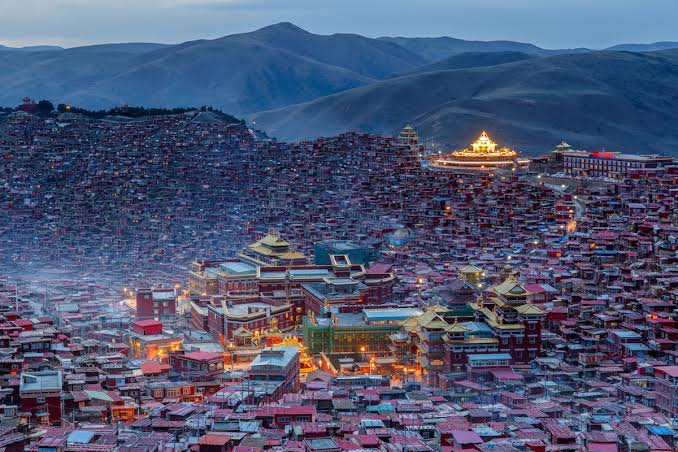
Prefecture, Kardze, TAP and Larung Gar, Serthar, Sichuan, are sealed
off or are under intense surveillance.
Individually and collectively, people around the world have
denounced China’s actions and attempted to intervene. Hundreds of
Chinese intellectuals have boldly signed an open letter condemning
Beijing’s response to the crisis. The UN High Commissioner for Human
Rights requested – and was denied – urgent permission to visit Tibet.
The European Parliament and the US Congress moved quickly to pass
resolutions calling on the Chinese government to show restraint and to
engage directly with His Holiness to find solutions for the underlying
causes of the problems in Tibet. Beijing has heard this same message
from heads of state and eminent persons around the globe.
We continue to ask that the international community to press
for immediate remedies for the suffering of the Tibetan people, the
most critical of which is access by journalists, diplomats and
humanitarian missions to Tibet.
We would like to recognize the important contribution of the
Tibetan language broadcast services at Voice of America and Radio Free
Asia, and Voice of Tibet, which have served as a critical line of
communication in and out of Tibet.
We urgently ask the international community — especially those
governments involved in rule-of-law programs with China – to insist
that the legal cases of Tibetans detained, who are all political
prisoners, as a result of the current crisis are considered according
to international standards of due process, and that they be treated
humanely.
We welcomed the reminder yesterday in a State Department
statement that “the intentional withholding of necessary medical
treatment for political reasons is a serious violation of human
rights.”
Chinese Missteps And Tibetan Efforts To Engage
It is
difficult to watch events unfolding in Tibet. I have long warned that
such a crisis could be provoked by Chinese policies – such as
authorizing the Communist Party to recognize reincarnate lamas — or by
unique actions Beijing has taken — such as the abduction of the young
Panchen Lama. Friends of China knowledgeable about Tibet have cautioned
that moving progressively harshly to constrain the Tibetan Buddhist
identity while creating circumstances that facilitate the movement of
hundreds of thousands of Chinese up and onto the Tibetan plateau would
heighten tensions.
Beijing must now reverse course. Chinese leaders must look to
the underlying causes of the problems, conduct whatever housekeeping
may be necessary in their personnel and policies, and reach out to His
Holiness and the Tibetan people in the spirit of inclusion and mutual
benefit so that together we can achieve peace in Tibet.
The situation in Tibet has of course created conditions that
make our engagement with Beijing difficult. Throughout the period of
crisis, I have been using existing channels of communication with
Chinese officials to convey our urgent concerns. What I have been
hearing back is nothing but the usual rhetoric, very similar to what
Chinese government spokespeople are saying publicly. On March 19, His
Holiness himself sent a letter to Chinese President Hu Jintao. We
continue to make efforts to begin a discussion on a peaceful way
forward. As a first step, His Holiness has offered to send a delegation
to Tibet that we believe could ease anxiety among Tibetans and
contribute to the restoration of calm. To say, as some media have
reported, that we are in discussions with the Chinese government is
unfortunately an overstatement of fact.
From the onset of this crisis, we have expressed our concern to
Beijing about whipping up nationalist sentiment against the Tibetan
people and His Holiness. The Chinese authorities are blaming the
so-called “Dalai clique” for inciting the demonstrations. Such a charge
is baseless.
We are asking for an international impartial investigation of the true causes, which have led to the recent crisis.
His Holiness has been deeply concerned by the deep division that
has been created in the minds of the Chinese and Tibetan people within
a period of several weeks, and will likely endure for the foreseeable
future. His Holiness is deeply saddened by this, particularly because
he has made so much effort to outreach to the Chinese people on a
personal level and because he knows that real stability depends on
tolerance, mutual understanding, and peaceful coexistence. His Holiness
the Dalai Lama has appealed for calm from both sides as early as March
14, 2008 specifically urging the Tibetan people not to resort violence.
I have the honor of submitting the full text of the appeal on March
14th.
On March 28, His Holiness issued a public appeal to the Chinese
people, reflective of his many initiatives to connect with them. Many
of these initiatives have been warmly received. We have increasingly
seen among many Chinese in and outside China, a new fascination with
the Tibetan culture, an emerging consideration for the protection of
Tibet’s fragile environment, and also a kind of renaissance of Tibetan
Buddhism in China. These developments had been very encouraging.
If possible, I would like to request that the full text of His
Holiness the Dalai Lama’s Appeal to the Chinese People be included as
part of the record of today’s hearing.
Overall Issue Of Tibet
On the overall issue of Tibet, the position of His Holiness
remains unchanged in key areas. First, his commitment to the Middle Way
is unwavering. He is not seeking independence for Tibet but, rather,
genuine, meaningful autonomy for the Tibetan people within the People’s
Republic of China. Chinese law makes considerable commitments to
regional national autonomy, so there exists already a legitimate
platform for discussion. However, the prevailing system lacks legal
assurances that provisions of autonomy are not given by the state on
the one hand and taken away by the state on the other hand. This is the
crux of the problem with autonomy and why His Holiness is seeking
“genuine” or “meaningful” autonomy.
Second, His Holiness is uncompromising in his commitment to
non-violence. This is not just the core principle of the Tibetan
struggle. It is the message he carries around the world in his public
teachings. As the spiritual leader of the Tibetan people, it defines
his very existence. Even at this time, His Holiness believes that the
principle of non-violence is so essential to the Tibetan identity that
he has said repeatedly that he would disassociate himself from a
Tibetan movement that departs from a non-violent path.
Third, His Holiness remains fully committed to a policy of
engagement with China to resolve the issue of Tibet. It is in this area
where I have the honor to serve His Holiness at chief negotiator with
the Chinese government, a process the Tibetans have been engaged in on
an on-and-off basis since 1979. After serious efforts by us — and the
urgings of many in the international community — we were able to
re-establish a formal dialogue with Beijing in 2002. We have had six
rounds of dialogue since that time, the most recent in June/July of
2007. Those discussions have served the purpose of providing the
opportunity to build relations and convey our positions.
The Tibetan position entails a single ask – that we are able to
maintain the distinctive Tibetan identity into the future. Central to
this ask is the political right of autonomy. According to the Chinese
government’s own analysis of its law on regional ethnic autonomy, the
Tibetan people are entitled to the full political right of autonomy;
full decision-making power in economic and social development
undertakings; freedom to inherit and develop our traditional culture
and to practice our religious belief; and freedom to administer,
protect and be the first to utilize our natural resources, and to
independently develop our educational and cultural undertakings.
The other central point is that such autonomy must be provided
to all Tibetans living in contiguous Tibetan areas, an area roughly
defined by the geography of the Tibetan plateau, governed by a single
administrative unit under a single unified policy.
The recent tragic events in Tibet clearly demonstrate the even
though Tibetans have been divided among different provincial
administrations, they remain unified by their identity and their
aspirations. A piecemeal solution for the future of Tibet that takes
into account only the Tibetans in the TAR would not resolve the Tibet
problem. This has been tried in the past and has failed.
A Way Forward
In the 4th and 5th rounds of our dialogue with the Chinese, we
had expansive discussions around these issues, and both sides came away
with a very clear understanding and a sense that we were moving
forward. However, during the 6th round, we saw a hardening of the
Chinese position.
We cannot pretend that if our next round of discussions were
held now, it would be business as usual given the scale of the
crackdown and the fact that protests are continuing almost daily. The
present emergency situation must be resolved before we can really talk
about the future. However, if both sides are determined to find a
solution through genuine engagement – and it is my duty today to assure
you that His Holiness remains fully committed to that effort – then, we
will find a way. However, the true sentiments of the Tibetan people,
evident in the current crisis, have given both sides the clear mandate
that when we next talk, we can waste no time; rather, we must deal with
the real issues and produce results so that genuine peace is at last
restored in Tibet.
Therefore, we ask of those advising both sides to continue with
the dialogue process that they press the Chinese side to provide
assurances of their commitment to real and concrete progress.
We believe that China’s way forward in Tibet envisages two
possible scenarios. The more hopeful scenario is that Chinese leaders
realize that, in spite of some constructive efforts to improve the
lives of the Tibetan people, many Tibetans are profoundly unhappy —
and some have even shown their unhappiness at the cost of their own
lives. In this scenario, a sensible approach would be for Beijing to
review its policy on Tibet and commit to constructive dialogue with His
Holiness or his representatives whereby genuine and meaningful autonomy
for Tibetans and unity and stability for the PRC are assured.
The second scenario reflects the more rigid Chinese attitude.
In this scenario the Chinese government continues to implement
repressive measures and looks forward to a final solution where Tibet’s
unique identity is subsumed and entirely assimilated into China. We
might suspect that such a policy – which would include the
intensification of the anti-Dalai Lama campaign and in-migration of
Chinese settlers – would further develop after the Beijing Olympics in
August. In either scenario we see a strong role for the international
community.
On the humanitarian side, we are asking that governments engage
international human rights mechanisms – such as UN human rights
rapporteurs and private NGOs, like the International Committee of the
Red Cross and Doctors without Borders — in coordinated efforts to
press the Chinese government for access to Tibet so that the immediate
suffering of the Tibetan people can be addressed.
On the political and diplomatic side, we are respectfully
requesting of all our international government contacts that they meet
with Chinese officials in discussions on remedies for the underlying
issues that have contributed to the current crisis, and urge dialogue.
We have been encouraged by the active engagement of many
countries, including the Germans, Australians, British and,
particularly, the French in this regard. Even, India and Japan, who
have sensitive relations with China, have felt the need to speak out by
calling for restraint and dialogue. Just last week, the Japanese Prime
Minister challenged the Chinese Foreign Minister’s attempt to
characterize Tibet as a domestic issue, saying that China had to “face
the fact that Tibet had become an international problem.”
In stark contrast, the government of Nepal, which shares a long
history with Tibet, has behaved in a most reprehensible manner,
cracking down on Tibetans who live in Nepal and have been protesting in
solidarity with the brothers and sisters inside Tibet. Nepal is acting
almost as an extension of the brutal regime on the other side of the
Himalayas, a reaction that has many Nepalese deeply disturbed and
ashamed for their government.
I would like to close my testimony by mentioning the recent
passing of Julia Taft who served the United States in many capacities,
including as the second Special Coordinator for Tibetan Issues,
appointed by Secretary of State Madeleine Albright. Julia was an
extraordinary friend of Tibet and would have been a powerful advocate
in this time of crisis.
Thank you.