
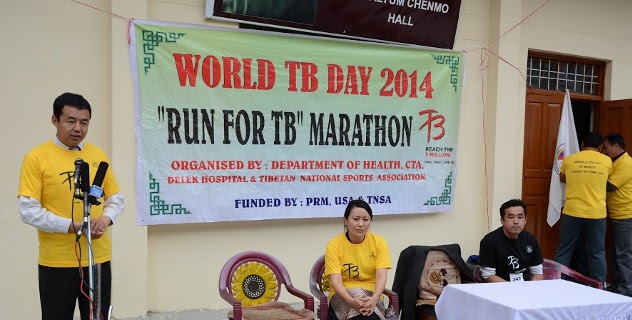
March 24 commemorates the day in 1882 when Dr Robert Koch discovered the cause of Tuberculosis (TB), the tuberculosis bacillus. Since then, 24th March is observed every year as World TB Day worldwide. Tuberculosis is a preventable disease which can be prevented and cured easily by prompt and proper diagnosis and treatment.
The theme of this year’s World Tuberculosis Day, 2014 is “Reach the three million: A TB test, treatment and cure for all”. It has been highlighted in WHO 2013 Global TB Report that diagnosis of TB is missed for at least three million people suffering from TB. Even though TB is very much curable, our current efforts to identify, treat and cure people with TB are not sufficient. Most of these three million “missed” people live in the developing countries in some of the poorest communities, and they also include refugees. In 2013, we have seen one of the highest numbers of refugees and internally displaced people amounting to 45.2 million worldwide according to UNHCR. There has long been a significant connection between refugees and TB disease, and as many as half of the refugees of the world may be infected with TB.
The difficult living conditions for Tibetan refugees cause many to be at risk for TB. The prevalence of TB was around 30% in the Tibetan refugee population in the early years of exile in the 1960s. Although social conditions have greatly improved over the years, TB continues to be a high public health threat in the Tibetan refugee population, particularly drug resistant TB.
The Department of Health (DOH) has a TB control program which treats and gives care to Tibetans suffering from TB disease across various settlements in India through its wide network of health care centers. The program practice its assignments in conformity with the treatment guidelines laid down by the WHO and that of the host nation, India. The primary health centers serve as first referral centers for patients within the settlements and the hospitals provide basic diagnostic and treatment facilities. The DOH is fully committed and has continued to raise awareness and mobilize support from all aspects in this fight against TB in our community. The clinics and hospitals provide either free or subsidized TB drugs for both standard and multi-drug resistant TB regimens and nutritional supplement for the TB patients. TB diagnostic tests like culture and GeneXpert are done free of cost. Regular TB screening is done in the schools and the monasteries through active case finding for early detection and treatment. Over the years, the department’s TB Control Program has continued to make remarkable achievements in provision of TB treatment in our community.
This World Tuberculosis Day is a time to be positive in the fight against TB in the Tibetan community as well as the world at large. It is important for every Tibetan to be ‘TB aware’. We must take action to understand the disease and call for interventions to reach out and give treatment to the people who may have TB but who have not been diagnosed. The department, with its active TB screening programs, aims to screen and identify potential patients who are unaware of their TB status. Researches done in the past have made us more aware of the distribution and determinants of TB disease in our community. It is now the time to act to reduce the disease burden so that we can have a TB free community in the near future.
Dr. Tsering Wangchuk
Date: 24th March’2014