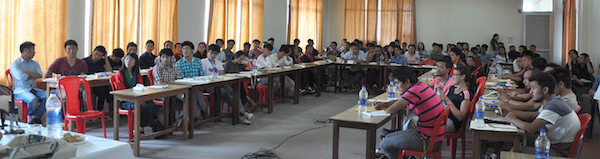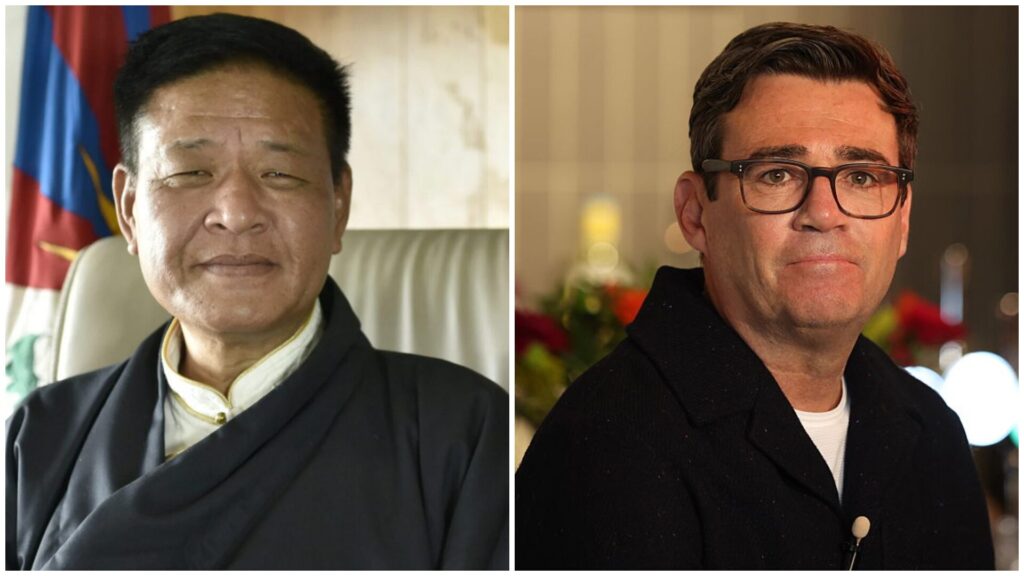

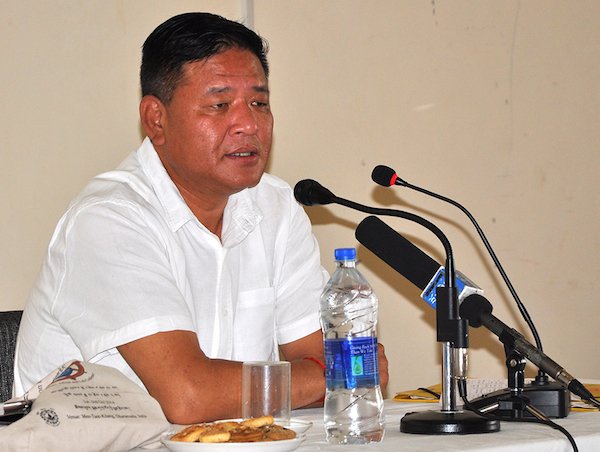
DHARAMSHALA: “The evolution of the democratic form of Tibetan Parliament solely owes its tribute to His Holiness the Dalai Lama,” Tibetan Parliament Speaker Penpa Tsering said on the second day of a six-day leadership training for students at Sarha. The training is organised by Department of education, Central Tibetan Administration.
“The democratic form of governance for Tibet had been a long-held aspiration of His Holiness the Dalai Lama from a tender age. It was during His Holiness the Dalai Lama’s visit to China and India in 1954-56 respectively that he witnessed the different forms of governments. It was then that he made up his mind to form a democratic government for Tibet,” he added.
Elucidating in detail about the Tibetan Parliament, Speaker said that the democratisation of Tibetan administration has undergone several steps to evolve itself to its current status.
Categorising the evolution of Tibetan democratic form of administration into three stages; from 1960-1990, 1991-2001 and from 2001-2011, the speaker said that prior to China’s occupation of Tibet, Tibetans had little or no experience of democratic governance.
After the establishment of Tibetan Government in Exile in February 1960, His Holiness the Dalai Lama for the first time outlined a detailed program designed to introduce the practice of democratization. His Holiness advised setting up an elected body with three exile representatives each from the three provinces and one each from the four religious schools of Tibetan Buddhism-13 representatives were elected and designated as “The Commission of Tibetan People’s Deputies (CTPD)” they took oath on 2 September 1960 which later celebrated as ‘Tibetan Democracy Day’.
“Around 1990s, as per the vision of bringing the system closer to the core of democracy, His Holiness the Dalai Lama convened a special meeting announcing further democratic reforms including election of an interim Kashag (Cabinet members) and expanded the strength of the Tibetan Parliament from 13 to 46.,” he said, explaining the composition of the members of the Tibetan Parliament.
“The Tibetan Parliament is currently comprised of 45 members; ten representatives each from the three traditional provinces, 2 each from the five religious schools, 2 each from Tibetan communities in Europe and North America and 1 from Tibetans in Australasia,” he said.
The Tibetan Parliament in Exile, on the advice of His Holiness the Dalai Lama in 2001, suggested direct election of Chief minister (Kalon Tripa)- the highest executive authority) and subsequently Professor Samdhong Rinpoche was elected the Kalon Tripa by the people of Tibet. The Kalon Tripa then nominates other minister (Kalons/Cabinet members) and seek the approval of the parliamentarians for their appointment.
In 2011, in a historic development in the Tibetan democratic polity, His Holiness the Dalai Lama devolved all his political authority to an elected Tibetan leadership. In August 2011, Dr. Lobsang Sangay became the first political leader after the devolution of His Holiness the Dalai Lama’s political authority.
The 6-day leadership training orgainsed by the education department is an effort by the Central Tibetan Administration to foster leadership qualities among students. Other topics that will be covered during the training include Middle Way Approach, Sino-Tibetan relations, Human Rights and Environmental exploitation in Tibet, Dolgyal, Sherig scholarship etc.