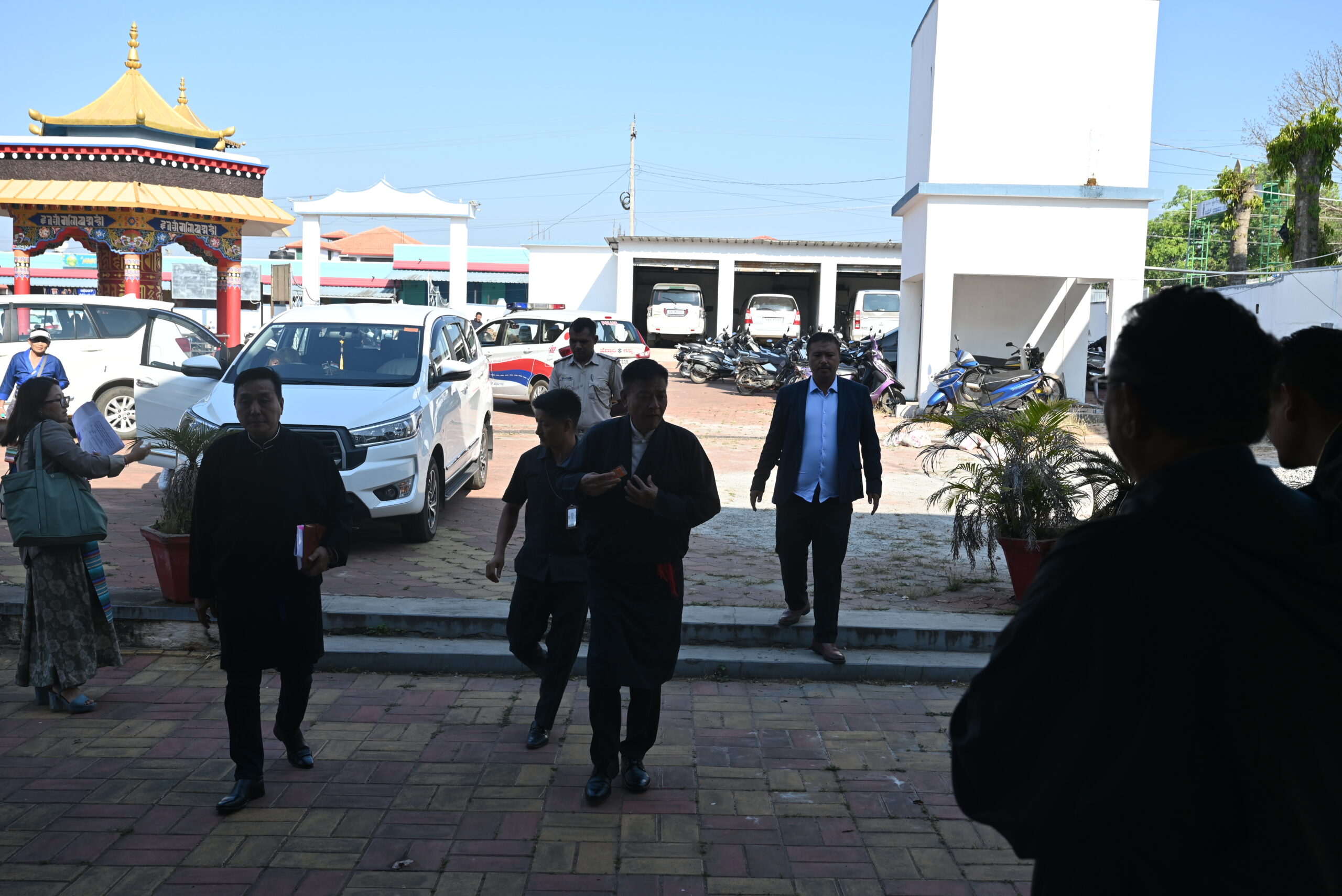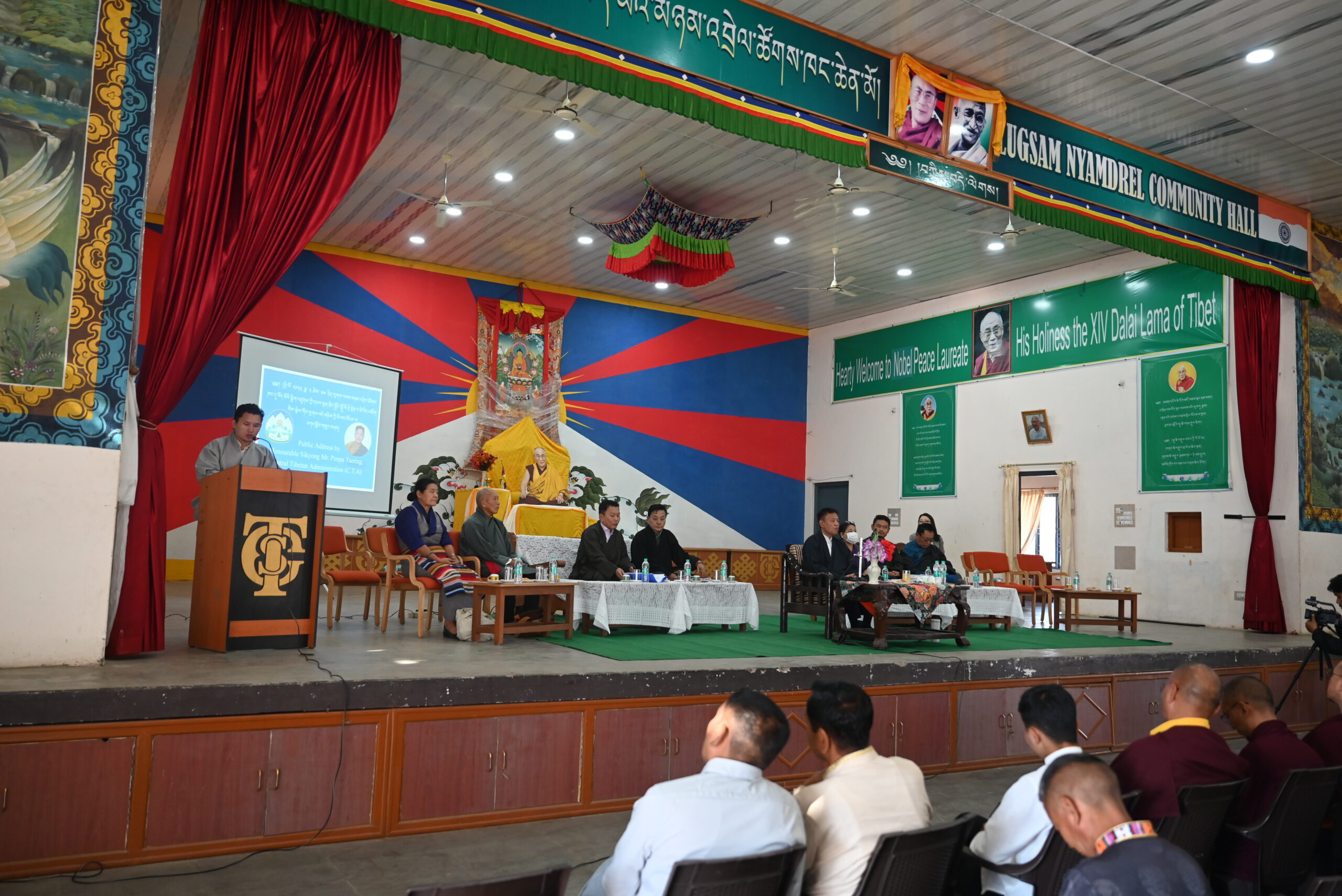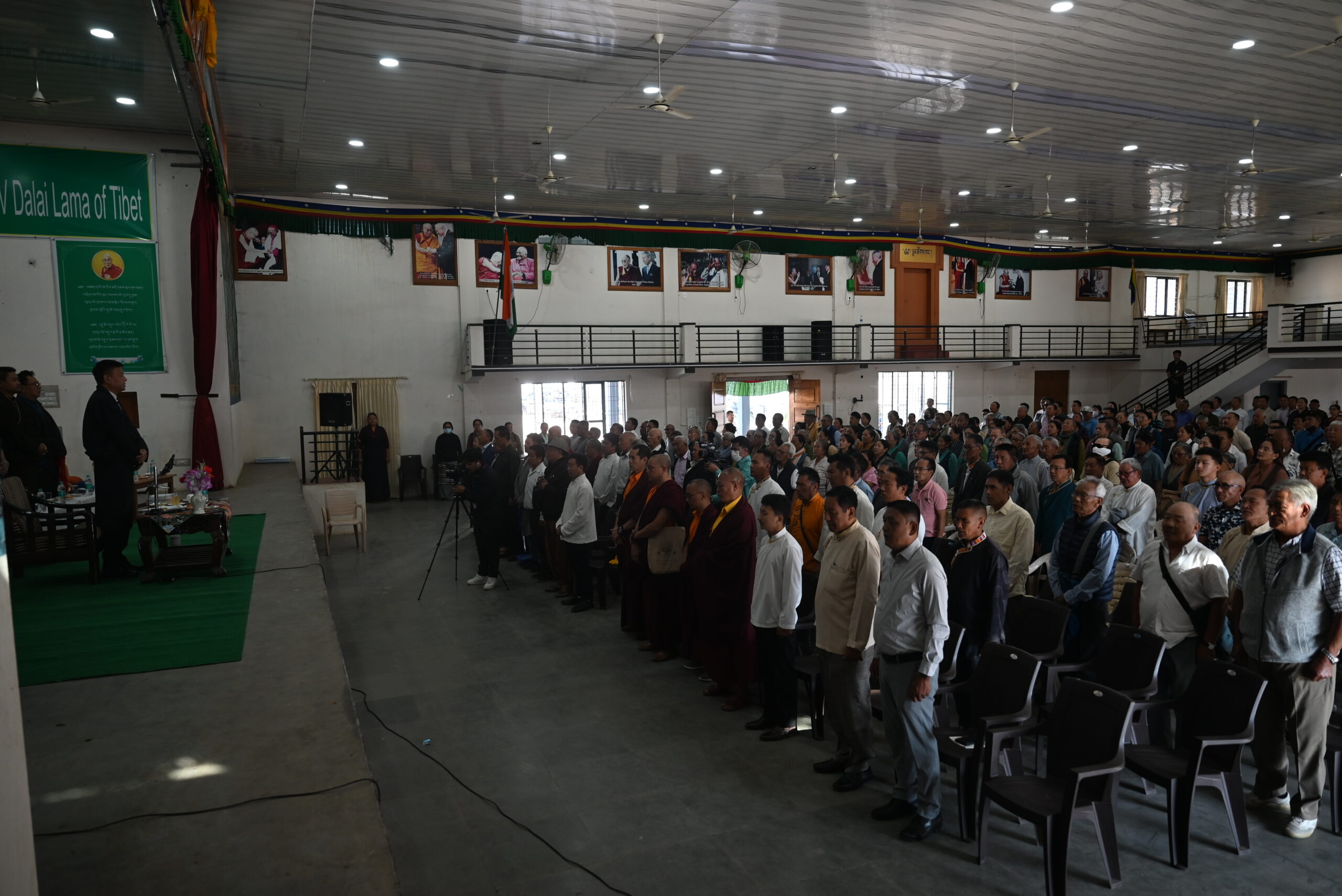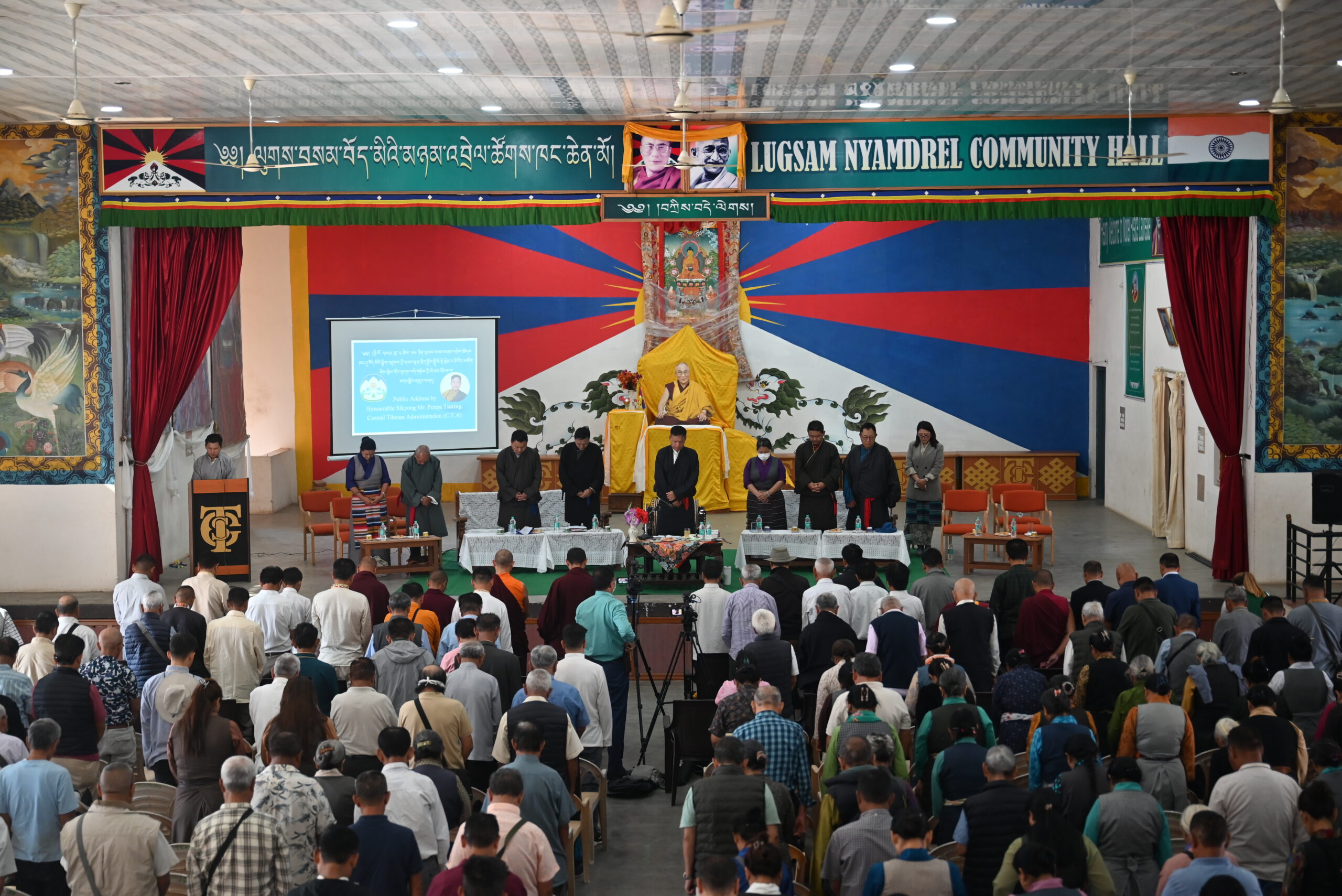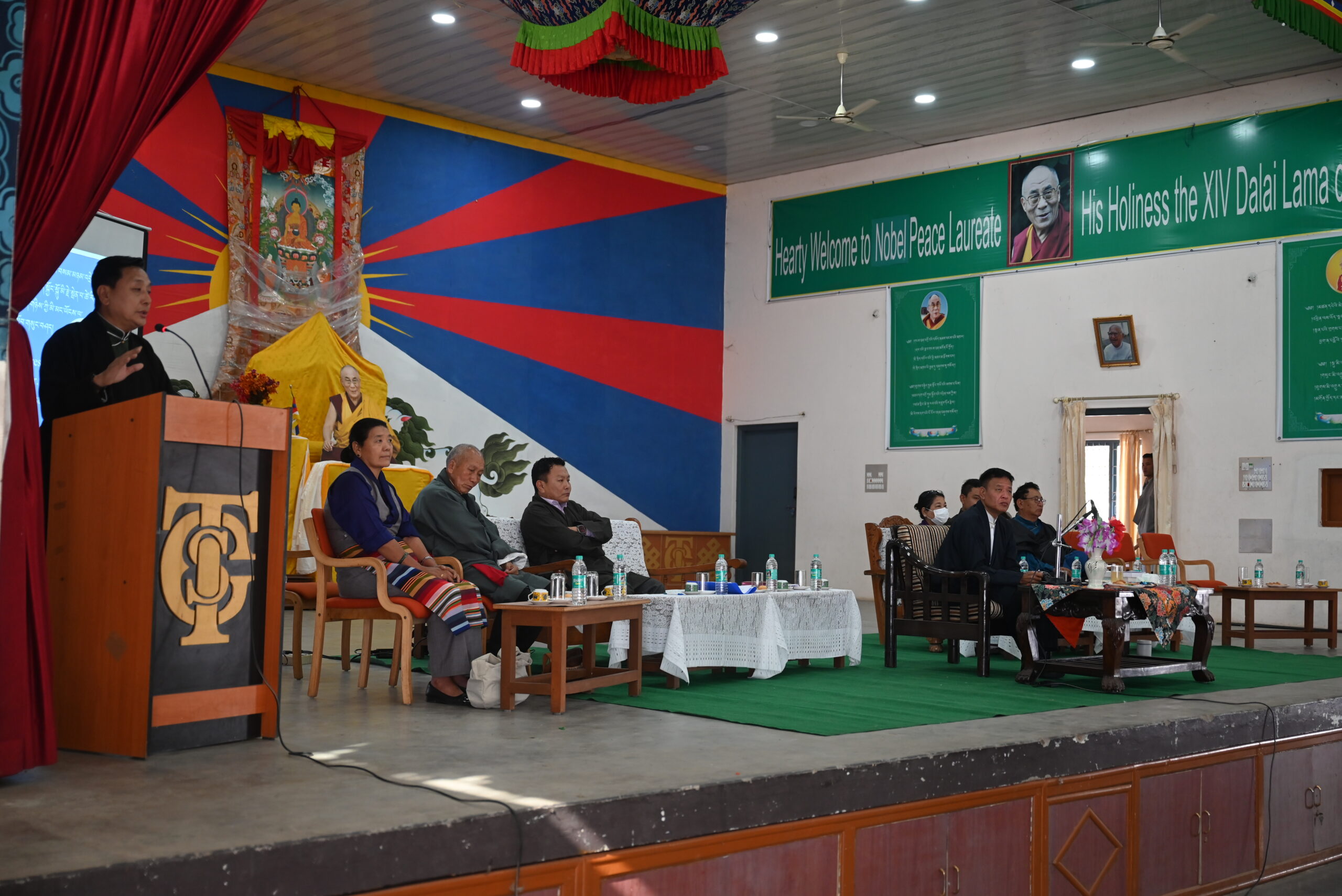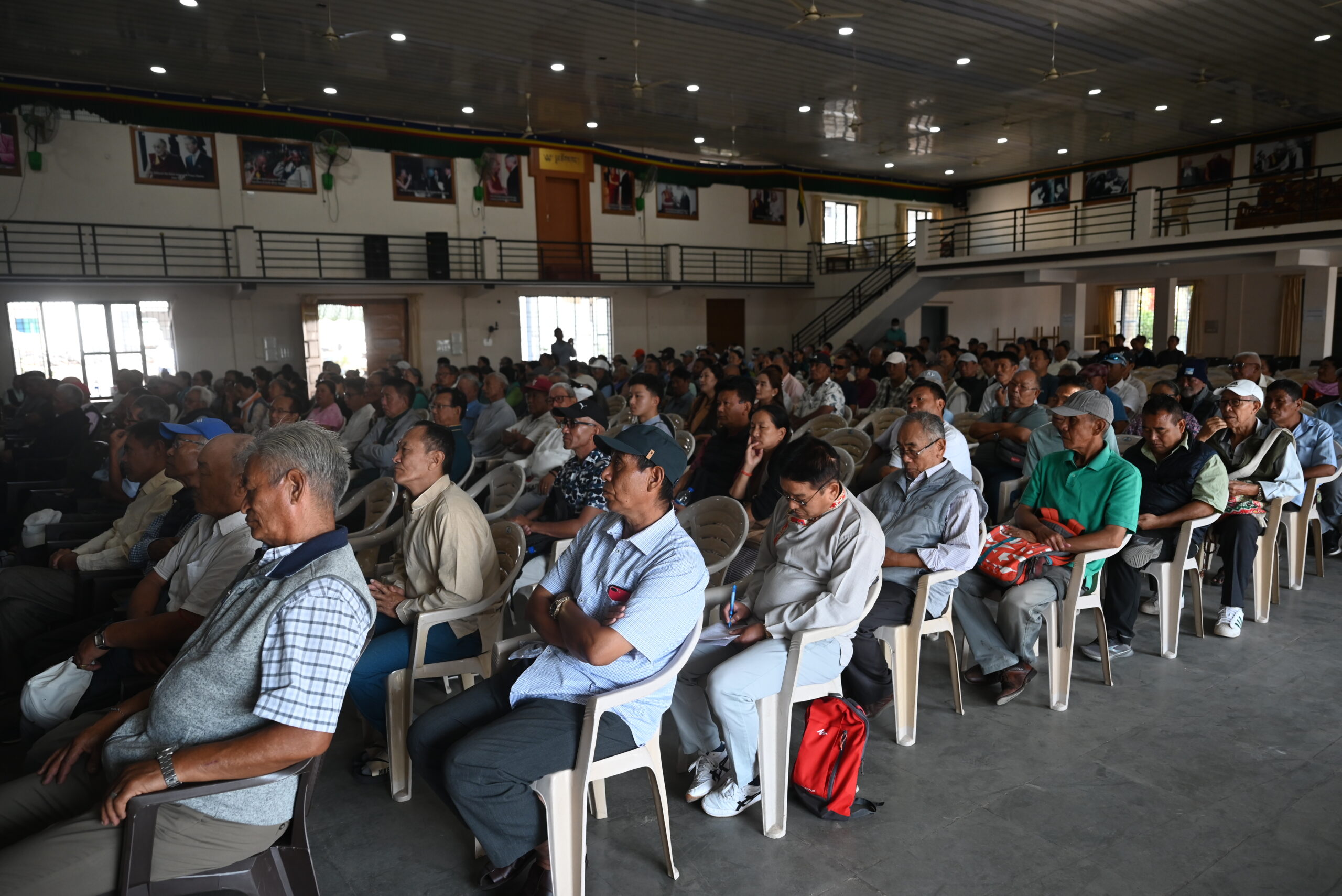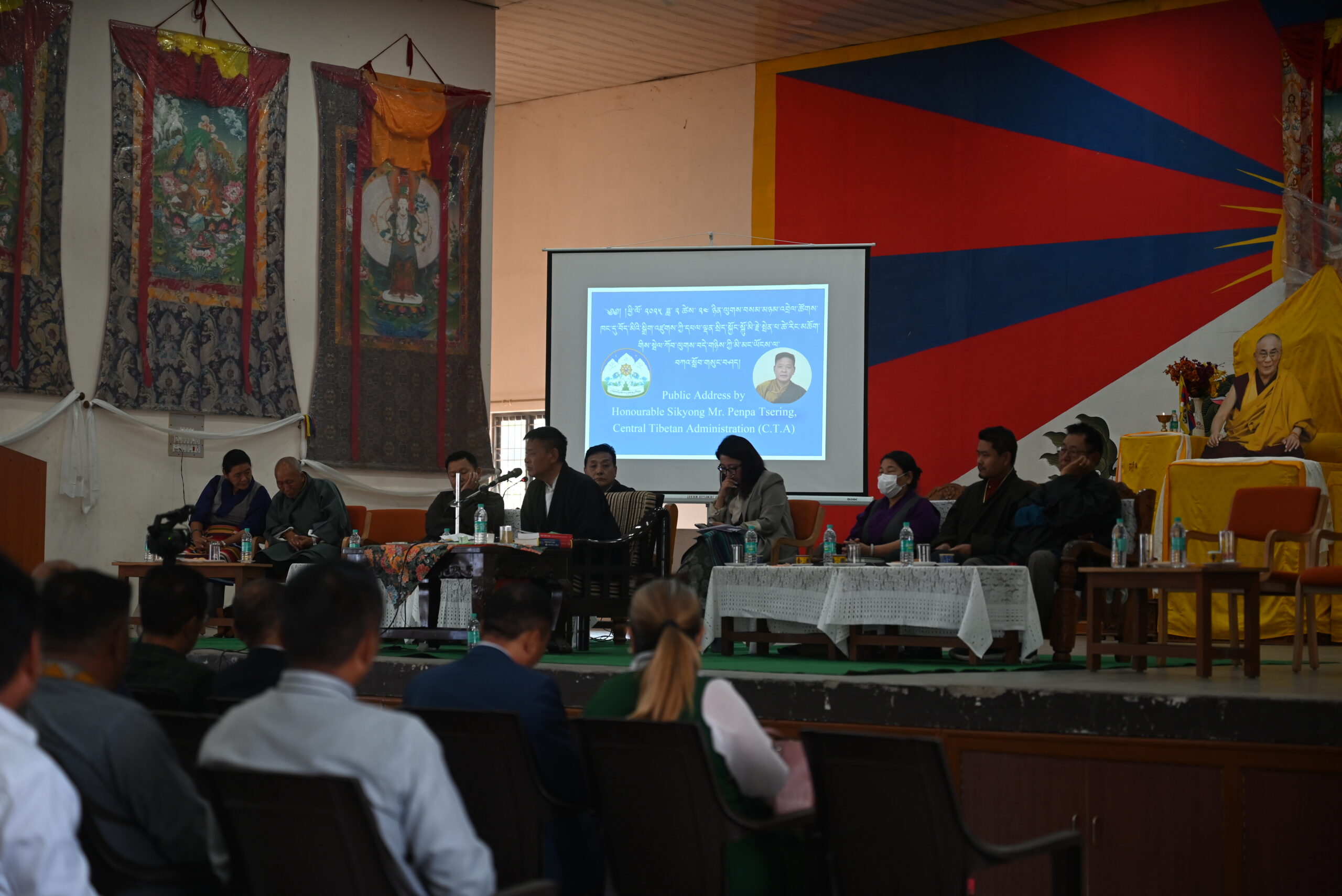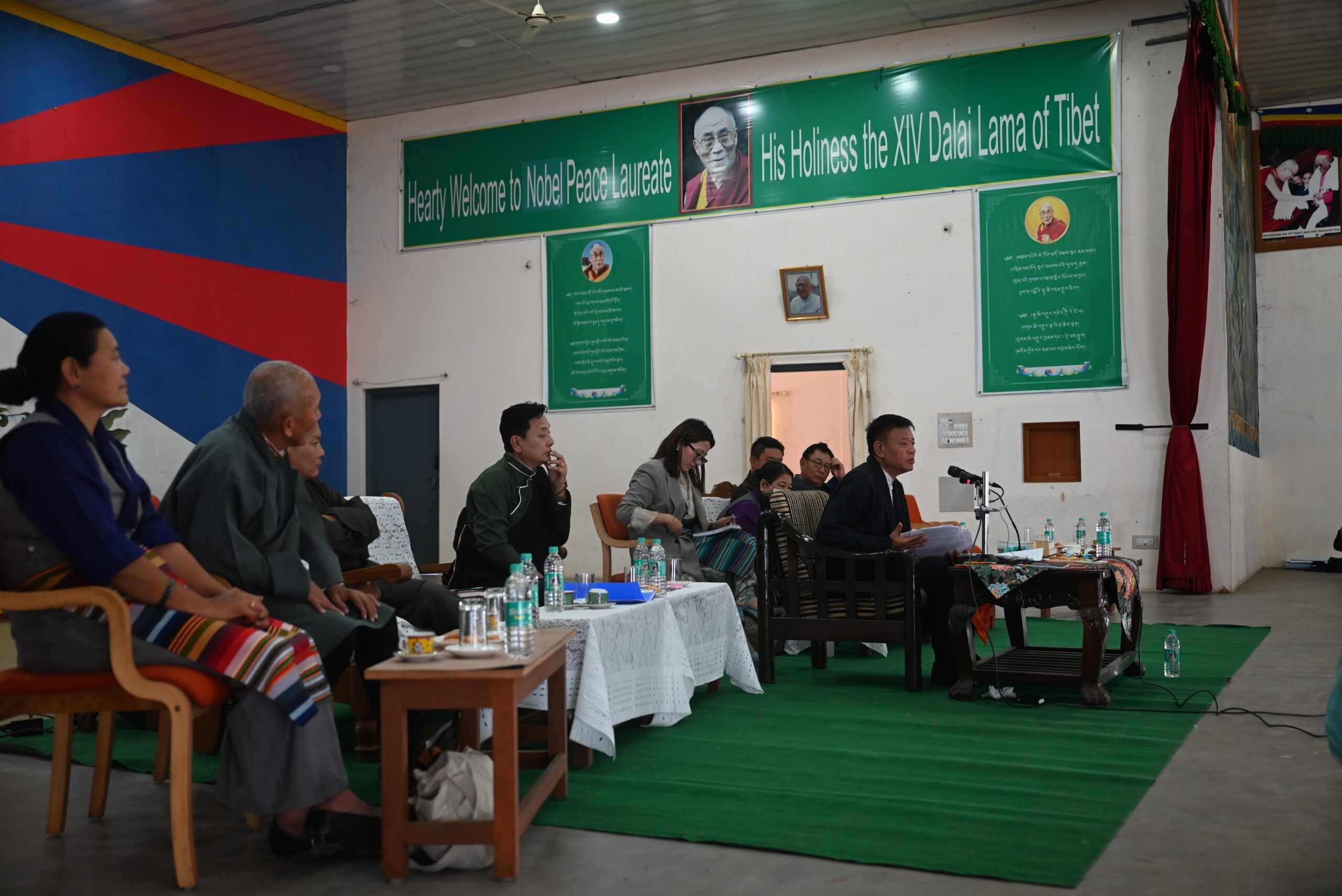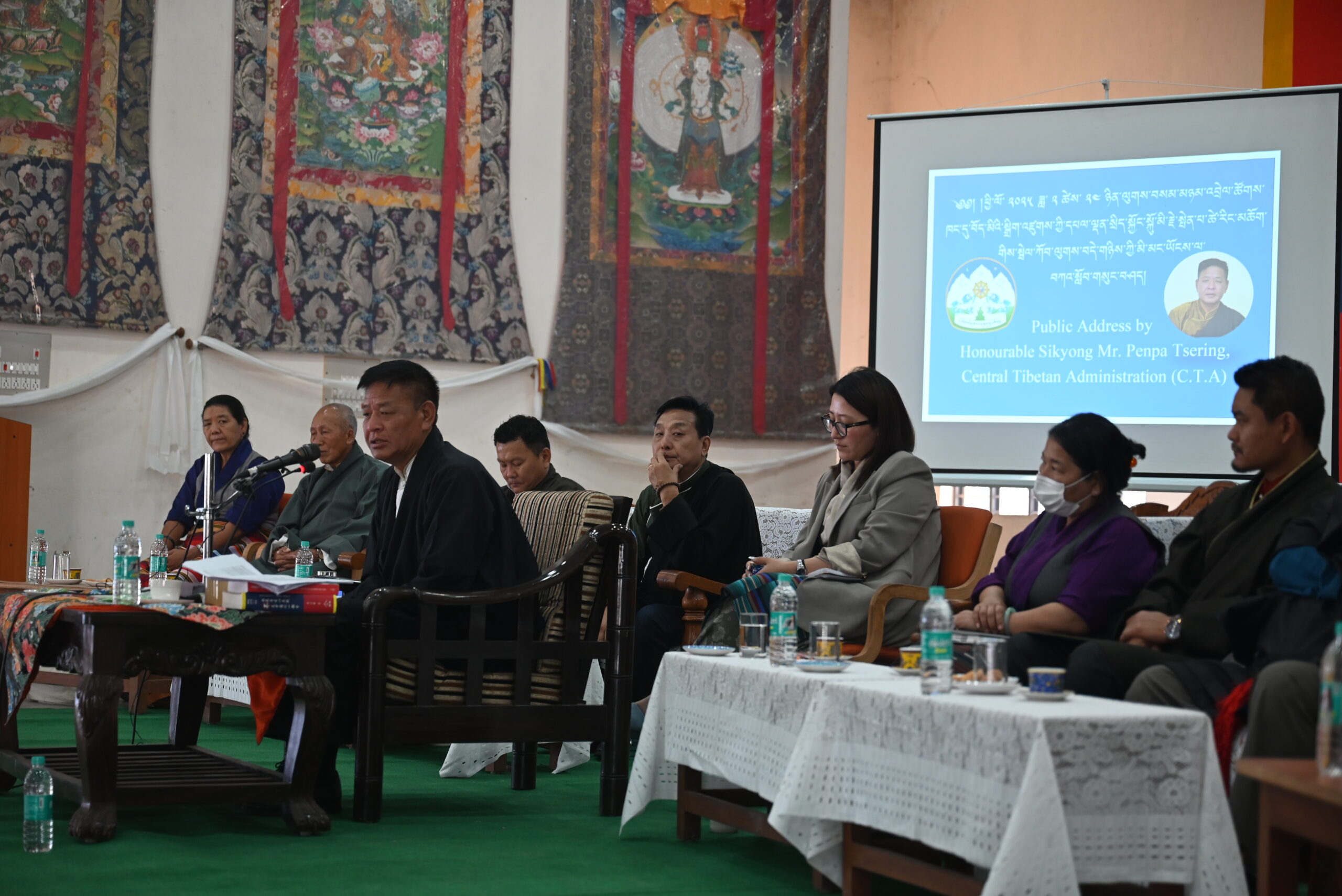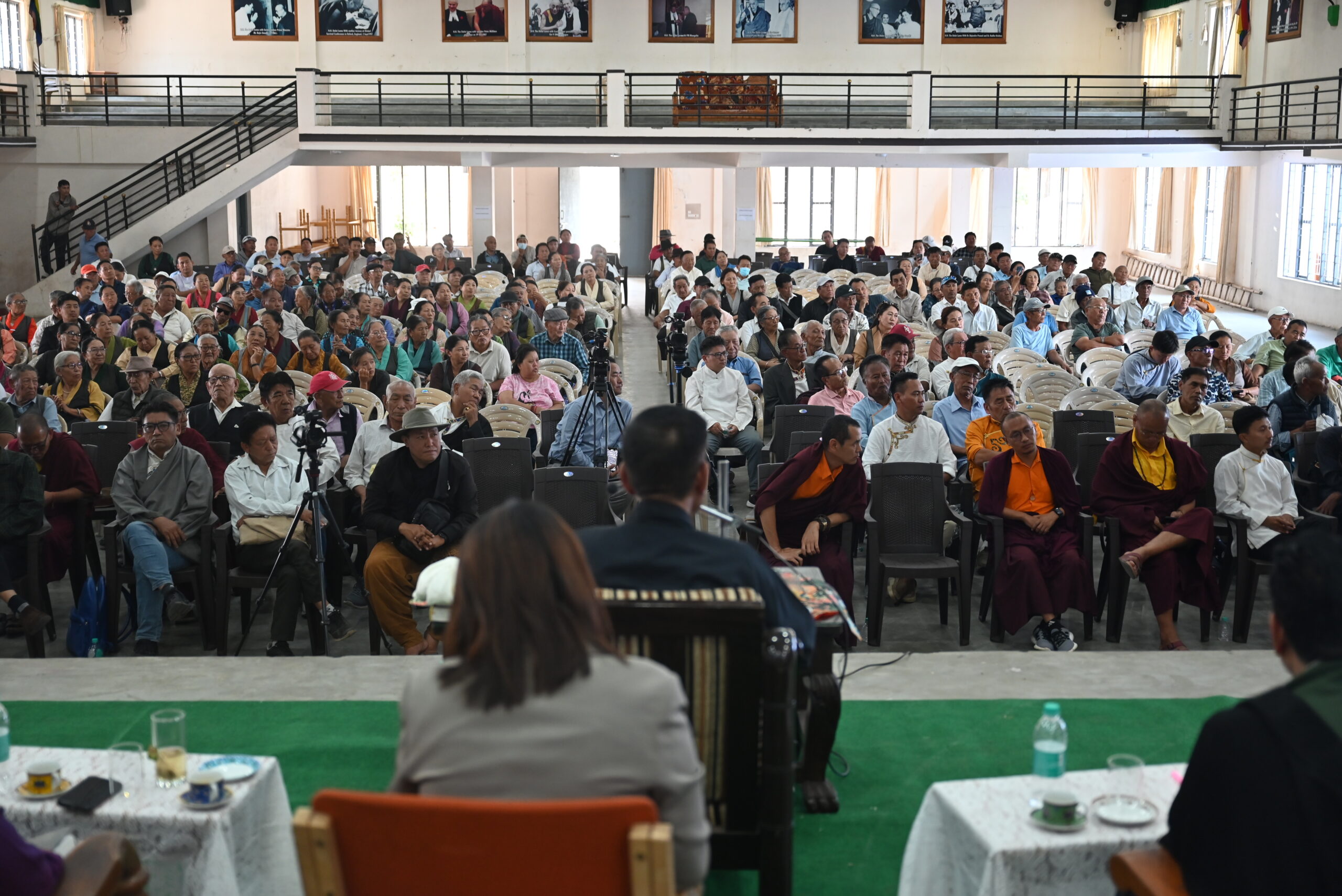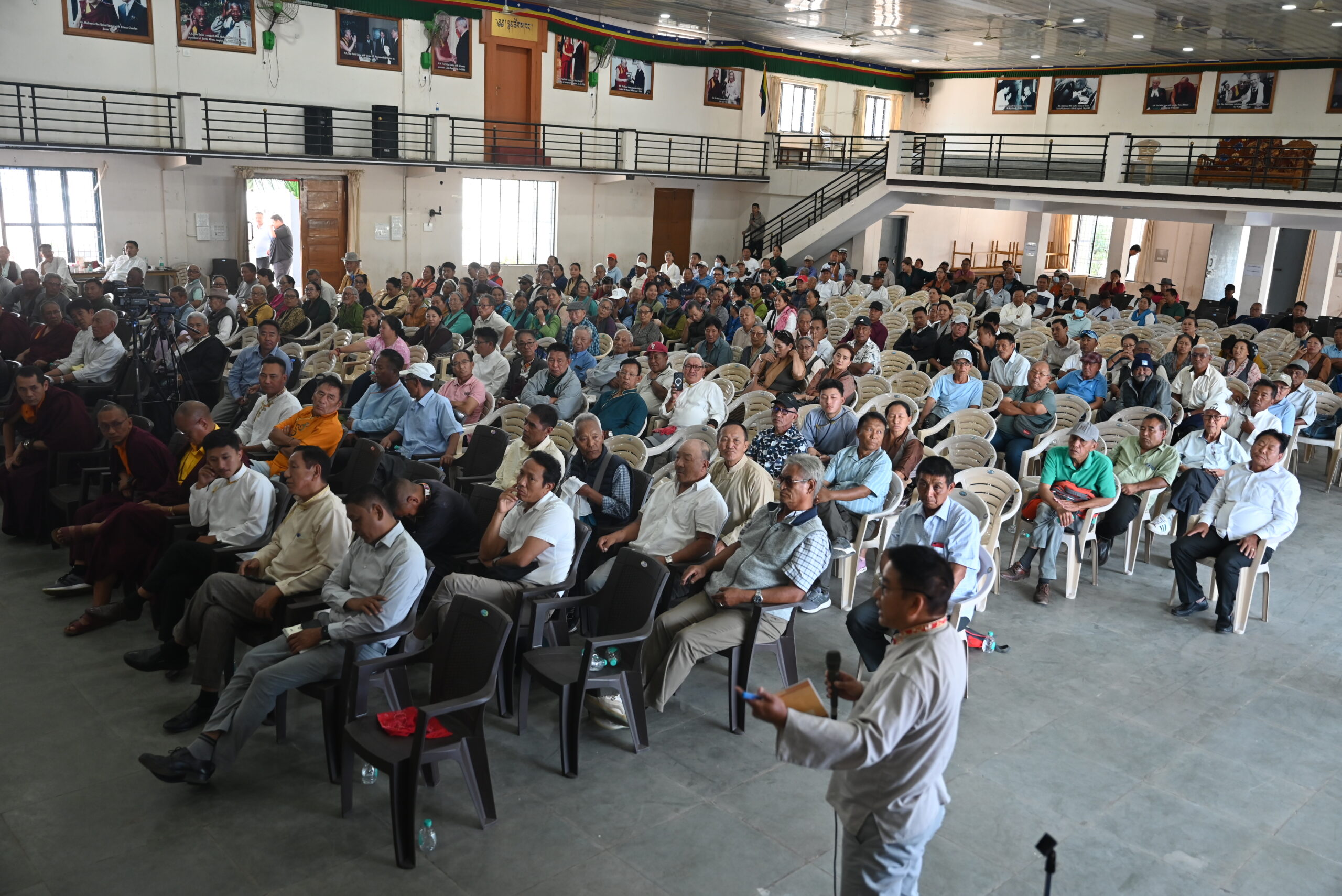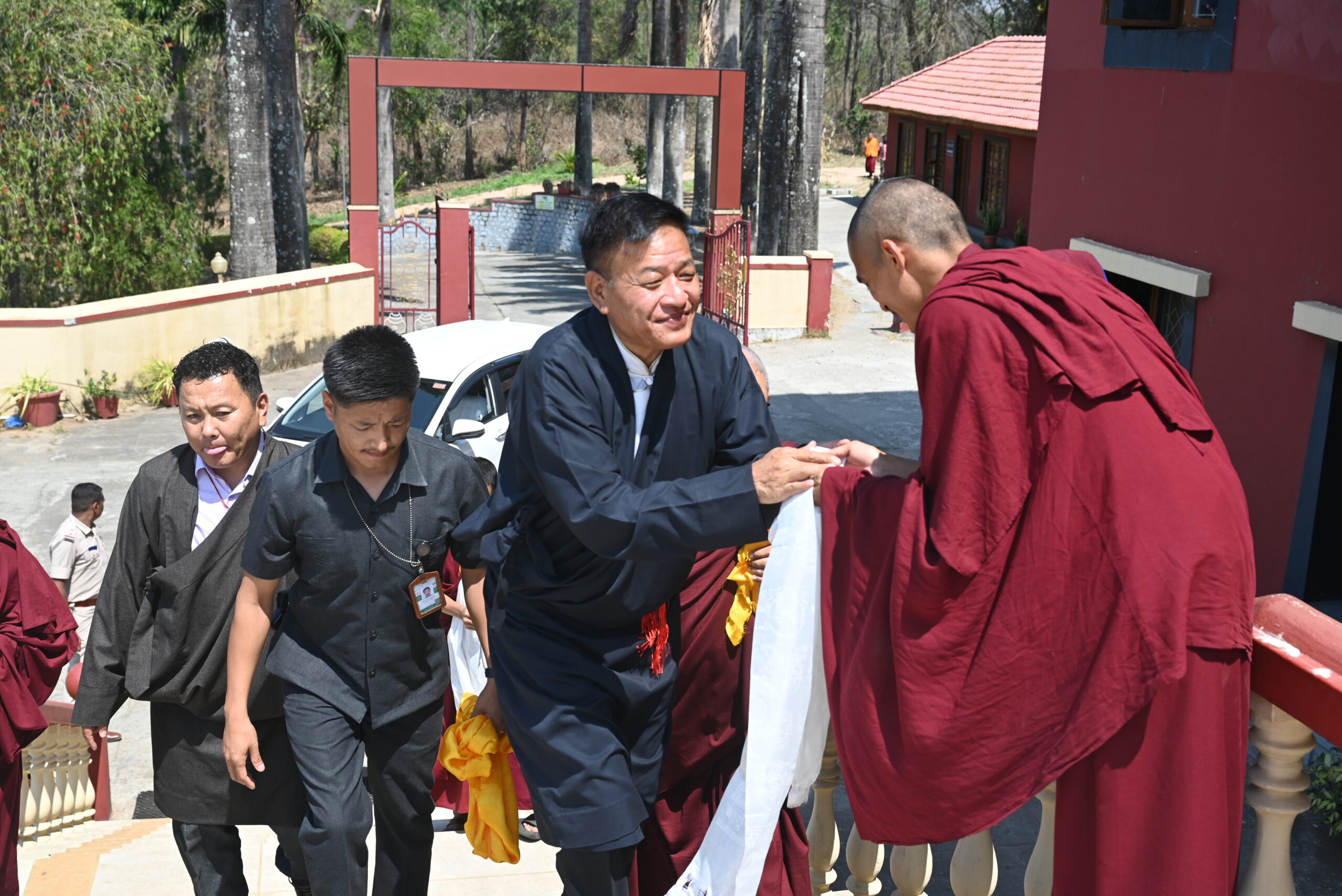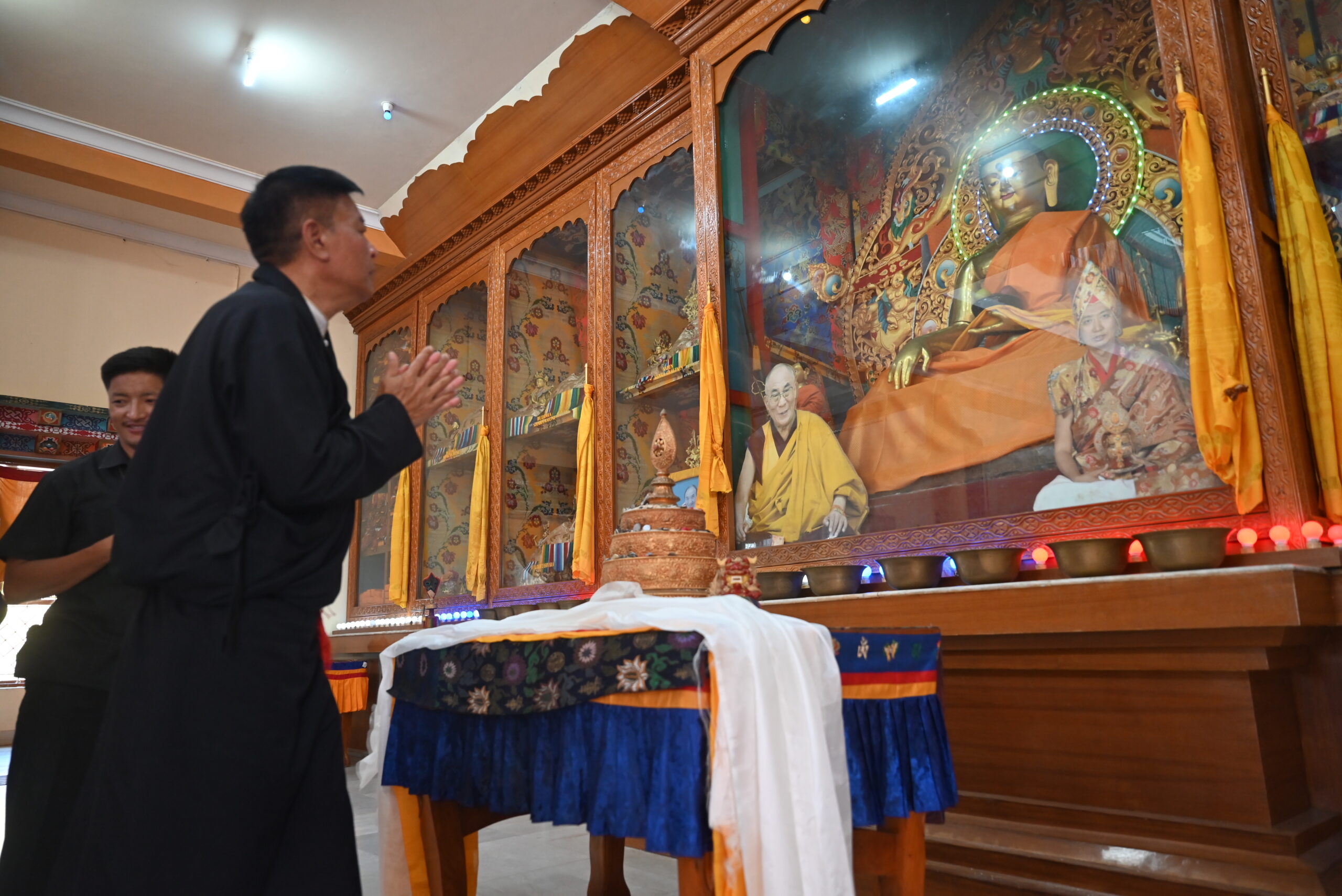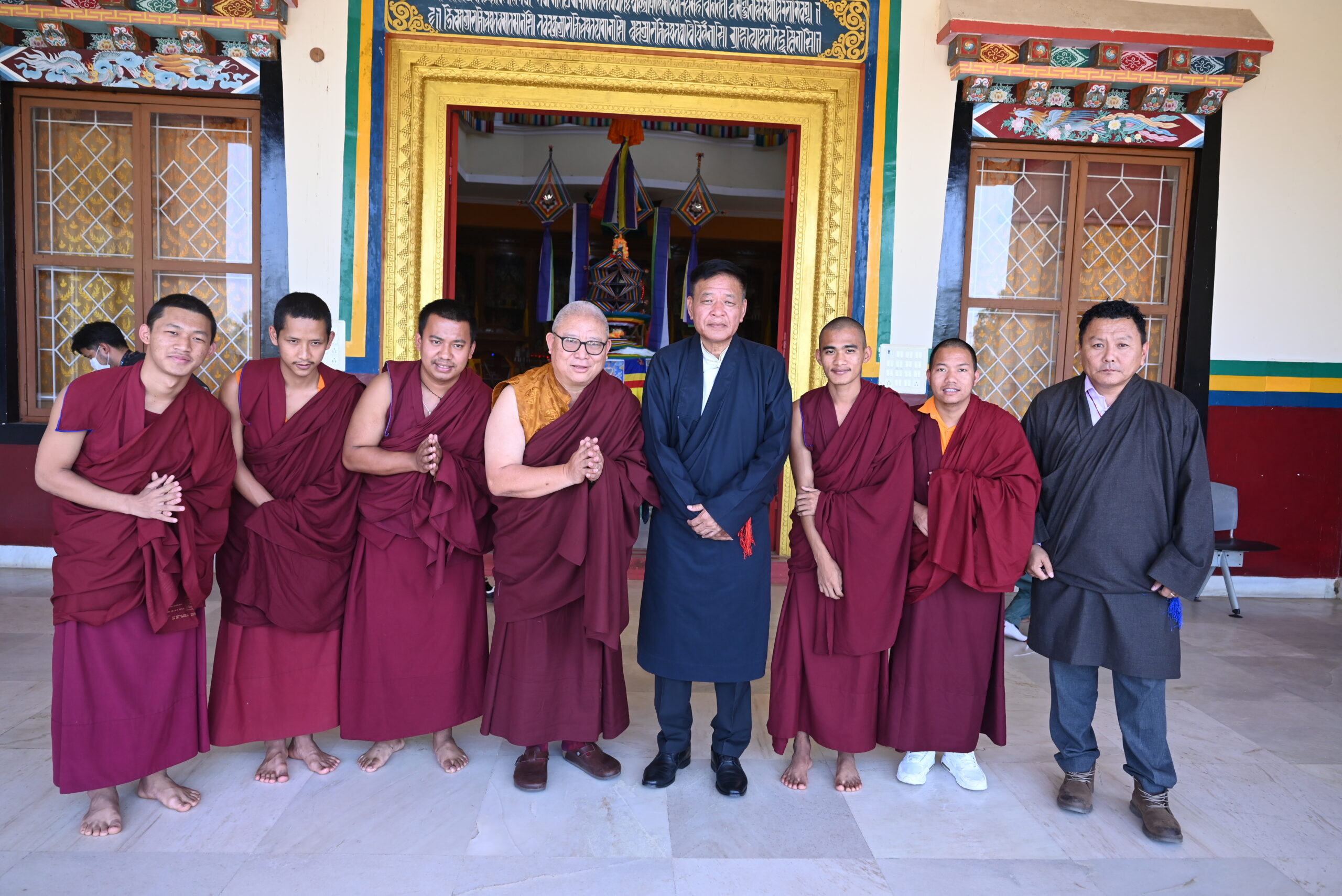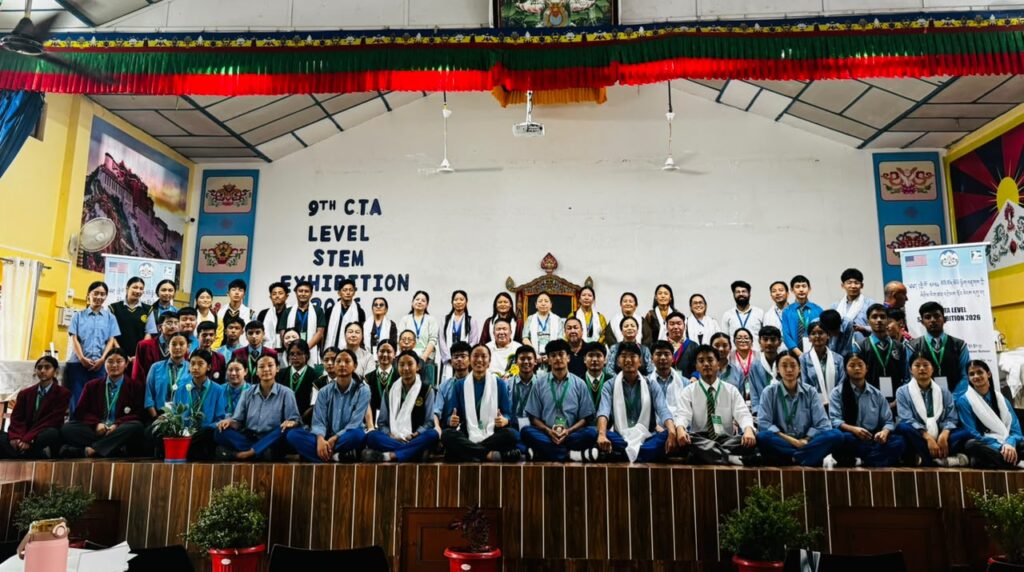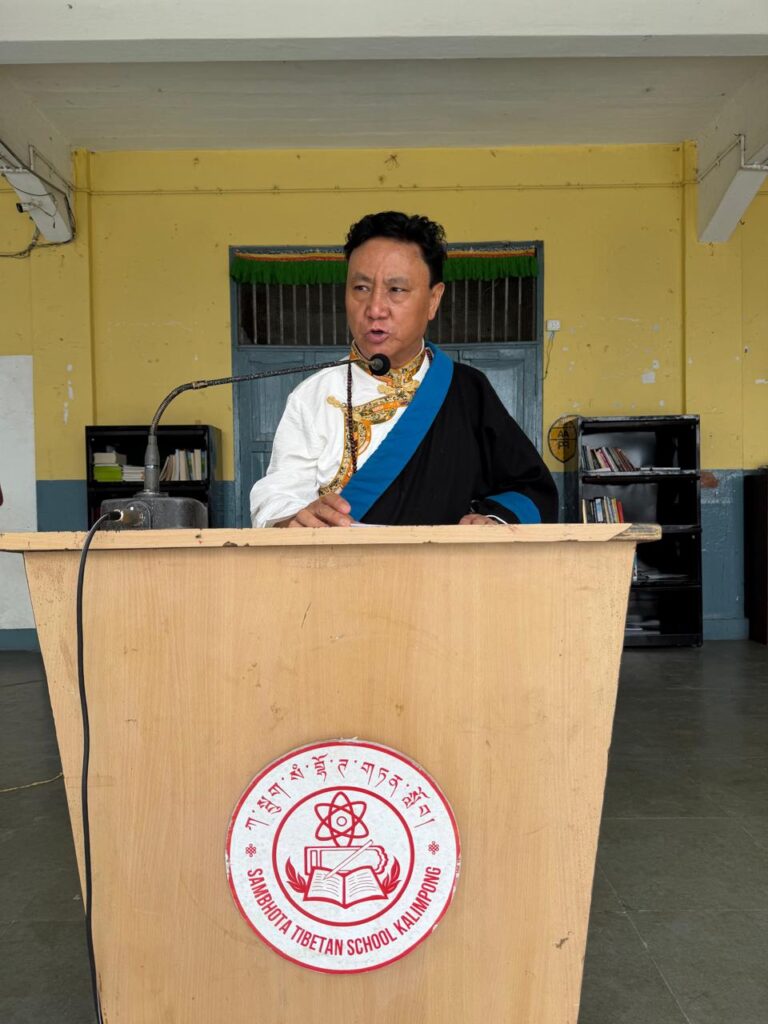


Bylakuppe: After successfully completing his official visits to key institutions and settlement camps in Lugsum Samdupling and Dickey Larsoe Tibetan settlements in Bylakuppe, Sikyong Penpa Tsering gathered with the general public to discuss the administrative priorities and ongoing efforts of the 16th Kashag. He also reaffirmed the Central Tibetan Administration’s (CTA) commitment to addressing the evolving needs of the Tibetan exile community.
Present at the event were Settlement Officer Gelek Jungney of Lugsum Samdupling and Settlement Officer Chime Dorjee of Dekyi Larsoe. The gathering was also attended by local Tibetan leaders, including representatives of the Local Tibetan Freedom Movement, Tibetan Cooperative Societies, monastery administrators, camp leaders, and representatives from various NGOs.
In his address, Sikyong emphasised the CTA’s ongoing efforts to strengthen the Tibetan settlements through enhanced governance, education, and welfare initiatives. He stressed the importance of unity and collective responsibility in safeguarding Tibetan identity and advancing the Tibetan cause.
“We Tibetans are among the most unique refugee communities in India, thanks to the blessings of His Holiness the 14th Dalai Lama and the unwavering support of the Indian government,” Sikyong remarked. “Many foreigners and other refugee groups are astounded by the strength, resilience, and well-organised structure of the Tibetan administration and community. We should take immense pride in this and recognise that our unity is our greatest strength.”
One of the key initiatives of the 16th Kashag that Sikyong highlighted was the ongoing archiving through digitisation of records. “If the digitisation process is successfully completed, it will stand as one of the major achievements of the 16th Kashag,” he stated. “Just as the Kangyur and Tengyur texts are being digitised for global accessibility, the administrative records of the CTA will be preserved and made more efficient through this initiative.”
Sikyong also announced plans to make Buddhist teachings, scriptures, and texts available in several languages, including Assamese, Bhojpuri, and Hindi, to ensure that the profound wisdom of Tibetan Buddhism reaches a broader audience.
Additionally, Sikyong emphasised the CTA’s ongoing efforts to advocate for the Middle Way Approach as the official policy for seeking a peaceful resolution to the Sino-Tibetan conflict. He also provided updates on CTA’s global engagements and its continued advocacy for Tibet. “Tibetans should take pride in their identity only when they have a full understanding of Tibet’s history and current situation. Without this knowledge, our struggle for Tibet becomes directionless. We must always remember that we are in exile because of China’s illegal occupation of Tibet.”
Before concluding, Sikyong Penpa Tsering underscored the significance of unity among Tibetans and warned against the dangers of misinformation in the digital age. “Rather than spreading baseless rumours, Tibetans should focus on fostering truth and unity. In this 21st century, many people believe whatever they see on social media, which is why self-study and fact-checking are crucial before sharing any information,” he advised.
In his interaction with the public during Q&A session, Sikyong addressed various concerns, including sustainable livelihood opportunities, education policies, and settlement welfare. He encouraged community members, particularly younger generations, to take active role in preserving Tibetan culture and contributing to the broader Tibet movement. The discussion further covered issues related to youth engagement, employment opportunities, the long-term sustainability of Tibetan settlements, challenges faced by farmers, and strategies for enhancing agricultural productivity. He also addressed concerns about agricultural land disputes among Tibetan settlers, urging for constructive dialogue and resolution.