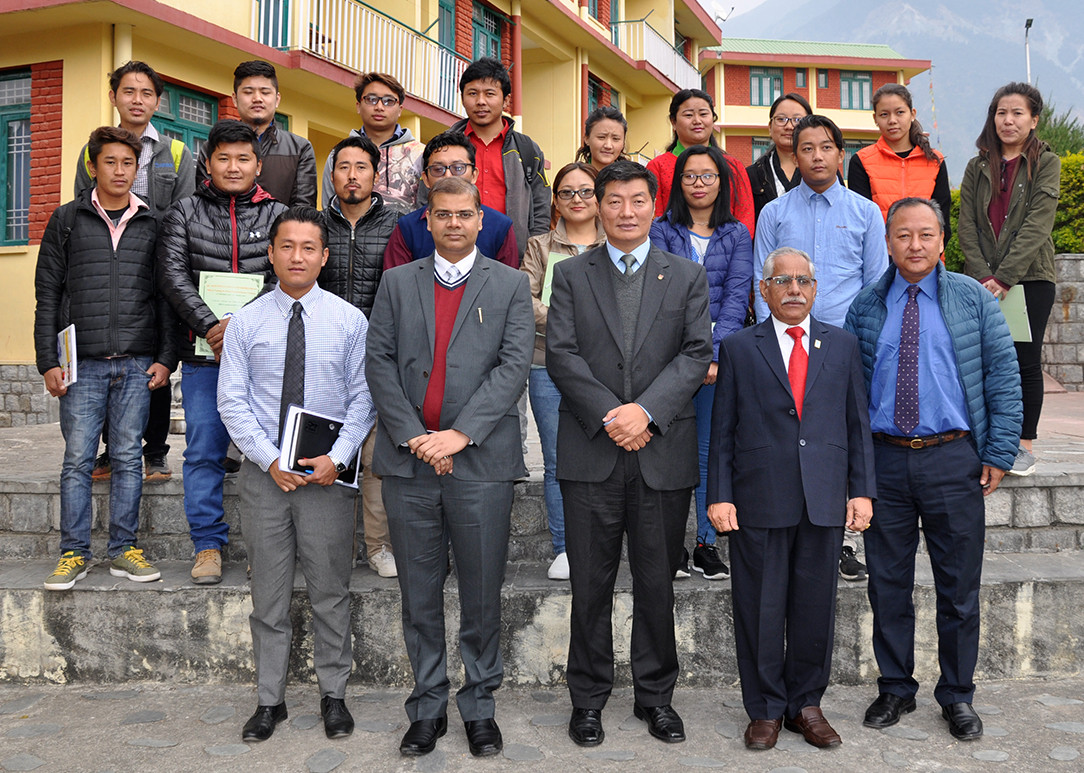

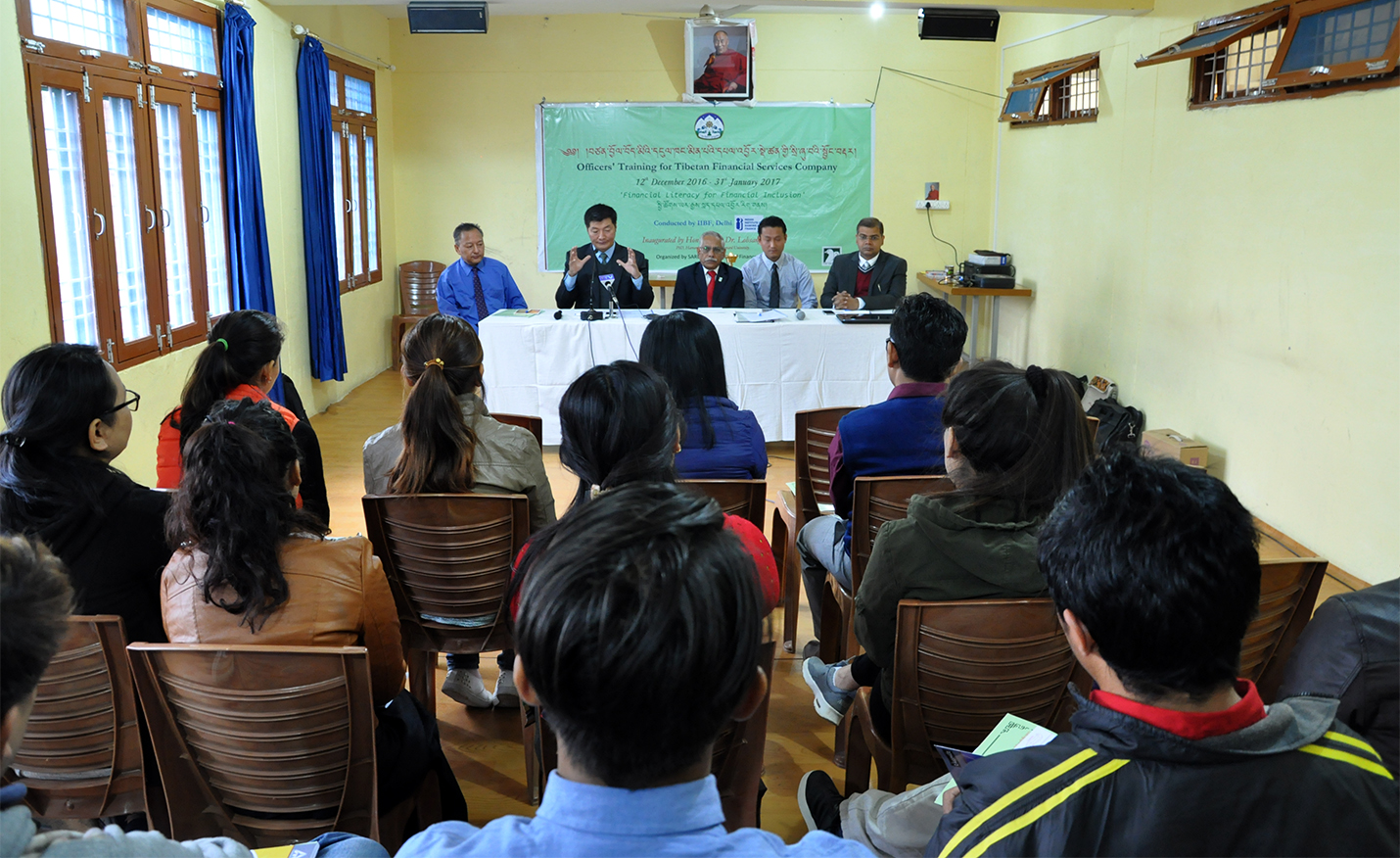
DHARAMSHALA:The inaugural session was graced by Sikyong Dr Lobsang Sangay, the Chief Guest, Mr J K Rajput, the Zonal Head, Indian Institute of Banking & Finance, PDC-Northern Zone, New Delhi, Mr S Tyagi, visiting faculty to the ‘Institute of Company Secretaries of India’, Dr Kunchok Tsundue, CPO, Mr Tenzin Topchen, SARD training coordinator and members of Tibetan medias.
As per the plan, about 16 well-qualified candidates with finance, auditing and management degrees have finally made into the Tibetan non-banking services training conducted by the renowned IIBF (Indian Institute of Banking & Finance), Delhi. This training will go over a month and half, where various experts in the banking, the financial services and the MFIs would visit and take various sessions for positioning, developing financial products and services for the Tibetans.
While delivering the inaugural address, Hon. Sikyong said, “This is going to be one of the most strategic and novel venture of Central Tibetan Administration so far and has high expectations from all corners but there are risks too.” “Risk of not meeting the compliances, business targets, level of fund raising and most of risk of maintaining excellent recovery rates must all be thoroughly dealt with and planned from upfront.” He greeted all participants individually and elaborated why the 14th Kashag came about with this policy and decided to set up such an institution that has plan roll out customized products affecting huge populations. He stressed the need for advances and loan products for Tibetan businesses including Hosiery retailers towards sustenance of the Tibetan community in exile. He also underlined the relevance of three basic principles of the Kashag -Unity, Innovation and Self-reliance to the community development by large. He also inspired the trainees to commit themselves to develop a Tibetan financial institution matching a global standard.
Mr Rajput, made a brief presentation on IIBF’s history and explained why and how this chapter of the famous London Institute of Banking and Finance established in India way back in 1928 during the British Raj. Supported by major public and private sector banks, this institute has an excellent record of building many banking and financial institutions in Indian sub-continent. He also told the gathering that this programme is exclusively designed for Tibetan situations to provide a rare professional skills and competence to meet both regulatory and managerial compliances for running an intermediary registered under the Companies Act 1956 with a RBI’s NBFC (Non-Banking Financial Companies) license. During the session, the CPO, PC outlined the progressive growth and development stages envisaged for the Tibetan Financial Institution from the initial Non-banking to NBFC-SI to the Small Banking services and ultimately Tibetan brand full-fledged Banking institution. He also addressed the gathering on the key findings of the recent financial market assessment report indicating public funds, savings and credit demand. He elaborated further on the motto of this training- ‘Financial literacy for financial inclusion’ ‘སྤྱི་ཚོགས་ཡར་རྒྱས་སླད་དཔལ་འབྱོར་རིག་གནས།‘, and how and why this training conceived and how legal and regulatory training phase will follow up by empirical prototype business plan and product modeling.
-Report filed by Department of Finance-