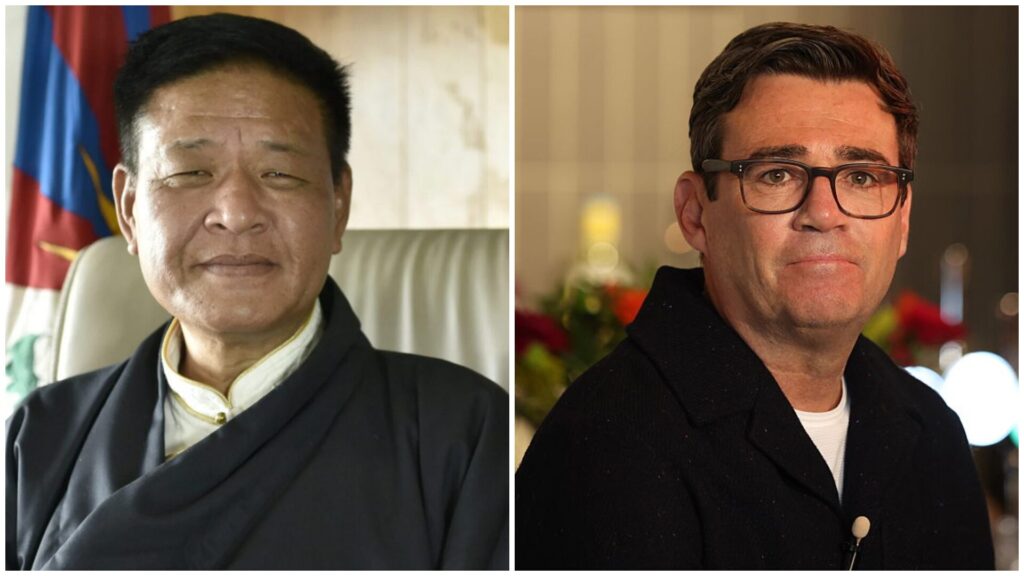
“I believe that in addition to the courage and determination of our people back home if the diaspora Tibetan could consolidate our capability, power, strength, resource, and education towards the functioning of CTA, we could make a difference to CTA. With the foundation of strong public health and moral education, if we could pool and utilize the knowledge and resources of our young people, CTA will be even more successful in its mission,” says Tsering Yangkyi, director of Tibetan Policy Institute
Social Media Executive (SME): Could you briefly tell us about yourself?
Tsering Yangkyi (TY): I was born and raised in Doeguling Tibetan settlement, Mundgod in the South Indian state of Karnataka. I have completed my schooling from CST Mundgod and graduated from Bangalore University. I joined the Central Tibetan Administration (CTA) as Under Secretary in 1995 and my first appointment was at the Department of Religion & Culture. In 2007, I got the opportunity to study in the US under the Tibetan Scholarship Program. Upon my return in the following year, I was appointed in the Health Department as its Joint Secretary. I was then appointed as the director of the Tibetan Institute of Performing Arts (TIPA). After serving at TIPA, I was then appointed as the Deputy Director of the Tibet Policy Institute (TPI) and later as Additional Secretary at the Department of Information & International Relations (DIIR). Towards the end of last year, I was promoted to Secretary and appointed as the Director of the Tibet Policy Institute where I am currently working.
SME: Please explain your job description and how best does your work represent you or vice versa.
TY: At the TPI, we undertake research on various topics relating to issues in Tibet and its people. We then present our research findings in academic and non-academic platforms. As a Think Tank of the CTA, we update the members of Kashag about the political developments in Tibet under the rule of the People’s Republic of China (PRC). We also highlight the global significance of the Tibetan plateau which is called the Roof of the World, Asia’s Water Tower and the Third Pole. We establish academic contacts and collaborate with think tanks and universities within and outside India. TPI organizes and takes part in numerous conferences and publishes commentaries, articles, reports, books on issues related to Tibet. I cannot think of a better way of representing myself than the work I do towards the furtherance of our sacred cause.
SME: What inspired you to serve the CTA?
TY: I was hugely inspired to serve CTA by my school teacher- Gyen Tashi Dhundup la. He used to tell us that as refugee children, we were raised and educated under the kindness and charity of H.H. the Dalai Lama, the government of India, our parents, donor organisations and individual sponsors. I remember he would say that our whole body (from head to toe) is filled with charity (skor in Tibetan). He would advise us while taking his classes that when we grew up it’s our responsibility to serve the Tibetan government. This piece of precious advice by my kind and a thoughtful teacher got instilled in my heart and mind. I grew up with full determination to serve our cause. I never thought of working elsewhere other than Dharamshala. As I grew up, I realized that as a Tibetan, irrespective of whether we were raised under other’s charity or our family’s support, it’s our moral and karmic responsibility to serve our cause. We all must remember that H.H. the Dalai Lama followed by our parents, grandparents and great grandparents fled their own country and took refuge in India solely to regain our freedom. We are political refugees out of compulsion not by choice.
SME: What does it mean for you to be a CTA civil servant?
TY: When I joined CTA way back in 1995, a few candidates couldn’t get through the public service exam. So, to console them, the then chairman of the Public Service Commission, Mr. Namgyal Dorje said that we all had the same level of education but to join CTA one must also have some good fortune. So, those who couldn’t make it lacked the fortune, not the educational qualification. I believe I am indeed fortunate to be blessed with the opportunity to fulfill my moral duty and that too under the benevolent leadership of H.H. the Dalai Lama. However, on the other hand, as a Tibetan, I would say serving CTA is not a big deal because you are fulfilling your own moral responsibility. I would rather be surprised if you are not serving your cause as a Tibetan. Serving CTA is not the responsibility of just a handful of CTA staff, it’s, in fact, the responsibility of every single Tibetan. At some point in time in our lives, we all must serve to further our cause. Simply seeking the blessing and audience of H.H. the Dalai Lama is not enough. What is more important is to practice his compassionate and meaningful pieces of advice, fulfill his great visions and wishes.
SME: How best do you think you could make a difference to CTA?
TY: I believe that in addition to the courage and determination of our people back home if the diaspora Tibetan could consolidate our capability, power, strength, resource, and education towards the functioning of CTA, we could make a difference to CTA. With the foundation of strong public health and moral education, if we could pool and utilize the knowledge and resources of our young people, CTA will be even more successful in its mission.
SME: Who is your role model and why?
TY: I draw my inspiration from the fate and status of our country and our people back home in Tibet. I am conscious of the purpose of fleeing our own country and coming into exile. I tell myself that if we as Tibetans don’t work for the freedom of our country, nobody will do it for us. We lost our country and we will have to regain it.
SME: What is your piece of advice for young Tibetans serving or wishing to serve at CTA?
TY: For the young Tibetans serving in CTA, I would say that they have taken the right decision to join CTA and continue to work with full dedication and sincerity as long as they remain in the CTA. And, for those who aspire to join CTA, they are most welcome as CTA needs young talents. CTA is the right place for all of us to do something effective and meaningful to realise our common dream of a free Tibet. And finally for those who don’t particularly think of serving at the CTA, wherever you are and whatever you do, please keep our cause in your heart. Please get involved somehow at some point in time in your life. Our spiritual leader H.H. the Dalai Lama is aging, our brethren back home are burning themselves, our diaspora population is sinking and scattering. It’s high time we integrate our efforts unitedly towards our cause. CTA has also transformed its workplace and accommodation to suit and attract young people to join. So, both the time and condition are suitable. Come and together we can and we will fulfill our common dream one day.
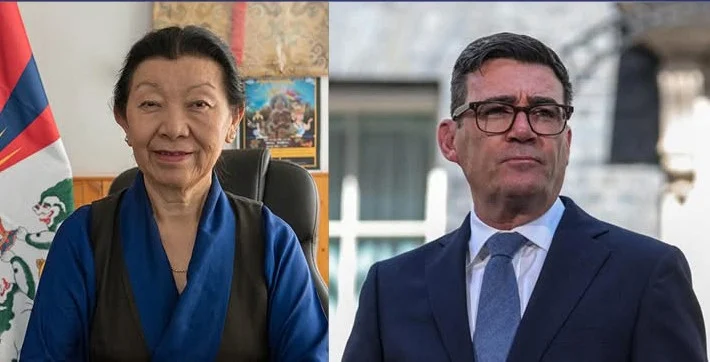
Every first Saturday of the month, as a part of its shout-out campaign, DIIR’s Social Media Desk will be profiling a civil servant of Central Tibetan Administration. This week we are pleased to profile Tsering Yangkyi, director of Tibet Policy Institute, Central Tibetan Administration.