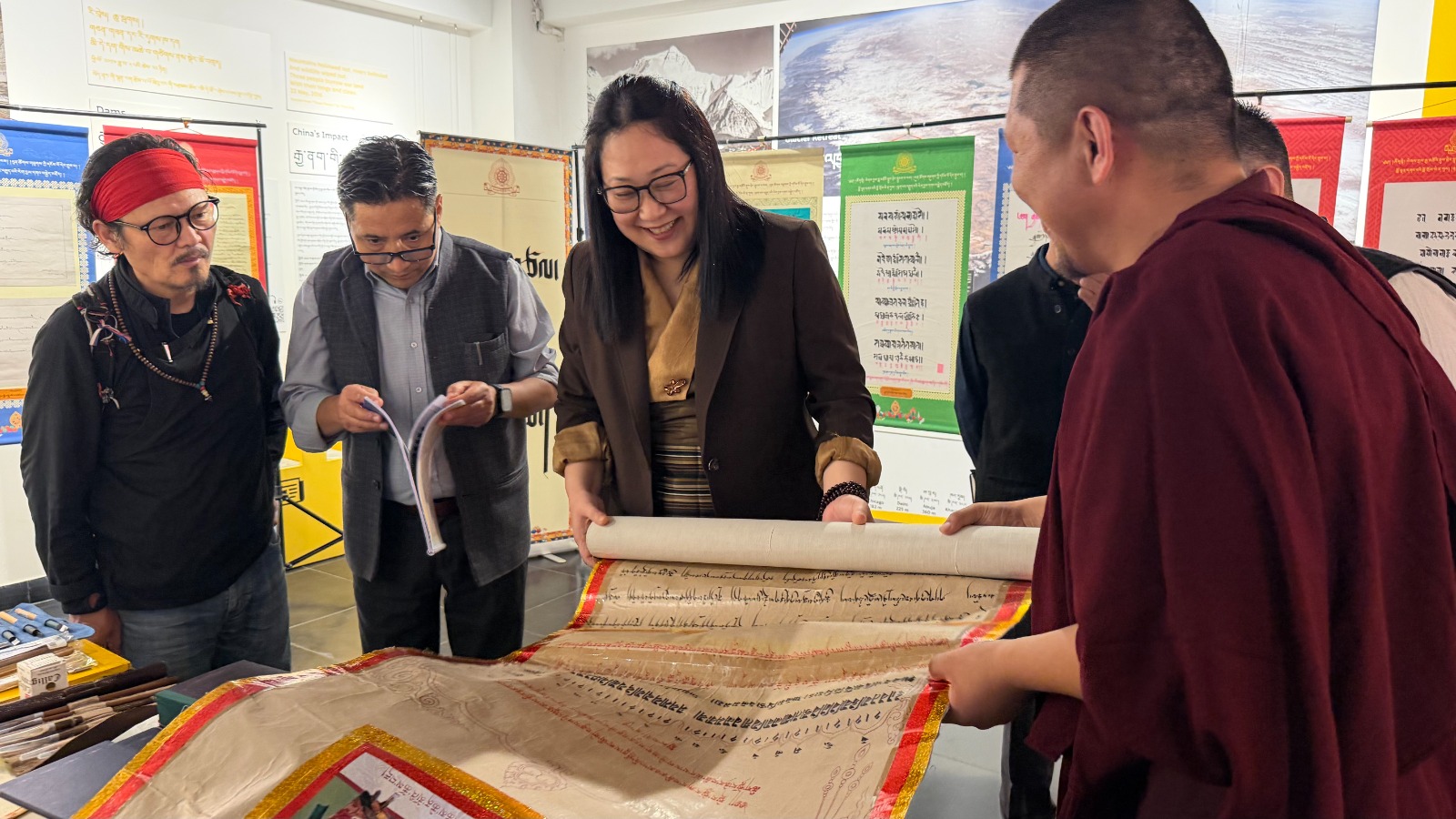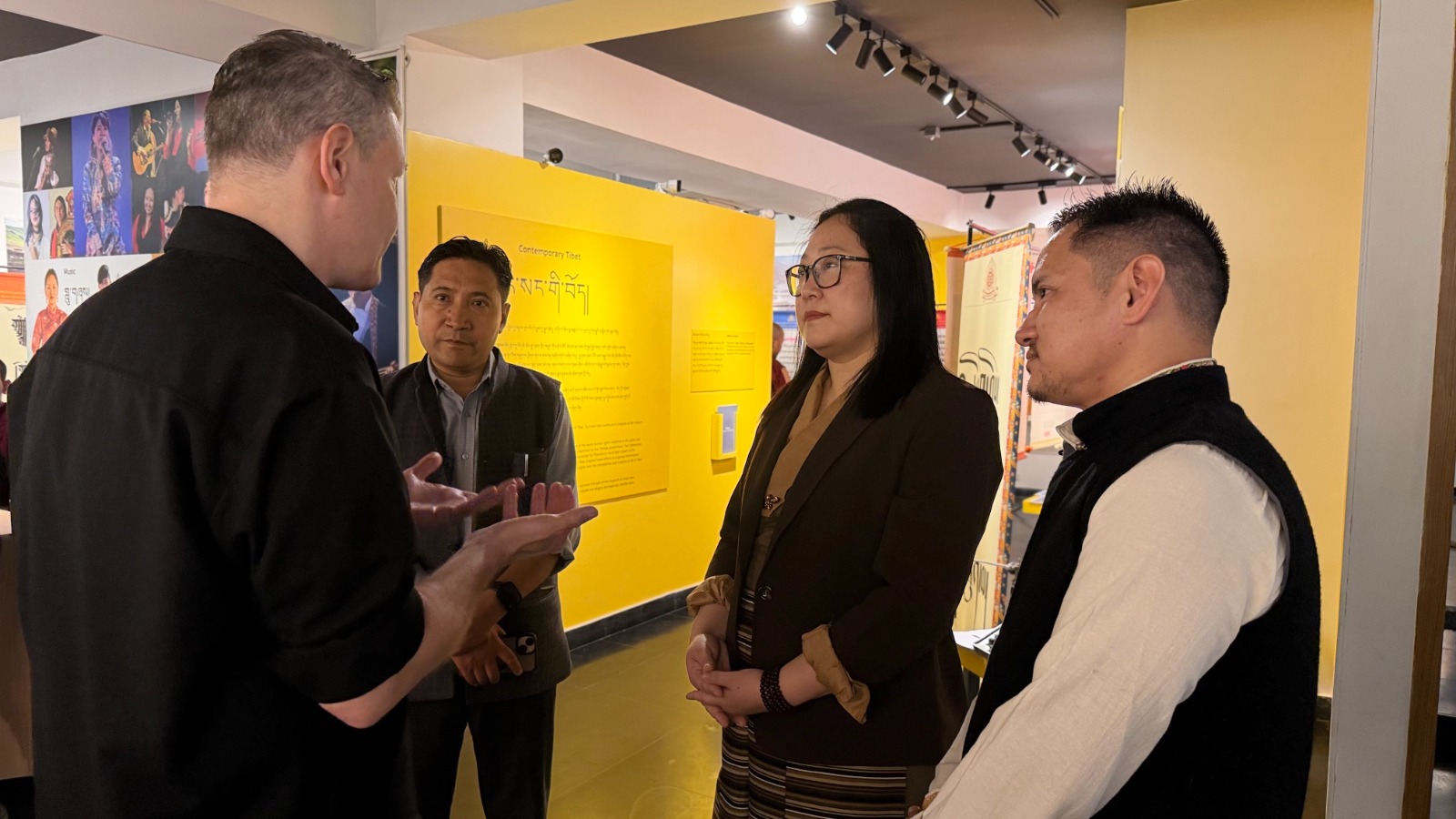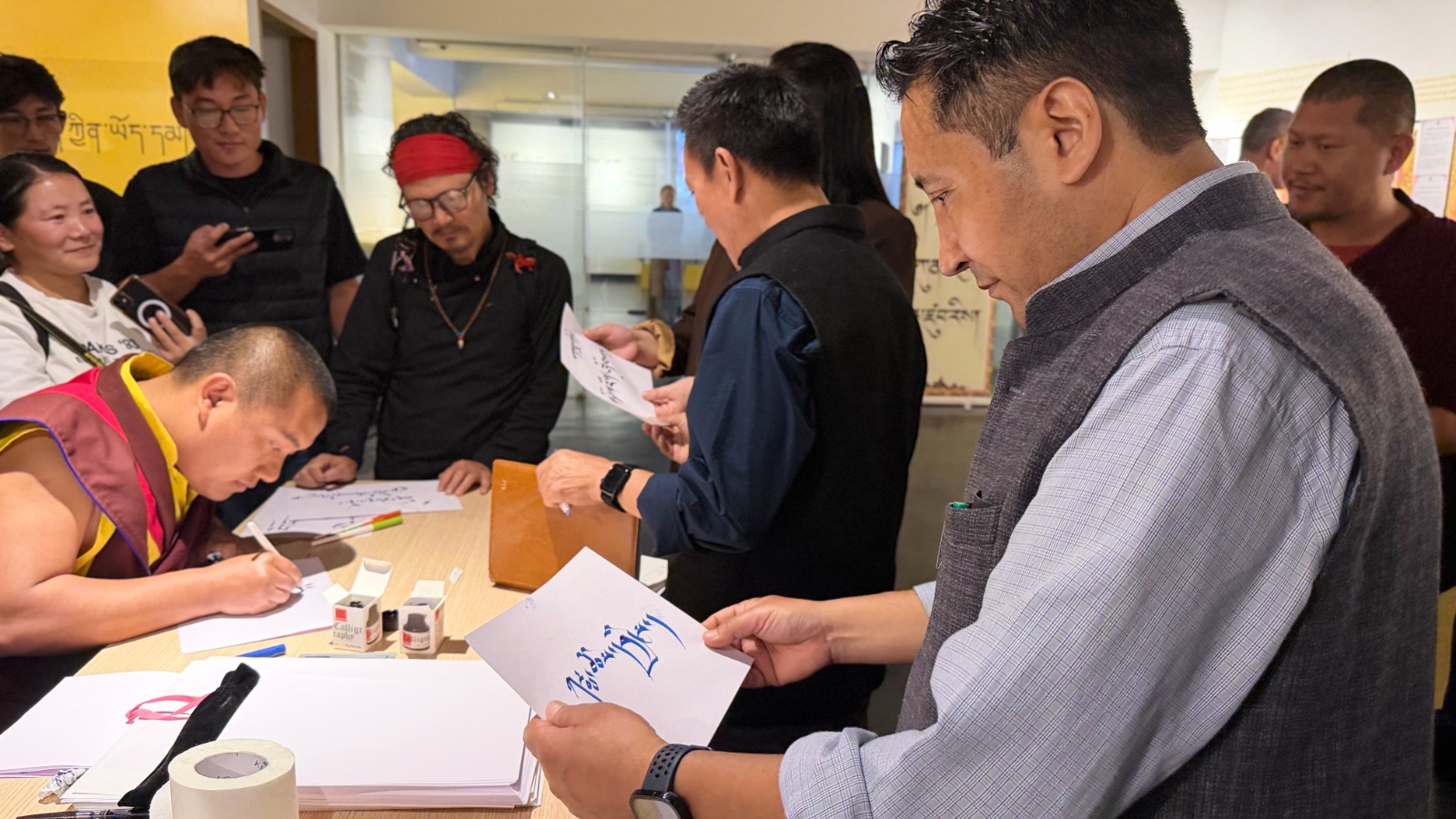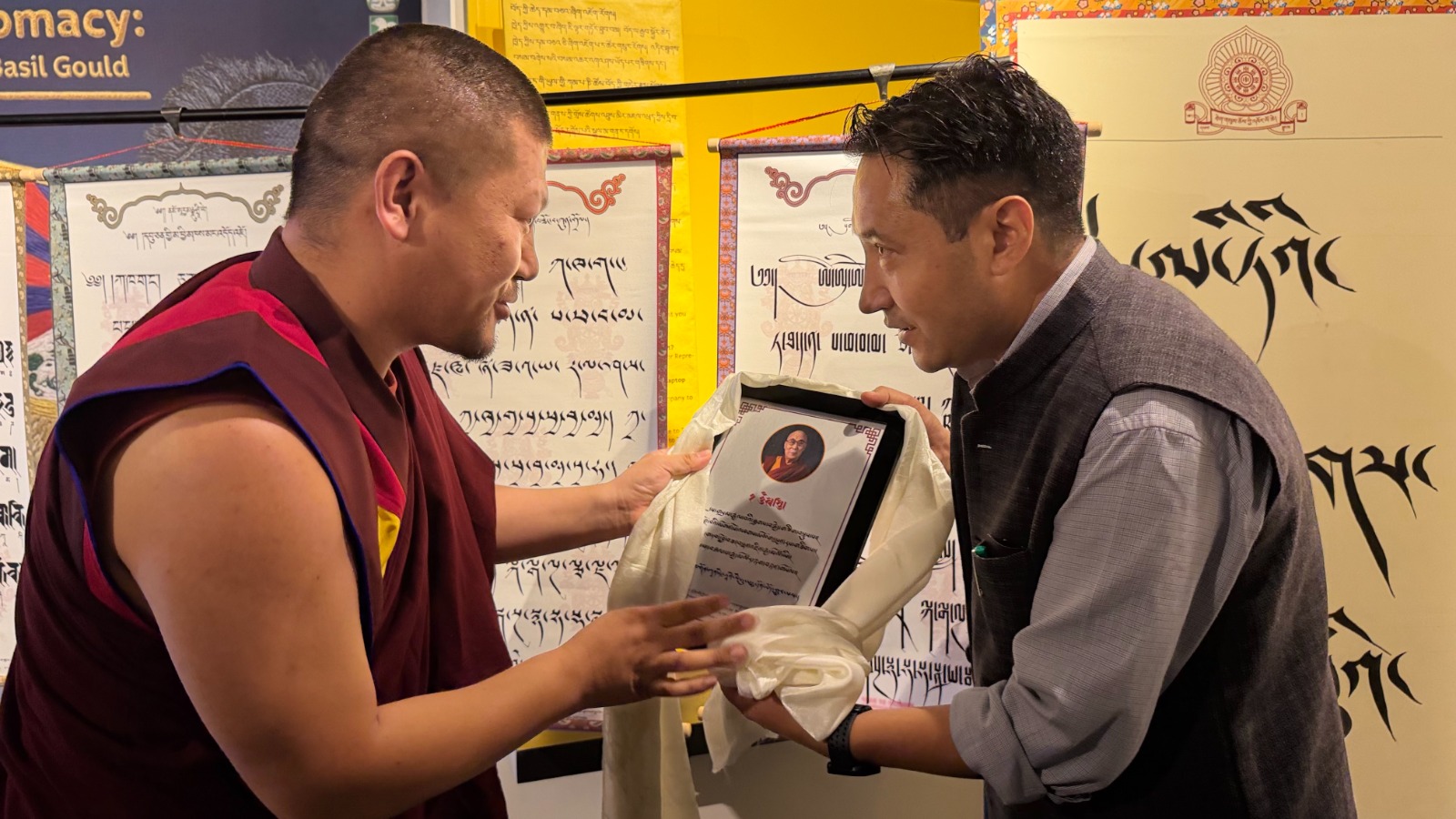

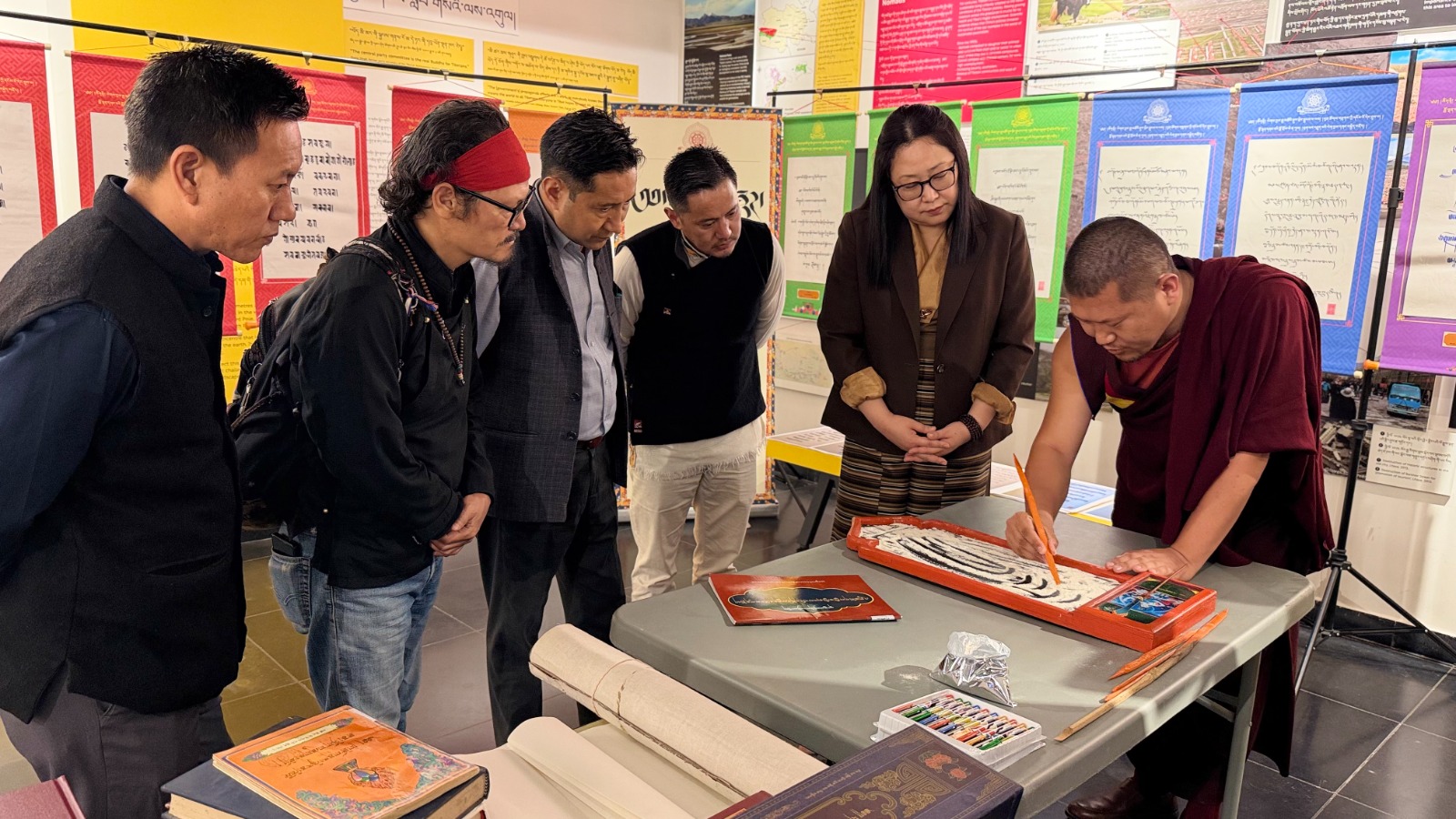
Dharamshala: The Tibet Museum of the Central Tibetan Administration, in collaboration with Palpung Sherabling Monastery, organised an exhibition of canonical calligraphy works and a calligraphy workshop to mark International Tibetan Calligraphy Day.
In 2017, a Tibetan scholars’ symposium on calligraphy was held inside Tibet, during which it was officially resolved that 30 April each year would be designated as International Tibetan Calligraphy Day. The selection of this date carries symbolic significance: the Tibetan script consists of four vowels and thirty consonants; accordingly, 30 April—the fourth month and thirtieth day—was chosen to represent these fundamental elements.
The inaugural observance of International Tibetan Calligraphy Day in Dharamshala was graced by Kalon (Minister) Norzin Dolma of the Department of Information and International Relations, accompanied by the department’s Secretary Karma Choeying and Additional Secretary Namgyal Tsewang.
Tenzin Topdhen, Director of The Tibet Museum, introduced the importance of the day in preserving and promoting the rich heritage of Tibetan calligraphy. He also led guests on a tour of the exhibition, which featured various styles of handwritten scripts displayed across the gallery. Among the exhibits were reproductions of calligraphy by the 8th Tai Situpa, Chokyi Jungne (1700–1774), who played a key role in establishing the Derge Parkhang alongside the King of Derge, Tenpa Tsering, in 1729.
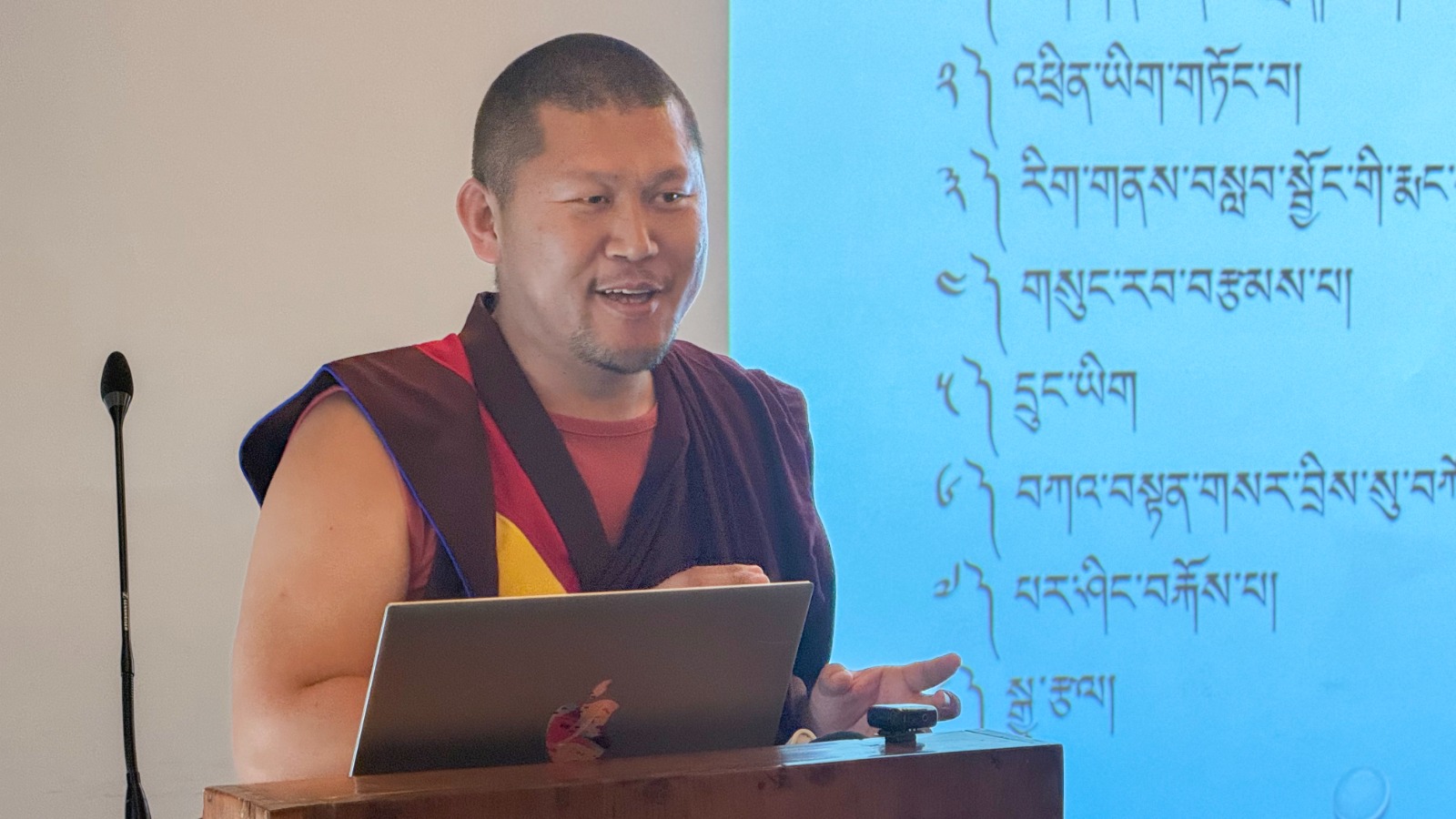
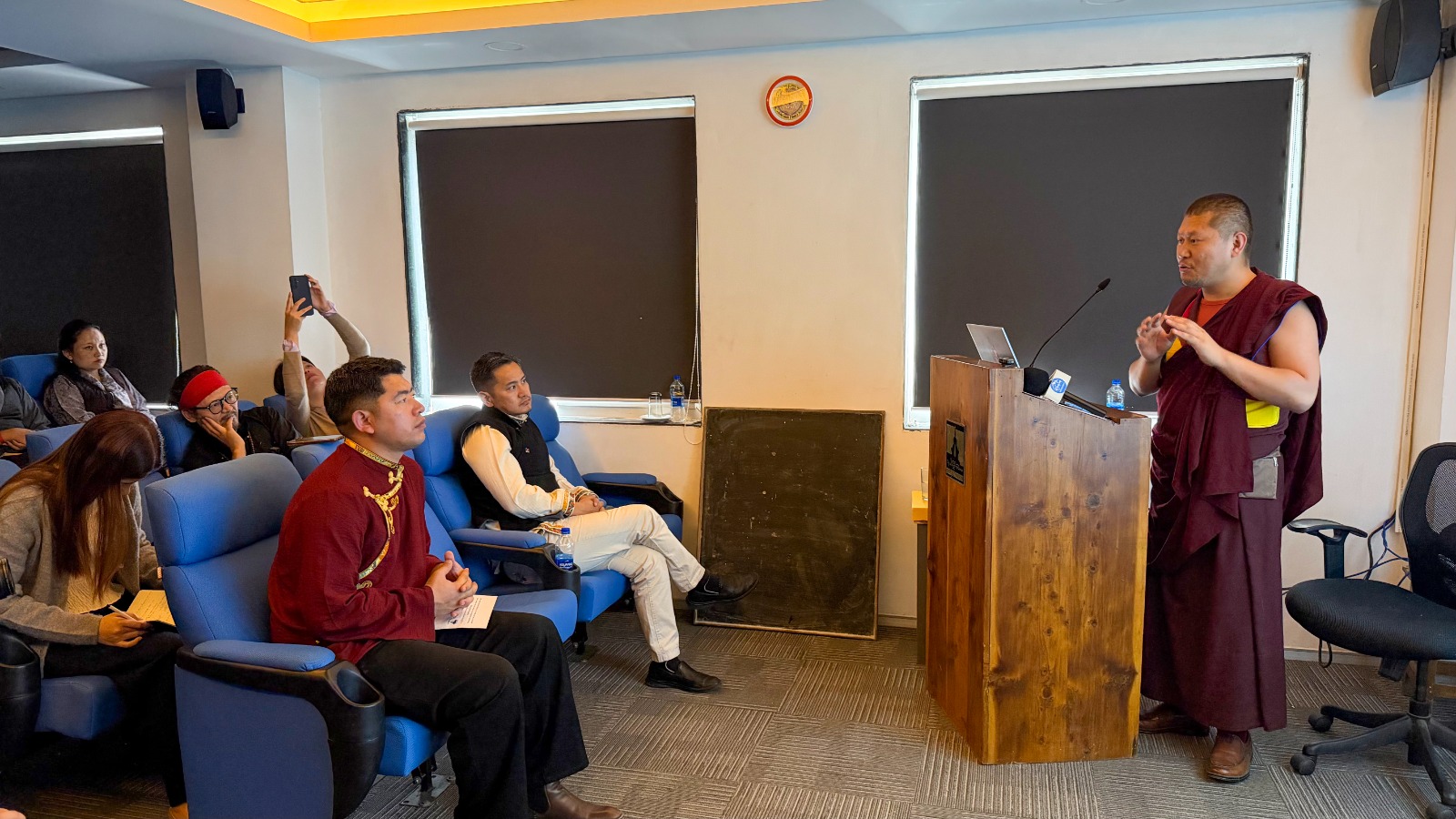
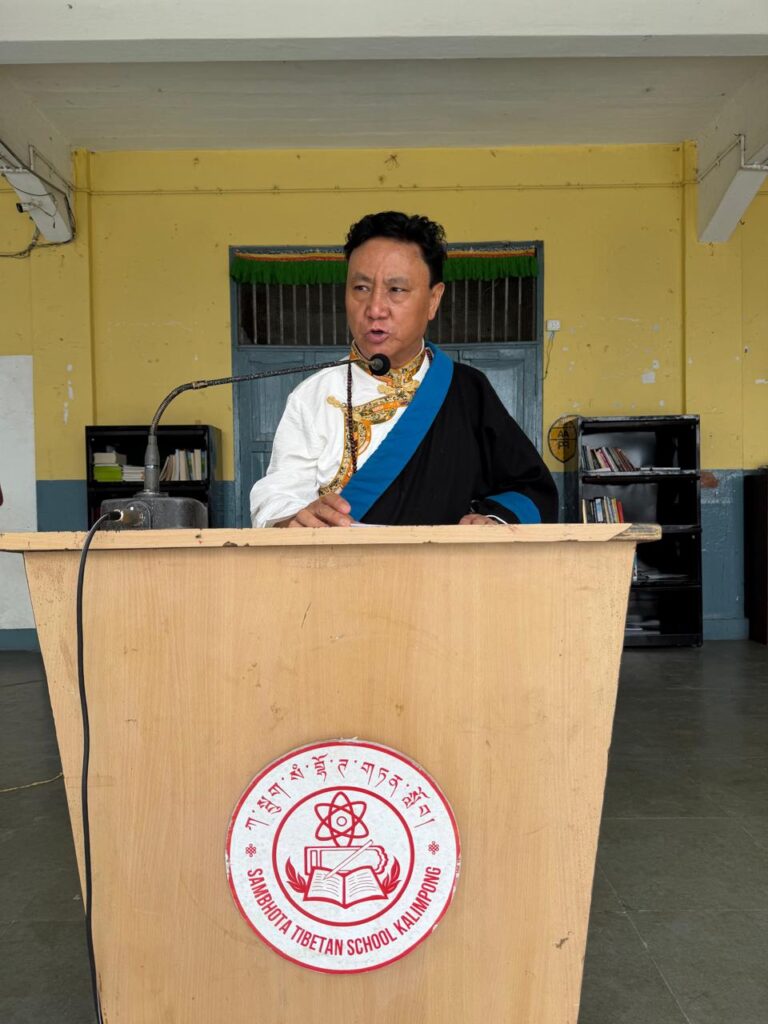
The programme included an expert talk by Venerable Karma Wangdak of Palpung Sherabling Monastery, Director of the monastery’s Literature Department. He spoke on the history and evolution of the Tibetan writing system, originally devised by Lopon Thonmi Sambhota in the 7th century, and its later development during the period known as the “Later Flourishing of the Teachings,” following Tibet’s era of fragmentation.
He particularly highlighted the contributions of the Derge Parkhang and Tai Situ Rinpoche Chokyi Jungne in promoting and standardising the Tibetan writing system with the advent of printing technology in Tibet, along with the efforts of other Tibetan scholars and lamas who have played a crucial role in this field.
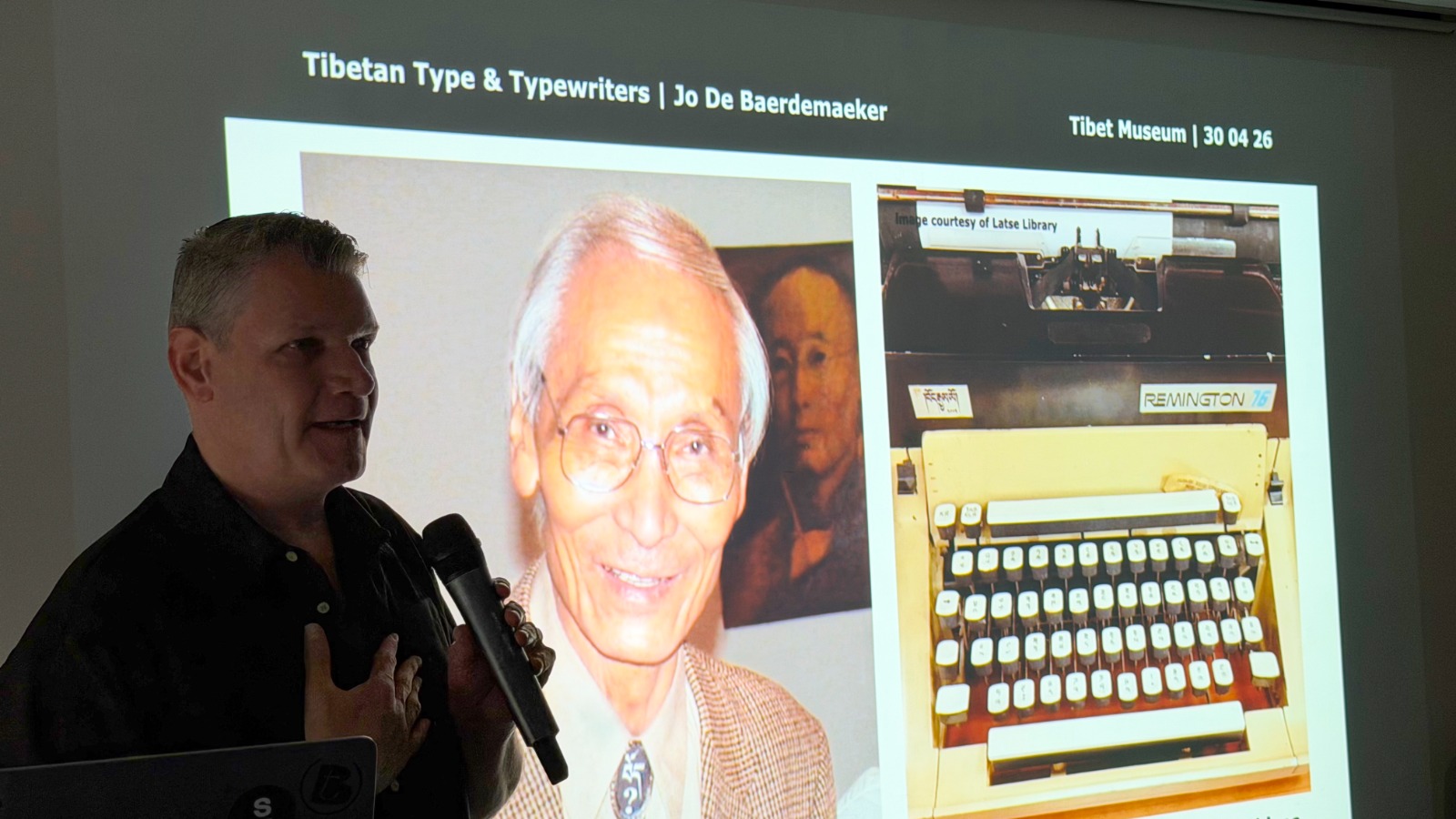
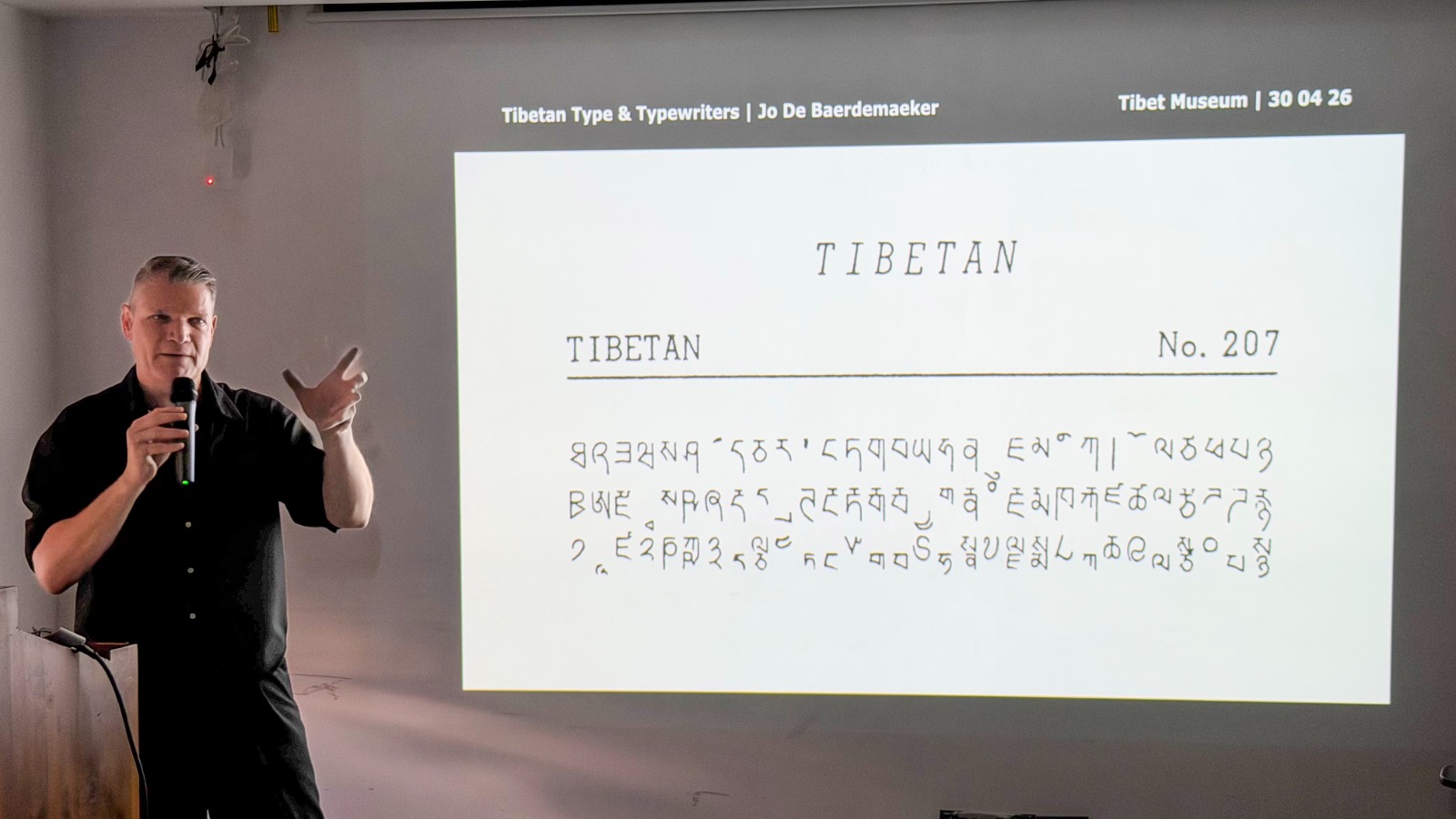
Later in the afternoon, Jo De Baerdemaeker, an independent Belgian typeface designer and researcher who holds an MA in Typeface Design and was awarded a PhD from the University of Reading, spoke to the gathering about introduction of Tibetan typewriter and Tibetan typeface design. He presented an overview of the history and evolution of Tibetan typewriters and typeface design, tracing developments from the early 18th century in Western contexts to the modern digital fonts and design systems used today.
A few days earlier, Jo De Baerdemaeker also had the opportunity to present his research on Tibetan typewriters and typeface design to His Holiness the Dalai Lama during an audience.
The talk sessions were coordinated by the Curator of The Tibet Museum, Ngawang Dorjee.
On 1 May, the exhibition and calligraphy workshop will be held at the Tsuglagkhang for the general public in Dharamshala as part of the observance.
The occasion, dedicated to preserving the rich heritage of Tibetan calligraphy, was also observed with enthusiasm within Tibet.