
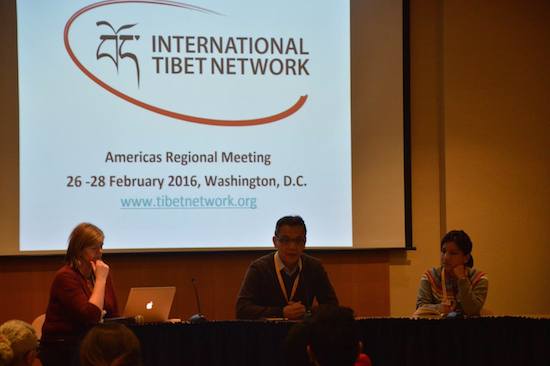
WASHINGTON DC: International Tibet Network (ITN), a global coalition of Tibet support groups, held its North America regional meeting at Washington DC from 26-28 February. Forty delegates representing 18 Tibet support groups from five countries participated in the meeting, taking part in workshops, training and campaign planning.
Mr Kaydor Aukartsang, Representative of His Holiness the Dalai Lama at the Office of Tibet, Washington DC, inaugurated the three-day meeting. In his inaugural address, he outlined the challenges and opportunities facing the Tibetan movement and the crucial role performed by Tibet support groups in amplifying the global Tibetan movement.
The three-day workshop provided training and briefings on a range of topics including Strategic Non-Violent Resistance, Tibet’s Environment, Humour in Campaigning, Digital Security, Digital Fundraising and Women in Tibetan Resistance, etc.
The workshop also developed detailed plans on 5 different campaigns or projects, including on Tibet’s environment, Confucius Institutes, Advocacy for Political Prisoners, coalition-building with China-related movements and increasing campaign engagement by action-oriented Tibetans.
Mr Tenzin Jigdal, International Tibet Network’s International Coordinator said: “This has been an inspiring and productive meeting, with participants working very hard on planning campaigns and developing strategies for increasing collaboration between Tibet Groups. The result is some strong campaign plans and robust discussions and proposals that address how important it is that Tibet Groups move forward together.”
Ms Dhardon Sharling, Co Chair of the Network’s elected Steering Committee added: “Each participant has left this meeting having made their own personal commitment to contribute towards better collaboration. With robust campaign plans and stronger personal relationships between Groups, we are confident that our movement will be more effective as a result of this meeting.”
The International Tibet Network was established in the year 2000, with specific aims to ensure effective coordination among the diverse Tibet support groups and strengthen their campaign capacities. The Network is committed to non-violence as a fundamental principle of the Tibetan movement.