DHARAMSHALA: India Tibet Coordination Office based in New Delhi organised an Indian Tibet Support Group’s (TSG) Youth Training and Campaign Programme in Dharamsala from 14 – 18 March.
The programme is aimed towards strengthening the TSG’s movement in India and raising awareness about the Central Tibetan Administration in exile, programme co-ordinators told TibetNet.
Around 16 participants from Tibet Support Groups, consisting of India Tibet Friendship Society (ITFS), Bharat Tibbat Sahyog Manch (BTSM), Students for Free Tibet (SFT), Himalayan Committee for Action on Tibet (HIMCAT), Antarashtriya Bharat Tibbat Sahyog Samiti (ABTSS), National Campaign for Free Tibet Support (NCFTS) from all over India, took part in the workshop.
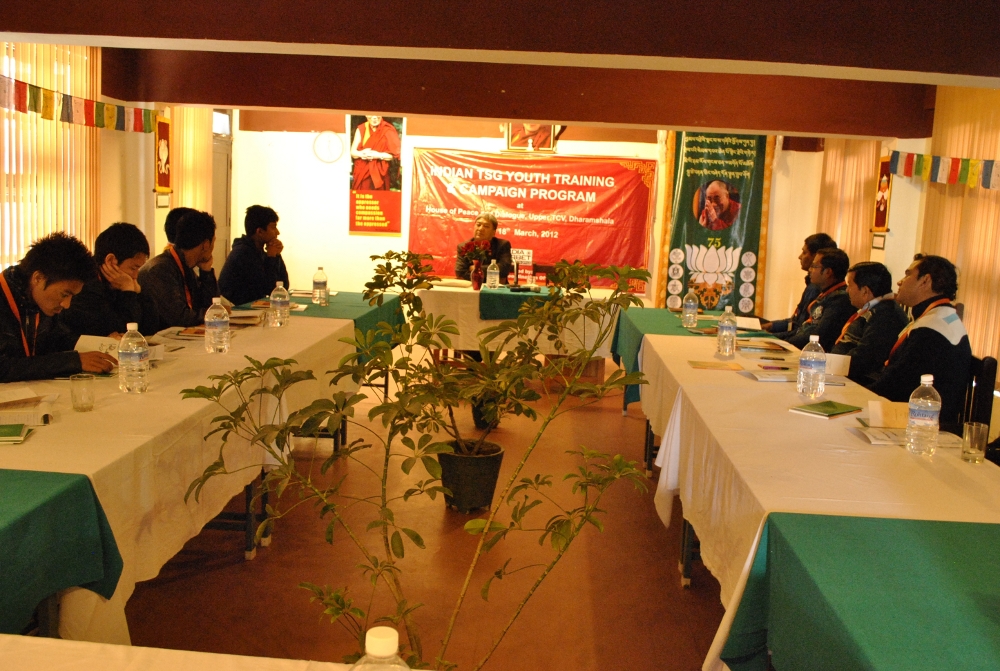
- Central Tibetan Administration’s Secretary for Information, Mr Tashi, speaking to Indian students in Dharamsala, India/Photo/ITCO
During the four-day workshop, the students had interactive discussions with the Tibetan administrative officials, representatives from different NGOs, and various cultural and educational preservation establishments.
Mr Thubten Samphel, Director of the CTA’s Tibet Policy Institute, briefed the participants about the nature, evolution and achievements of the Middle Way Policy towards the resolution of the issue of Tibet. Mr Tashi, Secretary, Department of Information and International Relations, spoke to the participants on the organisational structure of Central Tibetan Administration set up in exile in 1960. Mr Tenzin Lekshay, Deputy Secretary at the Kashag Secretariat, conducted SWOT analysis of the Tibet freedom movement and the opportunities that the Tibet Support Groups must execute at the both national and local levels across India. Moreover, the participants discussed media outreach and activities carried out by Tibetan NGOs.
The participants were also given briefings on pressing issues facing Tibet such as exploitation of natural environment and mineral resources and the ongoing human rights violations.
Dr Kuldeep Chand Agnihothri, National Co-Convener of the Core Group for Tibetan Cause, spoke on how to mobilise and strengthen the movement of Tibet Support Groups in India, particularly at the grassroot level. He emphasised that a lasting solution to the problem of Tibet is in the interest of India’s security. He further said that the growing Chinese military presence and incursion in the north Indian states of Jammu & Kashmir, Ladakh, and Arunachal Pradesh, is a matter of grief concern and threat to the government of India and Indian people.
The participants also visited various educational and cultural institutions including Tibetan Children’s Village, Library of Tibetan Works and Archives, Tibet Museum and Tibetan Medical and Astrological Institute. They also witnessed the live proceedings of the ongoing Tibetan Parliament’s budget session.
“The participants actively interacted with the speakers and discussed ways to organise various programmes at the regional level in India. We thank all the participants for participating in the Tibet awareness programme,” Tenzin Paljor and Tashi Norbu, who are co-ordinating the programme, told TibetNet.