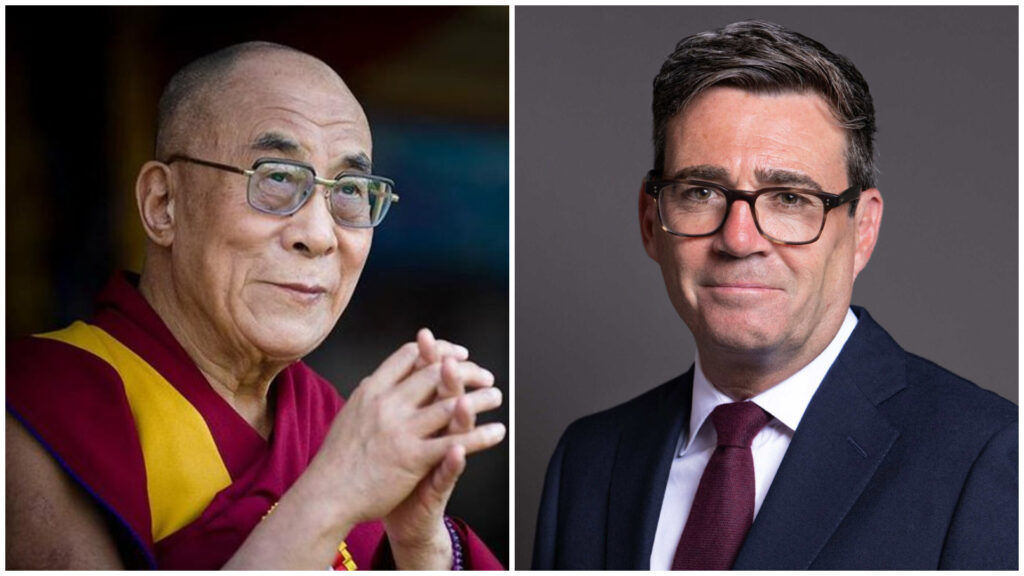

His Holiness the Dalai Lama remembers Lal
Bahadur Shastri
Bahadur Shastri
[Sunday, 9 January 2011, 12:02
p.m.]
p.m.]
NEW DELHI: As a
young college student, Lal Bahadur Shastri, one of India’s greatest
leaders, was so moved by the death of a pigeon that he decided to be a
vegetarian for life. The pigeon, accidentally trapped in the hostel
dormitory, died in its frantic attempt to avoid being caught by
Shastriji and his friends.
young college student, Lal Bahadur Shastri, one of India’s greatest
leaders, was so moved by the death of a pigeon that he decided to be a
vegetarian for life. The pigeon, accidentally trapped in the hostel
dormitory, died in its frantic attempt to avoid being caught by
Shastriji and his friends.
Later in the
mid-1960s when he succeeded Jawahar Lal Nehru as India’s prime minister,
Shastriji shared this profound transformative experience with His
Holiness the Dalai Lama and other Indian ministers during a lunch
meeting.
mid-1960s when he succeeded Jawahar Lal Nehru as India’s prime minister,
Shastriji shared this profound transformative experience with His
Holiness the Dalai Lama and other Indian ministers during a lunch
meeting.
“Even in his youth,
Shastriji had a deep sense of compassion for others; it was unbiased
compassion based on the realisation that all sentient beings be they
animals or humans have the same right to happiness and overcome
suffering,” said His Holiness as he delivered the 18th Lal Bahadur
Shastri Memorial Lecture on ‘The Power of Compassion’ on Friday at the
National Museum. The event was organised jointly by the Lal Bahadur
Shastri National Memorial Trust and National Museum.
Shastriji had a deep sense of compassion for others; it was unbiased
compassion based on the realisation that all sentient beings be they
animals or humans have the same right to happiness and overcome
suffering,” said His Holiness as he delivered the 18th Lal Bahadur
Shastri Memorial Lecture on ‘The Power of Compassion’ on Friday at the
National Museum. The event was organised jointly by the Lal Bahadur
Shastri National Memorial Trust and National Museum.
National Museum is
the biggest Museum of India which holds a variety of articles ranging
from pre-historic era to the modern work of art. It has in its
possession over 2,00,000 works of exquisite art, both of Indian and
foreign origin covering more than 5,000 years of India’s cultural
heritage.
the biggest Museum of India which holds a variety of articles ranging
from pre-historic era to the modern work of art. It has in its
possession over 2,00,000 works of exquisite art, both of Indian and
foreign origin covering more than 5,000 years of India’s cultural
heritage.
His Holiness said
practicing unbiased compassion by developing a sense of concern for
others with selfless motivation can help conquer fear, suspicion, and
distrust. Fear breeds all kinds of negativity and compels one to
conceal, lie, cheat, exploit, and bully and hinders the development of
genuine friendship among individuals and countries, he added.
practicing unbiased compassion by developing a sense of concern for
others with selfless motivation can help conquer fear, suspicion, and
distrust. Fear breeds all kinds of negativity and compels one to
conceal, lie, cheat, exploit, and bully and hinders the development of
genuine friendship among individuals and countries, he added.
“Personally I have
deep admiration for Shastriji. He possessed all the qualities of a
principled leader,” His Holiness said as a packed auditorium filled with
academics, politicians, artists, students and diplomats listened in
rapt attention.
deep admiration for Shastriji. He possessed all the qualities of a
principled leader,” His Holiness said as a packed auditorium filled with
academics, politicians, artists, students and diplomats listened in
rapt attention.
His Holiness said he
felt the same compassion Shastriji felt as a young boy in Lhasa when he
would often see from the window of his room in Potala Palace herds of
cattle moving toward slaughterhouse. Concerned over the fate of these
animals, His Holiness over the years bought and freed tens of thousands
of sheep and yaks letting them roam free in open spaces.
felt the same compassion Shastriji felt as a young boy in Lhasa when he
would often see from the window of his room in Potala Palace herds of
cattle moving toward slaughterhouse. Concerned over the fate of these
animals, His Holiness over the years bought and freed tens of thousands
of sheep and yaks letting them roam free in open spaces.
Responding to a
question from the audience on the role of compassion in fighting poverty
and hunger, His Holiness said compassion means action devoid of
jealousy, hatred, and covert objectives but with a genuine motivation to
make a difference. “Sometimes someone giving donation might look
positive but if the motivation is to cheat or exploit, then that’s
actually some kind of violence,” he said. Such seemingly positive acts
when soiled by negative motivations ultimately become sinful, he added.
question from the audience on the role of compassion in fighting poverty
and hunger, His Holiness said compassion means action devoid of
jealousy, hatred, and covert objectives but with a genuine motivation to
make a difference. “Sometimes someone giving donation might look
positive but if the motivation is to cheat or exploit, then that’s
actually some kind of violence,” he said. Such seemingly positive acts
when soiled by negative motivations ultimately become sinful, he added.
On a question about
official corruption in India, His Holiness said basically it has to do
with the lack of self-discipline and moral ethics. However, in a free
country like India where there are free press, free elections, and
independent judiciary, which is not controlled by any single party,
there is accountability for official malfeasance, he said.
official corruption in India, His Holiness said basically it has to do
with the lack of self-discipline and moral ethics. However, in a free
country like India where there are free press, free elections, and
independent judiciary, which is not controlled by any single party,
there is accountability for official malfeasance, he said.
Even before India
developed the existing modern education system, there was a long
history of traditional education that put more emphasis on moral values
over materialistic values, His Holiness said. These ancient secular
values which have been practiced in India for centuries need more
attention, he said.
developed the existing modern education system, there was a long
history of traditional education that put more emphasis on moral values
over materialistic values, His Holiness said. These ancient secular
values which have been practiced in India for centuries need more
attention, he said.
His Holiness also
cautioned against excessive money worship in an increasingly
materialistic world. “Too much money worship deceives our mind, making
it impossible to achieve lasting inner peace,” His Holiness said.
“Extreme self-centered attitude makes the mind narrow, prevents the mind
from looking at problems in a wider perspective, so even tiny problems
appear unbearable.”
cautioned against excessive money worship in an increasingly
materialistic world. “Too much money worship deceives our mind, making
it impossible to achieve lasting inner peace,” His Holiness said.
“Extreme self-centered attitude makes the mind narrow, prevents the mind
from looking at problems in a wider perspective, so even tiny problems
appear unbearable.”
Shri Anil Shastri,
son of Lal Bahadur Shastri said it was His Holiness’ humility and
honesty that have lasting impression on him as he recalled several
meetings with His Holiness as a young college student and as a member of
Parliament. “If there is one word to describe how special he is, it
would be all embracing compassion not just for the Tibetans but for
everyone all over the world,” he said.
son of Lal Bahadur Shastri said it was His Holiness’ humility and
honesty that have lasting impression on him as he recalled several
meetings with His Holiness as a young college student and as a member of
Parliament. “If there is one word to describe how special he is, it
would be all embracing compassion not just for the Tibetans but for
everyone all over the world,” he said.
In his speech, Shri
Sunil Shastri, the elder son of Shastriji said listening to His Holiness
brought back memories of his father. “My father always used to tell me
and my brothers to always speak the truth because one has to lie
hundreds of lies to cover up one lie,” he said. “His Holiness’ values
and principles are very close to my father.”
Sunil Shastri, the elder son of Shastriji said listening to His Holiness
brought back memories of his father. “My father always used to tell me
and my brothers to always speak the truth because one has to lie
hundreds of lies to cover up one lie,” he said. “His Holiness’ values
and principles are very close to my father.”
Due to time
constraints, many who stood in a long line in the corner of the hall
could not ask questions. But the enthusiasm caused Shri Sunil Shastri to
remark that he was surprised and touched by how His Holiness kept the
entire audience “spellbound” and he admitted he found it hard to stop
more people from asking questions.
constraints, many who stood in a long line in the corner of the hall
could not ask questions. But the enthusiasm caused Shri Sunil Shastri to
remark that he was surprised and touched by how His Holiness kept the
entire audience “spellbound” and he admitted he found it hard to stop
more people from asking questions.
Dr CV Ananda Bose,
director-general of National Museum and vice-chancellor of National
Museum Institute and Prof AK Das, Director Lal Bahadur Shastri Memorial
Museum also welcomed His Holiness on the stage.
director-general of National Museum and vice-chancellor of National
Museum Institute and Prof AK Das, Director Lal Bahadur Shastri Memorial
Museum also welcomed His Holiness on the stage.
Lal Bahadur Shastri
was the second prime minister of India who succeeded Jawahar Lal Nehru
and was significant figure in the Indian independence movement. But his
tenure — from 2 October 1964 to 11 January 1966 — was cut short by
his untimely death in Tashkent (now in Uzbekistan) after signing the
1966 Peace Treaty with Pakistani President Muhammad Ayub Khan.
was the second prime minister of India who succeeded Jawahar Lal Nehru
and was significant figure in the Indian independence movement. But his
tenure — from 2 October 1964 to 11 January 1966 — was cut short by
his untimely death in Tashkent (now in Uzbekistan) after signing the
1966 Peace Treaty with Pakistani President Muhammad Ayub Khan.