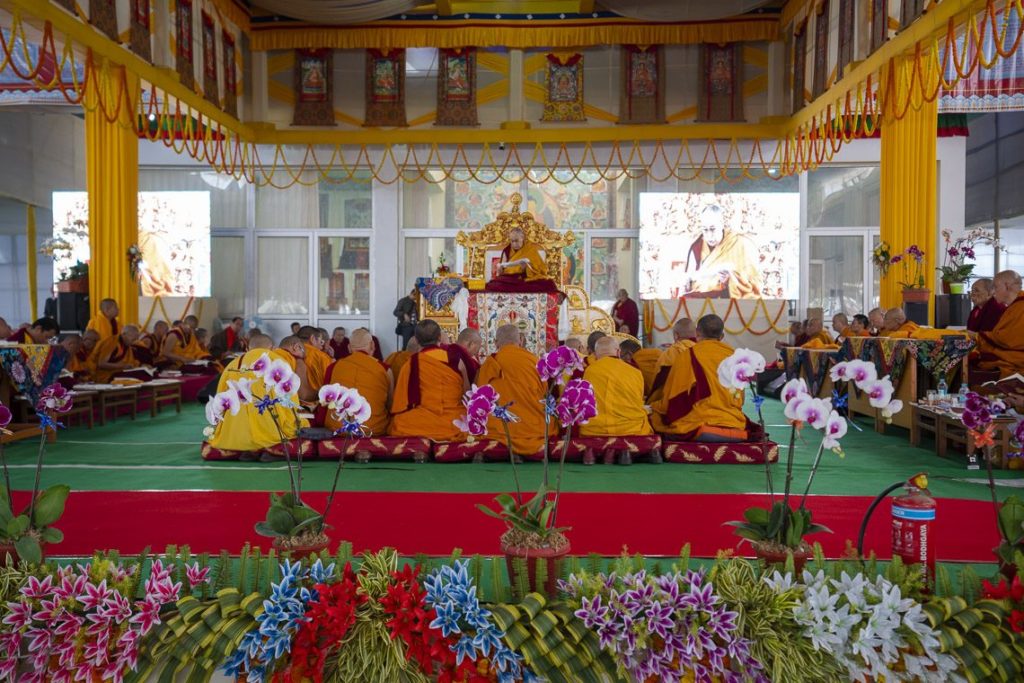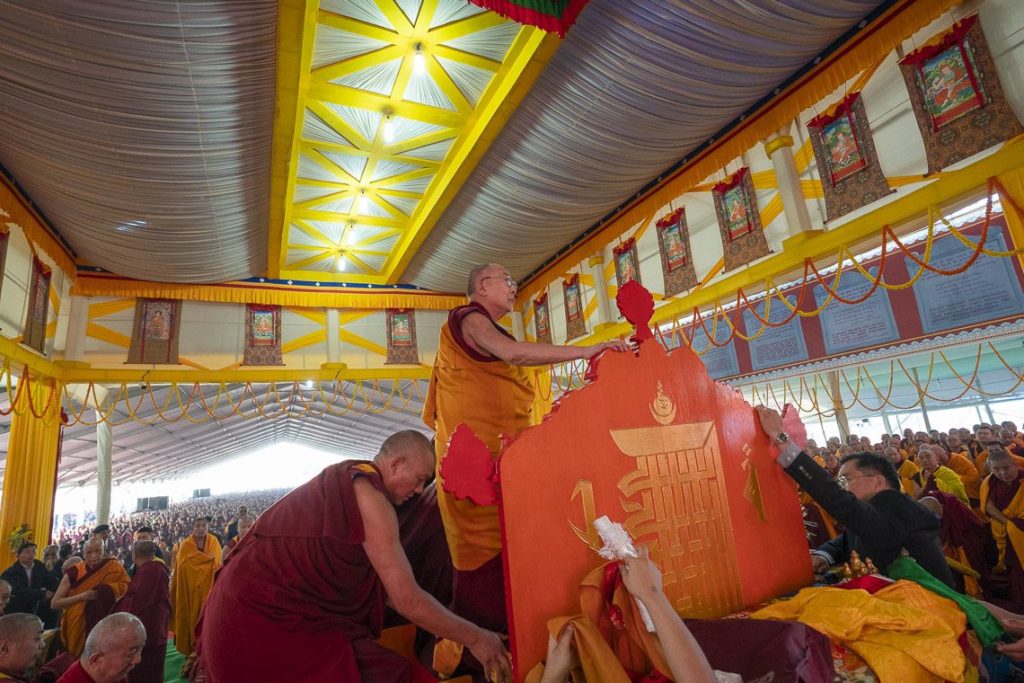
Bodh Gaya: His Holiness the Dalai Lama today began the first of the two-day teaching on Gyalsey Thokme Sangpo’s “37 Practices of a Bodhisattva” (Tib: རྒྱལ་སྲས་ལག་ལེན་སོ་བདུན་མ་) at the Kalachakra teaching ground in Bodh Gaya. The text of the teaching gives instructions on how to follow the bodhisattva path.
His Holiness will also give teaching on Dharmakirti’s “Pramanavartika – Commentary on Valid Cognition” (Tib. ཚད་མ་རྣམ་འགྲེལ་). The particular discourse is a continuation of his earlier teaching given in December 2015 at the request of Tashi Lhunpo Monastery.
In his introductory remarks, His Holiness the Dalai Lama spoke about Buddhism as a tradition based on reason and logic.
“All major traditions have the same practice of love and kindness, just different methods and different philosophies. However, in Buddhism, we do not assert a creator god as such.
“As mentioned in the Heart Sutra mantra, ‘Gate Gate Pāragate Pārasaṃgate Bodhi Svāhā’ which refers to the five-fold path: the path of accumulation; of application; of seeing; of meditating and the path of no-more learning.
“The five-fold path are stages of understanding, of experience, and finally, the stage of realization. These five paths incorporate the entire spiritual journey, as described in the Mahayana, from its very beginnings with the taking of the bodhisattva vow and the generation of relative bodhichitta, up until its culmination at the stage of complete enlightenment.
“What it shows is that we have to go through the path by cultivating the skilful means and wisdom and then progress along the path. This is how the Buddha himself has attained enlightenment. He was not born as an enlightened being. From his own experience, he taught us,” His Holiness said.
The practice of dharma entails training in ethics, concentration and wisdom, of which the most important is wisdom.
“The Buddhas don’t wash unwholesome deeds away with water, nor do they remove the sufferings of beings with their hands, neither do they transplant their own realization into others. It is through teaching the truth of suchness that they help beings find freedom.”