Health Department holds conference to control TB in Tibetan community (Updated) [Monday, 11 October 2010, 3:52 p.m.]
 |
| Department of Health and Delek Hospital hold a 3-day TB control program. Mr Wangchuk Phasur(3rd from R), Secretary, DoH, Mr Topgyal Tsering, Additional Secretary(3Rd from L), DoH, Dr Tsetan Sadutshang(2nd from R), CMO, Delek Hospital, Dr Fulvio Salvo(1st from R) of AISPO, |
Dharamshala: Department of Health of the Central Tibetan Administration and Tibetan Delek Hospital hold a 3-day conference on Tibetan Tuberculosis Control Program in Dharamsala from 11 to 13 October. This conference is organised by the Department of Health, Delek Hospital and AISPO(Italian Association for Solidarities Among People). It was funded by AISPO and Italian Cooperation-Italian Ministry of Foreign Affairs, with the scientific support of the John Hopkins University in the United States. Total of about 55 health workers are attending this conference from various Tibetan settlements in India and few monk health workers form major monasteries in India. Main speakers and resource persons at the conference are Dr Tsetan Sadutshang, Dr Daniela Maria Cirillo, Dr Giuseppina De laco, Dr Fulvio Salvo, Dr Kunchok Dorjee, Dr Maria Pia Macchi, and Ms Tsering Paldon. Dr Kunchok Dorjee said the main aim of this conference is to prevent tuberculosis from the base and to stop its growth. Mr Wangchuk Phasur, Secretary of Department of Health in his address said the conference is the result of the agreement between Kalon Chope Paljor Tsering of the Department of Health , Mr Dawa Phunkyi, CEO of Delek Hospital, Dr Tsetan Sadutshang, CMO of Delek Hospital and AISPO in Italy in 2008 to prevent TB and control its growth. Mr Phasur called on the participants to take the responsibility to implement the methodology of TB control and treatment after learning these during the course of training. Since the doctors and nurses of the health centres, staff, organisations and monasteries share a common responsibility to work for the health of Tibetans in exile, it is very important to maintain a robust co-ordination among themselves through interactive discussion and debate, he added.Despite 30 percent TB cases recorded in 1959, there has been improvement in the over all health of Tibetans in exile and decrease in the number of TB patients owing to the progress in health infrastructure and people’s health awareness, Mr Phasur said.He thanked the Italian government, AISPO, John Hopkins University, all the resource persons, and the officers dealing on the project.In the opening address Dr Tsetan Sadutshang talked about the growth of TB patients in exile community and challenges Tibetan Delek Hospital and exile Tibetans face in the process.Dr Tsetan counted on the major supporters to the Tibetan community in controlling TB, which includes the Indian government, Rotary International in the United States, Basque in Spain, and the present supporter AISPO, the Italian government and John Hopkins University.Dr Tsetan said there is an exponential rise in TB patients found among the newcomers from Tibet. He said that there is an important need to find out where the newcomers from Tibet first get affected by the disease. Dr Tsetan said Tibetans need to take the disease seriously and make efforts to deal with the disease in a faster and progressive manner. He underlined the need to be responsible to prevent its spread.Following Dr Tsetan’s talk Dr Fulvio Salvo, Head of the Project, Support to Tibetan TB Programme AISPO, gave presentation on the AISPO Project.
 |
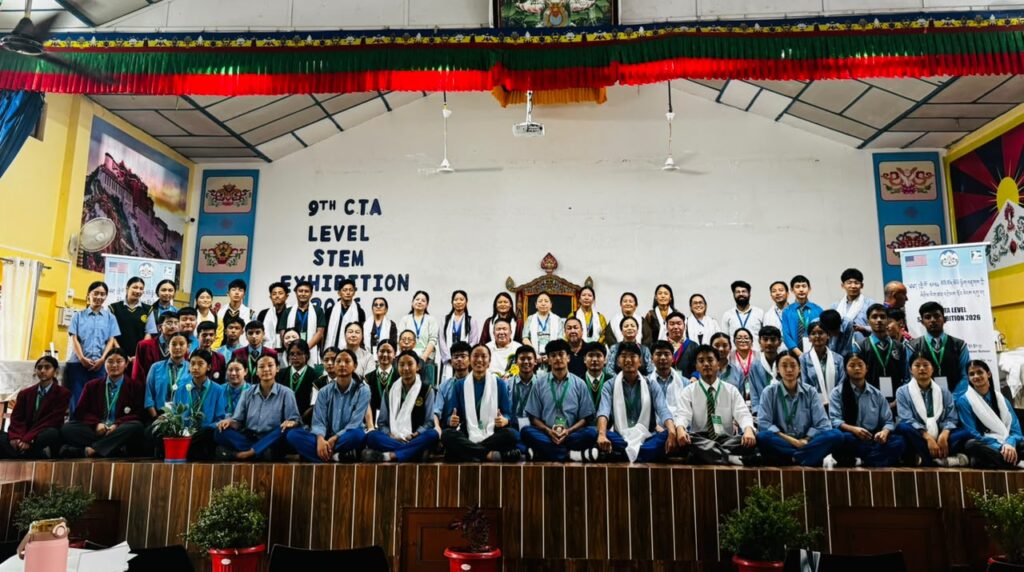
| Health workers and physicians participating in the conference. |