
Governments concerned at the situation in Kirti Monastery[Friday, 17 June 2011, 8:46 a.m.]
GENEVA:
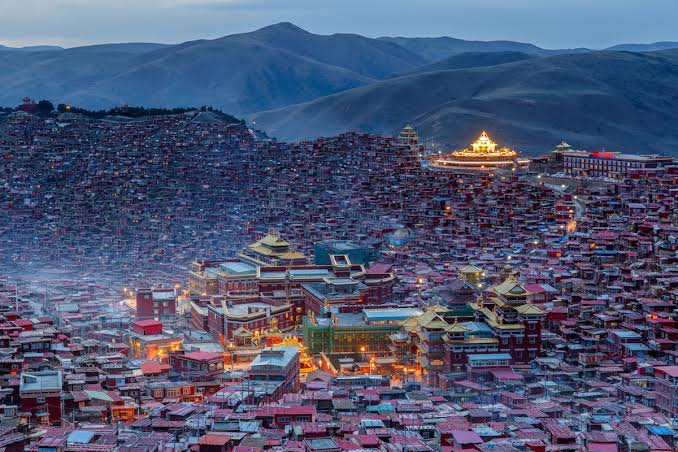
Several governments expressed their concern about the current situation
in Kirti Monastery in Ngaba Eastern Tibet during the UN Human Rights
Council held discussion under agenda Item 4 which deals with Human
rights situations that requires the Council’s attention.
 |
| Tenzin Samphel Kayta, speaking on behalf of Society for Threatened Peoples, Non-violent Radical Party and International Educational Development, apprises the UNHRC on the grave human rights situation in Tibet |
A
Hungarian delegate on behalf of the European Union said EU is deeply
concerned at the deterioration in the human rights situation in China.
The EU calls on the Chinese authorities to immediately end arbitrary
arrests and disappearances, to clarify the whereabouts of all
disappeared persons and to release all of those who have been detained
for exercising their right to freedom of expression. The EU also calls
on the Chinese authorities to refrain from the use of force in dealing
with the situation at the Kirti monastery, and to allow independent
observers to the site.”China’s growing number of arrests,
detention of lawyers, bloggers, activist, religious believer and their
families and use of extra legal measures undermines the rule of law,”
said a delegate of the United States of America. “The government
restricts freedom of religion and expression including criminalizing
dissent on the internet. The government has reportedly removed 300
Buddhist monks from the Kirti Monastery.”A delegate of Belgium
said “Human right in China has not improved since last month. Internet
censorship has increased and obstacle placed on foreign media workers
in Beijing. Belgium appeals Chinese authorities to end these measures;
to clarify on peoples disappeared of the event which took place in the
Kirti Monastery. Chinese authorities should explain themselves on that.
Belgium urged china to ratify ICCPR.”A Swedish delegate said
“Sweden concerns on China’s setback on the rule of law, freedom of
expression and increased harassment of Human Rights defenders. Sweden
called on China to refrain from use of force at Kirti Monastery; allow
independent observer to visit the site and to allow all Tibetans to
exercise their rights without hindrances.””Czech Republic is
concern about tense situation in the Kirti Monastery in Sichuan
Province in China. We strongly call upon government to establish an
environment where human rights such as freedom of expression and
assembly and rights of national minorities including Uyghur and
Tibetans are fully respected,” said a delegate from the Czech Republic.Mr
Tenzin Samphel KAYTA, speaking on behalf of Society for Threatened
Peoples, Non-violent Radical Party and International Educational
Development highlighted the grave human rights situation in Tibet.In
his speech, Mr KAYTA recalls the Sub-Commission on Prevention of
Discrimination and Protection of Minorities resolution 1991/10
entitled, “Situation in Tibet” adopted on 23 August 1991 in which the
expert body alerted the international community and expressed
“concerned at the continuing reports of violations of fundamental human
rights and freedoms which threaten the distinct cultural, religious and
national identity of the Tibetan people” and called upon the Government
of the People’s Republic of China “fully to respect the fundamental
human rights and freedoms of the Tibetan people.”He further
said that many Tibetans lost their lives during the 2008 Uprisings on
the Tibetan Plateau for exercising their rights of free speech and
assembly. In this respect the Committee Against Torture and the Special
Rapporteur on extrajudicial, summary or arbitrary executions have urged
the Chinese authorities to conduct investigations to bring those
responsible to justice. However, the Chinese authorities continuously
failed to provide the true information to the outside world. In its
last follow-up communication to the Chinese authorities, the Committee
said: “The State party should conduct a thorough and independent
inquiry into the reported excessive use of force, including against
peaceful demonstrators and notably monks, in Kardze county, Ngaba
county and Lhasa. The State party should conduct prompt, impartial and
effective investigations into all allegations of torture and
ill-treatment and should ensure that those responsible are prosecuted.
The State party should ensure that all persons who were detained or
arrested in the aftermath of the March 2008 events in the Tibetan
Autonomous Region and neighbouring Tibetan prefectures and counties
have prompt access to an independent lawyer and independent medical
care and the right to lodge complaints in a confidential atmosphere,
free from reprisal or harassment.”He also said “Article 35 of
China’s constitution guarantees right to freedom of opinion and
expression; freedom of speech, of the press, of assembly, of
association, of procession and of demonstration. However, in practice,
the Chinese authorities have been targeting and harassing human rights
defender, journalists and bloggers by using spurious and vague national
security related charges to silence their critic views. To cite some
example, on 2 June, Tashi Rabten, editor of banned literary magazine
‘Shar Dungri’ (Eastern Snow Mountain) was sentenced to 4 years in
prison on charges of “inciting activities to split the nation” by the
Ngaba Intermediatary People’s Court. Similarly, last December the same
court sentenced three Tibetan writers namely Dhonkho and Buddha to four
years and Kelsang Jinpa to three years respectively on similar
charges. On 8 November 2008, Norzin Wangmo, a female cadre and writer
from Ngaba (Chinese: Aba) was sentenced to 5 years for passing news
through the phone and internet about the situation in her area after
protests broke out.”He even referred to the 8 June Press
Release of the UN Working Group on Enforced or Involuntary
Disappearances in which the experts urged Chinese authorities to
provide full information on the fate and whereabouts of over 300 monks
of the Ngaba Kirti Monastery who reportedly disappeared on 21 April
after a military raid at the monastery. In its response, China’s
Foreign Ministry spokesman Hong Lei said there had been “no such thing
as enforced disappearance” of the monks. However, the spokesman
admitted to have “conducting legal education” in the Kirti monastery
but avoided the use of the words “patriotic re-education” conducting by
communist cadres. As the monks were being driven away in large trucks,
the group of laypeople – mainly in their forties or older – who had
been standing vigil at the monastery gate were beaten “mercilessly” by
police according to sources. “People had their arms and legs broken,
one old woman had her leg broken in three places, and cloth was stuffed
in their mouths to stifle their screams” sources informed. Under such
brutal crackdown, two elderly Tibetans namely Dongko, male, aged 60 and
65-year old Sherkyi died while attempting to prevent the monks from
being taken away by the security forces.He told the Council
that “the Chinese authorities have now closed “Tibet Autonomous Region”
to outsiders for the second time this year including Tibetans from
neighbouring provinces. We wonder why they need to carry out such a
restriction if the situation is “normal”, as the Chinese authority
always claims. Despite the brutal crackdown they face the Tibetan
people continue to risk their lives in protests when, as recently as on
9 and 10 June, the monks and nuns staged protests alone or in small
groups in the Kardze (in Chinese, Ganzi) Tibetan Autonomous Prefecture
calling for freedom and the return of their spiritual leader the Dalai
Lama. Within the last week alone, a total of 17 Tibetans have
protested in Kardze’s downtown centre, a Tibetan resident of the town
told RFA on Monday, speaking on condition of anonymity. The
whereabouts of these protesters again remain unknown.” Given this
background, it becomes the responsibility of this Council to address
chronic human rights situation faced by Chinese, Mongolians, Tibetans
and Uyghurs under Communist China. In his concluding speech, he urged
the Chinese authorities to receive the UN High Commissioner for Human
Rights on a fact-finding mission that will include visits to Inner
Mongolia, Tibet and Xinjiang.In its right of reply, the Chinese
delegation said “Chinese delegation opposed to few western governments
and NGOs making unreasonable accusation against China on human rights
situation in China. China has made great achievement on human rights
field after opening up to outside world. Freedom of expression is
protected by the China’s constitution. Chinese people can express their
views on national economy and people’s livelihood. Small number of
clergymen in Kirti Monastery engaged in activities disrupting social
order and creating incidents of burning, looting, smashing and beating.”The
UN Human Rights Council will conclude its three-week session on 17
June. The 18th session is scheduled from 12 – 30 September 2011.