

The Tibet News Bureau of Central Tibetan Administration interviewed professor Su Jia Hong from Fooyin University in Taiwan. Professor Su had studied Tibetan in exile for a long time and has published two major books on the development of Tibetan democracy in exile for the Chinese readers. He is also a great admirer of His Holiness the 14th Dalai Lama.
Following is the English transcript of the original interview in Chinese.
TNB (Tibet News Bureau): Today we are going to discuss a very important topic on the reincarnation of His Holiness the Dalai Lama. Professor Su will speak his own views on the issue.
A few years back, at the invitation of Sikyong Dr Lobsang Sangay and Central Tibetan Administration, you visited Dharamshala for the launch of your book titled “Transformation of Democracy in exile”. This year in September, you have returned with your new book titled “Reincarnation in exile”. What do you find different between this and the last visit?
Prof. Su: There are two observations that I would like to share. First, the Tibetans have a very close relationship with local Indian people. Being able to foster such a friendly relationship is admirable and is likely to benefit the development of the Tibetan community in exile.
My second point is that I have personally studied the Tibetan democratic election system and have even closely observed three consecutive Tibetan elections and the transition of the respective Kashag[Cabinet] and Tibetan Parliament-in-Exile. Later on, I did in-depth research for a long time. I have found that Tibetans’ election in exile is particularly significant to them and there is maximum participation from the people. Generally speaking, the election system worldwide has changed drastically due to the advent of information and communication technology. People are encouraged to express their own views with the help of these technologies. Similarly, I have seen the changes taking place in the exile Tibetan community. There are certain differences of opinions but such differences are inevitable in a democracy. It is happening everywhere in the world, in Taiwan as well.
TNB: You had an audience with His Holiness the Dalai Lama during this visit. Could you please tell us what was your conversation with His Holiness about?
Prof. Su: In my meeting with His Holiness the Dalai Lama, I raised two questions related to Taiwan. I also asked His Holiness the kinds of attitude needed for devotees towards his/her master. And His Holiness replied with some references to some of Master Tsongkhapa’s teachings. I didn’t quite fully understand it so I need to work on that more.
My second question was about Taiwan where I informed His Holiness about Taiwan’s Presidential and Legislative Council election scheduled to take place on 11 January 2020. In that regard, I asked His Holiness to send his blessing for the people of Taiwan and I am sure that we have received his blessings. His Holiness also cracked a joke and said, “I prayed for 70 years for Tibet’s cause but there is no concrete result”.
TNB: You have studied the election process of exile Tibetan community and also published two books titled “Democracy in Exile” and “Transformation of Democracy in Exile” and now recently you have published your third book “Reincarnation in exile”. Could you please tell us briefly about the last book?
Prof. Su: My second book was about His Holiness the 14th Dalai Lama’s political retirement from exile Tibetan political system. At the time everyone was more focused on the subject of the devolution of His Holiness’ temporal power but now people are paying more attention to his reincarnation. Even though the reincarnation issue has different views from both sides and especially from the Beijing side, His Holiness is hoping both sides will have a common view. It doesn’t matter what is the subject of the issue, I believe firmly that His Holiness is always hoping for the best outcome and therefore, I respect him.
In my latest book, I have covered views from both sides: Chinese perspectives as well as perspectives of His Holiness the Dalai Lama on the issue of His Holiness’ reincarnation. I have also included my personal religious perspective and tried to accumulate views from high Tibetan lamas including Gosok Rinpoche and Lhatse Tulku Rinpoche through interviews. I have also done extensive research.
There are also highlights of relations between Taiwanese and the Tibetan diaspora in Taiwan. According to reports, there are more than two hundred Tibetans in Taiwan and besides five major Tibetan Buddhist Sect, Jhonang sect is also prevalent. There is a large number of Taiwanese who are followers of Tibetan Buddhism and most of them are from the northern part of Taiwan.
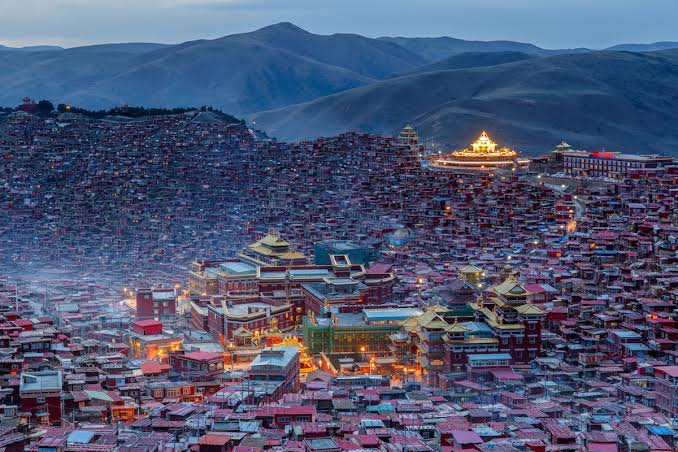
Lastly, the book discusses how the inheritance of Buddhism in Taiwan came from many different countries including India, China, especially from the Serta Larung monastery. Based on the research, we have found that Buddhism in Mainland China has originated from the Serta Monastery in Tibet. This can be concluded as a result of my research.
TNB: Central Tibetan Administration’s “Middle Way Policy” seeks meaningful autonomy for Tibetans within the scope of the constitution of the People’s Republic of China but the Chinese government always call it a “separatist” position. In reality, “Middle Way Policy” can resolve the problems between Tibet and China. It is a win-win solution. What is your view?
Prof. Su: The Middle-Way policy is proposed by His Holiness the Dalai Lama to peacefully resolve the issue of Tibet. Democracy around the world have emerged from mass revolutions, but Tibetan Exile Democracy is totally different; it was not brought by mass revolution rather it came as a gift from His Holiness the Dalai Lama.
What I specifically admire about the Middle Way Policy is that it has democratic legitimacy. It is legally adopted by the Tibetan Parliament-in-Exile and endorsed by the CTA as the official policy on the issue of dialogue between the envoys of China and the Dalai Lama. 65%of Tibetan people have supported and voted for the Middle Way Policy. And this is not only the Dalai Lama’s decision; the majority of Tibetan people supported it. I believe that the new CTA leadership after 2021 election will carry on the responsibility based on the Middle Way Policy and not deviate from it. However, the Middle Way Policy is against the call for Tibetan Independence. But I believe that the endorsement for Middle Way Policy in Tibetan community will grow in the future.
TNB: The Communist Party of China is an atheist government but contradictory to that, they are always claiming that the Dalai Lama’s reincarnation should be decided by them. How do you look at this contradiction?
Prof. Su: The Communist Party is an atheist and we all know that. There is nothing to defend otherwise. If a country needs to improve its governance or development, then the party must listen to its citizens and respect their voices. So far I haven’t seen any changes or compromises from the Chinese regime. More importantly, what the Chinese government speaks on the reincarnation of the Dalai Lama and Tibetan exile society, none of those is valid or factual.
TNB: This is my final question. Could you tell us briefly your views on the Tibetan freedom movement?
Prof. Su: In terms of the democratic election system of Tibetans in exile, there are differences of views but such differences are inevitable in a democracy. However, I believe that the Tibetan people themselves should be able to decide the future course. They should not always depend on His Holiness the Dalai Lama. Secondly, the increasing phenomenon of Tibetans migrating to the West might pose difficulties in the efforts towards preserving the Tibetan culture and identity. These are my thoughts on the current Tibetan movement.
TNB: Prof. Su, thank you so much for speaking with us!