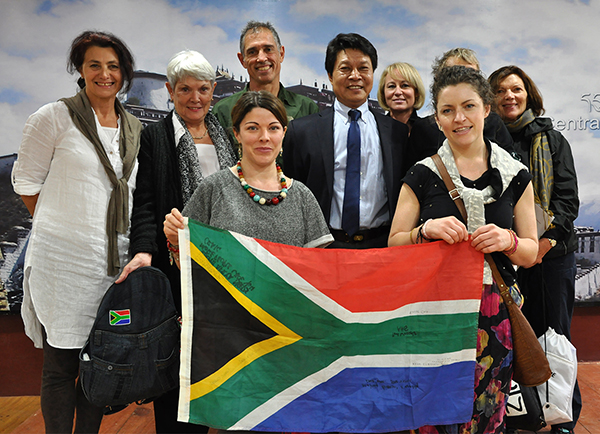

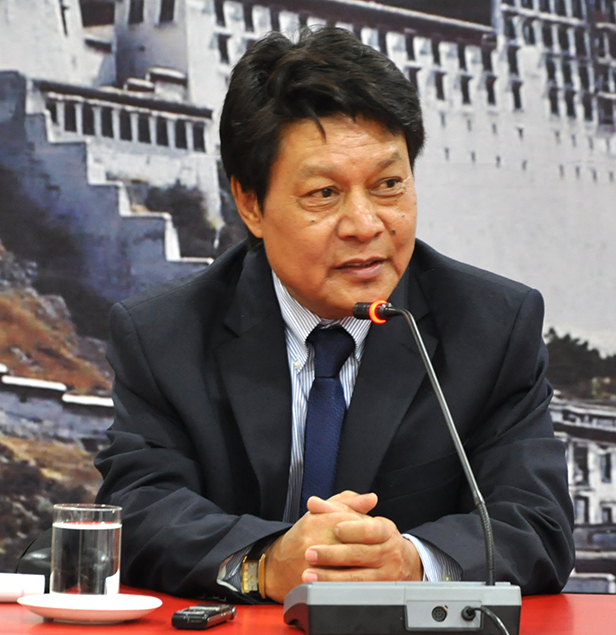
DHARAMSHALA: Mr. Tashi Phuntsok, the Secretary for Information of the Department of Information and International Relations (DIIR), Central Tibetan Administration, met with a group of visitors from South Africa at DIIR hall today.
The Secretary began the session with a brief introduction of the Tibet issue beginning with the occupation of Tibet by China in 1949 and the subsequent flight of His Holiness the Dalai Lama into exile followed by thousands of Tibetans. He also apprised the group about the establishment of the Central Tibetan Administration (CTA); to restore freedom for Tibetans, to look after the welfare of Tibetans in exile and promote the Tibet issue across the globe.
He explained the structure of the CTA; the three pillars of democracy; Kashag, Judiciary (Executive) and Legislature and the policies framed by it. Explaining in detail the seven departments of CTA and the 12 Offices of Tibet across the world, the Secretary said that services provided by the CTA reach the grass-root level of all Tibetan communities around the world.
“CTA is able to not only provide the political impetus for Tibetan struggle, not only the preservation of Tibetan culture, but also to look after the welfare of Tibetans all over the world through democracy and modern education,” he said.
He also mentioned a blend of modernity and tradition in the composition of the Tibetan Parliament-in-Exile. “It consists of 44 members with 10 representatives each from the three traditional provinces of Tibet, 2 each from the four schools of Tibetan Buddhism and Bon religion and two each from Tibetan communities in North America and Europe” he said.
“Through all these efforts, we manage to keep alive the Tibet issue, voice the condition of Tibetan people in Tibet around the world. The situation of Tibet is deplorable and very tragic; nearly around 140 Tibetans have self-immolated. The whole thing about self-immolation is because the situation in Tibet is so grave that they don’t find any avenue to express themselves and they find it extremely difficult to live under China in that frustrating and suffocating repressive situation” he concluded, leaving the floor open for Q&A.
Mr. Klasie Wessels, Director of Street School in South Africa, initiated the program in 2012. It was initially intended for personality development and learning different culture, which later altered to ‘learning the Tibetan situation’, and it was the 11th group to visit Dharamshala under the program.