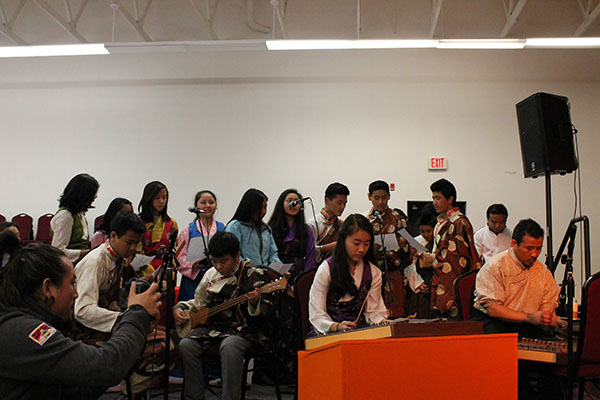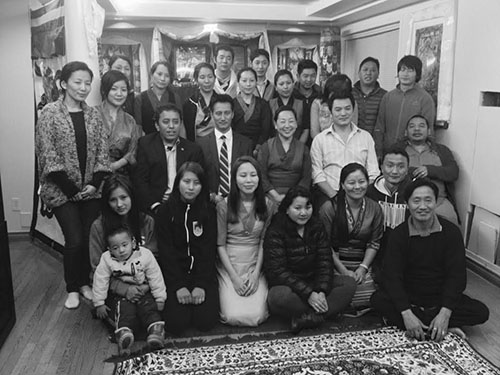

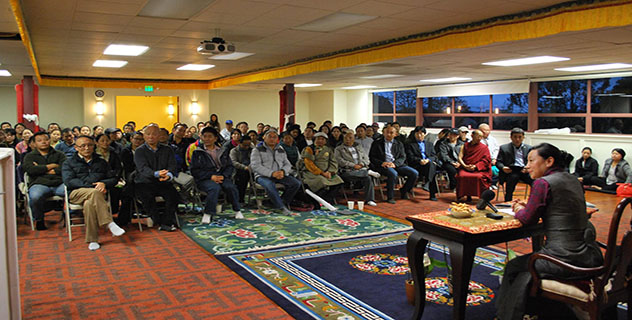
SAN FRANCISCO: In her maiden visit to the Tibetan communities on the West Coast region of North America, the Tibetan communities warmly welcomed DIIR Kalon Dicki Chhoyang. She spoke on many important issues pertaining to the Tibetan movement. Her special efforts in reaching out to youth and students in all the places were highly appreciated. She also met with board members of the Tibetan Associations separately and commended them for their hard work towards the welfare of their community.
Some of the topics she addressed included the Middle Way Approach (MWA) of the Central Tibetan Administration (CTA), the current situation inside Tibet, Chinese outreach, Tibet Corps, the importance of Tibetan culture and language, revitalization of Tibet Support Groups (TSG), Tibetan Green Book, and the Dolgyal issue.
She emphasised the importance of reading the documents relating to MWA, especially the “Memorandum on Genuine Autonomy” which is readily accessible online (www.middlewayapproach.org). She spoke strongly on the important role of individual Tibetans everywhere, particularly Tibetan youth, for Chinese outreach. One of the topics she touched upon which was widely appreciated was what she referred to as “the misbelief that the future of the CTA is only the responsibility of the Kashag, Tibetan Parliament in Exile (TPiE) and staff in Dharamshala”. “The future of the Central Tibetan Administration and the strengthening of its capacity to fulfill the dreams of Tibetans inside Tibet is a collective moral responsibility of all Tibetans” she said. In that spirit, she highlighted the CTA’s initiative for Tibetans with different professions to serve the CTA through Tibet Corps (www.tibetcorps.org). While thanking the more than 40 Tibetans who have volunteered in the past two years since the program began, she encouraged more people to join.
With regards to political advocacy, Kalon Dicki Chhoyang urged local Tibetan Associations to work closely with local Tibet Support Groups which have historically played a key role in general public outreach on Tibet. “A thriving network of Tibet Support Groups is crucial for continued international support for Tibet and as Tibetans we must make sure that momentum is maintained” she said.
On the issue of the Tibetan Green Book, she reminded Tibetans that more than the financial value, a Green Book contribution symbolizes one’s recognition and support for the Central Tibetan Administration and its role as the leading body to fulfill the aspirations of Tibetans inside Tibet.
With Tibetan youth, especially those who were born in the West she underlined the importance of language as part of one’s Tibetan identity and that although one may not be able to currently speak, as demonstrated by so many non-Tibetans, with determination and steady effort one can still learn as an adult. While thanking the dedicated teachers of the Tibetan weekend schools, and commending parents for sending their children for weekend lessons, she said such effort must be complemented in a home environment with, for example, the daily usage of Tibetan language, Tibetan storytelling, practice of cultural traditions such as the observations of religious holidays, and New Year.
Report filed by : Office of Tibet, Washington DC