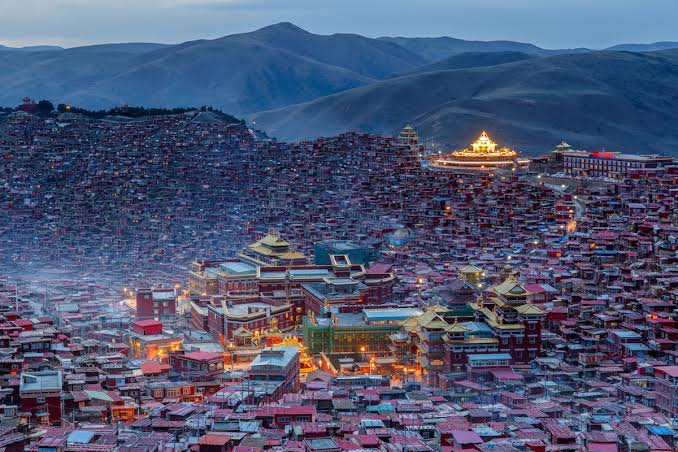

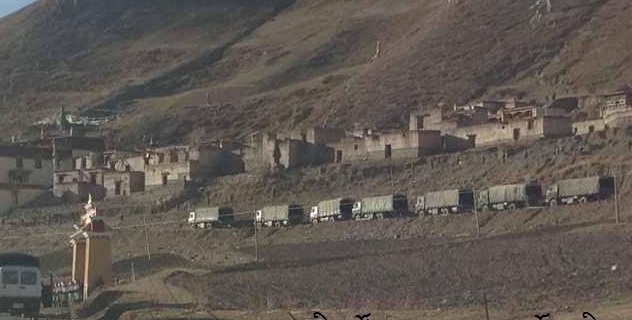
DHARAMSHALA: The Central Tibetan Administration has expressed deep concern over the continuing government crackdown on Tibetans in Driru county in Nagchu prefecture in eastern Tibet (incorporated into the so-called Tibet Autonomous Region) since the Chinese government brutally crushed the protest against its measures forcing Tibetans to undergo patriotic re-education and hoist Chinese flags over their homes ahead of its National Day on 1 October.
A huge number of Chinese officials and security forces have been deployed across the region to enforce the measures, which include forcing Tibetans to swear allegiance to the Chinese Communist Party and denounce their most revered spiritual leader, His Holiness the Dalai Lama.
Media reports say thousands of Tibetans have been arbitrarily arrested since protest erupted against the Chinese government’s repressive measures, which local Tibetans described similar to those imposed during the Cultural Revolution. The Tibetans in Driru are being subjected to gross human rights abuses such as arbitrary detention, torture, unlawful imprisonment and enforced disappearance, human rights groups say. The Chinese authorities conduct frequent raid at homes and force Tibetans to undergo 24-hour political indoctrination.
A latest report coming out of Tibet say three monks of Tarmoe monastery in Nagshoe Driru county were arrested on 23 November when they on winter holiday in Lhasa. Their whereabouts and well-being remain unknown. The monastery remained shutdown after the deployment of heavy security forces there and some villages in its vicinity. Similarly, security forces have laid siege to some other monasteries like Rabten monastery and Drongna monastery. Eight monks of Rabten monastery, who have traveled to Palyul, Derge, Sershul and Serthar in Karze (incorporated into China’s Sichuan Province) for study, have been arrested.
Police firing on Tibetan protesters
The security forces opened fired at peaceful Tibetan protesters who were demanding the release of a fellow Tibetan in Dathang township in Driru county on 6 October. The Tibetans gathered in front of the government office to demand the release of Dorje Draktsel, a Tibetan who was arrested from Nagchu township, apparently for his persistent advocacy of freedom and truth on the issue of Tibet. The police firing left four Tibetans dead and over 60 Tibetans injured.
The Chinese authorities cut off phone and internet lines following the incident.
The shooting incident followed the arrest of over 40 Tibetans on 29 September. They were arrested when they protested against the repressive measures in Mowa village in Driru. The arrest drew strong protest from Tibetans in the neighbouring villages of Taklhay, Bahro, Lavog and Kona, who gathered in Mowa village to demand the release of the arrested Tibetans.
The police firing drew condemnation from Amnesty International, a prominent human rights group. “It is outrageous for the police to start firing on a peaceful gathering. This latest incident shows that the Chinese authorities have done nothing to rein in excessive use of force by their security forces or to increase respect for Tibetans’ right to freedom of peaceful assembly,” Corinna-Barbara Francis, Amnesty International’s China Researcher, said in a statement on 9 October.
“Across the Tibetan region the situation remains tense, the Chinese authorities are doing nothing to improve it by continuing to deny Tibetans their most basic human rights. The daily harassment and humiliating treatment have to end,” said Francis.
Singers and writers targeted
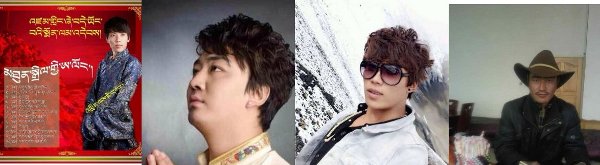
The Chinese authorities have targeted Tibetan singers and writers in the crackdown.
According to the Tibetan Center for Human Rights and Democracy, a human rights group based in Dharamsala, two Tibetan singers – Trinley Tsekar, 22 and Gonpo Tenzin, 25 – were arrested by the Chinese police in late November. Trinley Tsekar, a native of Serkhang village in Driru township, was arrested for distributing a DVD that contained songs he had sung on Tibetan identity, culture and language. Sources said Trinley Tsekar was a well-known singer who used to expressed the pain and suffering of Tibetan people through his songs. His family members, including his old mother, wife and two children, are deeply concerned about his well-being and whereabouts.
The other well-known singer, Gonpo Tenzin, a native of Septha Village in Shagchu Town, Diru County, was arbitrarily arrested on unknown charges in Lhasa on 30 November. Friends of the singer suspect that he might have been arrested in connection with his songs that contained lyrics calling for the promotion and propagation of Tibetan culture, literature and language. He released a special album titled “No Losar for Tibet”, the title song of which became hugely popular among Tibetans. With the growing repression and relentless self-immolations in Tibet, the title song “No Losar for Tibet” touched a chord among many Tibetans who felt that celebrating Losar (Tibetan New Year) would be inappropriate given the situation inside Tibet, TCHRD reported.
In early November, over 17 Tibetans were arrested for protesting against the arbitrary arrest of Tsultrim Gyaltsen, a writer, and his friend Yougyal, in Tenkhar village near Shamchu town in Driru county.
As part of its ongoing crackdown in enforcing mass line policy, China has sentenced nine Tibetans to varying prison terms. Among those sentenced is Topden, a 30-year-old nomad who writes under the pseudonym Dro Ghang Gah. He was arrested on 28 October and sentenced to five years in prison on 30 November, TCHRD said, quoting sources as saying that he was imprisoned for allegedly “keeping contacts with Dalai clique and engaging in activities to spilt the nation.” He has written a poem about the Chinese atrocities in Tibet particularly in Nagchu area in 1969 when thousands of Tibetans were starved, imprisoned and killed. The poem contains details of recent crackdown on Tibetans in Driru county including beating and continued detention of 69-year-old Dayang and protest against mining activities.
Two other Tibetans – Tenzin Rangdol, a 30-year-old layman and Kunchok Choephel, a 28-year-old monk – were sentenced t0 five and six years in prison respectively.
The human rights group said the identities of six others were not immediately known due to extreme government censorship and surveillance in the region.
Chinese government sensitive to political protests in Driru: US Congressional Commission
The US Congressional Executive Commission on China has released a special report on the Chinese government’s crackdown on Tibetan protests in Driru region.
“The scale of security responses to recent events in Driru, however, likely reflects Chinese government and Communist Party sensitivity toward political protests in the county. Driru’s role in the series of Tibetan self-immolations focusing on political and religious issues provides significant context for the series of detentions and protests.
UN Must Hold China Accountable its Human Rights Pledges
In view of the worsening human rights situation in Driru region, the Central Tibetan Administration (CTA) based in Dharamsala has called for urgent intervention of the world leaders and human rights bodies to urge the Chinese government to end its crackdown. In October, the CTA office in Geneva has briefed the UN officials about the urgent situation in Driru. Moreover, Kalon Dicki Chhoyang of the Department of Information & International Relations raised the issue in her testimony before Italian Senate’s Extraordinary Commission for the Protection and Promotion of Human Rights in Rome on 5 December.
The deepening crackdown on Tibetans in Driru is a blatant violation of the pledges to “further protection of the rights and interests of minority ethnic groups” that China made to become a member of the UN Human Rights Council. The Central Tibetan Administration appeals to the UN member States to hold China accountable for its ongoing human rights abuses and prior commitments. It calls for the highest level of China’s human rights performance now that it has become a member of the UN Human Rights Council.