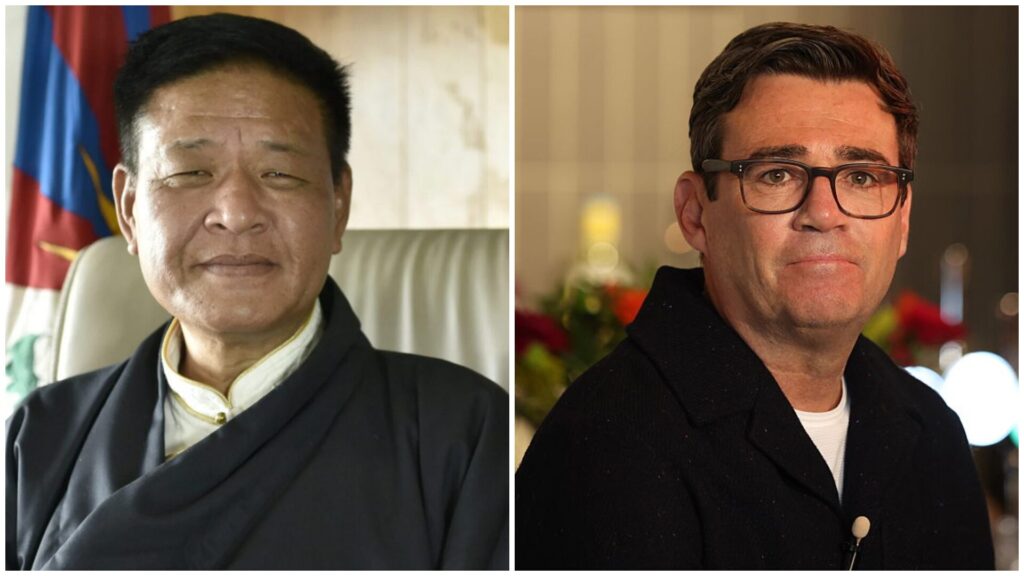


- Dr Thupten Jinpa leading a session during the workshop in New York
NEW YORK: A three-day workshop on Buddhism and retreat for university students of Tibetan, Himalayan, and Mongolian descent concluded here on 8 July.
60 students from 16 states and provinces in the United States and Canada participated in the retreat held at Garrison Institute in the outskirts of New York from 5 – 8 July.
Geshe Dadul Namgyal, a former religious assistant to His Holiness the Dalai Lama and current faculty member of Emory Tibet Science Initiative of the Emory University in Atlanta, and Lama Pema Wangdak, a founder of the Vikramasila Foundation and the Palden Sakya Centers, served as core instructors during the retreat. Gelek Rinpoche, a Tibetan spiritual master and founder of Jewel Heart Centers headquartered in Ann Arbor, Michigan, and Dr Thupten Jinpa, English translator to His Holiness the Dalai Lama and director of the Montreal based the Institute of Tibetan Classics, joined the retreat.
Geshe Dadul Namgyal led four sessions — (1) Introduction to the Buddhism, (2) Rebirth and karma, (3) Noble Eight-Fold Path, and (4) Buddhism and Science. He introduced Buddhism in such a beautiful setting that the students didn’t face any difficulty in connecting them with it. His exceptionally well-prepared power-point presentations and his amazing teaching skill captivated the attention of the students early on the retreat.
Lama Pema Wangdak led the sessions on Introduction to Meditation, Six Paramitras, and Compassion and Wisdom. His gentle and compassionate nature and his elaborated explanations on each of the topics he dealt with created enthusiasm among the students to learn further. Lama Pema Wangdak recommended students to treat the book, A Guide to the Bodhisattva’s Way Of Life by Shantideva, as life’s manual.
Gelek Rinpoche began the retreat by speaking on the urgency for the Tibetan youth to understand and preserve the Tibetan Buddhist culture as well as by giving a historical introduction to the different schools of Tibetan Buddhism. Rinpoche’s passion for sharing and his humble and modest nature had an immense impact on the students.
Rinpoche’s presentations was preceded by an inaugural address of Mr Lobsang Nyandak, Representative of His Holiness the Dalai Lama to the Americas, in which he shared observations about the moral degeneration among the Tibetans lately and reminds the youngsters about the importance of moral and ethics in ones life to make it meaningful.
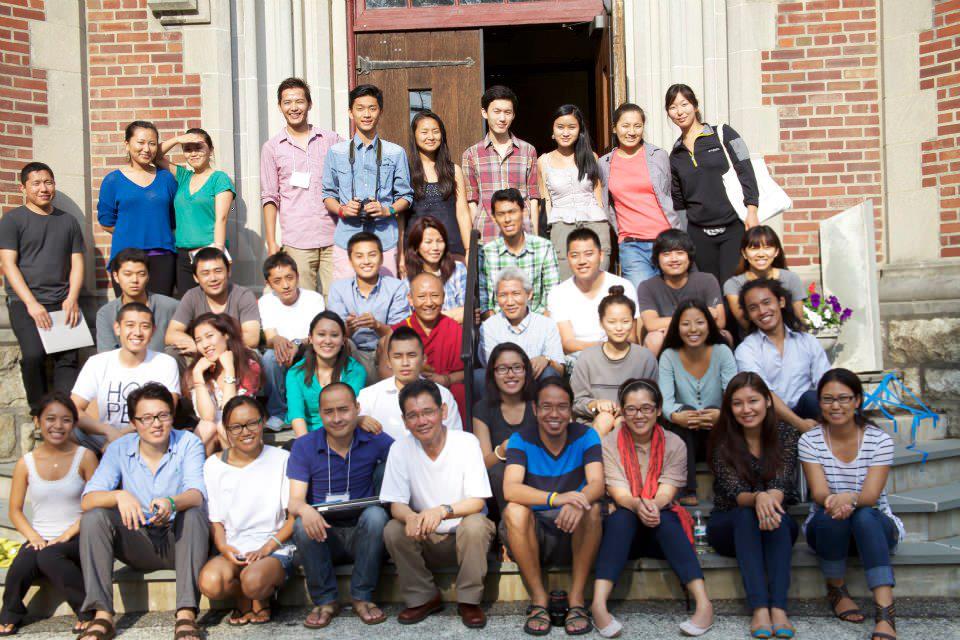
- Group photo of participants for the retreat session for University students in New York
On the final day of the retreat, Dr Thupten Jinpa led the sessions on ‘Unique Features of the Tibetan Buddhism’ and ‘Lojong: Applying Buddhist Teachings in Everyday Life’. After introducing cores of Tibetan Buddhism and Tibetan Buddhist culture, Dr Jinpa emphasised the importance of getting culturally literate and also more importantly emotionally connected with one’s own cultural heritage. He gave an example of his own experience. He said, although his understanding of both English and Tibetan poetry is almost equal, he doesn’t get a similar punch that he gets from reading Tibetan poetry from reading English poetry. This, he said, is primarily because of his emotional connection with the Tibetan language and Tibetan cultural heritage. Once emotionally connected, he added, the way one understand and relate to once cultural instruments such as art, architect, music etc change and the relationship become much deeper and stronger.
In the sharing circle led by Dr Thupten Jinpa on the final day, the students suggested for longer retreats in future. They also suggested expanding the topics to include discussions on Tibetan art and culture, allowing time for group discussions, and introducing yoga exercises along with meditation in the morning. The suggestions also included giving recommended readings before coming to the retreat.
Commenting on the retreat, one of the students e-mailed stating that ‘these 3 days have been one of the most productive days of my summer’ and another student wrote ‘we all loved the program’. Another student also e-mailed commenting that ‘it was remarkable experience’ and ‘I am encouraged and even more provoked than I was to embody the Tibetan culture as well as Tibetan Buddhism’. A student from Himalayan descent wrote, ‘The retreat was very educational and helped me experience our culture and religion in a beautiful setting’.
The three-day retreat was hosted by the Dalai Lama Trust in New York and the Montreal based the Institute of Tibetan Classics with a financial support from Camella Foundation. The retreat is presented and conducted by Office of Tibet in New York.