The illusion of calm in Tibet
–The Economist
After a botched response to bloody riots in Tibet in March, the
Chinese authorities have ruthlessly restored order. But anti-Chinese
resentment is deep-seated

|
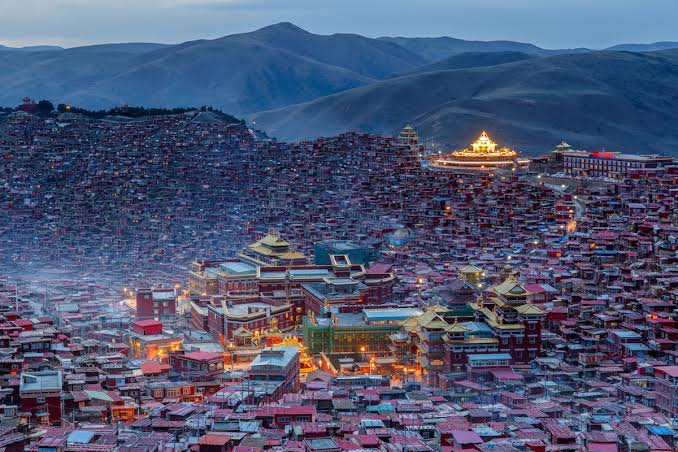
VISITORS to Rongwo Monastery, a sprawling 700-year-old complex
on the edge of the Tibetan plateau, might notice little untoward. There
are no open signs of protest, of the sort that presaged vicious rioting
in Tibet in March. But in one shrine a monk chants near a portrait of
the Dalai Lama, prominently displayed despite the government’s
diatribes against the exiled spiritual leader. And police cars patrol
the streets nearby: nervous, say residents, that protests could erupt
anew.
Security around Rongwo, as it is known to Tibetans (its Chinese
name, like that of the adjacent town, is Longwu), is far less visible
than it was a few weeks ago when police surrounded the monastery,
raided monks’ quarters and took many away to jail. No police are to be
seen inside the hillside monastery. But a monk says some 200 of his
colleagues in the 500-strong community have been detained since Rongwo
joined the wave of protests that swept the plateau. Many are still in
custody, and, says the monk, it is “very tense”. Near Rongwo is a much
smaller monastery, which until recently was a popular destination for
lovers of Tibetan religious artefacts, production of which creates
hundreds of jobs in the area. It is now all but empty of visitors. A
monk there says two of his colleagues have been seized by security
officials.
As Beijing prepares to host the Olympic games in August, the
authorities are trying, unconvincingly, to reassure the world that calm
has returned to Tibet and ethnic-Tibetan parts of neighbouring
provinces, such as Qinghai, to which Rongwo belongs, and much of which
is considered by Tibetans part of their historical territory.
On June 21st the Olympic torch was paraded through the Tibetan
capital, Lhasa, without incident but under huge security. Three days
later the authorities announced that foreign tourists would be allowed
back into Tibet for the first time since rioting erupted in Lhasa on
March 14th. But they were supposed to join guided tours and stick to
preset routes. On July 1st and 2nd Chinese officials held talks in
Beijing with representatives of the Dalai Lama, the second such meeting
since the riots. This time the Tibetans were treated to a tour of
Olympic facilities in Beijing. But the talks got nowhere. The Dalai
Lama’s team agreed to talk again in October but said that “in the
absence of a serious and sincere commitment” on the Chinese side, it
would “serve no purpose”.
Despite China’s promises of greater openness for the Olympics,
foreign journalists still need special permission to visit Tibet. It is
usually refused. About 50, none of them from The Economist, were
invited to cover the torch parade in Lhasa, but were closely watched.
Your correspondent reached Rongwo without hindrance, but was stopped
twice at police checkpoints while leaving. Travellers say security is
much tighter in Tibetan areas of Sichuan where several demonstrators
were shot by security forces in March. In some monasteries police have
seized computers and mobile telephones from monks to suppress news of
the security operation.
Chinese officials want to win favour in the West by renewing
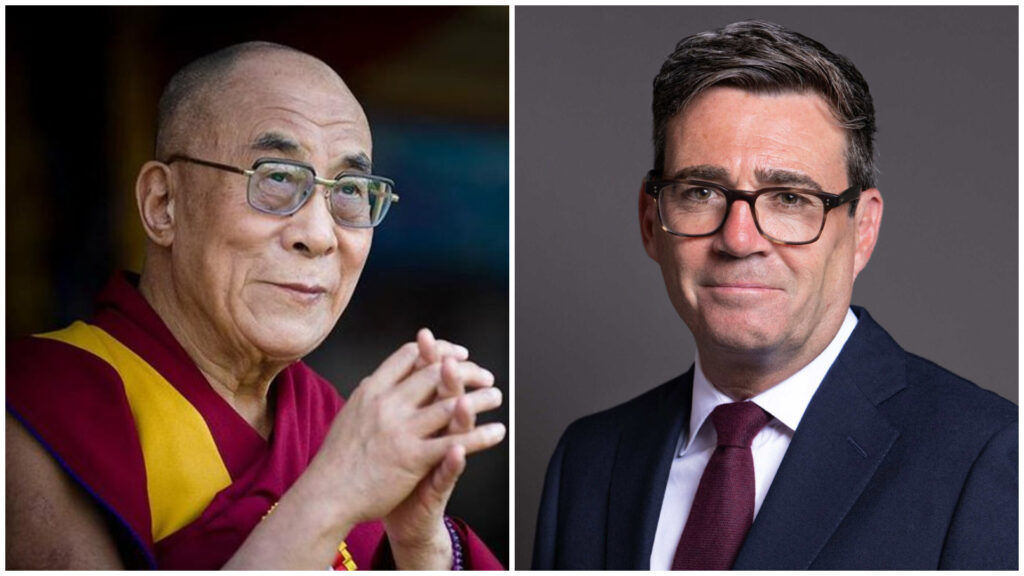
talks with the Dalai Lama’s aides. The Dalai Lama is a moderate: many
Tibetans do not share his willingness to accept Chinese sovereignty in
return for genuine autonomy. But some Chinese officials see him as the
source of their Tibet problem. The Communist Party chief in Tibet,
Zhang Qingli, used the torch ceremony to assert that Tibet could
“thoroughly smash the separatist plots of the Dalai Lama clique”. Even
the usually tongue-tied International Olympic Committee expressed
regret at the remark. Some government-controlled websites omitted it in
reporting the speech. This could reflect differences over whether to
seek a compromise with the Dalai Lama or to try even harder to erase
his influence.
Chinese leaders must be relieved by America’s announcement on
July 3rd that George Bush will attend the opening ceremony of the
Olympics. Relations with the West, though strained by recent events in
Tibet, have not been critically damaged. France’s president, Nicolas
Sarkozy, had been the most outspoken of Western leaders in linking the
clampdown in Tibet to a possible boycott of the games. But this week,
after meeting China’s president, Hu Jintao, at the G8 summit in Japan,
he confirmed he would attend. Popular sympathy in the West for the
Dalai Lama and Tibet is outweighed by the fear of antagonising China.
The leadership in Beijing, however, must also be asking itself
whether the crisis in Tibet could have been avoided. As the dust
settles, perhaps temporarily, it has become clearer that the unrest
could have been far better handled. The rioting could have been stopped
well before it engulfed the city, averting the deaths of the 20 or so
ethnic-Han Chinese the government says were killed in fires set by the
rioters. And had the unrest been more quickly contained, it might not
have spawned sympathy protests across the plateau, even in monasteries
such as Rongwo, some 1,200km (750 miles) from the Tibetan capital.
The security forces’ response was highly unusual compared with
their usual tactics for dealing with protests in Tibet and elsewhere in
China. In 1993 the authorities quelled a riot in central Lhasa using
tear-gas and plastic bullets. This time they kept well away from the
rioting. Even if troops did shoot at people, it was not part of a
concerted effort to stop the unrest.

|
Your correspondent, who happened to be the only foreign
journalist in Lhasa at the time, reported in March that the rioting
began to spread along the city’s main thoroughfare, Beijing Road, in
the early afternoon, “a short while” after a clash between monks and
security officials outside Ramoche temple some 200 metres up a side
street. But in fact the eruption of citywide rioting was slower than
this suggested. Witnesses speak of the unrest outside Ramoche temple
starting before 11.30am, well before your correspondent arrived at
Beijing Road around 1.30pm and saw the rioting fan out through the
narrow alleys of Lhas’s old Tibetan quarter.
Until just before then the unrest, including some
stone-throwing by Tibetans at police, was confined to a small area.
Oddly, however, your correspondent was nearby in a government car at
around 12.30pm and saw no sign of beefed-up security. Foreign tourists
say three lorryloads of paramilitary troops arrived at around 1.15pm.
They crouched behind shields at the junction of Beijing Road and the
Ramoche temple side-street. But the troops scattered within a few
minutes after being bombarded with stones. Some of them abandoned their
shields. Photographs show that several of the security personnel,
although carrying shields and wearing helmets, were in civilian
clothes. They did not look ready to defend themselves against rioters,
let alone to try to stop them.
Why not read the riot act?
There are a number of possible explanations for this
half-hearted response to such a big incident. It may have been simple
bungling by a security apparatus overstretched by an outbreak of
large-scale protests earlier in the week outside big monasteries on the
edge of the city. Or perhaps official decision-making was paralysed by
differences over what to do, and hindered by the absence of Mr Zhang,
the party chief, who was in Beijing at the time.
The slow and cackhanded reaction is puzzling nonetheless.
China, after all, faces tens of thousands of protests and riots every
year, most swiftly contained. This month in Guizhou province, some
30,000 people protested in Weng’an county at the authorities’ handling
of the death of a girl they believed raped and murdered. It turned into
an ugly riot. But those involved were soon detained. There was also a
purge of the local political leadership, blamed for losing public
confidence.
The security forces and political apparatus had long been
nervous in Tibet especially. Indeed they had been gearing themselves
for just such an outbreak of violence. The government’s public claims
that Tibet was stable were disingenuous, as was their dismissal of past
unrest as ancient history. A series of anti-Chinese protests from 1987
to 1989 culminated in the imposition of martial law in Lhasa for more
than a year.
Since then, officials, not least the hardliner Mr Zhang, who
was appointed in 2005, have never let down their guard. In 2006 the
security forces, fearing attacks by Tibetan terrorists (not that any
are known to be active), staged what the government described as the
biggest protection operation in the region’s history. The occasion was
the grand opening of Tibet’s first rail link with the rest of China.
Official records say this involved a series of exercises for dealing
with terrorist and other “sudden incidents” (ie, riots), heightened
surveillance of monasteries and the deployment of thousands of
paramilitary troops along the railway line. In October last year police
and paramilitary officers in Lhasa rehearsed rapid-response measures to
cope with possible disturbances during the national-day holiday and the
Communist Party’s congress in Beijing.
In 2006 officials responsible for religious and ethnic affairs
in Tibet circulated a secret document predicting that the train link
could create instability in urban areas. Sure enough, ethnic-Han
Chinese, many of them recent migrants hoping to profit from a
train-related tourism boom, were the main targets of the violence in
Lhasa.
Even if officials had ignored such warnings, the protests at
Lhasa’s monasteries on March 10th and 11th were the biggest in the city
since 1989 and provided ample warning of bigger trouble ahead. And
Tibetan radicals outside China-not including the Dalai Lama, who
supports the Beijing games-had made no secret of their plans to use the
Olympics to publicise their grievances. On March 13th, the eve of the
riots, security in central Lhasa was visibly tighter than normal in the
city, which is ringed by military encampments. That day one of the
Dalai Lama’s representatives sent a letter to a senior official in
Beijing, warning him that unless managed carefully the situation in
Tibet might become “difficult for all of us to handle”.
Yet by 1.30pm on March 14th, as the riots began to spread
beyond the area near the Ramoche Temple, the security presence had all
but disappeared from that part of the city. Once the riots began to
spread, officials may have worried that any effort to control them
would lead to bloodshed that would damage China’s image in the build-up
to the games. But it is also possible that some officials actually
wanted the violence to escalate, as a pretext to impose blanket
security on the city long before the Olympics. They might have
calculated that tensions in Lhasa were likely to present a growing
security headache in the run-up to the games, and that foreign scrutiny
would become more intense. By refraining from an immediate bloody
crackdown they might even gain international kudos for avoiding a
Tiananmen-style response. Chinese officials may have been genuinely
surprised that, in the event, Western reaction was overwhelmingly
negative.
This response was fuelled by a widespread perception outside
China, encouraged by reports from Tibetans in exile, that large-scale
bloodshed had indeed occurred. But it is still not known whether the
security forces shot anyone at all during the unrest of March 14th and
15th in Lhasa. Figures used by Tibetans abroad have fudged the issue.
The Dalai Lama himself says more than 200 people have been killed by
Chinese security forces since March. But he and his aides have provided
scant detail. There is little doubt that several were shot in other
parts of the plateau, most notably in Sichuan, where several dozen may
have been killed.
In the case of Lhasa the Tibetan government-in-exile has
published a list of only 23 Tibetans killed on March 14th and 15th. But
it is unable to provide a consistent account of these incidents. In an
interview with The Economist in May, the Dalai Lama admitted he was
uncertain about how the unrest developed in Lhasa and the details of
any shooting by the security forces there: ‘There is a lot of confusion
and contradictory information.”
No photographs have come to light from Lhasa of violence by
police or troops on March 14th or 15th, nor of any resulting
casualties. Photographs of dead bodies displayed in the streets of
Dharamsala, the seat in exile in northern India of the Dalai Lama, are
said to be those of Tibetans shot in Sichuan. Yet camera-equipped
mobile phones are widely used in Lhasa and internet services remained
uninterrupted during the rioting. Georg Blume of Die Zeit, a German
newspaper, who arrived in Lhasa on March 15th just after the riots,
says he expected to hear residents describe a massacre. But in nearly a
week of interviews he was unable to confirm any reports of killings by
the security forces.
The relay of the Olympic torch through Lhasa was much curtailed
for security reasons-though officials claimed the truncation was
somehow related to the devastating earthquake in Sichuan in May.
Officials must have been deeply relieved. Their original plans for
three days of ceremonies across Tibet would have been a security
nightmare-and would have been even worse had there been no crackdown in
March. Foreign journalists and tourists as well as a sprinkling of
Tibetan exiles would have poured in. Disgruntled Tibetans would have
sensed an opportunity.
Whether deliberate or incompetent, the authorities’ failure to
stop the rioting at the outset has been a bigger setback for Tibet’s
long-term stability and China’s foreign relations than any official is
likely to have calculated on March 14th. Chinese officials appeared to
condone the xenophobic outcry triggered by Western criticism of the
clampdown. The party, after all, prides itself on its nationalist
credentials. But the outburst has also shaken party officials. They are
ever fearful that they might become the target of their own citizens’
anger. The earthquake helped restrain the nationalist anger. But as
Sharon Stone, an American actress, found in May when she suggested that
the earthquake could have been karmic retribution for the clampdown in
Tibet, it is easily reawakened.
A matter of trust
The Dalai Lama expresses little optimism. He says that because
of the unrest the Chinese government might now rally round the view
held by some of its officials that “they can’t trust any Tibetans”. It
might, he said, step up “demographic aggression” by sending more
ethnic-Han Chinese into the region. The Dalai Lama talks of reports
that the Chinese have fenced off land and speculates that this might be
given to settlers. He even says he had heard a report that 1m of them
might come in to Tibet once the Olympic games are over.
Such remarks suggest the enormous gulf between the Dalai Lama
and the Chinese government and the difficulty he and his aides face in
separating truth from rumour. Just as there is scant proof that the
“Dalai clique” is actively engaged in fomenting unrest, as Chinese
leaders claim, so there is little evidence that China is actively
seeking to change the ethnic mix of Tibet. Migrants from elsewhere in
China, mainly neighbouring Sichuan, are indeed flocking to the region.
But this is part of a nationwide flow of tens of millions of
job-seeking migrants into the richer cities of China that has occurred
since the 1980s. Tibet’s problem is the pace of this influx. No
official figures are published. But it appears to have accelerated
rapidly in recent years thanks to a rapid growth in tourism, which has
received a big boost from the railway.
Sporadic discussions between Chinese officials and the Dalai
Lama’s advisers over nearly three decades have achieved nothing. China
has not allowed the Dalai Lama’s delegates to visit Tibet itself since
1980, following three trips there during which Chinese officials were
embarrassed by emotional displays of public support for the Dalai
Lama’s team. The last trip they made to any part of the Tibetan plateau
was a visit to Qinghai in 1985. Deng Xiaoping, then China’s paramount
leader, met a representative of the Dalai Lama in 1979. But current
animosities make such a high-level meeting hard to imagine today.
Chinese officials will be alarmed that unrest spread as far as
Rongwo. Qinghai, home to the biggest Tibetan population outside the
“autonomous region”, had long been relatively peaceful and was ruled
with a lighter touch than Tibet itself. The practice is frowned upon,
but some monasteries there had greater freedom to display the Dalai
Lama’s portrait.
Even now, amid a plateau-wide campaign of “patriotic education”
in monasteries during which monks in some places are being asked by
officials to denounce the Dalai Lama, two portraits of him were on
display at Kumbum, a monastery close to Qinghai’s capital, Xining. Yet
official tolerance of such infractions in recent years has not appeared
to make Qinghai’s Tibetans any more loyal to the party than those in
more tightly controlled Tibet.
Curbing official vitriol directed at the Dalai Lama would
certainly please Tibetans. But addressing their economic grievances,
such as Han domination of Lhasa’s shops and taxi services, would help a
lot too. The officials who decided to stand back during Lhasa’s riots
may well have gambled-correctly as it turned out-that the violence
would be directed mainly at businesses run by Hans and Huis (members of
a Muslim minority) rather than at symbols of party power.
The crackdown has been less astute. Officials have depicted the
riots as politically inspired, and have ignored the underlying ethnic
and economic grievances, which are rekindling pro-independence
sentiment. Hardly any political slogans were uttered during the unrest
on March 14th. But as the riots started outside the Ramoche temple, a
Tibetan writer said she heard that a citizen, startled and delighted by
the authorities failure to intervene, shouted “Tibet is independent!”
Few would dare even to whisper that openly now. But many Tibetans still
cherish the dream.
(The article is reproduced from the
online edition of The Economist, www.economist.com, published 10 July
2008. The views expressed here are solely those of the writer and they
do not reflect or endorsed by those of the Central Tibetan
Administration.)