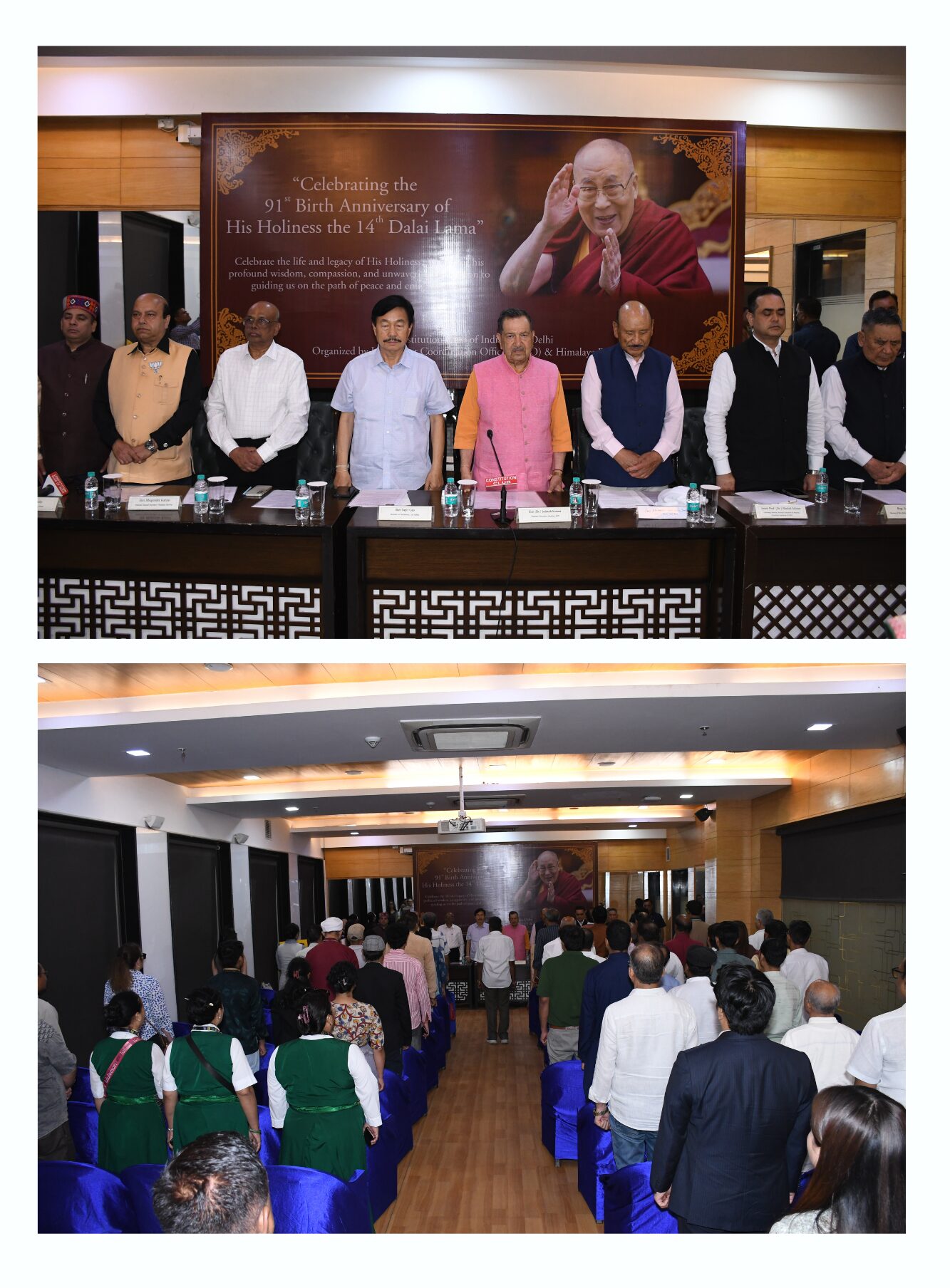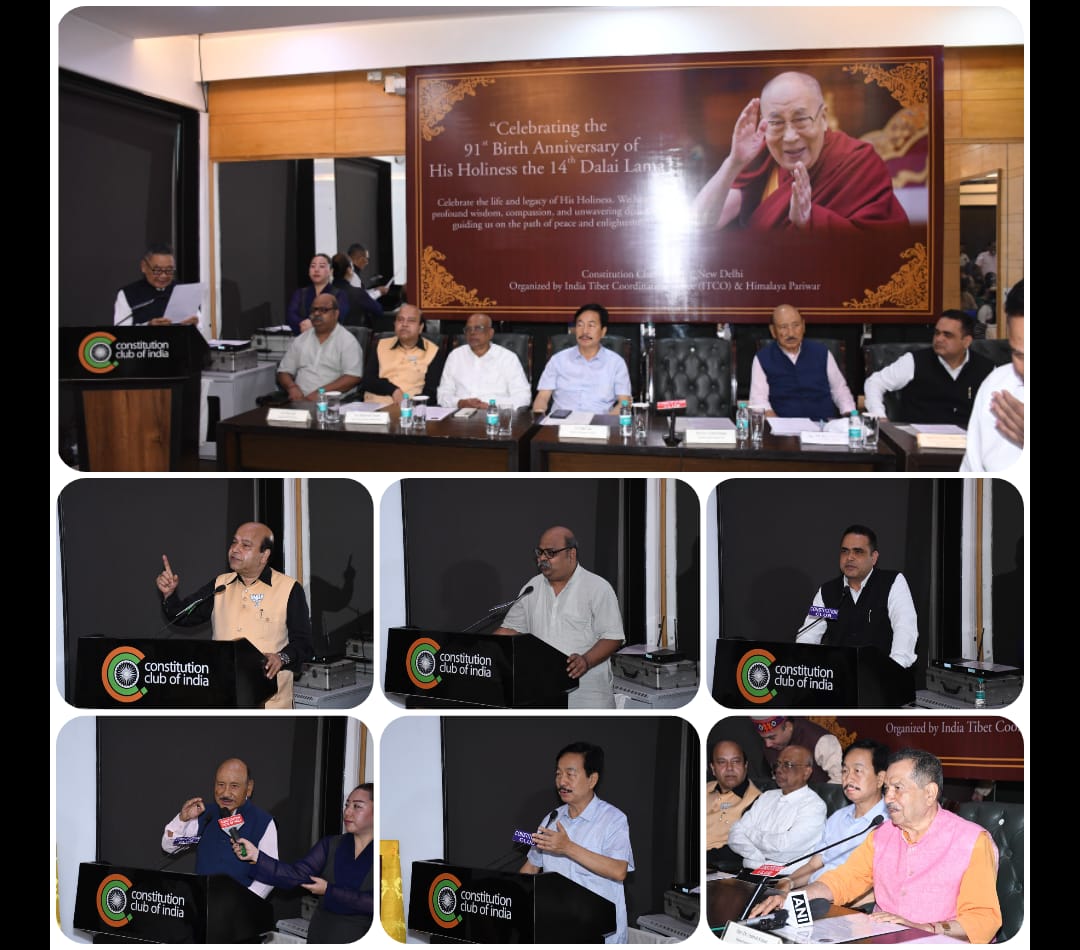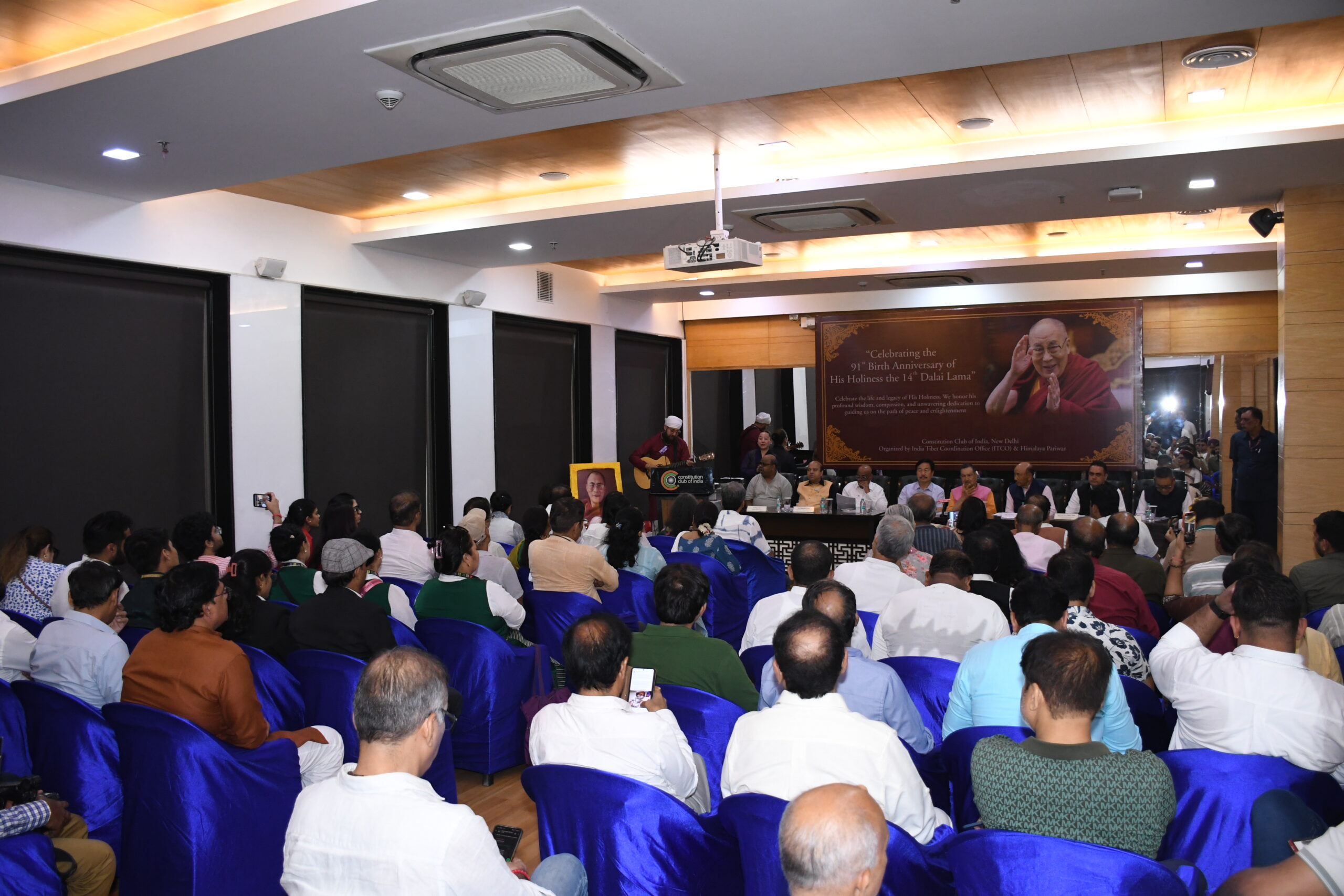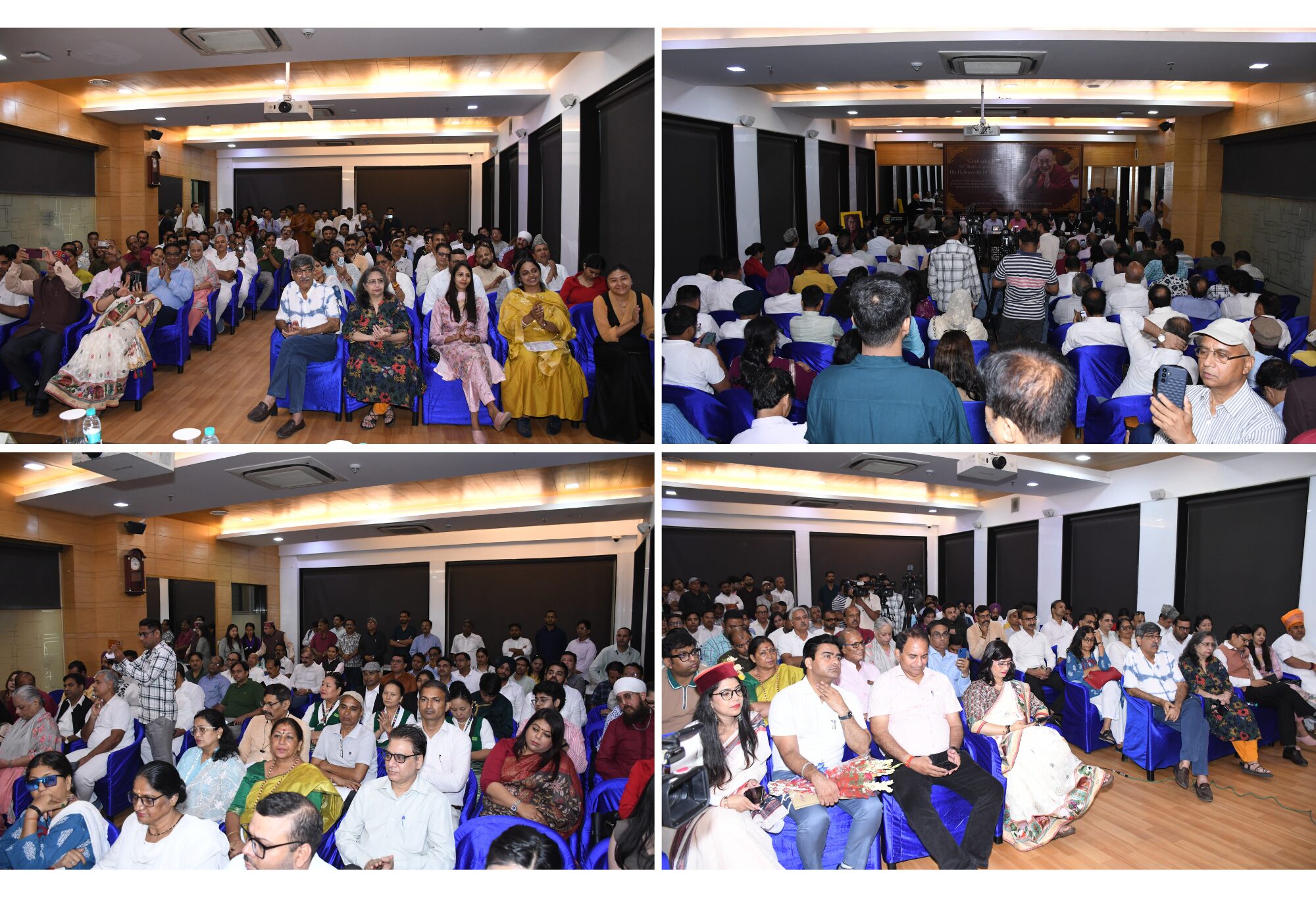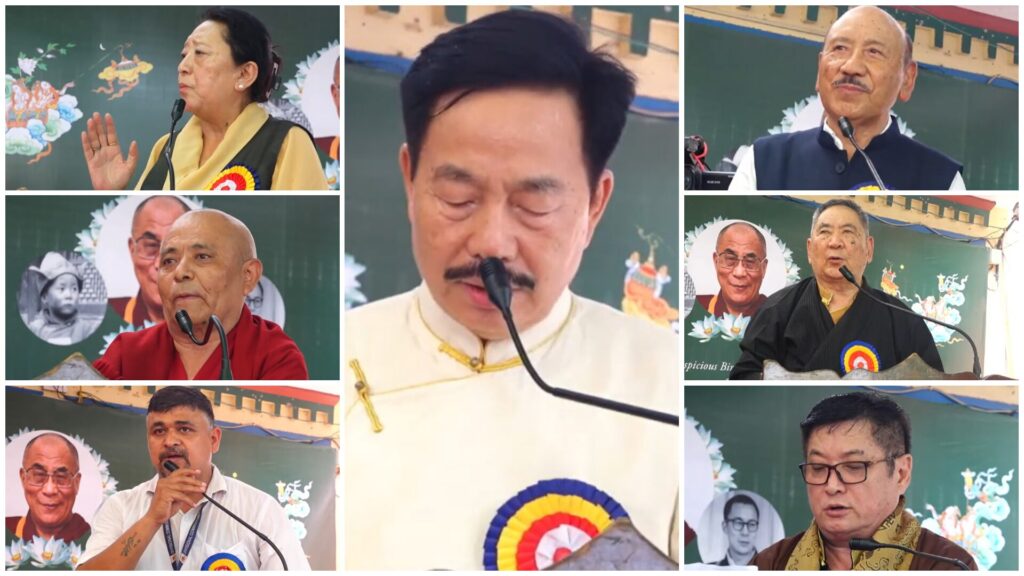

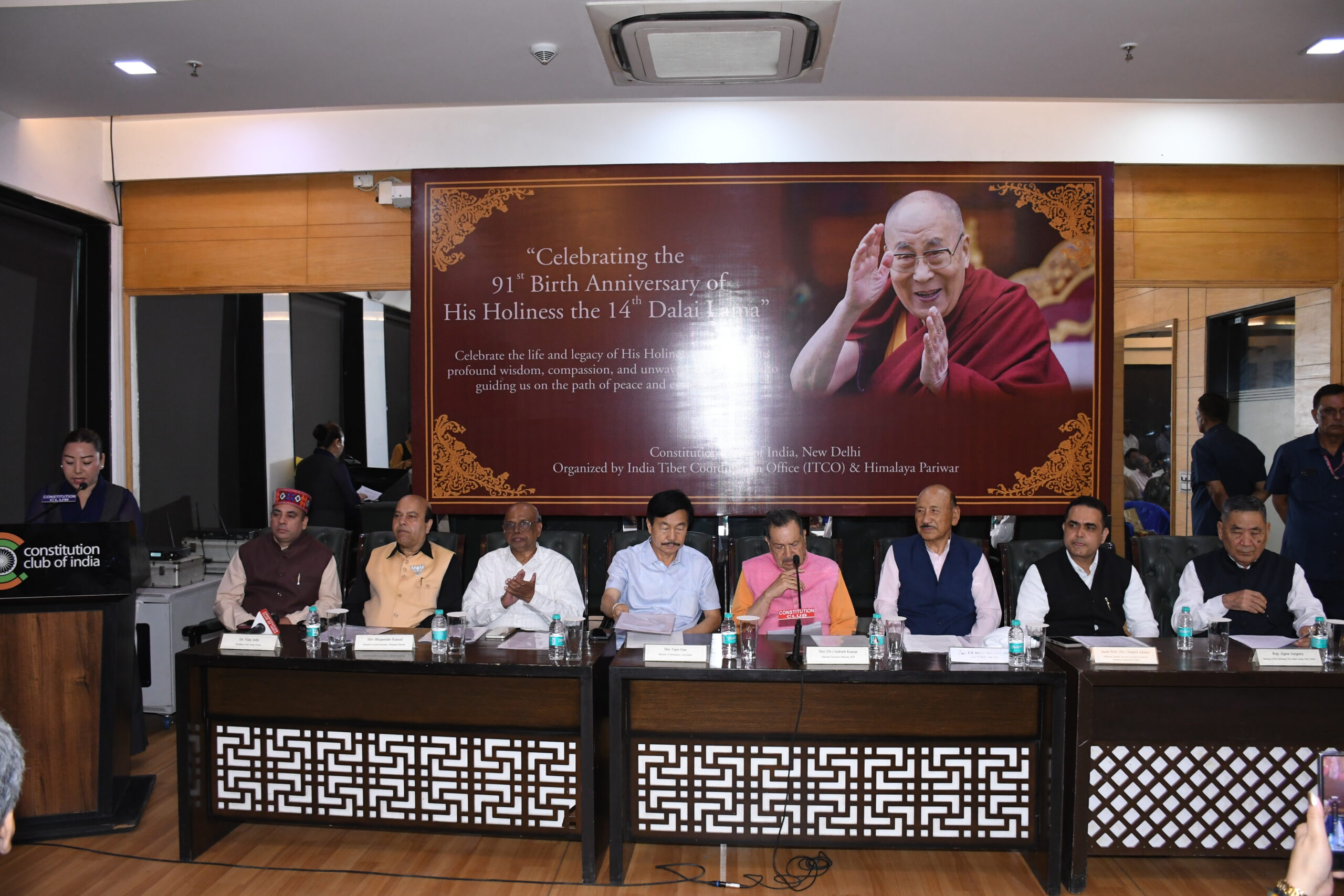
New Delhi: The 91st Birth Anniversary of His Holiness the 14th Dalai Lama was celebrated with great enthusiasm and reverence through a programme jointly organised by India Tibet Coordination Office (ITCO) and Himalaya Parivar. The event was witnessed by distinguished speakers including Vijay Jolly, President, Delhi Study Groups, Shri R. K. Khrimey, National Convenor, CGTC-I, Hon’ble Member of Parliament Shri Tapir Gao, Professor Dr. Shahid Akhtar, Hon’ble Dr. Indresh Kumar and Representative, Bureau of His Holiness Dalai Lama. The event was attended by Tibet Support Groups, social organisations, scholars, Journalists, supporters and Tibetan community representatives. The programme served as an occasion to honour the life and teachings of His Holiness while reaffirming solidarity with the Tibetan people and their peaceful struggle to preserve their identity, culture, religion, and human rights.
The event commenced with the Indian National Anthem and the Tibetan National Anthem, symbolising the deep friendship and shared values between the people of India and Tibet.
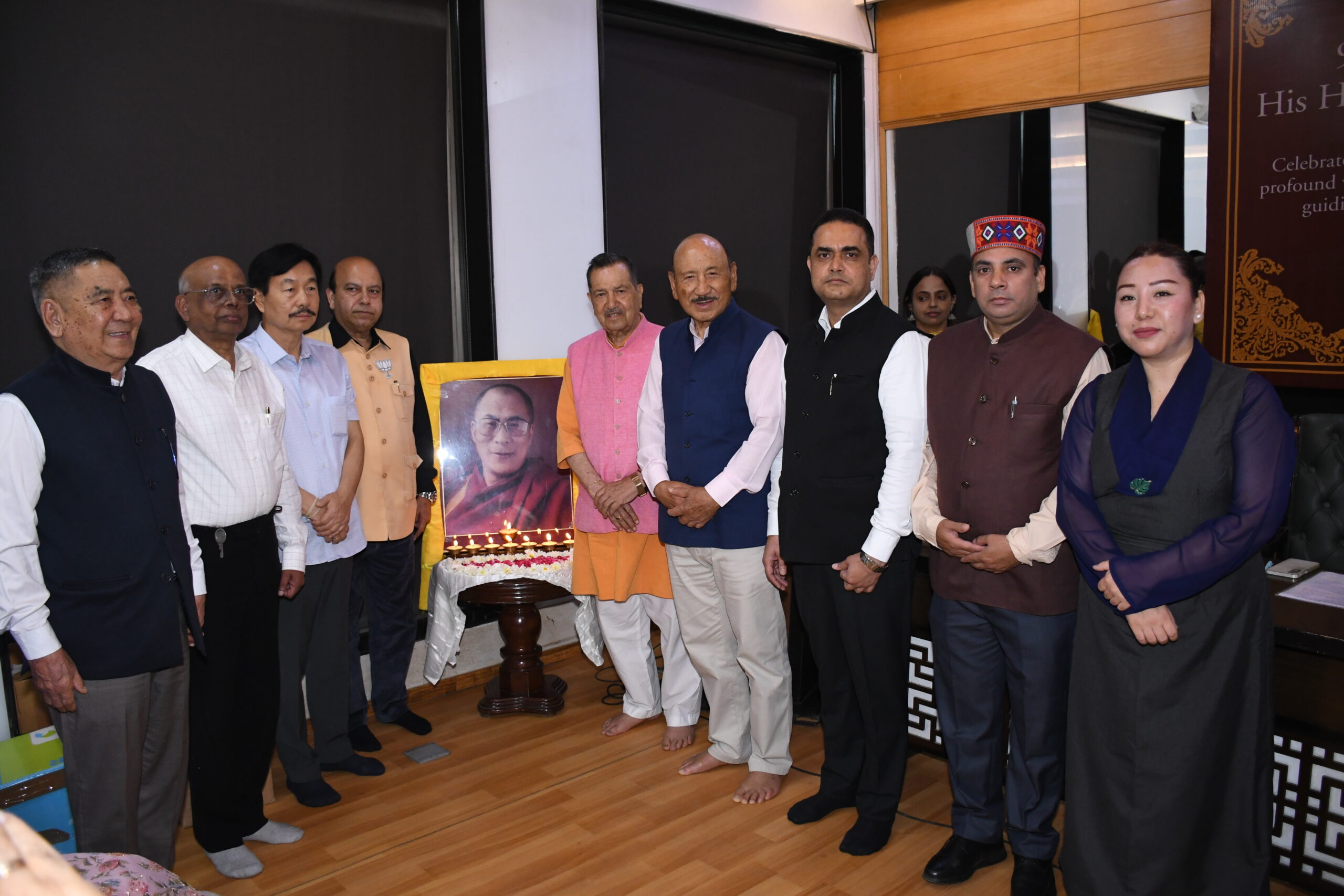
This was followed by the ceremonial lighting of the lamp by the distinguished dignitaries on the dais, accompanied by the recitation of the Gayatri Mantra by Smt. Anita Shukla, invoking peace, wisdom, and universal harmony.
The gathering then observed a two-minute silence in solemn remembrance of the Tibetan and Indian martyrs. Tribute was also paid to Late Shri Bhuvan Bhatt of Himalaya Parivar and Late Lobga Rangzen, who self-immolated outside the United Nations Headquarters in New York on 2 July 2026 in protest against the PRC’s Ethnic Unity and Progress Law.
Following the tribute, the distinguished guests on the dais were felicitated as a mark of respect and appreciation for their contributions to the Tibetan cause and public service.
The cultural segment of the programme began with a group song presented by the students of Jamia Millia Islamia, reflecting the spirit of peace, unity, and compassion.
This was followed by a special celebration song in honour of His Holiness the 14th Dalai Lama, beautifully rendered by Mr. Inderjeet Singh, National Gold Medallist in Ghazal and Light Music.
The audience was then treated to a vibrant Himachali Folk Song performed by renowned folk singer Ms. Richa Sharma, celebrating the rich cultural traditions of the Himalayan region and symbolising the enduring bond between the Himalayan communities and Tibet.
The formal proceedings commenced with the Welcome and Introductory Remarks delivered by Shri Bhupender Kansal, National General Secretary of Himalaya Parivar, warmly welcomed the dignitaries, delegates, representatives of Tibet Support Groups, and participants. He stressed the importance of uniting organisations working for the Tibetan cause under a common platform like Himalaya Parivar to strengthen cooperation and raise awareness nationally and internationally. He condemned China’s policies in Tibet as inhumane, reiterated the belief that “Tibet’s independence is India’s security,” and emphasised that a free Tibet would promote regional peace and stability. He concluded by urging the global community to build international support and democratic pressure for a peaceful resolution of the Tibetan issue.
Address by Jigmey Jungney, Representative, Bureau of His Holiness Dalai Lama, New Delhi. Jigmey Jigme conveyed warm greetings and heartfelt gratitude on behalf of His Holiness the Dalai Lama, the Central Tibetan Administration, and Tibetans across the world. He thanked the Government and people of India for extending refuge, compassion, and unwavering support to Tibetans for more than six decades. He recalled that His Holiness received the Nobel Peace Prize in 1989 in recognition of his lifelong commitment to non-violence and peaceful dialogue. He described the four principal commitments of His Holiness: promoting universal human values, fostering religious harmony, safeguarding the welfare of the Tibetan people, and reviving India’s ancient Buddhist wisdom. He also informed the gathering that His Holiness had recently undergone successful knee surgery and expressed prayers for his speedy recovery, long life, and continued guidance. Concluding his address, he reaffirmed the Tibetan community’s confidence that India would continue supporting the Tibetan cause until its aspirations are achieved.
Address by Shri R. K. Khrimey, National Convenor, Core Group for Tibetan Cause, India, began by offering prayers for the long life of His Holiness and describing him as a universal symbol of compassion and humanity. He shared remarkable historical accounts connected with His Holiness’s journey into India in 1959 through Arunachal Pradesh. He narrated how the walking stick reportedly left by His Holiness at Khinzemane became associated with a sacred tree and how another tree planted during his journey has become an important pilgrimage site. He urged organisers to include these locations in future pilgrimage programmes to preserve this historical legacy. Turning to current affairs, he expressed concern over Chinese laws promoting linguistic and cultural assimilation, particularly the replacement of Tibetan language with Mandarin in schools. He warned that such measures threaten Tibet’s unique identity and announced that Tibet Support Groups throughout India would intensify peaceful awareness campaigns against these policies. He concluded by encouraging everyone to follow the teachings of His Holiness and continue working towards a peaceful and dignified future for Tibet.
Address by Professor Dr. Shahid Akhtar. He congratulated all the organisations involved in organising the programme and emphasised that the Dalai Lama’s philosophy transcends religion by promoting compassion, peace, and non-violence. He observed that India became the spiritual home of the Tibetan community after 1959 and has preserved the traditions of Tibetan Buddhism. Referring to India’s civilisational heritage, he described the country as a place that accepts, respects, and protects those seeking refuge. He urged young people and students to study the teachings of His Holiness and participate actively in peaceful campaigns supporting Tibet. He also emphasised that the authority to recognise the future Dalai Lama rests solely within Tibetan Buddhist traditions and not with any external political authority. He concluded by encouraging all organisations and citizens to continue strengthening the peaceful movement for Tibet.
Address by Hon’ble Member of Parliament Shri Tapir Gao. He welcomed the gathering and reflected upon the institution of the Dalai Lama as one of the most respected traditions in Tibetan Buddhism. He stressed that the selection of the next Dalai Lama must be carried out strictly according to Tibetan religious customs and warned against political interference in this sacred process. Speaking from the perspective of India’s border state of Arunachal Pradesh, he explained the strategic importance of Tibet for India’s national security and expressed concern over China’s claims on Indian Territory. He also drew attention to recently enacted Chinese legislation restricting Tibetan language, education, religion, and culture, describing it as a violation of basic human rights. He urged democratic countries to condemn these policies collectively and called upon young Tibetans and Indians to use modern technology and digital platforms to raise awareness internationally. He concluded by expressing confidence that persistent peaceful efforts would ultimately strengthen the Tibetan cause.
Keynote Address by Hon’ble Dr. Indresh Kumar. As he shared his personal experiences of meeting His Holiness the Dalai Lama and recalled their discussions on India’s spiritual heritage and Tibet’s future. He stated that His Holiness regarded India as the spiritual teacher of Tibet and believed that India’s philosophy of peace, compassion, and non-violence offers hope to the entire world. Reflecting on history, Dr. Indresh observed that Tibet has traditionally served as a natural protective barrier for India and emphasised that developments in Tibet directly affect regional peace and security. He also referred to historical warnings regarding China’s expansionist tendencies and emphasised the importance of public awareness, peaceful advocacy, and national unity. Calling for stronger cooperation among the many organisations supporting Tibet, he urged participants to continue spreading awareness through democratic and non-violent means. He concluded by expressing his faith that truth, compassion, and perseverance would ultimately prevail and that the aspirations of the Tibetan people would continue to inspire people across the world.
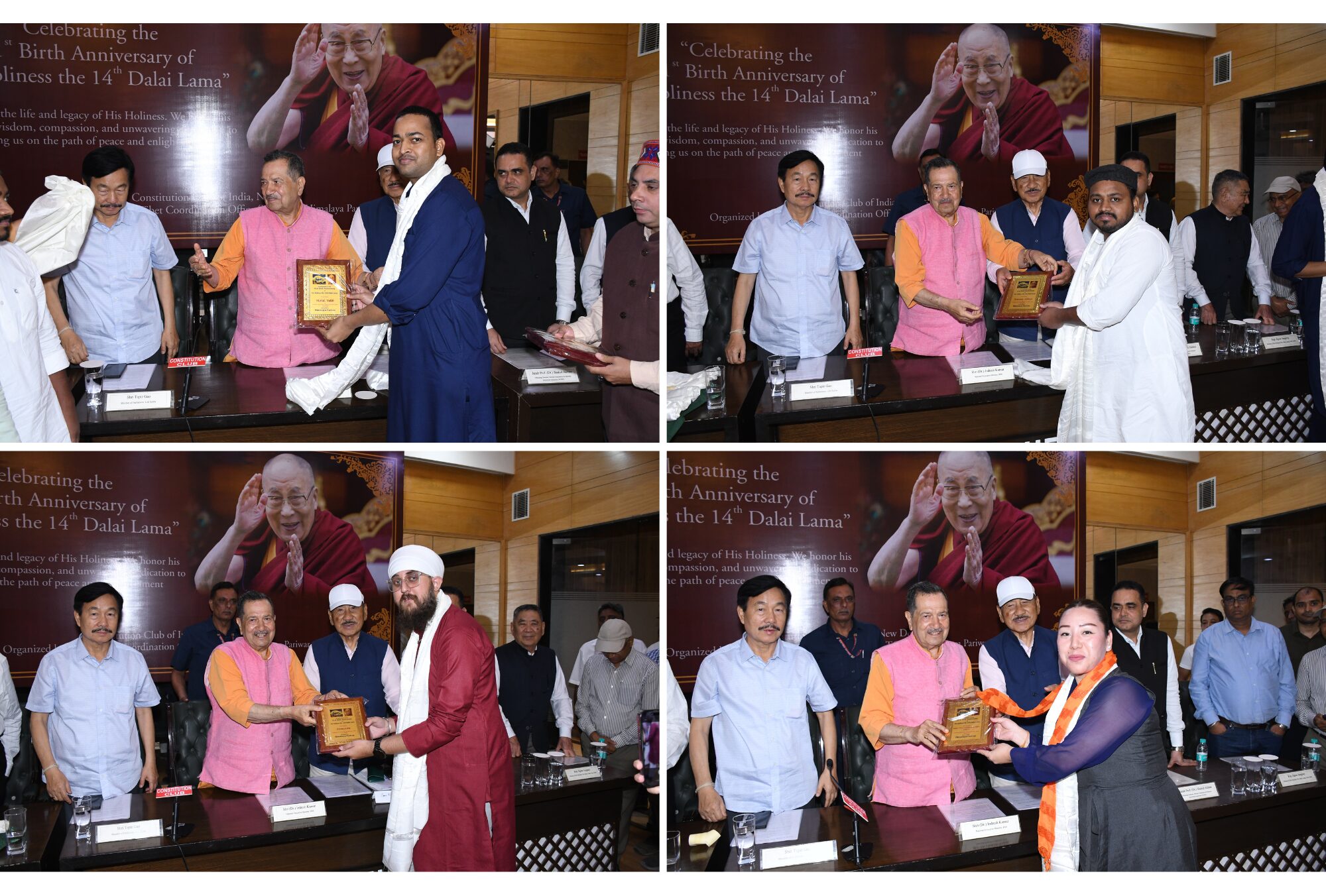
In conclusion, as a mark of appreciation, Hon’ble Dr. Indresh Kumar Ji presented mementos and blessings to the participating artists and the student group from Jamia Millia Islamia for their cultural performances. Tokens of appreciation were also presented to distinguished contributors, including Mr. Inderjeet Singh, Ms. Richa Sharma, Shri Rajesh Bajaj, and Shri Bhupender Kansal, in recognition of their valuable support and participation.
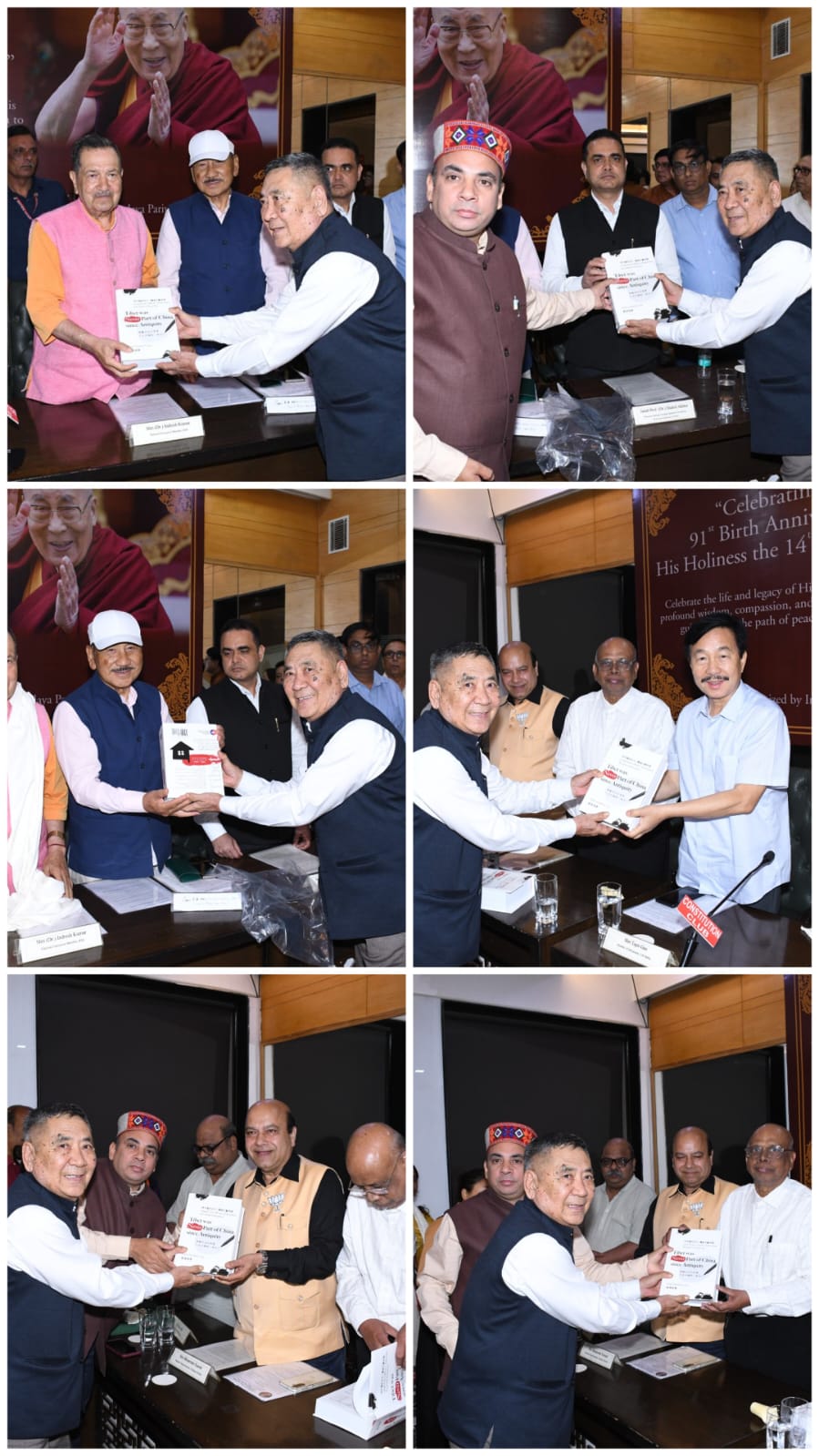
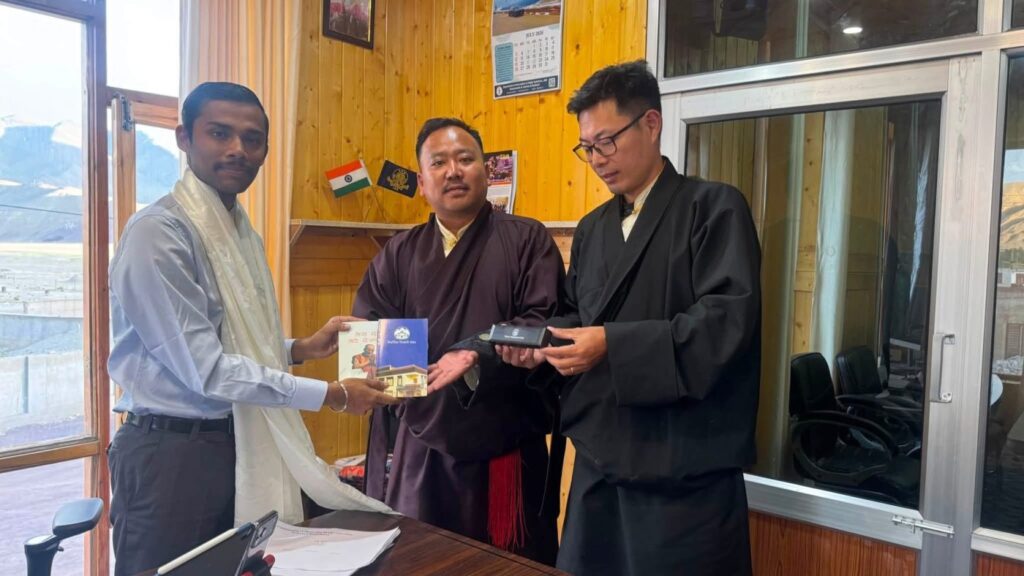
On this occasion, Mr. Jigmey Jungney presented the dignitaries and speakers with the book Tibet was Never a Part of China Since Antiquity, authored by Chinese researcher Hon. Shing Lao, highlighting historical evidence on Tibet’s independent legacy.
This was followed by the Vote of Thanks delivered by Shri Rishi Walia, National Secretary, Himalaya Parivar, who expressed sincere gratitude to the Chief Guest, distinguished dignitaries, speakers, artists, media personnel, and all attendees for their wholehearted support in making the programme a grand success.
The Core Group for Tibetan Cause, India issued a press release strongly condemning the implementation of the so-called “Ethnic Unity and Progress Law” in Tibet, stating that it undermines the identity, culture, language, and religious heritage of the Tibetan people.
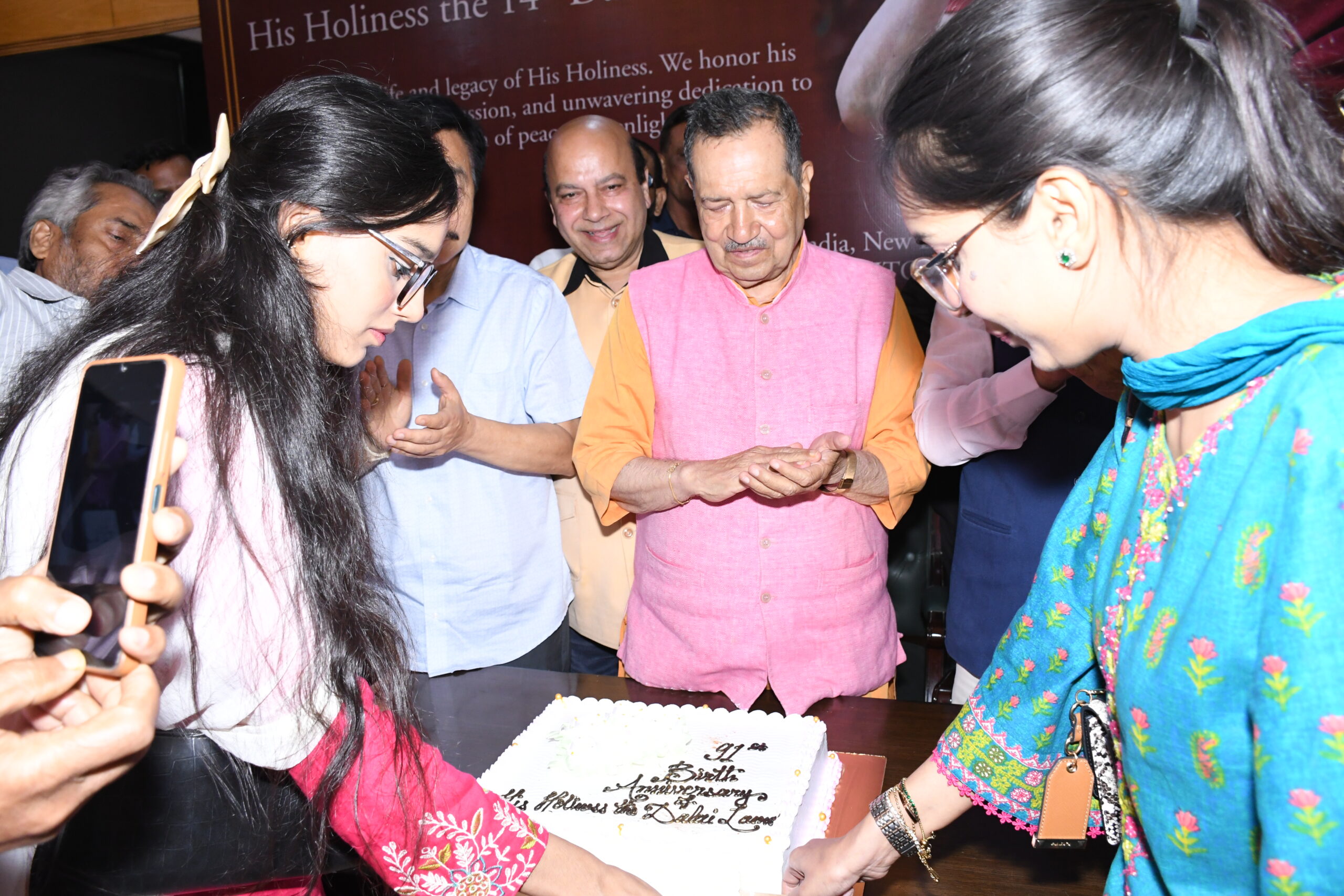
To commemorate the 91st Birth Anniversary of His Holiness the 14th Dalai Lama, a commemorative cake-cutting ceremony was held, symbolising prayers for His Holiness’s long life, good health, and continued guidance for humanity.
The programme concluded with High Tea.
-Report file by ITCO