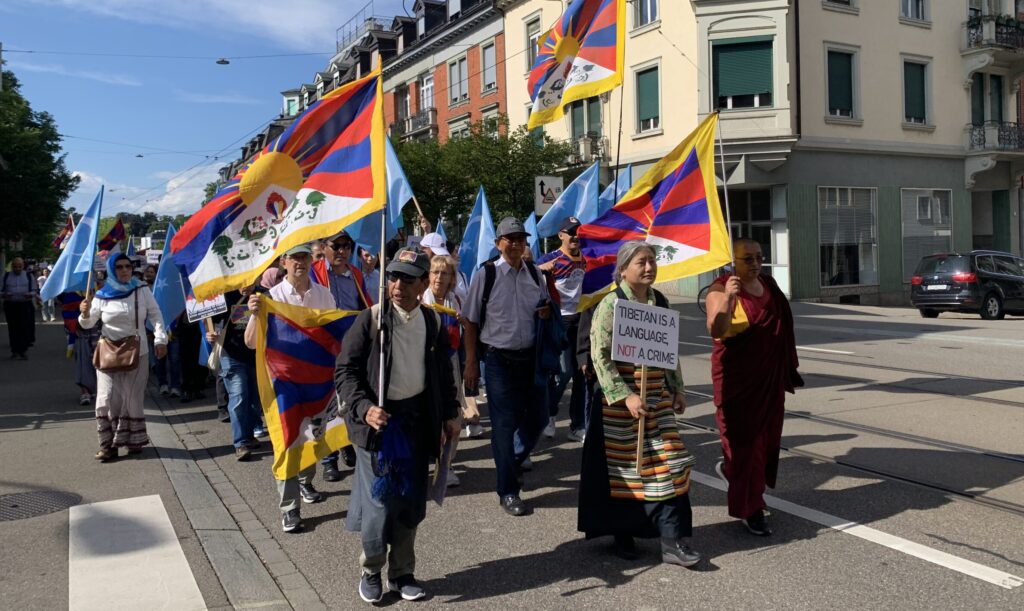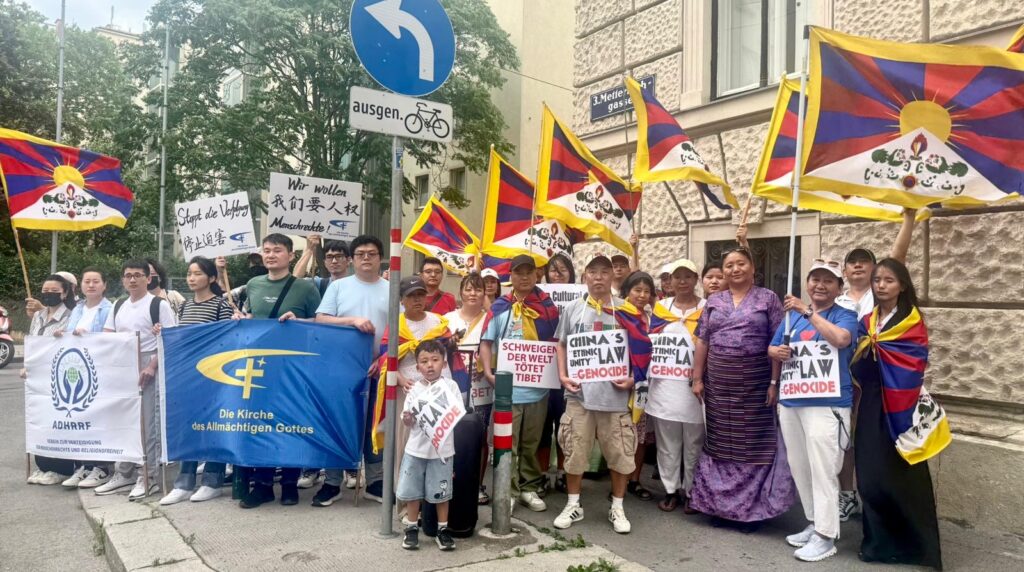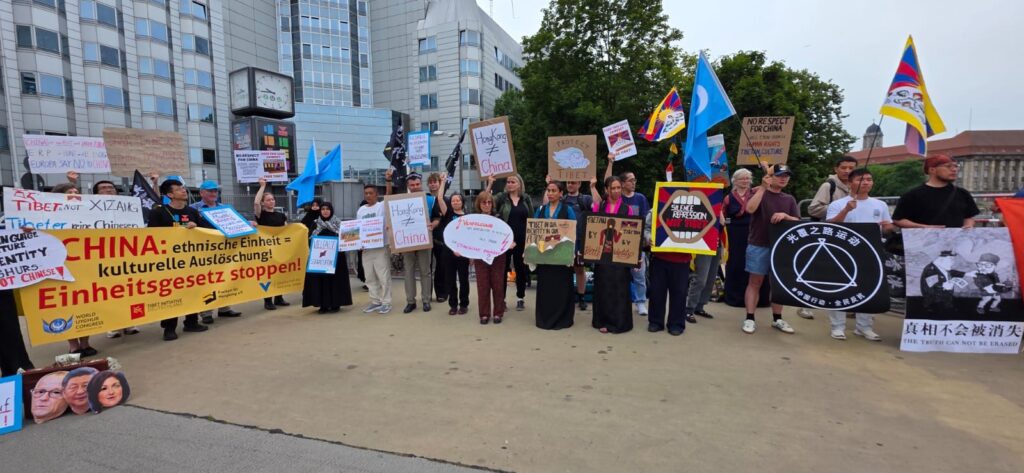


Brussels, 1 July 2026: Thousands of Tibetans and their supporters across Belgium, the Netherlands and Spain joined a coordinated day of action on 1 July to strongly protest China’s new law on Ethnic Unity Law which will come into force and call for its immediate repeal. Demonstrators argued that despite its benign title, the law codifies decade’s long force assimilation policies in Tibet and other regions under Chinese occupation.
The protests formed part of a global campaign in which Tibetans and supporters worldwide voiced grave concern that the legislation is aimed at eradication Tibetan identity, language, religion and culture. Protesters maintained that the law strengthens the Chinese government’s legal authority to accelerate assimilation policies affecting Tibetans and other peoples.
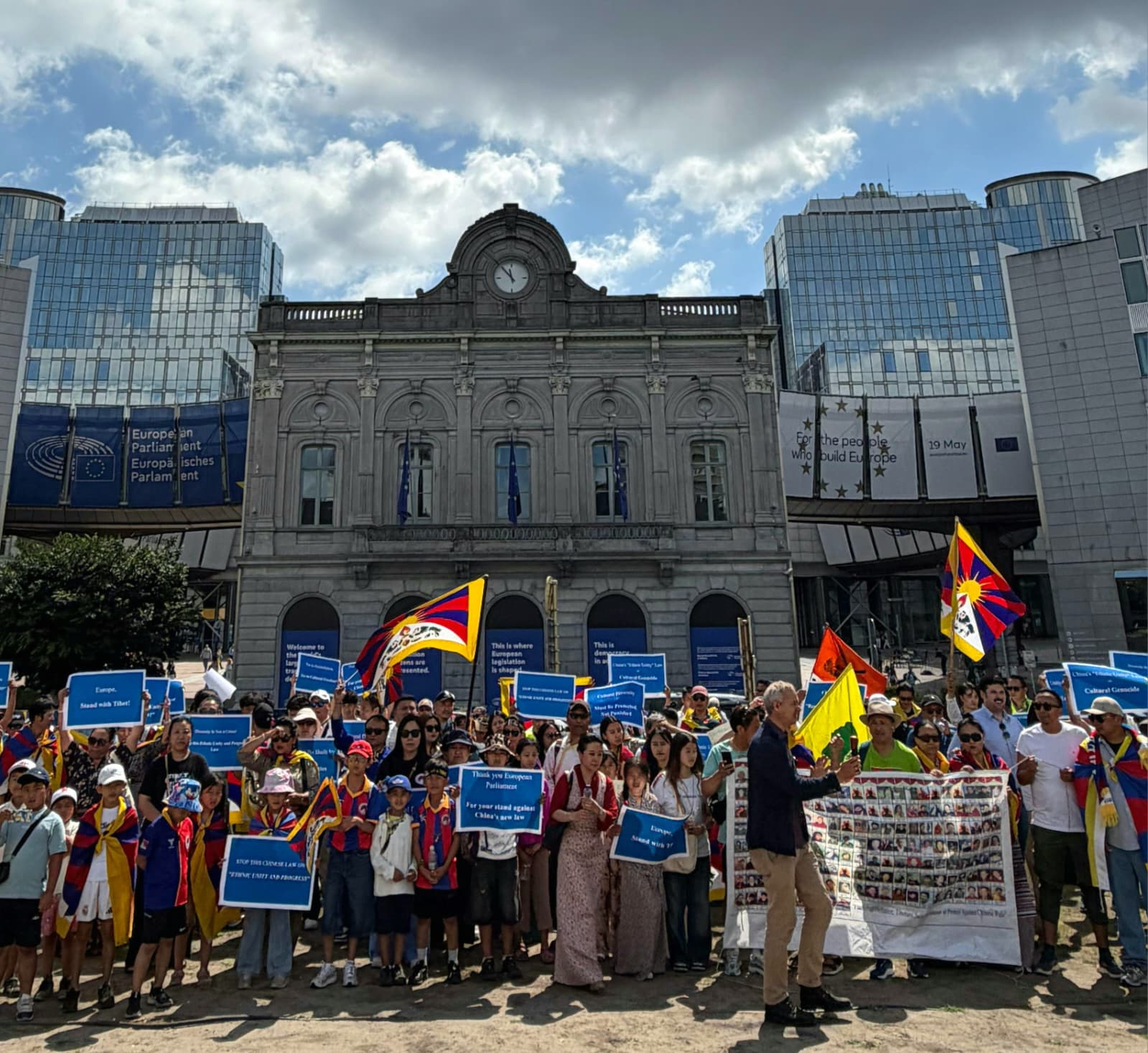
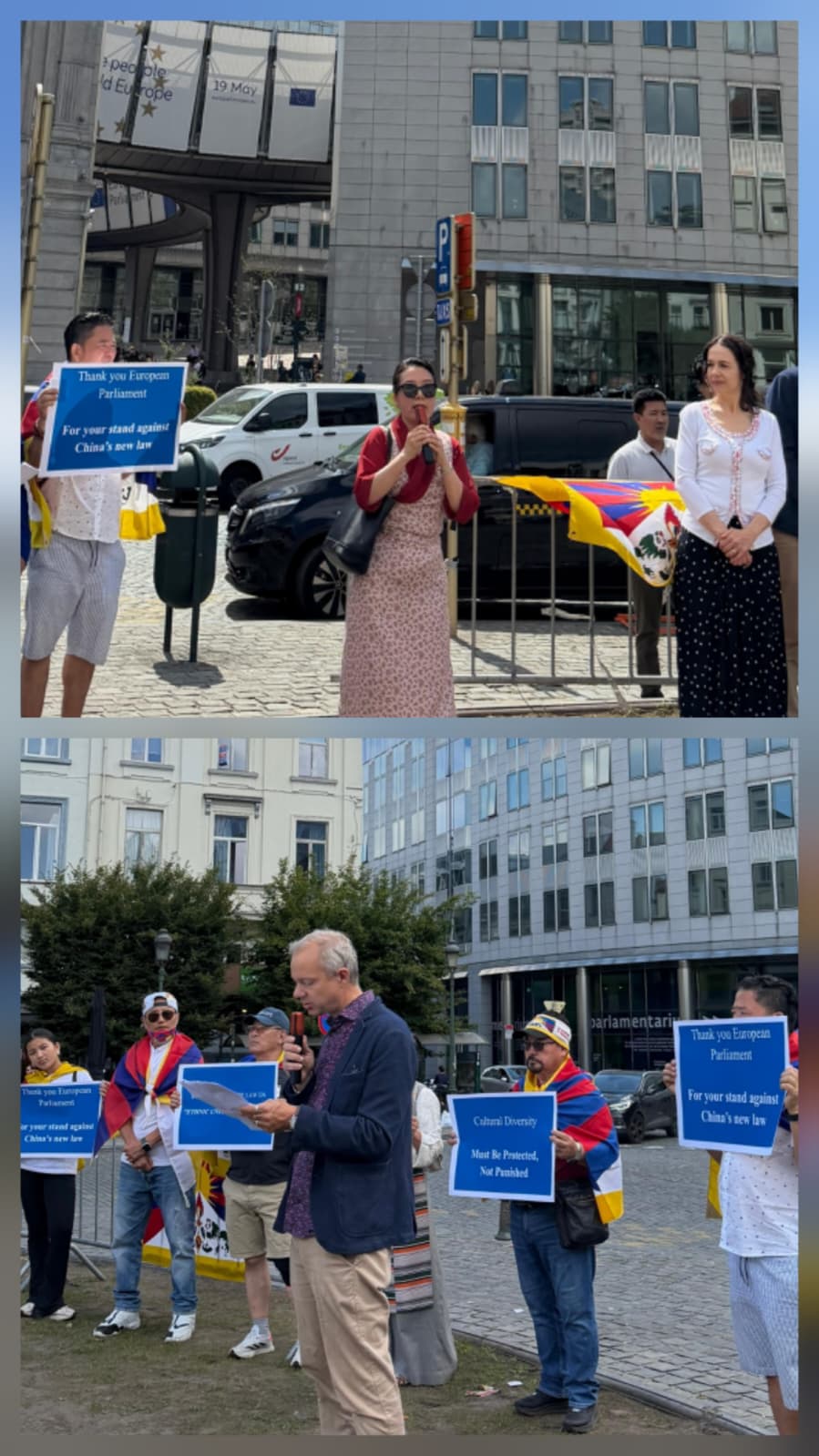
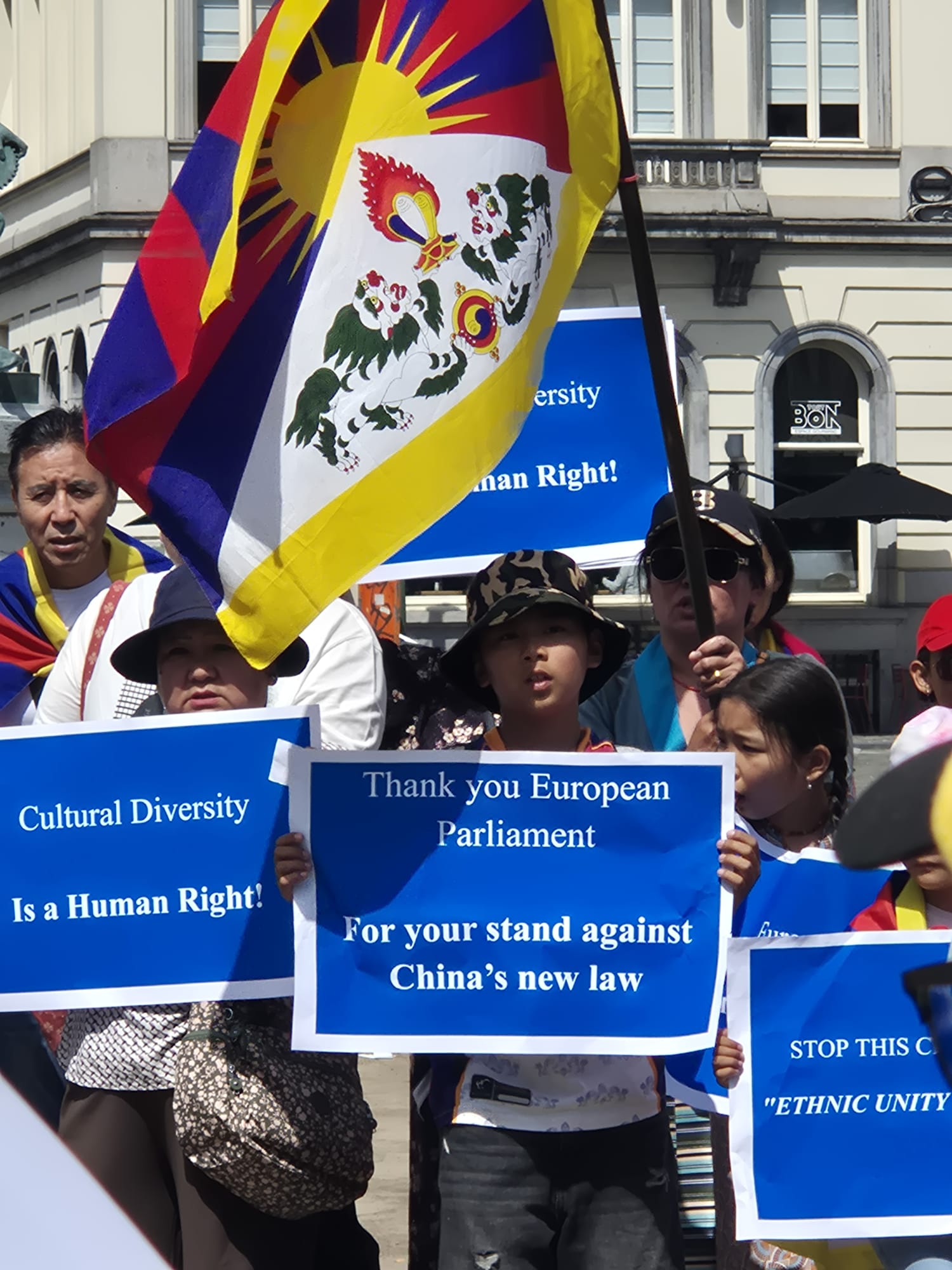
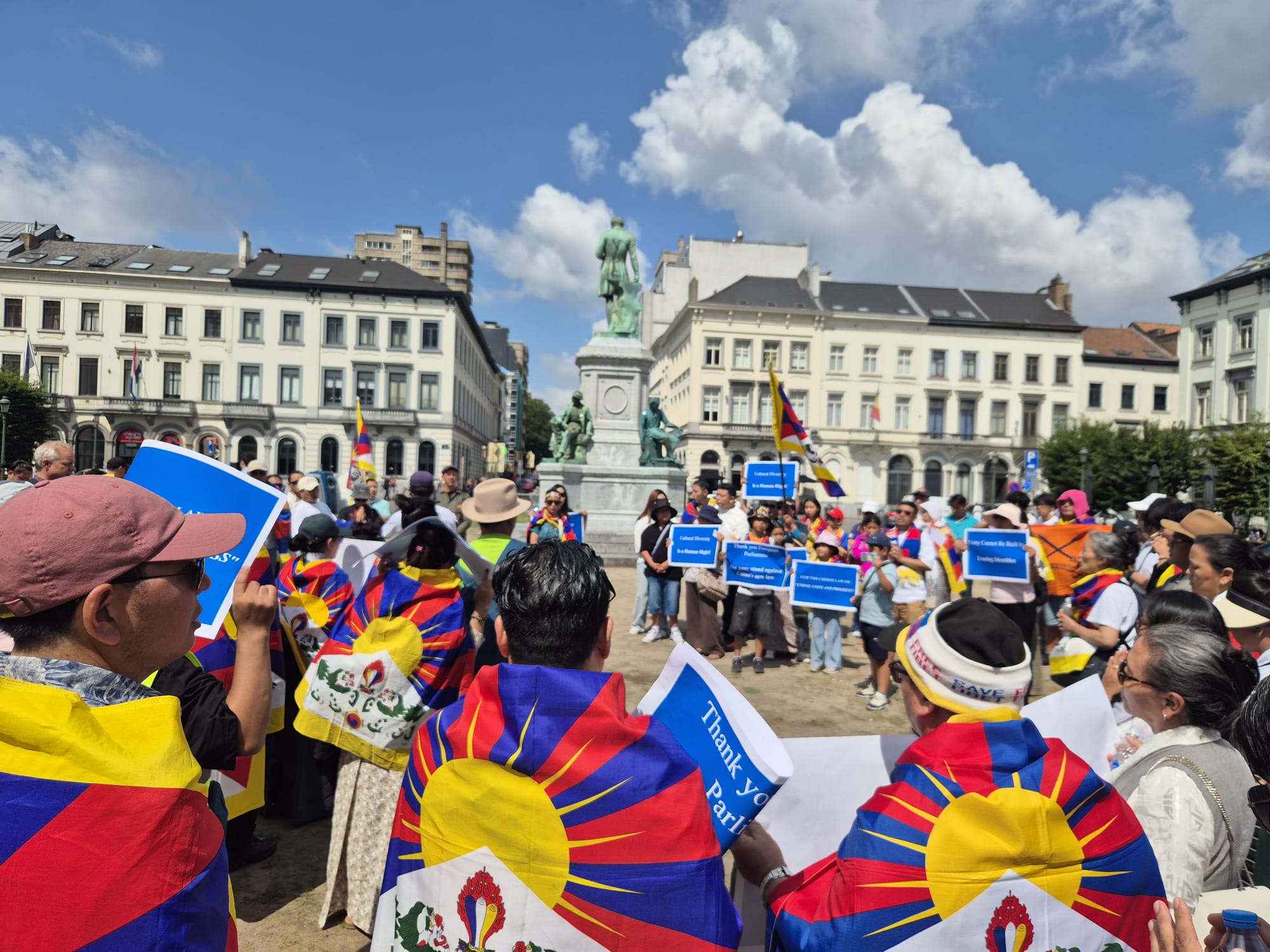
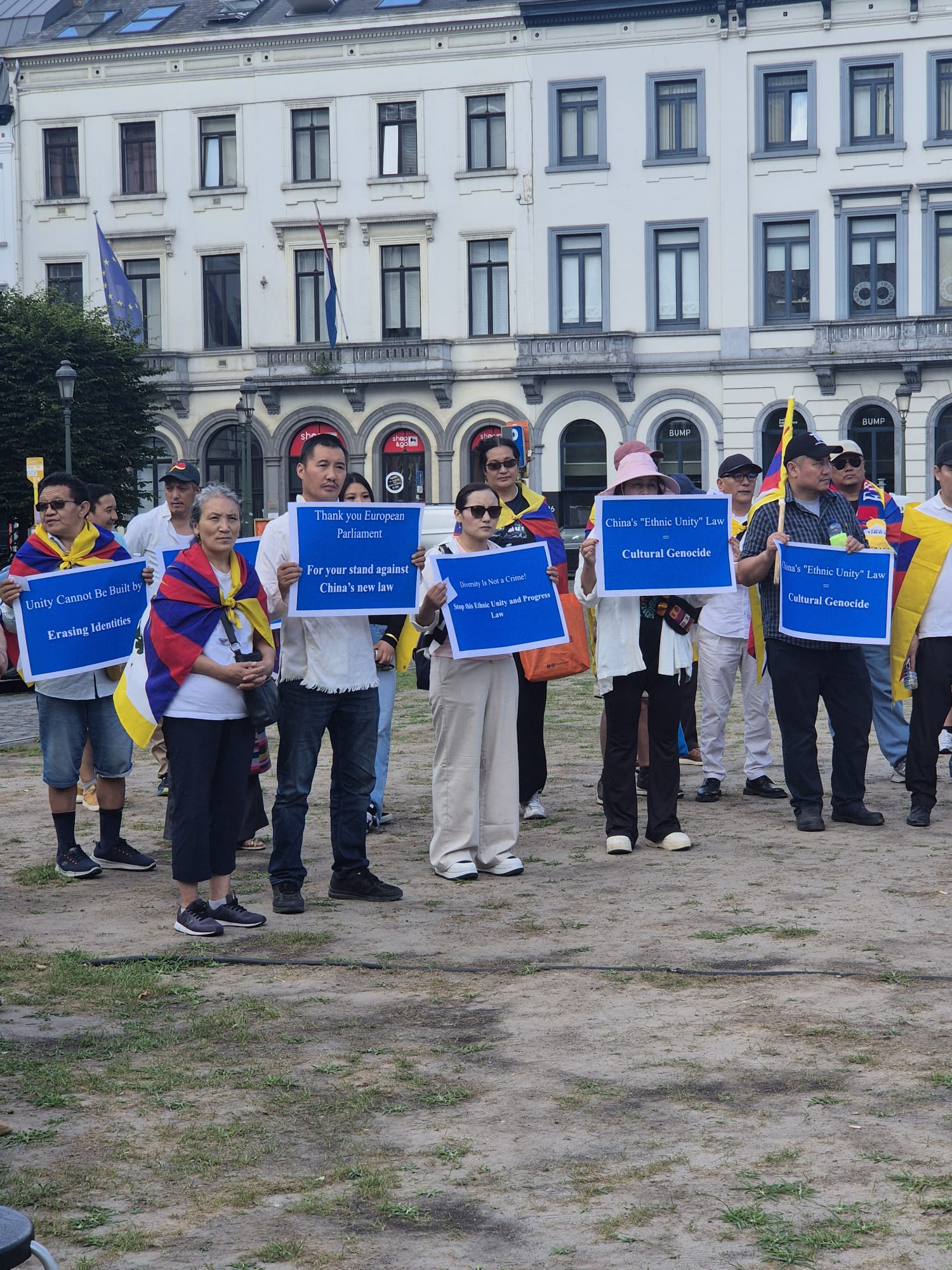
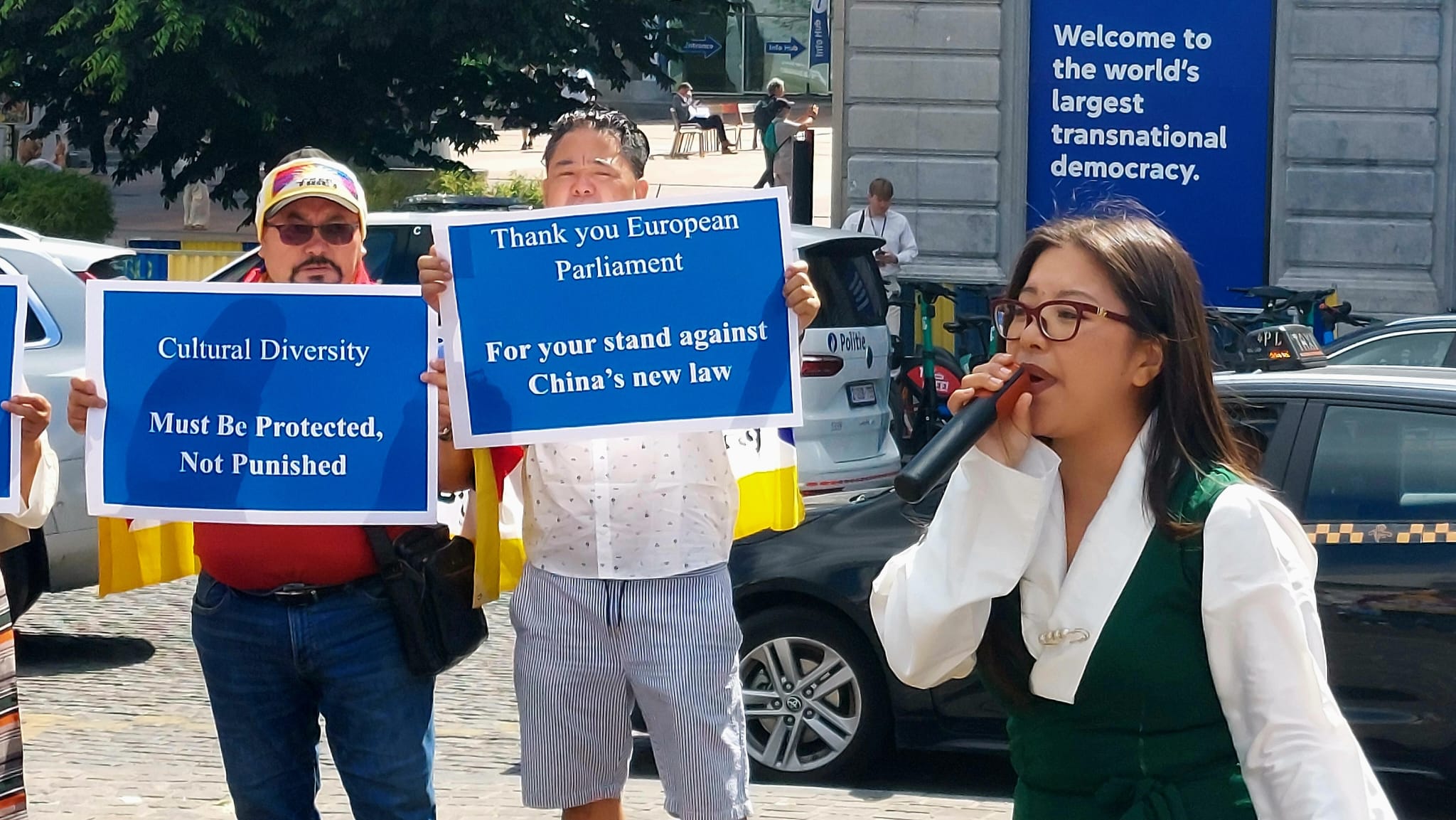
In Brussels, the protest was organised by the International Campaign for Tibet (ICT), Lungta Tibet Support Group (TSG), World Uyghur Congress ( WUC) and local Tibetan associations with the support of the Office of Tibet. Over 200 Tibetans and supporters gathered at the Place du Luxembourg outside the European Parliament to urge the European Union and its member states to oppose the implementation of the new legislation and sanction Chinese officials involved in it.
Several Members of the European Parliament (MEPs) including Dainius Žalimas, Chair of the Inter Parliamentary group for Tibet (IPGT); Markéta Gregorová, Vice-Chair of the Parliament’s Delegation ( D-CN) for Relations with China; Miriam Lexmann, Chair of the Intergroup on Freedom of Religion, Belief and Conscience; and Danuše Nerudová, among others took out time from their busy schedule to come and address the demonstration.
Addressing the gathering, MEP D. Žalimas recalled that the European Parliament had previously rejected China’s attempts to interfere in the succession of His Holiness the Dalai Lama. Like wise, this Parliament also rejects the new Ethnic Unity Law, stressing that the rights and freedoms of every individual must be protected under international law.
MEP M. Gregorová said she had joined the protest to express solidarity with Tibetans and to listen to their concerns. She described the legislation as facilitating cultural destruction and reaffirmed her commitment to supporting the Tibetan people.
MEP D. Nerudová, who had previously raised concerns about the legislation in the European Parliament in April, said the law’s title was misleading and that it had little to do with genuine unity. She also warned against transnational repression and stressed that Europe must not sacrifice human rights for economic interests.
MEP M. Lexmann thanked the protesters for reminding Europe of the values on which the European Union was founded, including freedom, democracy and the rule of law. She said these freedoms should be protected for the Tibetan people.
MEP H. Heide, co-chair of IPGT in his address, European Parliament had sent a strong, clear and simple message to the PRC i.e. withdraw this law.
Representative Genkhang of the Office of Tibet and ICT Policy Director Vincent Metten highlighted concerns over the law’s broader implications, particularly Article 63, which they argued could facilitate forms of transnational repression extending beyond China’s borders. Representative Genkhang called on European Union and other governments to follow the example set by European Parliament in opposing the legislation and urged Tibetans, particularly those in exile to preserve their language, identity and culture.
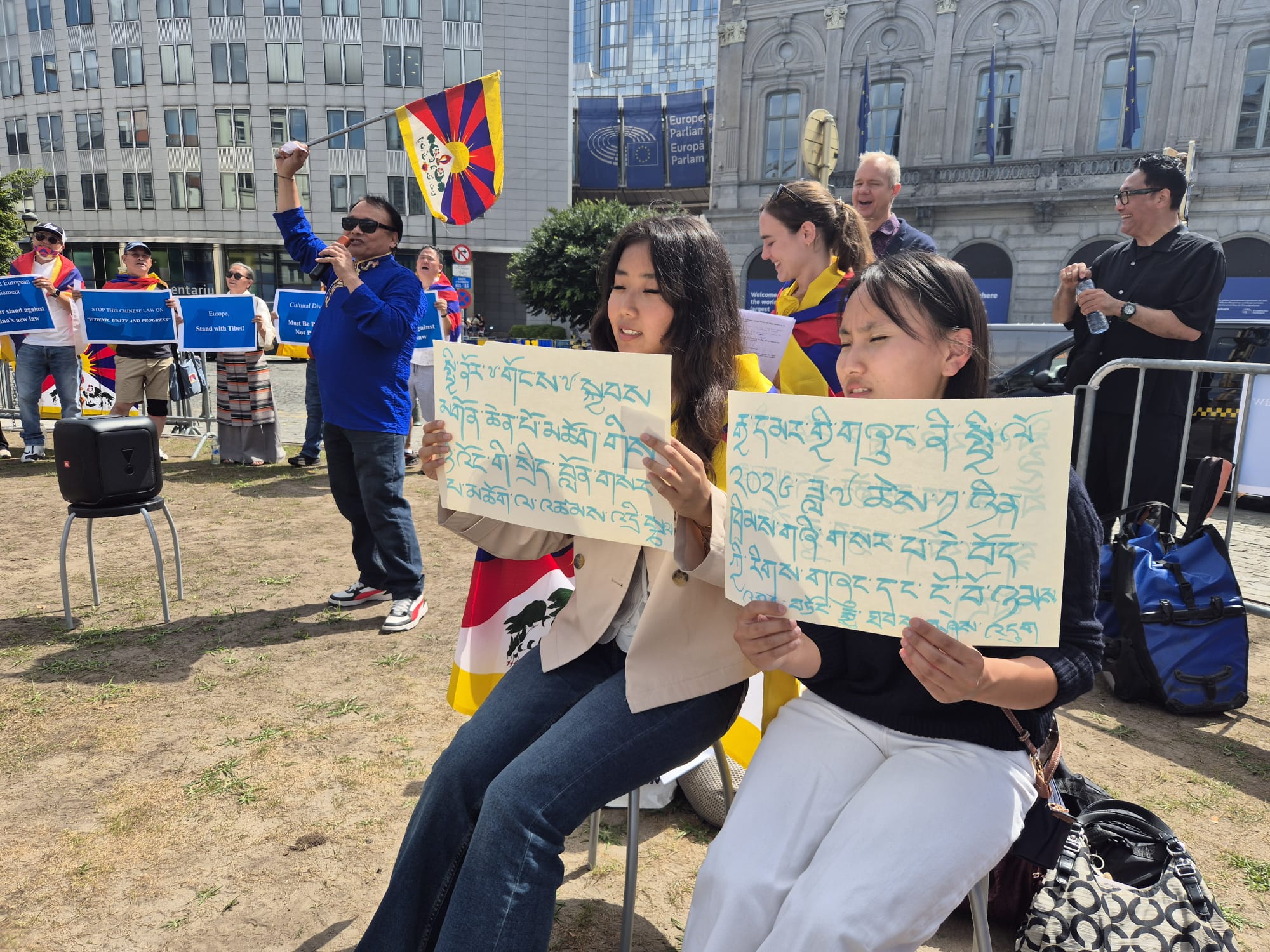
Adding a symbolic element to the demonstration, children from a Tibetan weekend school participated by writing messages in Tibetan to protest the threats to Tibetan language.
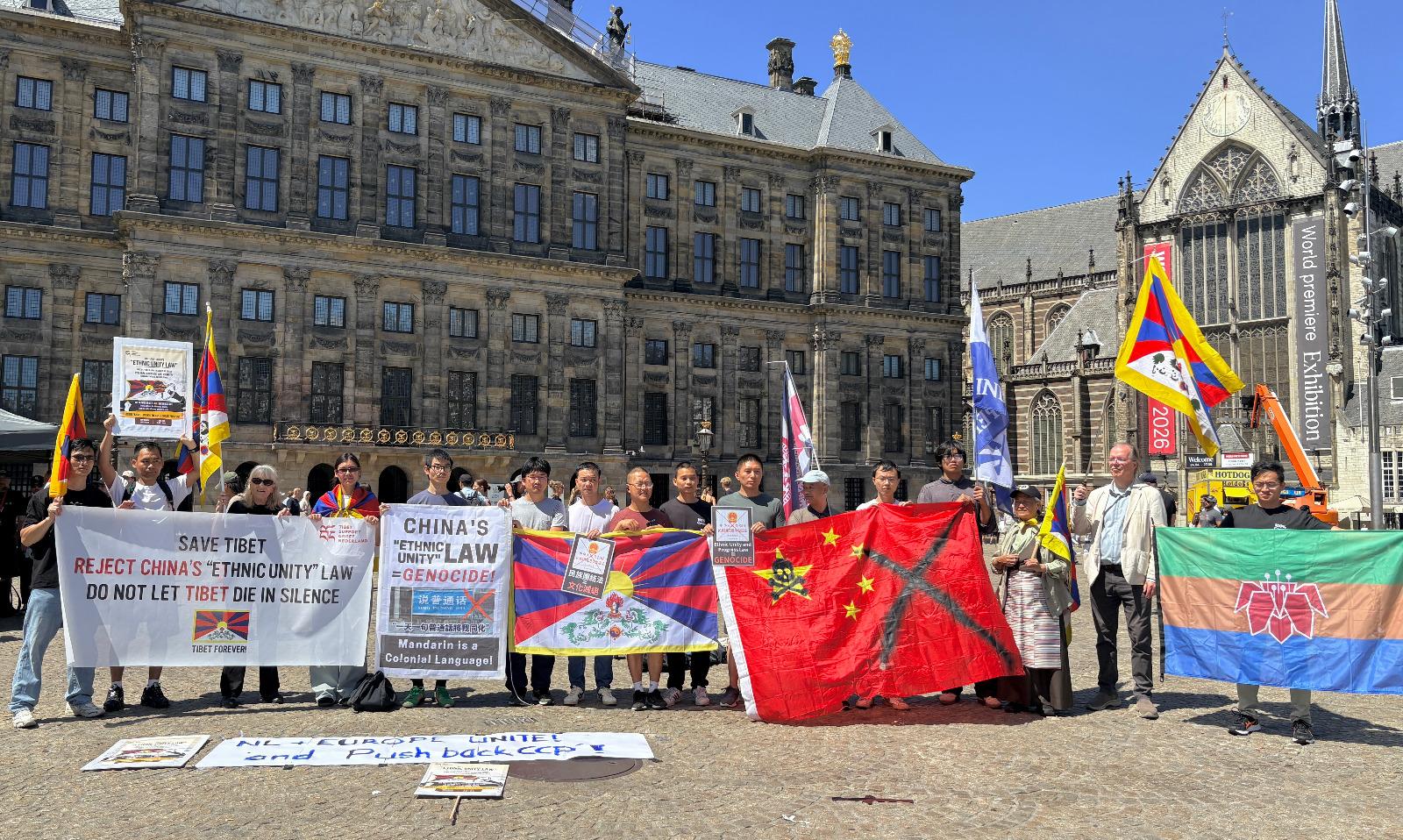
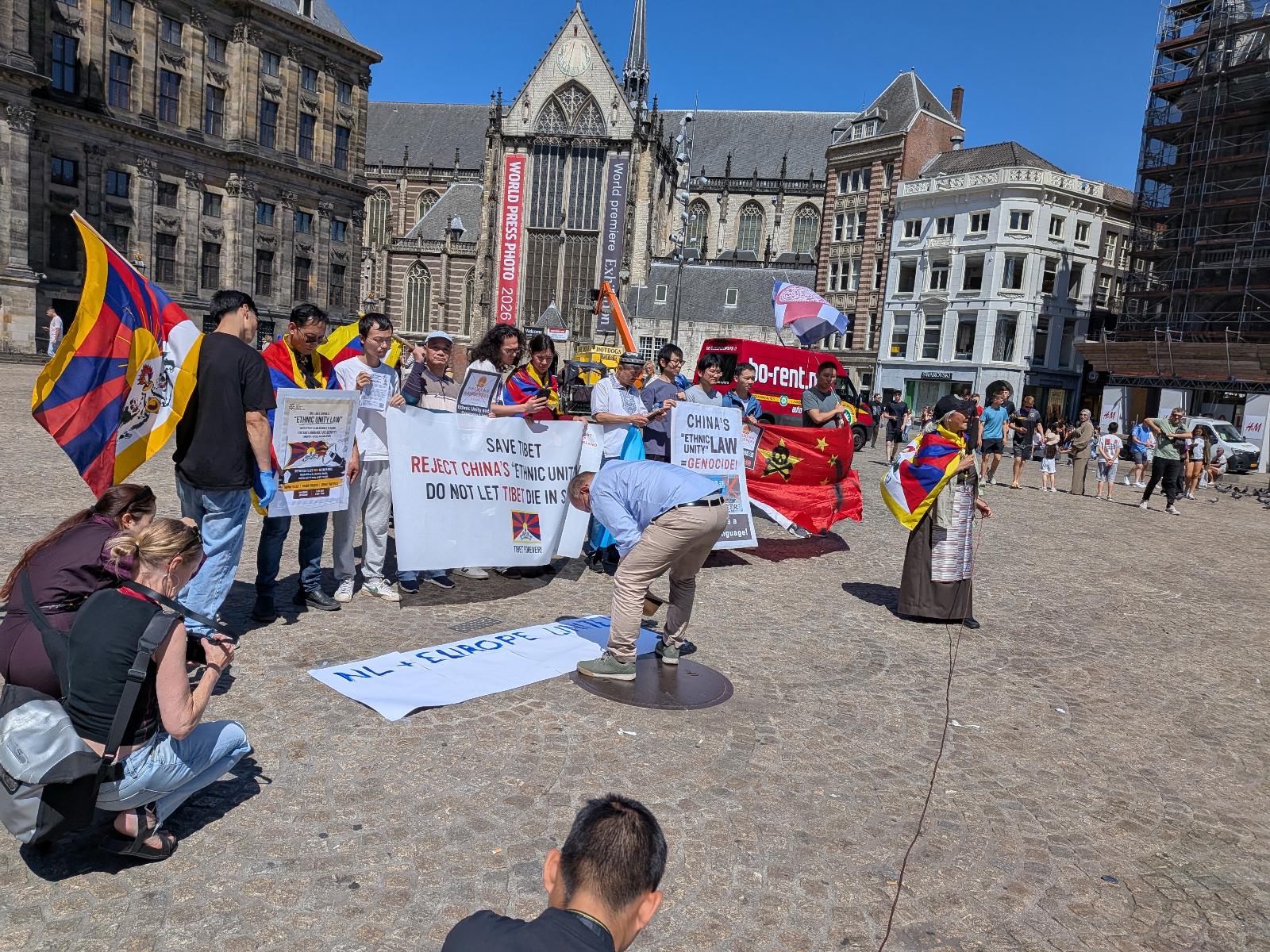
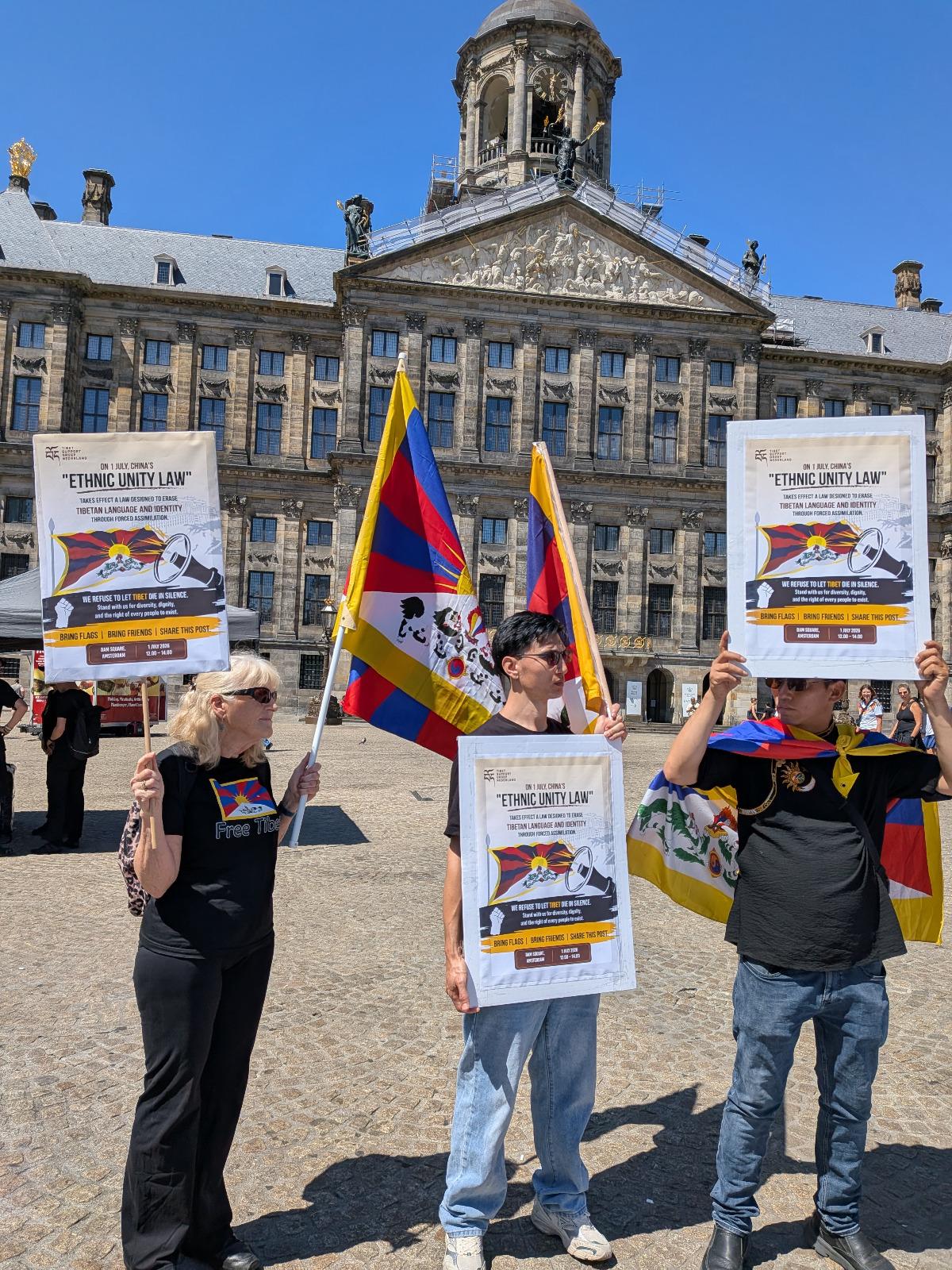
In the Netherlands, a group of Tibetan activists and supporters gathered at Amsterdam’s iconic Dam Square to call for the immediate repeal of China’s Ethnic Unity Law. The demonstration was organised by Tibet Support Groep Netherlands and joined by the International Campaign for Tibet (ICT), Tibetan Community in the Netherlands, Students for a Free Tibet, Uyghur, Hong Konger and Cantonese organizations, as well as Anti-CCP Netherlands. In addition to calling for the withdrawal of the law, participants engaged with passersby to raise awareness about its potential impact on Tibetans and other peoples.
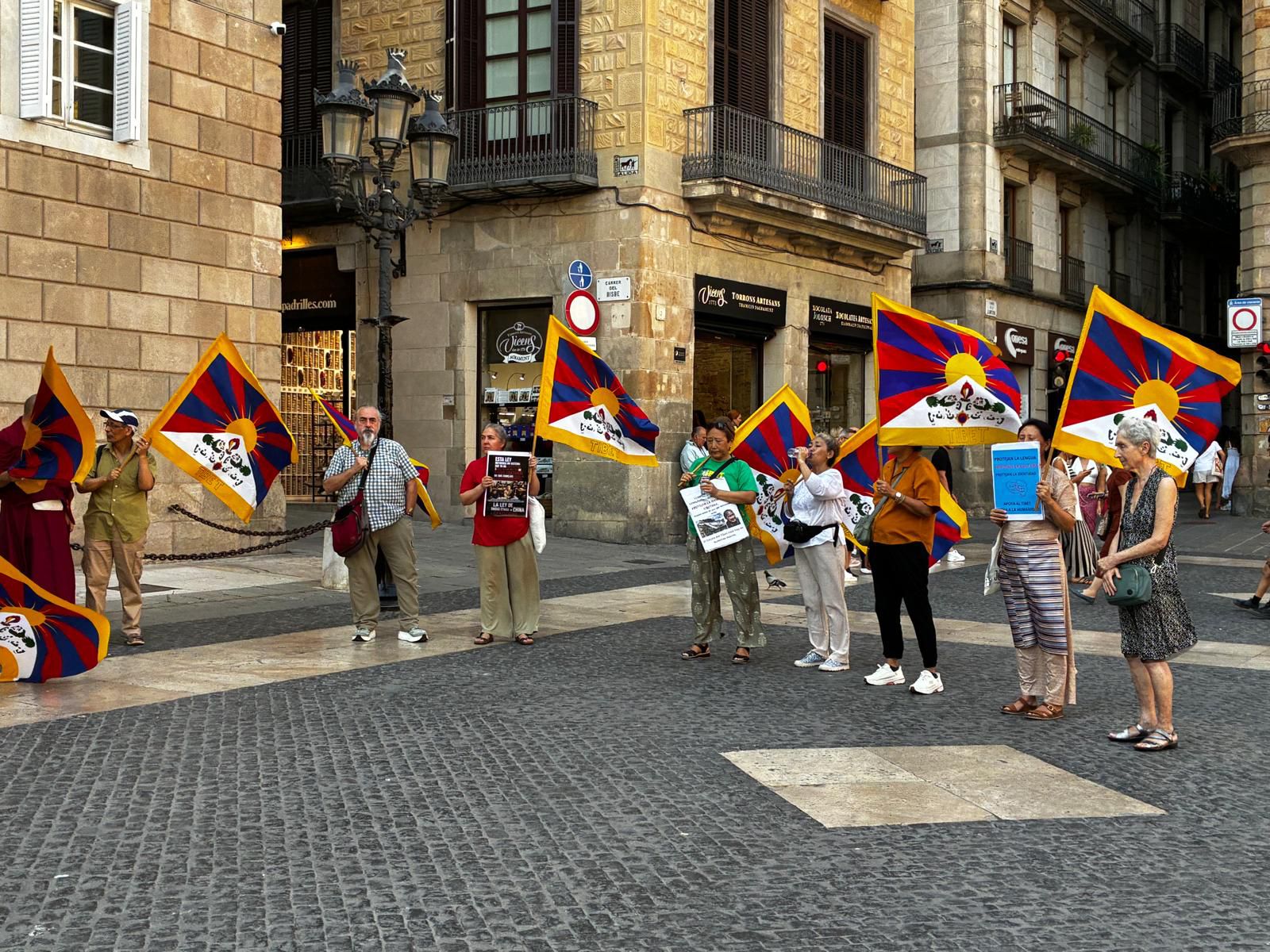
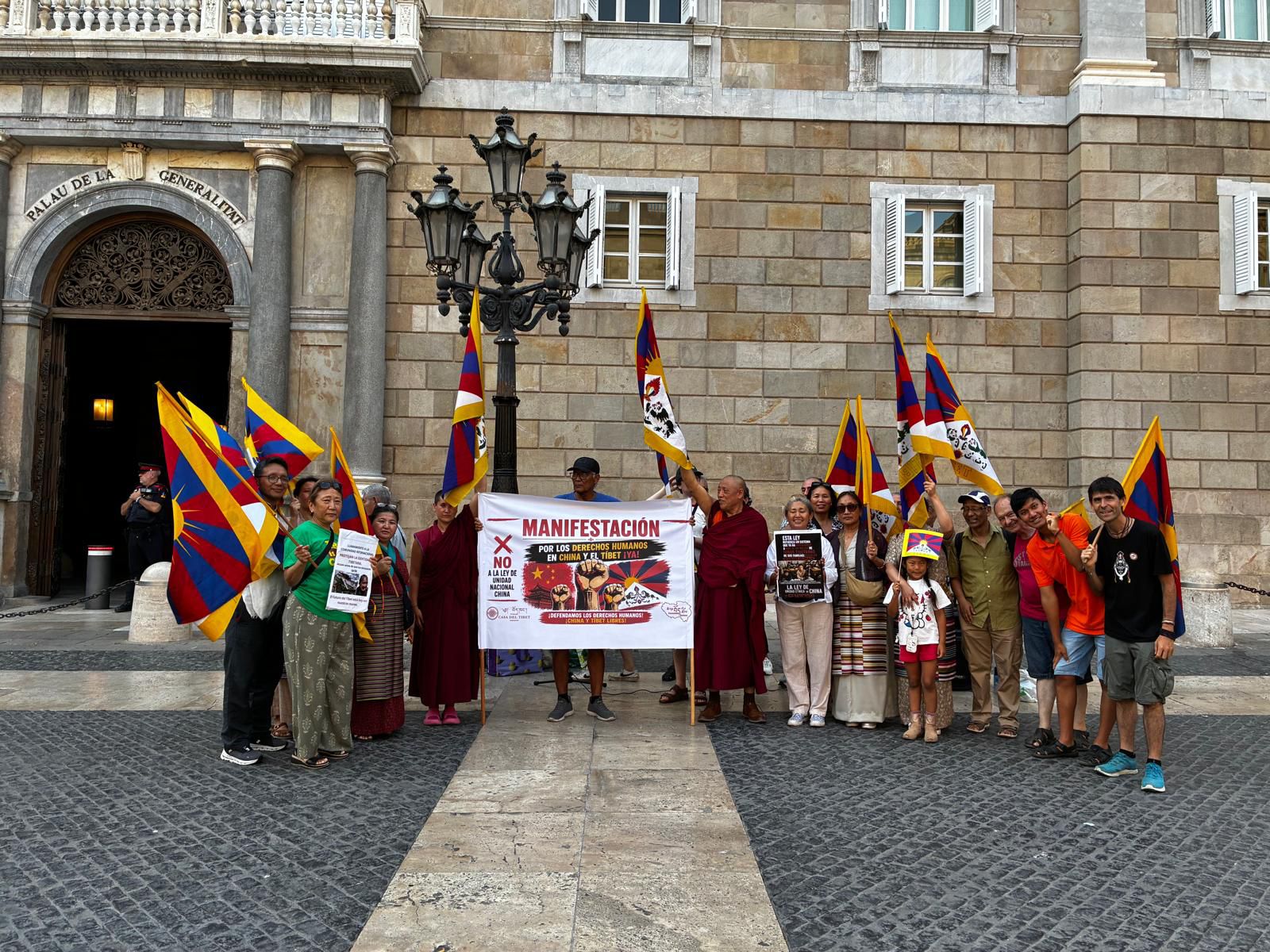
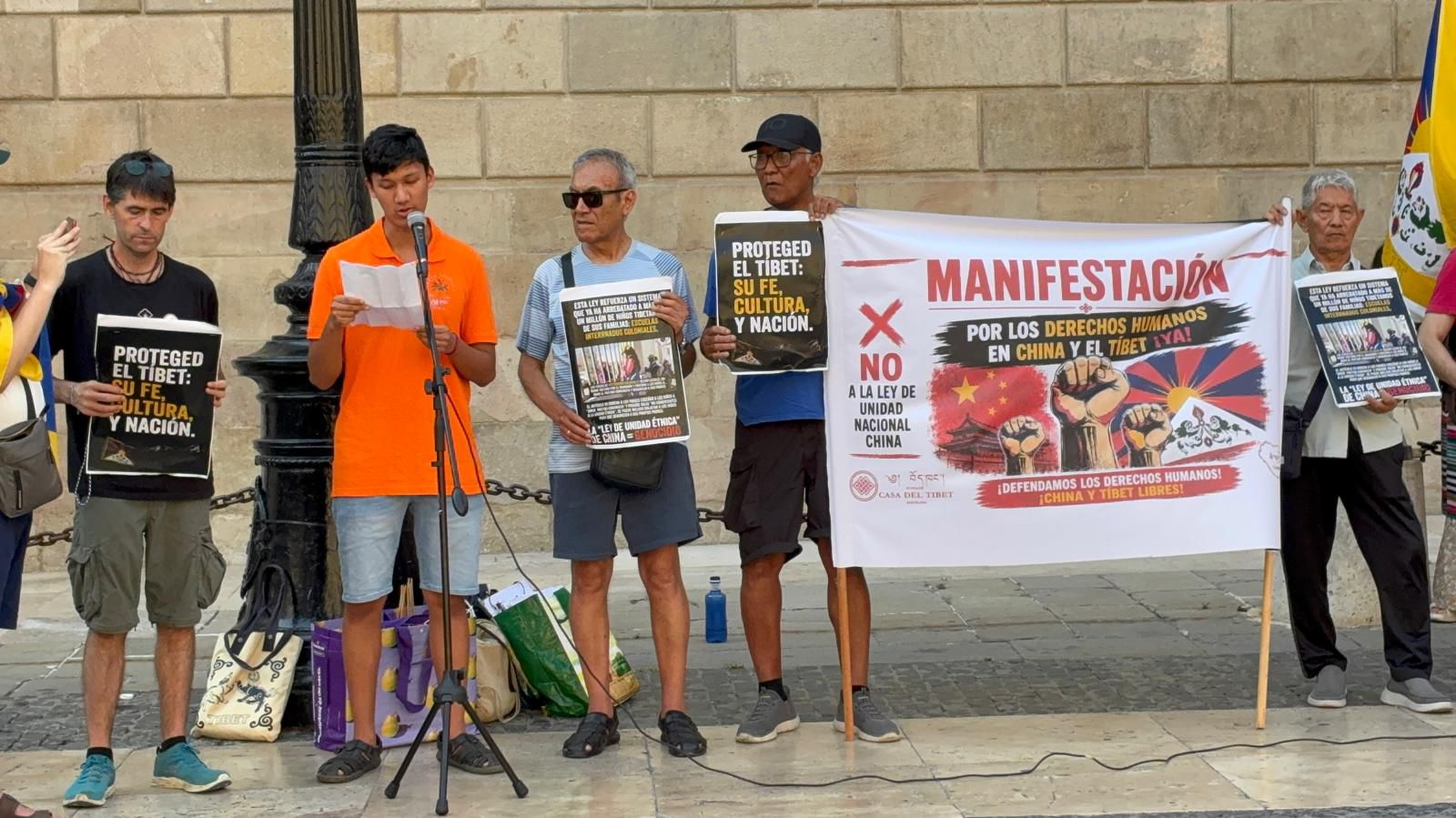
In Spain, the Tibetan community together with Casa Del Tibet and Tibet supporters, staged a morning demonstration outside the Chinese Embassy. Later in the day, they organized a public awareness campaign and protest near government buildings to draw attention to their concerns regarding the new legislation.
The demonstrations in Belgium, the Netherlands and Spain formed part of a wider international campaign responding to China’s implementation of the Ethnic Unity Law. Across the three countries, protesters delivered a unified message, urging the Chinese government to repeal the legislation and calling on the international community to continue supporting the protection of Tibetan identity, language, culture and fundamental human rights.
– Report filed by Office of Tibet, Brussels