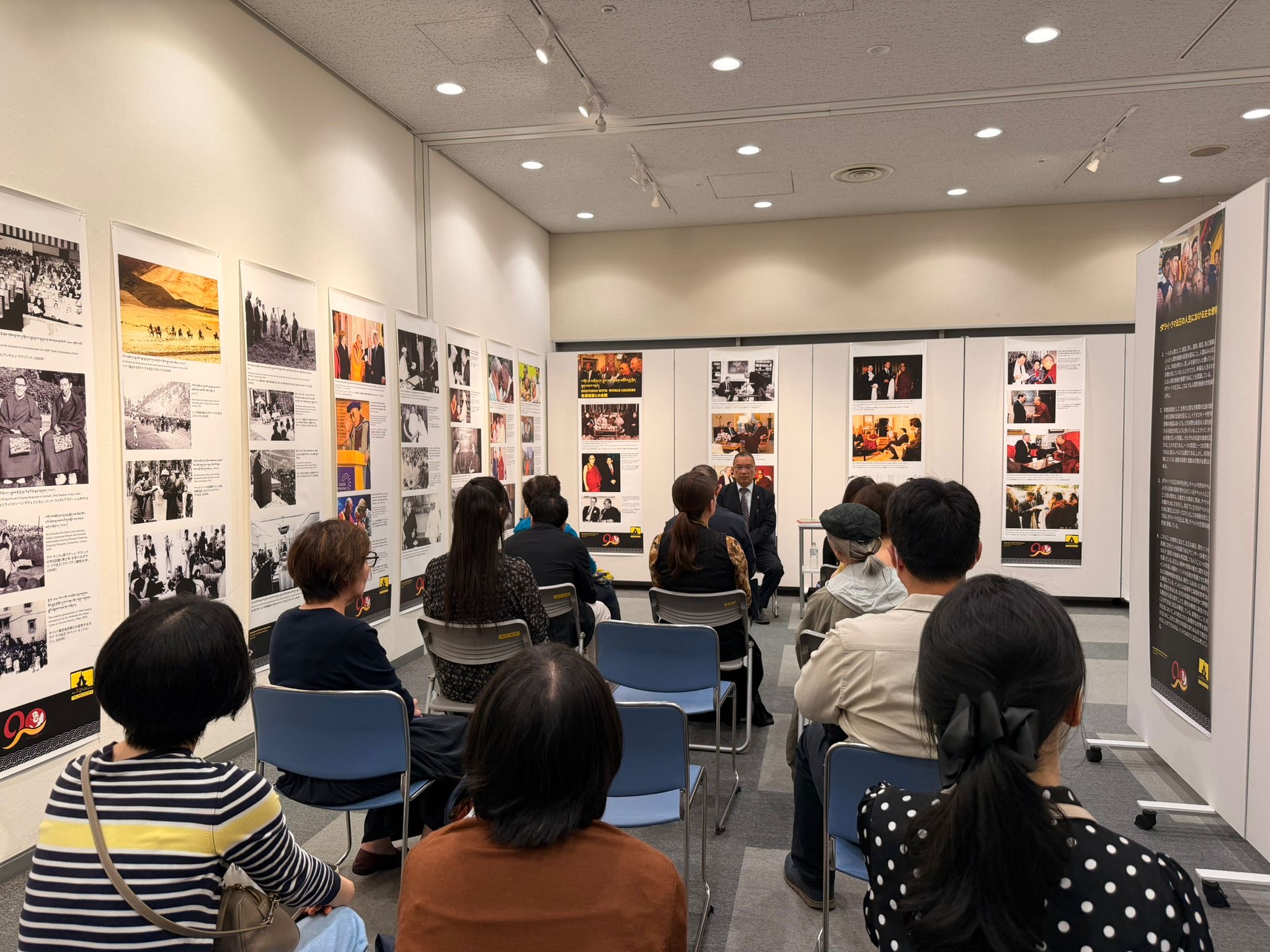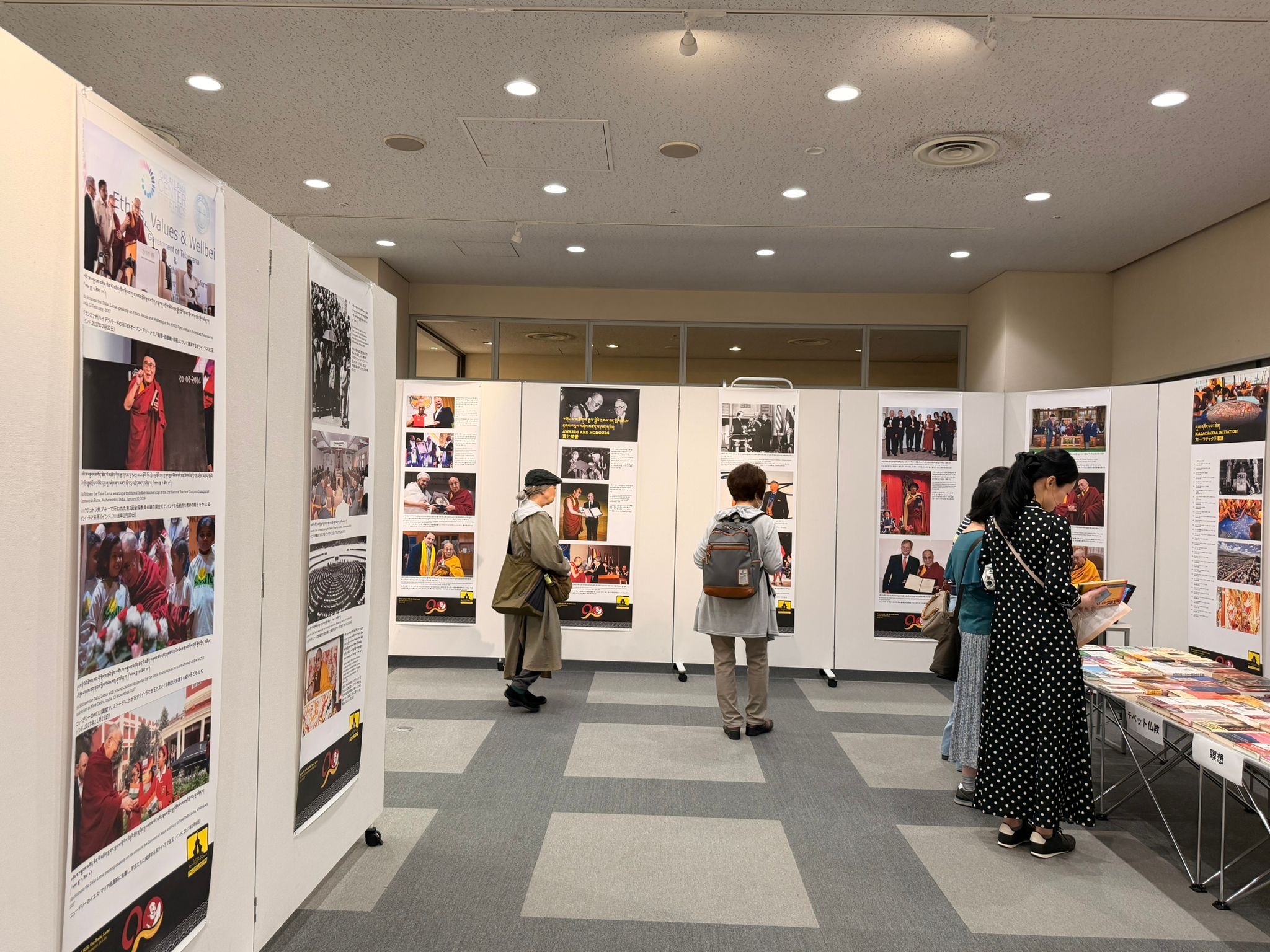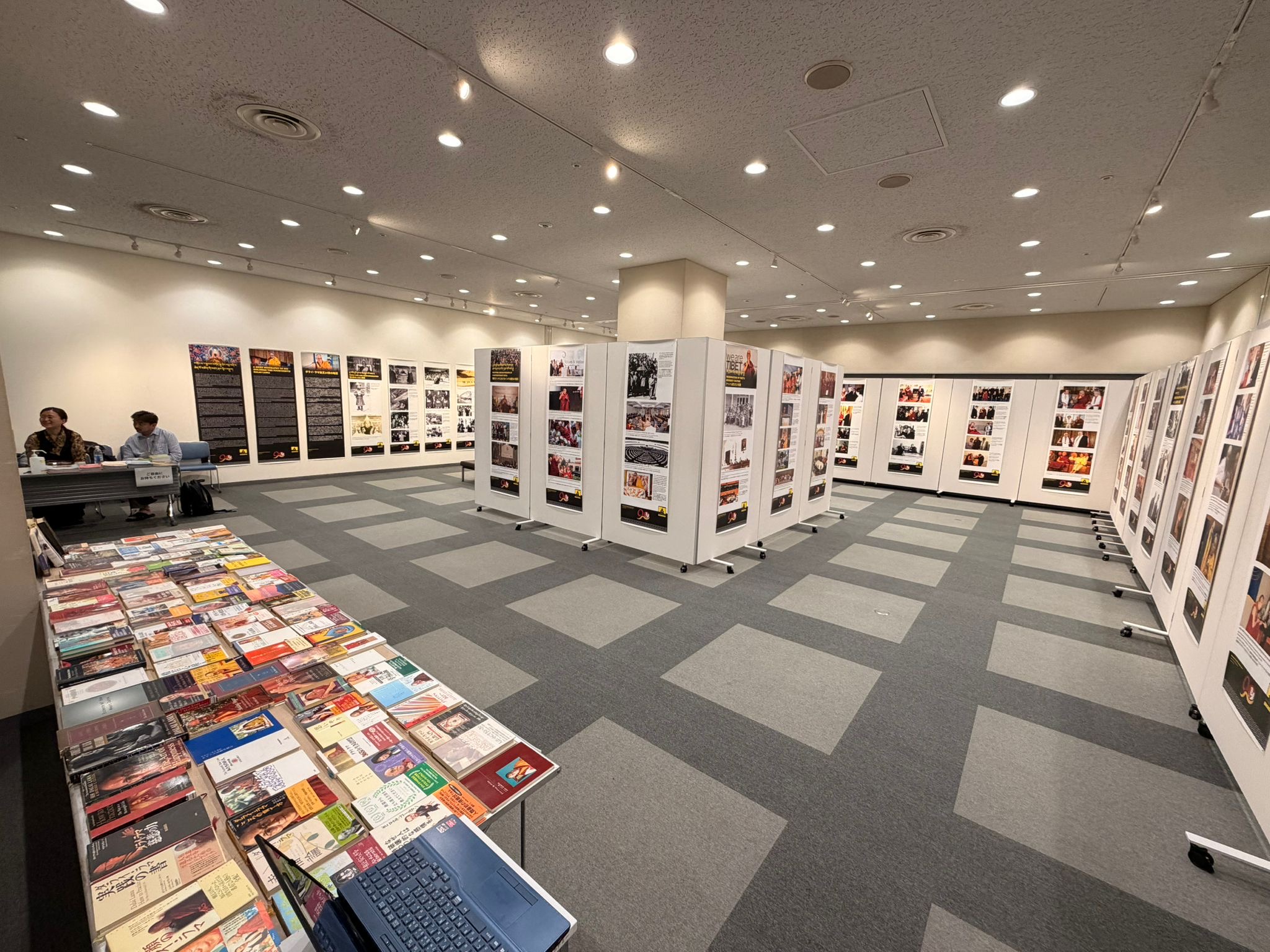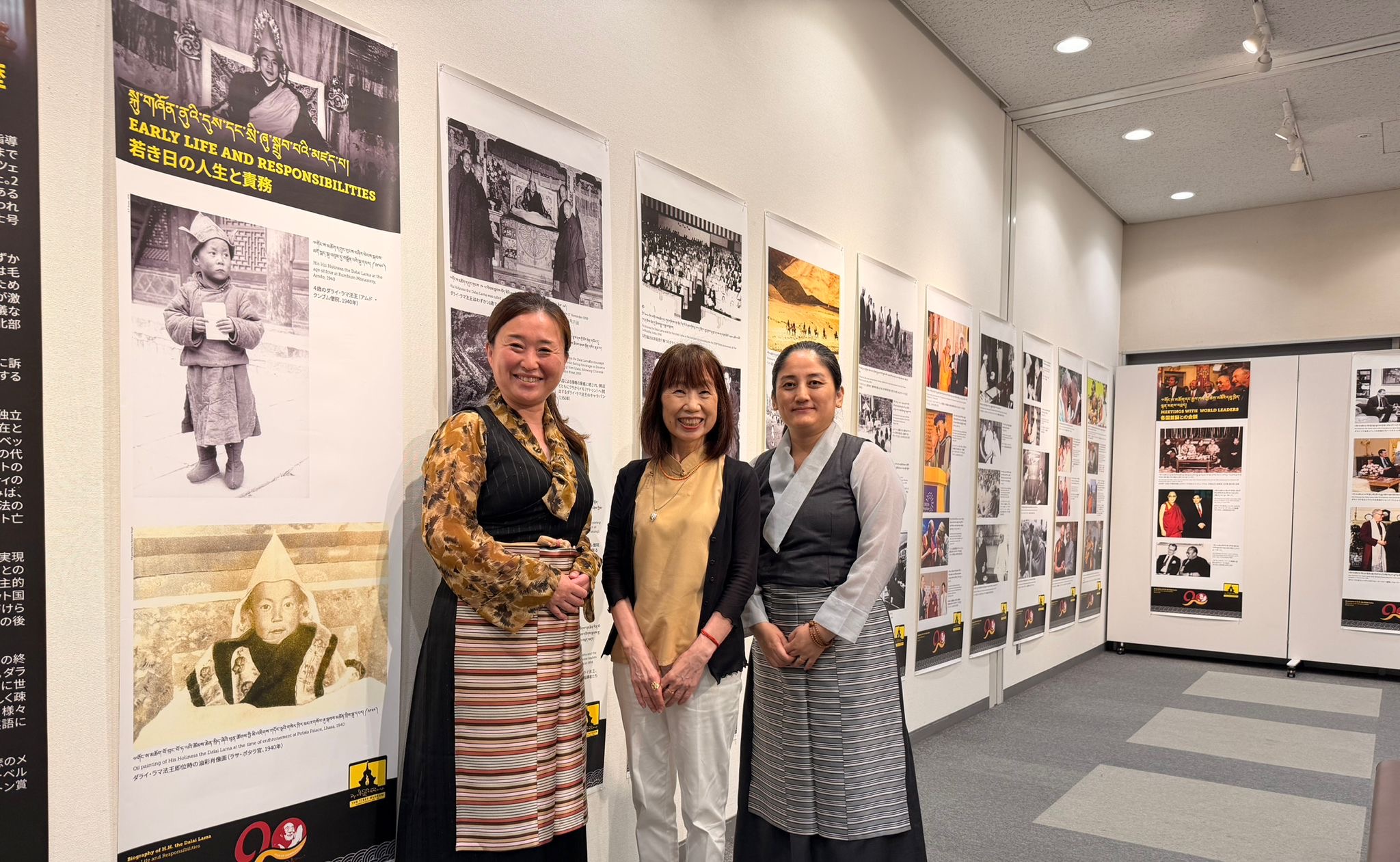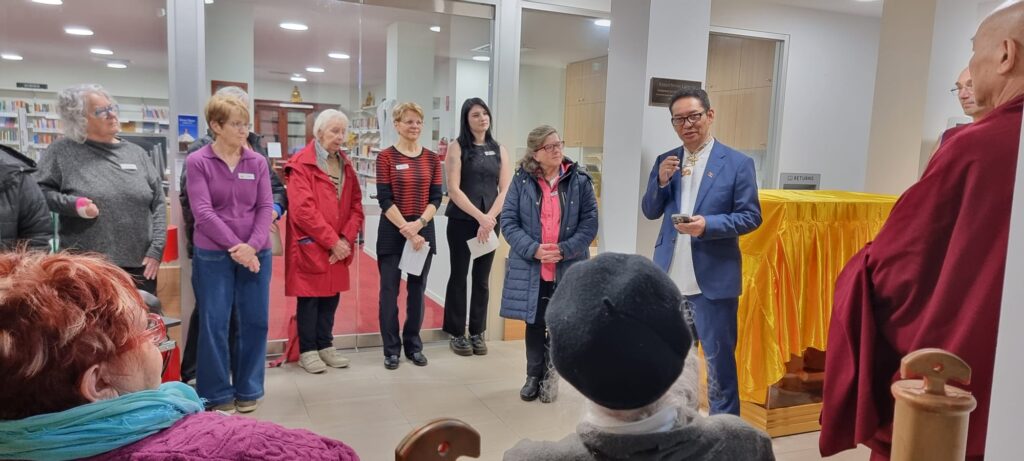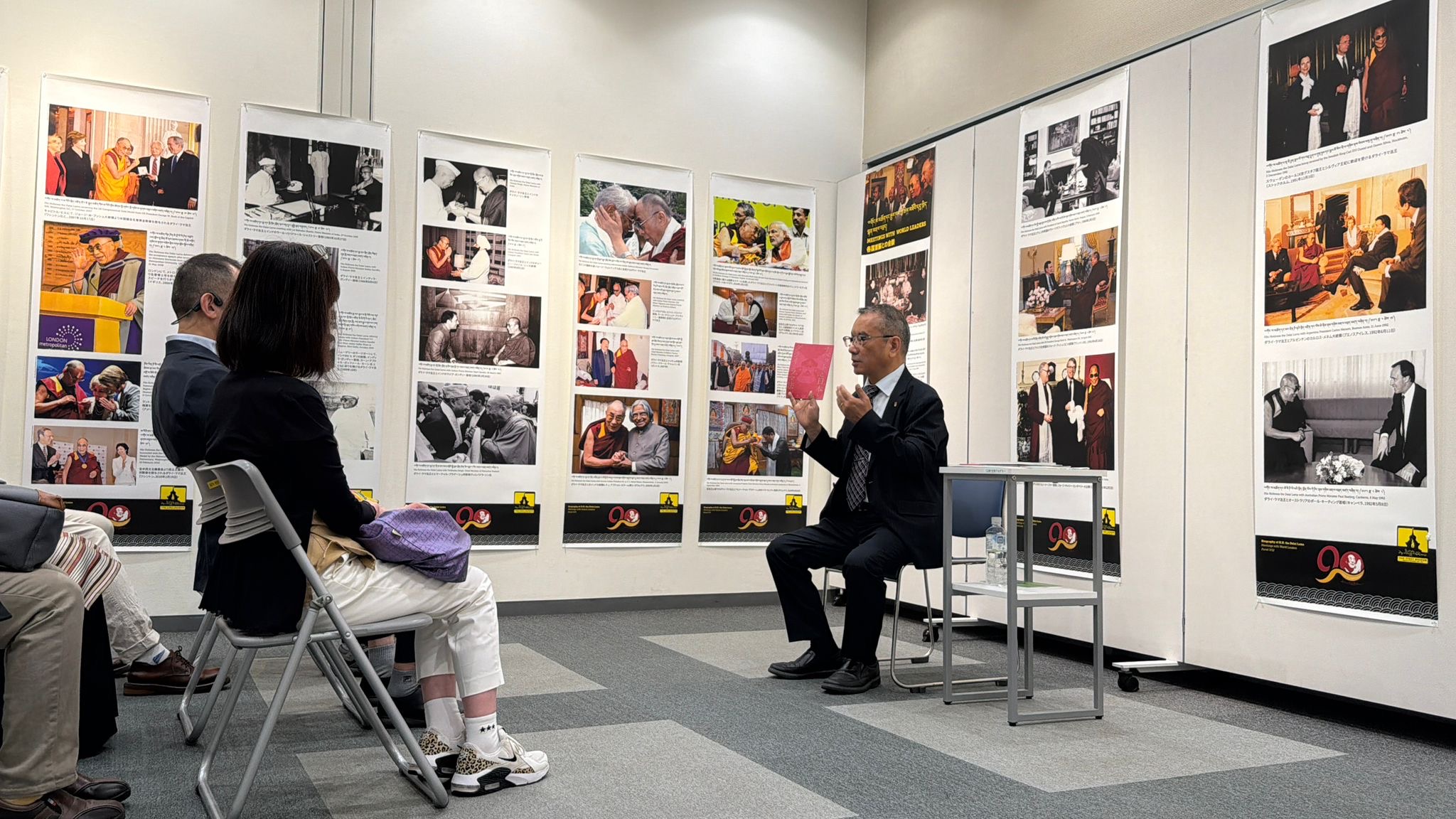
Tokyo: Coinciding with World Refugee Day, Tibet House Japan organised a two-day photo exhibition and talks on the life and teachings of H.H. the Dalai Lama at Bunkyo Civic Center in Tokyo. The United Nations has designated the 20th of June as World Refugee Day to honor and support the aspirations of refugees worldwide. It is also a day for the international community to commit themselves to work for a free and compassionate world without displaced refugees.
In 1950, China, to gain the strategic highland of Asia, occupied Tibet through military invasion and threat. More than 1.2 million Tibetans died as a result of the brutal occupation. More than 6000 monasteries and nunneries were destroyed. Thousands of religious scriptures and literature were burnt. H.H. the Dalai Lama, temporal and spiritual head of Tibet, who was 24 at the time, was forced to flee Tibet and take political asylum in India. Around 80,000 Tibetan refugees followed him to India, Nepal, and Bhutan.
Dr. Tsewang Gyalpo Arya, Representative of the Liaison Office of H.H. the Dalai Lama, briefed the audience about the history and current situation in Tibet and how the exile Tibetan community is working hard to preserve what is being destroyed in Tibet and restore freedom and justice in the homeland. He explained H.H. the Dalai Lama’s four commitments: promotion of human values; promotion of religious harmony; preservation of Tibetan culture; and revival of the ancient Indian Nalanda philosophy. He further elucidated how these four commitments are directed to achieving a peaceful and compassionate global community with a sense of universal responsibility.
Representative Arya raised the issue of the Chinese colonial boarding schools and how around one million Tibetan children are being indoctrinated in these schools. Regarding the recent Ethnic Unity and Progress Law, he said, “The law is not about unity and progress; it is all about elimination, assimilation, and destruction of the identity, language, and culture of the minority nationals of Tibet, East Turkistan, Southern Mongolia, and others.” He informed that on 1 July, Tibetan, Uyghur, Southern Mongolian, and Hong Kong representatives will talk on how this law will affect them and invited the audience to join the talk.
Around 48 photo panels displaying H.H. the Dalai Lama’s early life in Tibet, his enthronement, education, negotiation with the Chinese leaders, escape to India and his meetings with the Indian and international leaders for freedom and justice for the Tibetan people were exhibited. It has a special section where H.H. the Dalai Lama’s four mission statements or commitments in his life were explained with the relevant photos. There was also a table where the Japanese translation of H.H. the Dalai Lama’s books were displayed for reference.
More than 150 people visited the exhibition. Some shared information of their visits to Tibet, India, and attending the teachings of H.H. the Dalai Lama. During the two-day exhibition, staff and volunteers of the Tibet House, Tashi Yangzom, Tselha, Hasegawa, Inada, and Karma guided the visitors and explained the Tibetan situation and distributed information booklets on Tibet and the office.
– Report filed by the Office of Tibet, Japan