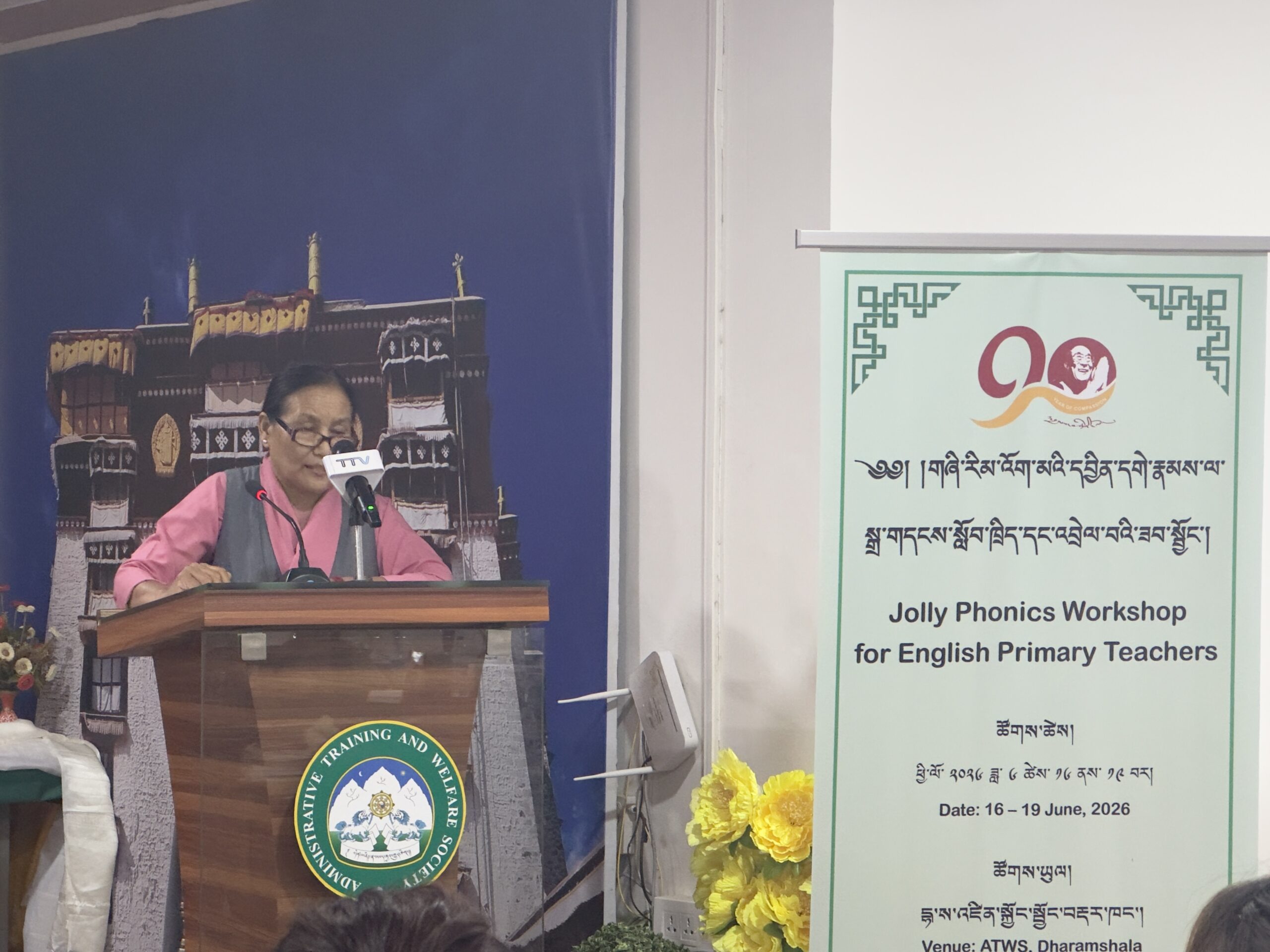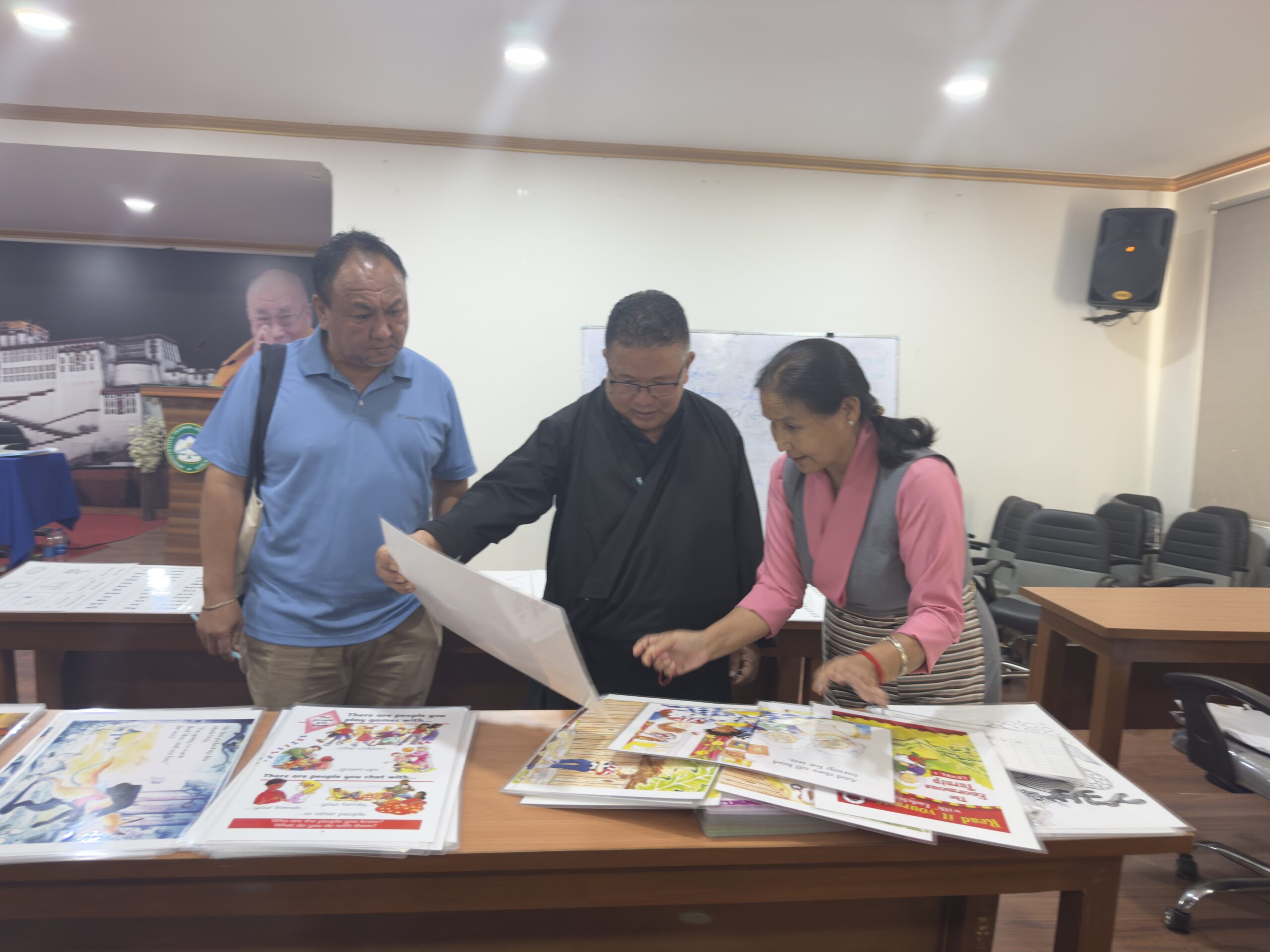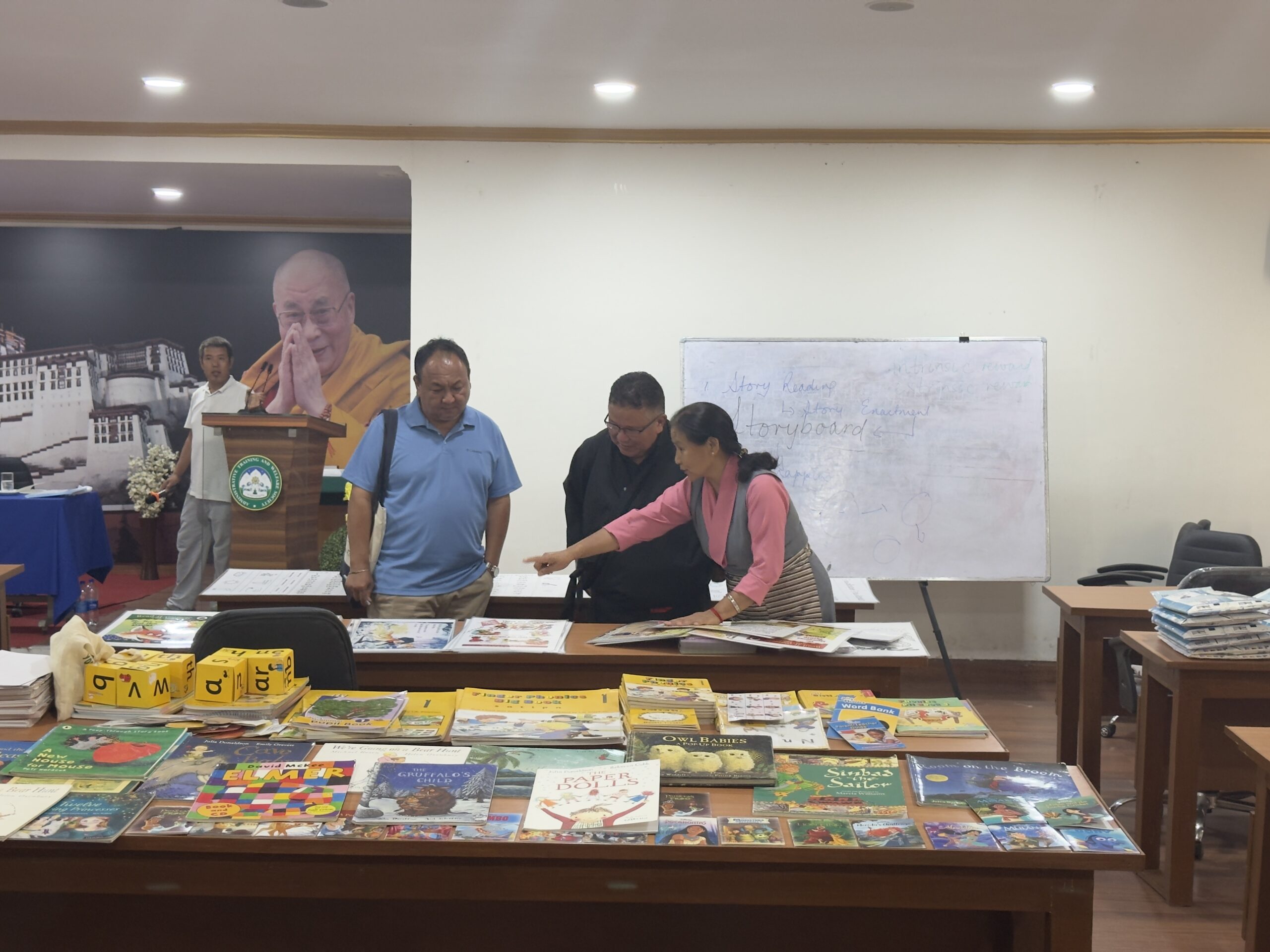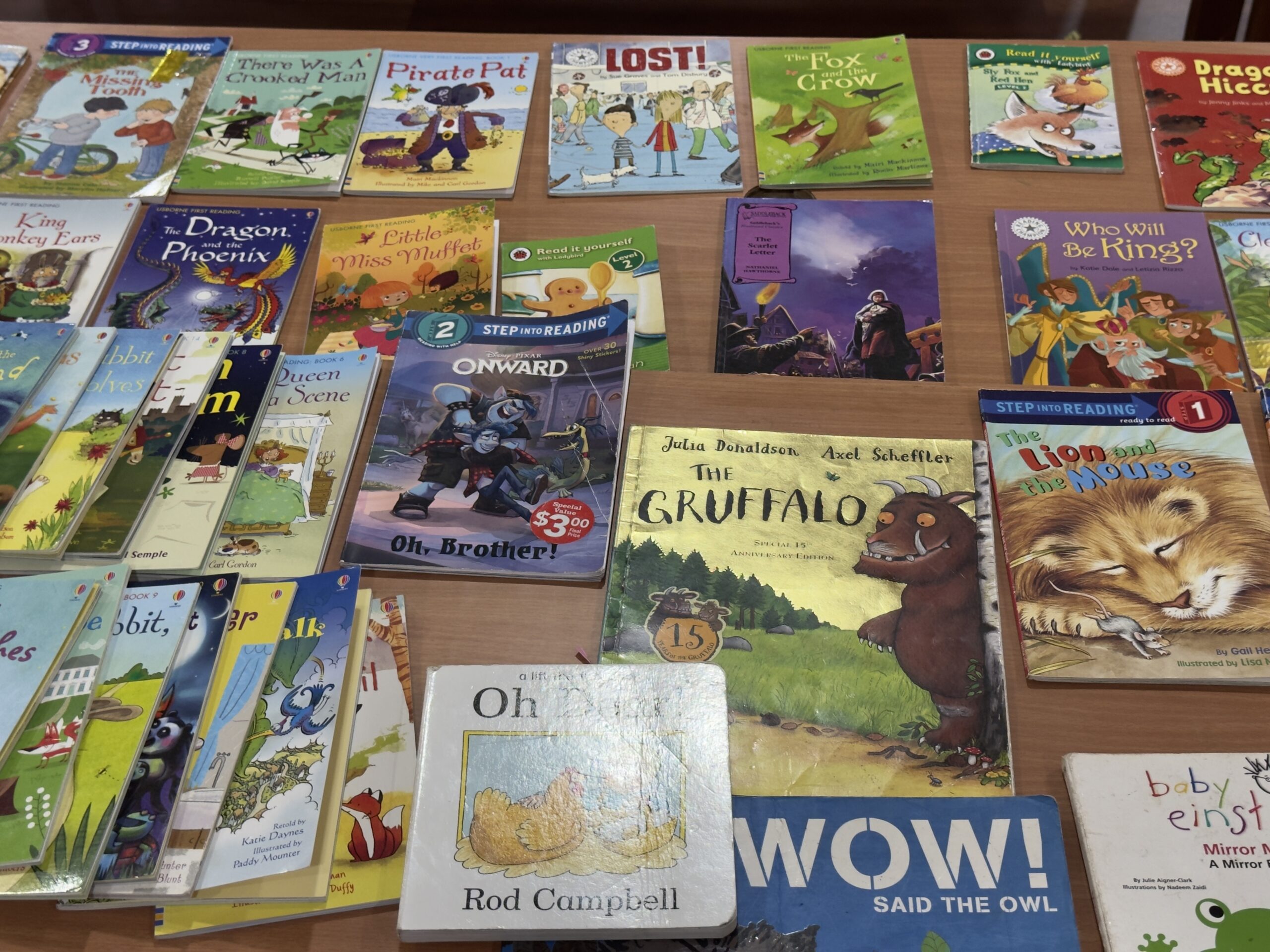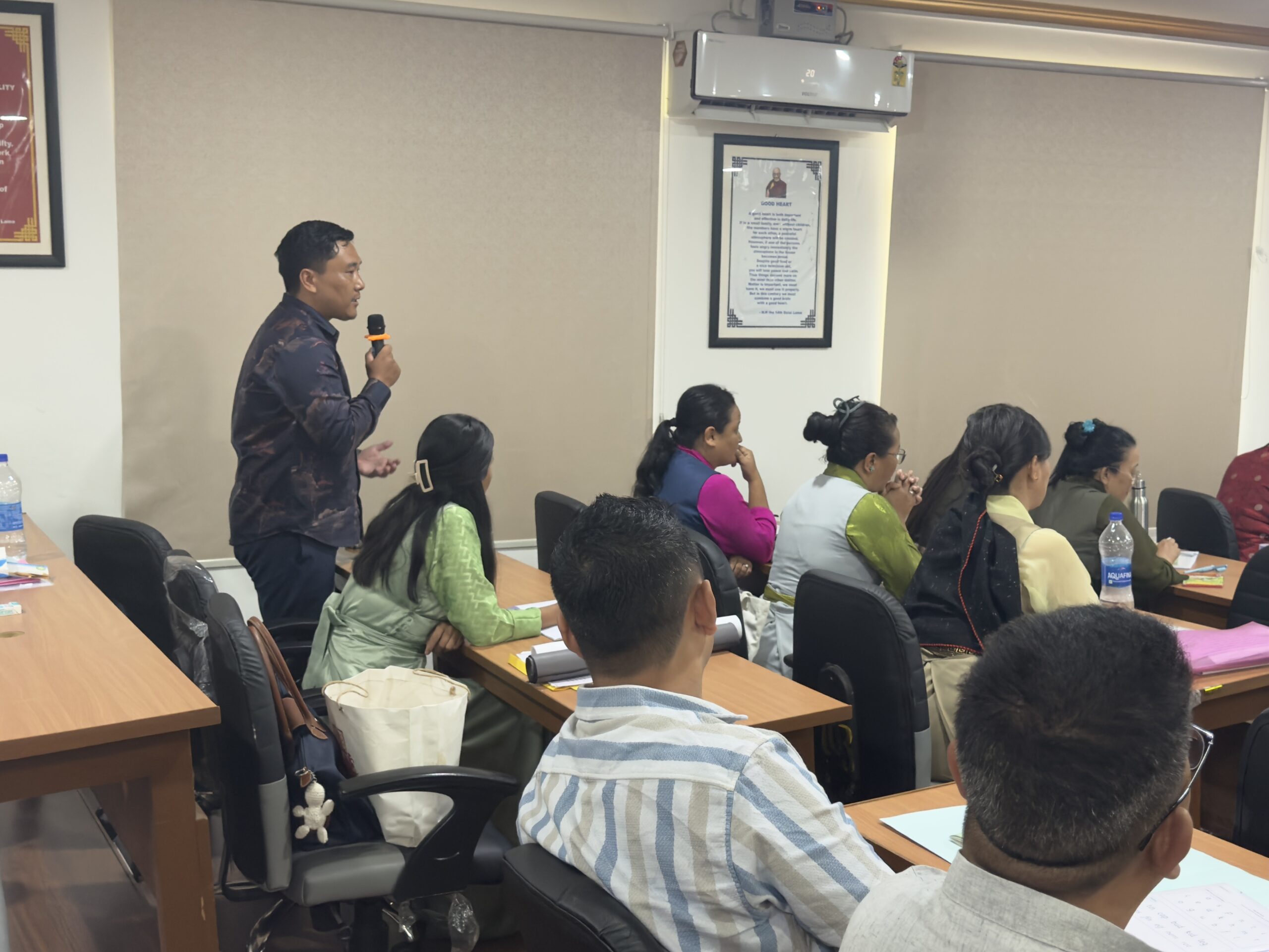

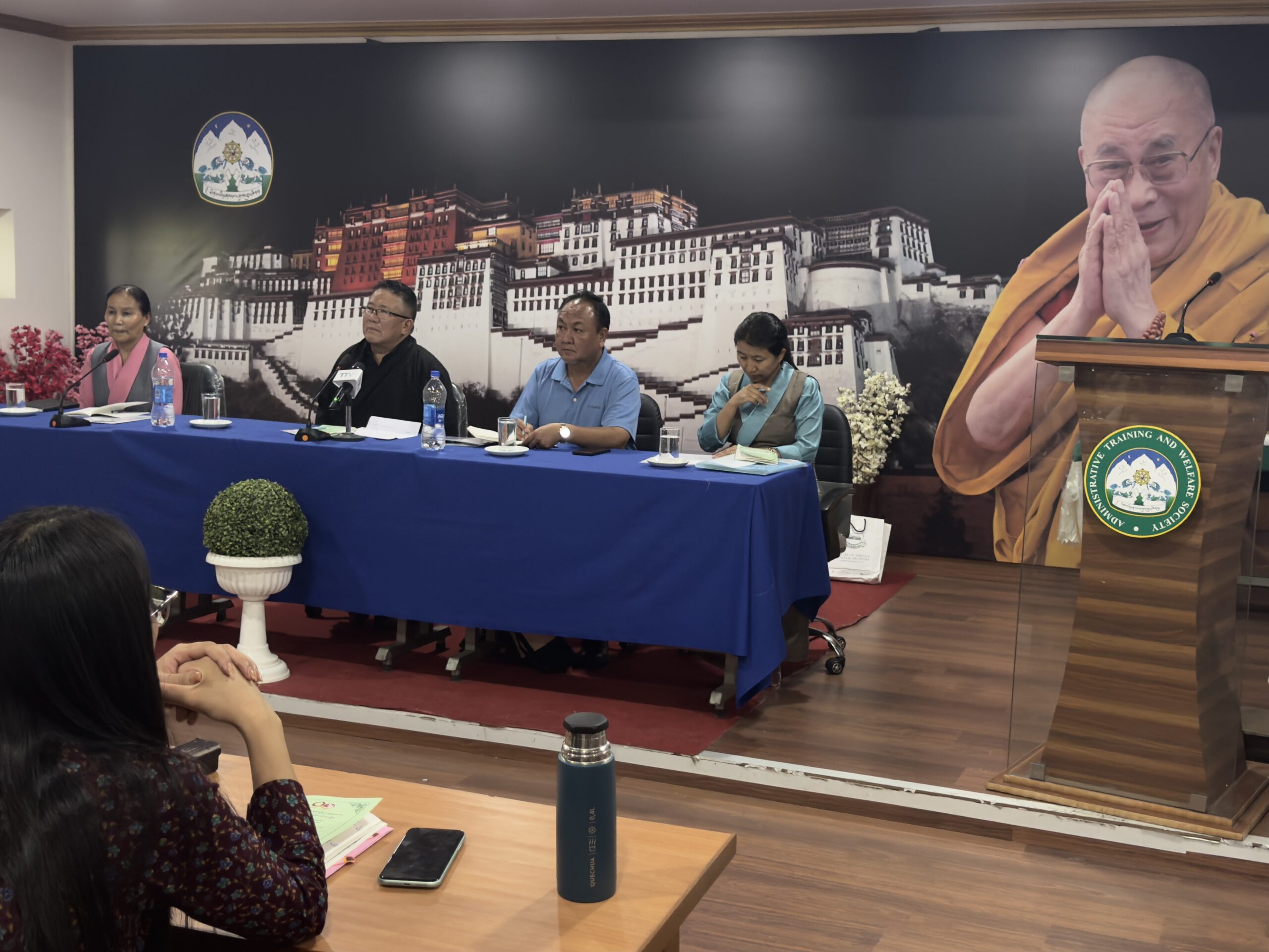
Dharamshala: The Department of Education (DoE) of the Central Tibetan Administration (CTA) successfully concluded a four-day Jolly Phonics Workshop for English Primary Teachers on Friday, 19 June, at the Administrative Training and Welfare Society (ATWS) in Dharamshala. The workshop, held from 16 to 19 June, brought together 29 English primary teachers from 26 Sambhota Schools, two Mewoen Tsuglag Petoen schools and Sherab Gatsel Lobling to strengthen their capacity in delivering early English literacy through the Jolly Phonics approach.
The workshop is a follow-up to last year’s training programme, comprising both theoretical and practical sessions, and was facilitated by veteran educator and mentor Tenzin Pelmo, who brings more than 35 years of teaching, teacher-training, and mentoring experience with Tibetan Children’s Village (TCV) schools.
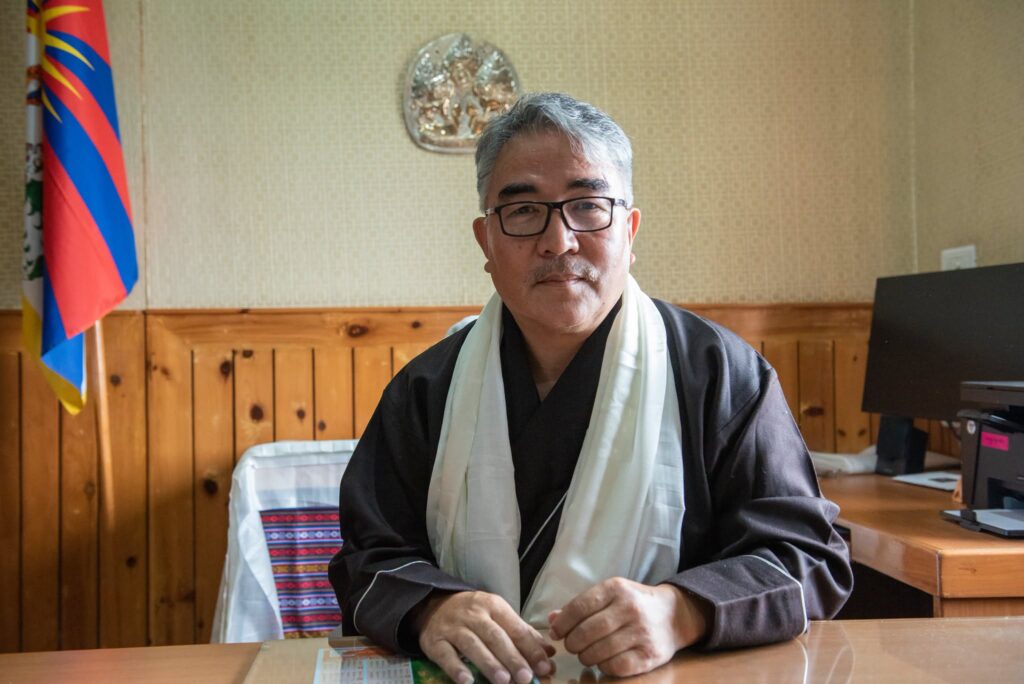
Education Kalon Ugyen Tenzin attended the closing ceremony as the chief guest. The event marked his first official public programme since assuming office as the Education Kalon under the 17th Kashag.
The programme commenced with a welcome and overview of the workshop by Sonam Gangsang, EGR Programme Coordinator of DoE, who introduced the objectives and implementation of the four-day training.
Two participating primary teachers shared their positive experiences and reflections on the training, highlighting its practical value in enhancing classroom teaching. This was followed by the presentation of certificates and ceremonial scarves to all participating teachers in recognition of their successful completion of the four-day training programme.
This was followed by remarks from the workshop’s lead resource person, Tenzin Pelmo, a retired Tibetan Children’s Village (TCV) English teacher and experienced Jolly Phonics trainer, who reflected on the significance of Jolly Phonics in strengthening English literacy among Tibetan students.
Tenzin Pelmo, during her speech, highlighted that children’s learning and development depend not only on teachers but also on the active involvement and support of parents. Drawing from her visits to schools, she noted the shortage of Jolly Phonics teaching materials and appreciated the Department of Education for producing additional resources, many made from recycled materials, and for training teachers in their effective use to create an engaging English-learning environment.
Emphasising that professional development is a continuous process, she said a single workshop is insufficient and encouraged teachers to keep learning and implementing new methods, as their growth ultimately benefits students. Quoting Maria Montessori’s words, “One test of the correctness of the education procedure is the happiness of the child,” she stressed the need to foster joyful classrooms where children are eager to attend school. She also urged teachers to be guided by the vision and message of His Holiness the Dalai Lama, serve with dedication and determination, and commended the young teachers who had travelled from remote schools for their commitment to improving educational opportunities for Tibetan children.
Following her remarks, Joint Secretary Jamyang Wangyal, Head of the Academic Section of the Department of Education, addressed the gathering. He described the Jolly Phonics workshop as one of the most significant training programmes organised by the Department of Education, noting that strong foundational learning in primary years is crucial for students’ future academic success. He said the absence of such training in the past had affected children’s English pronunciation and expressed hope that the workshop would help address this gap.
Encouraging teachers to embrace continuous professional growth, he urged them to confidently apply the skills acquired during the training, seek guidance whenever needed, and remain committed to lifelong learning. He also stressed the importance of helping students develop proficiency in both Tibetan and English, adding that young teachers have ample opportunities to refine their knowledge and teaching practices for the benefit of their students.
Delivering the keynote address, Education Kalon Ugen Tenzin congratulated the participants on completing the workshop and spoke about the importance of quality early childhood literacy and teacher development in strengthening Tibetan education.
Kalon appreciated teacher Tenzin Pelmo for her dedication and commitment to serving children and encouraged teachers to make the best use of the training to further strengthen their language skills and professional knowledge. Emphasising the importance of both Tibetan and English under the Basic Education Policy, he urged teachers to continue applying the methods learned in the workshop and to remain lifelong learners.
Stressing the pivotal role of teachers in shaping future generations, he said educators should embody knowledge, values, and compassion so that children develop a love for learning and grow into responsible individuals who contribute to society while preserving Tibetan language, culture, and identity. He also encouraged teachers to persevere despite challenges and continue serving the larger cause of education.
The training forms part of the DoE’s Early Grade Reading (EGR) initiative, introduced in 2013 to strengthen foundational literacy and cultivate reading habits among Tibetan school children. Jolly Phonics was incorporated into the EGR programme to equip teachers with a multisensory and systematic synthetic phonics approach, enabling young learners to master the 42 English letter sounds, blending for reading, segmenting for spelling, letter formation, and the recognition of irregular or “tricky” words. While TCV and Tibetan Homes Foundation schools have been implementing Jolly Phonics for several years, Sambhota Schools transitioned from the Sound Ways method to the Jolly Phonics approach in 2025. The first workshops for Sambhota School teachers were conducted in 2025, training 28 English teachers across three regions.
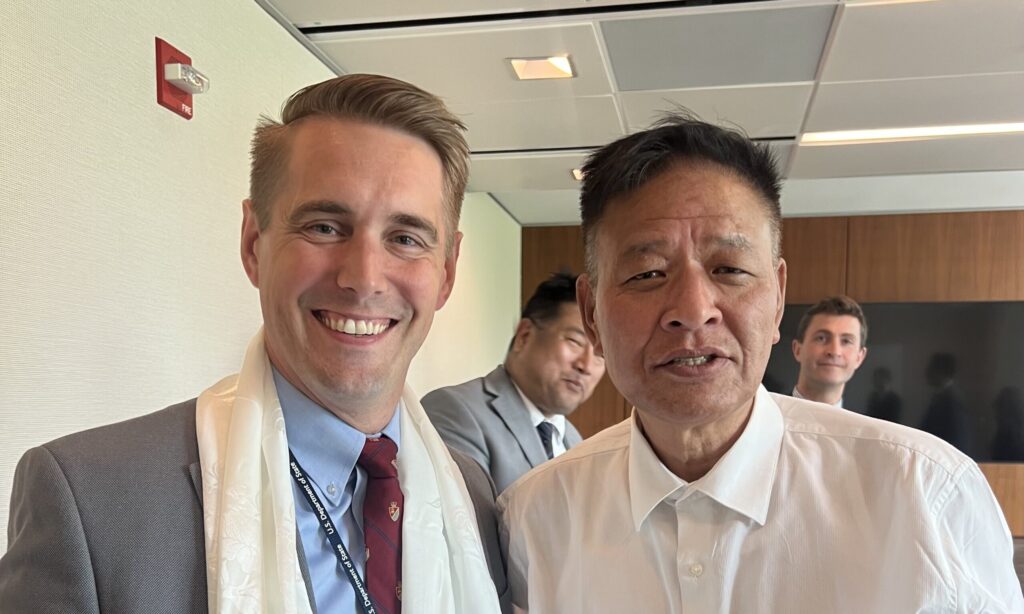
The Workshop was successfully carried out with the generous funding of the U.S. Department of State (USDOS) Bureau of South and Central Asian Affairs (SCA) through the Tibet Fund.