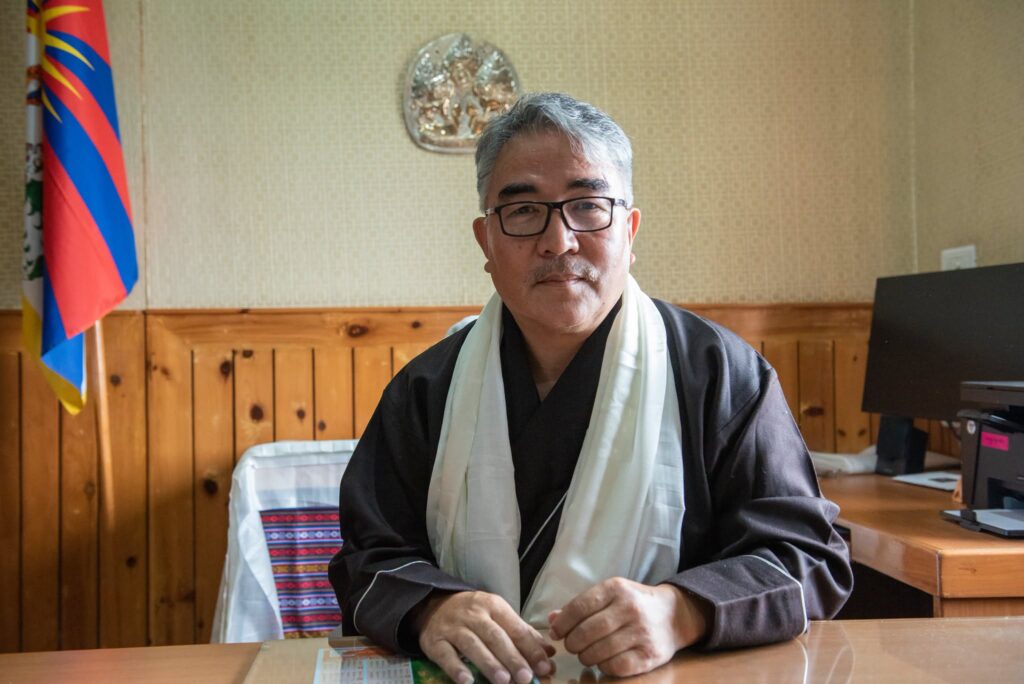
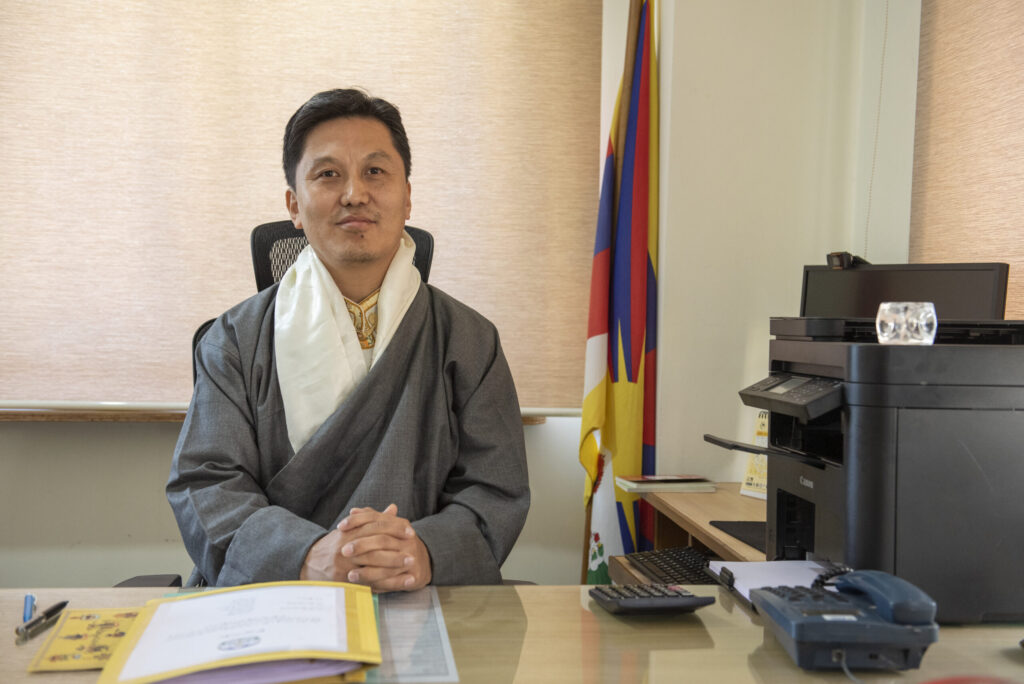
Pune: On 5 September 2024, an interactive session on “Why Tibet Matters” was held in Ishanya Auditorium, Symbiosis International (Deemed University).
Sikyong Penpa Tsering of the Central Tibetan Administration delivered the keynote address during the session, which was attended by Ambassador (Retd.) Gautam Bambawale, former Indian Ambassador to Bhutan and China; faculty members from the Humanities and Social Sciences department at Symbiosis International; Dr Shweta Sinha Deshpande, Director of Symbiosis School for Liberal Arts; and professors and students.
Sikyong Penpa Tsering stated in his opening remarks, “Maybe some of you have heard of Tibet, or some of you have met Tibetans. But we live under divisions, and despite living in India for 65 years, many Indians are not aware of Tibet. Even people in high places don’t know about Tibet. That is why, apart from going around the world, we engage with different governments to explain things about Tibet. It is essential to reach out to as many universities as possible. We plan to cover more universities in the future because it is very important for young Indians to understand their neighbourhood in terms of geographical area and security”.
Sikyong outlined that understanding Tibet is crucial for India’s security due to its geo-political significance, raising awareness about the strategic and environmental importance of the region, and fostering better relations through cultural understanding of Tibetan Buddhism and Tibet’s historical context.
Sikyong Penpa Tsering then provided a brief historical overview of China’s forceful invasion of Tibet, “In 1951, Tibet was forced to sign the so-called 17-Point Agreement under duress; this remains the only agreement Tibet had with China.” In addition, Sikyong recalled the visit of His Holiness the Dalai Lama to India during the 2500th Buddha Jayanti in 1956-1957, when His Holiness visited some regions and the Indian Parliament, and the flight of His Holiness and the thousands of Tibetans who fled into exile following China’s forced occupation of Tibet in 1959.
However, Sikyong stated, “The loss of our country significantly affected His Holiness’s exposure to the world. Before the loss, His Holiness would have remained relatively secluded in Potala or another place in the monastery. However, the Chinese forceful occupation of Tibet led to His Holiness reaching out to the international community, spreading messages of peace and wisdom. This exposure has allowed the world to gain insights and wisdom that originated from India, which might not have been possible had His Holiness remained in seclusion.”
Furthermore, Sikyong acknowledged Professor Bambawale’s comments on the Indian government’s stance, stating, “While the Indian government does not officially recognise us as the government in exile, the government has been kind enough to close one eye and open another, allowing our presence in Dharamshala. We have also ensured that all our organisations are appropriately registered as societies or trusts per Indian law.”
Sikyong Penpa Tsering further explored the deep historical connections between India and Tibet, highlighting how Tibetan Buddhism and script have their origins in India. He also mentioned that, according to certain historical accounts, the first king of Tibet was of Indian descent.
Apart from Tibet’s relevance to India from a cultural and historical point of view, Sikyong informed the gathering about the geo-political and strategic significance of the Tibetan plateau and its environment.
The session concluded with a Q&A session, providing an opportunity for interactive discussion with the audience and ending on a note of collective reflection and commitment.


 Dr Shweta Sinha Deshpande, Director of Symbiosis School for Liberal Arts giving Welcome Remarks.
Photo / Ngawang Tsepak / Tibet.Net / CTA