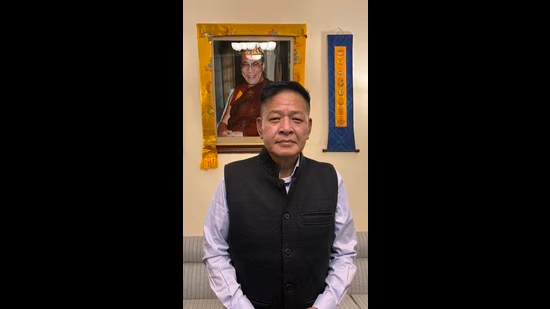
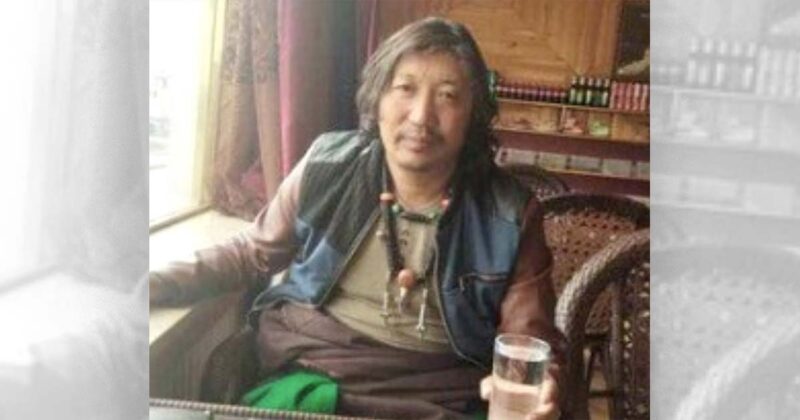
An analysis of the brutal repression of religion in Tibet and beyond, based on the author’s panel speech at the July 22 Tokyo’s International Religious Freedom Summit Asia.
-by Tsewang Gyalpo Arya
Why is religion important and why do we need it?
H.H. the Dalai Lama, a Tibetan spiritual leader and 1989 Nobel Peace Laureate, has said that all religious teachings carry important messages of love, compassion, forgiveness, and non-violence. All the major religions in this world have a great potential to generate and contribute peace and harmony at all levels: of the individual, the family, societal, national, and international. To have a peaceful world, we first need peace within ourselves at a personal level. This will have a ripple effect. For this, we need religion and moral ethics to guide us properly to find this peace within and outside ourselves. It is this important sacred potential of religions that we must uphold and promote for a better and peaceful world.
In a free and democratic nation, this religious freedom is respected and it complements social and national harmony. But a dictatorial and authoritarian regime, which wants to have complete control over people’s minds and bodies, sees religion as a threat to its authority, hence the religious repression. The very fact that they are against the religious teachings that are based on love, compassion, forgiveness, and non-violence shows the evil and dangerous nature of such a regime.
Tibet’s experience past and present
It’s more than 70 years since China occupied Tibet militarily. Despite their propaganda and claims of emancipation, prosperity, development, and socialist paradise, Tibetans are still suffering under the repressive brutal communist regime. The violation of human rights, religious freedom, repression, and destruction of Tibetan identity, which has been going on since the early occupation in the 1950s, has now reached the climax. Today, the situation in Tibet is described by sentences such as “total information blackout,” “Tibet has become a police state,” “Tibetan plateau militarized,” and so on. The US Freedom House survey has described Tibet as the most repressed and inaccessible country in several consecutive annual reports.
When China failed to gain legitimacy to rule Tibet even after 70 years of occupation and indoctrination, the communist regime decided to eliminate the root of the Tibetan identity, i.e., Tibetan language, culture, and religion.
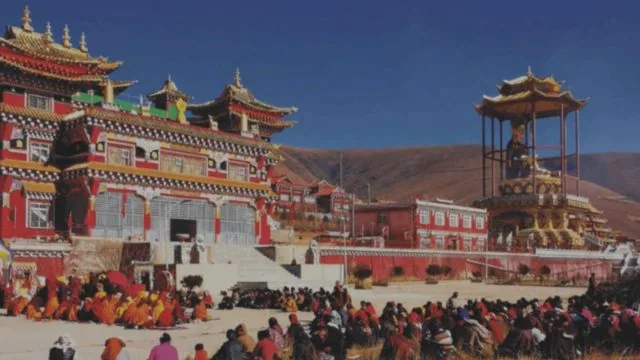
More than 6,000 monasteries and nunneries were destroyed and thousands of monks and nuns were forced to disrobe in the early years of occupation. But the situation has become worse since the coming of Xi Jinping in 2012. Today, monasteries, religious statues and artifacts, and schools are destroyed in broad daylight before the eyes of the public, and information on these atrocities comes out only after the destruction and despite of cover-up measures.
Click here to read more.