
Aspiring Indian Journalists Put the
Spotlight on Tibet[Saturday, 29
January 2011, 10:25 p.m.]
 |
|
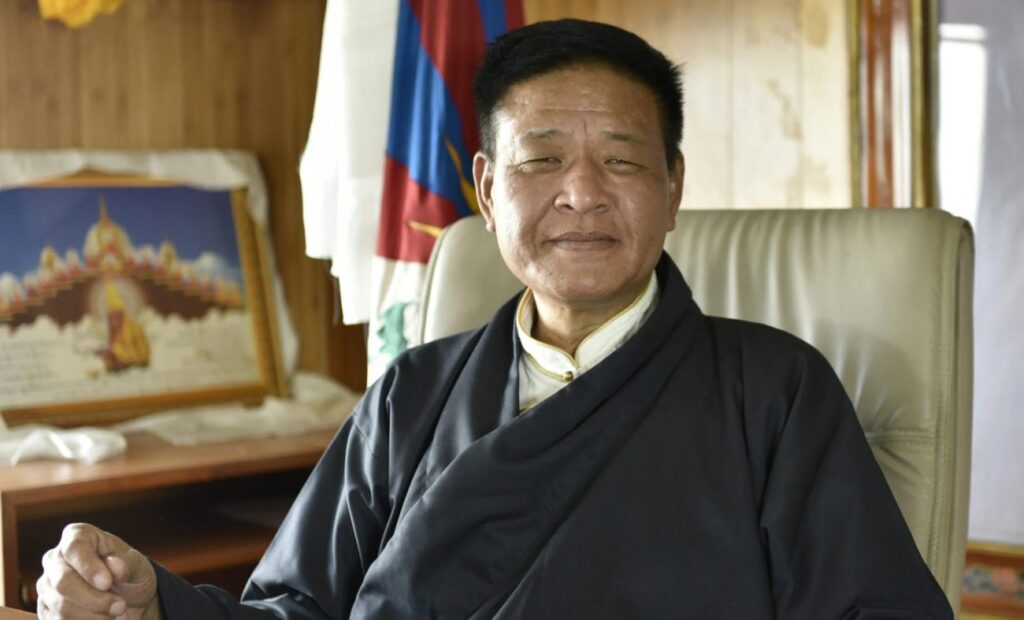
Kalon Tempa Tsering,
His Holiness the Dalai Lama’s Representative in New Delhi, (1st right) addresses the two-day session on Tibet in New Delhi /Photos by Javed Sultan |
NEW DELHI: A two-day interactive session ‘Road
To Tibet’ was held by Master’s students of Convergent Journalism at MF
Hussain Gallery in Jamia Millia Islamia University.Radio and
video documentaries in addition to a photo exhibition was presented
depicting the experiences, struggles, and hopes of Tibetans refugees
living in the Bylakuppe settlement, the largest Tibetan refugee
settlement in India. Students visited Bylakuppe from 30 December 2010 to
4 January 2011. The visit was jointly coordinated by the university’s
Mass Communication Research Center and India-Tibet Coordination Office. The
documentaries contain extensive interviews with Tibetans monks and
nuns, students, activists, organic farmers, and former freedom fighters
on varied issues and challenges faced by the exile community. Exile
Diaries, Song of Tibet, and Land of No Return were screened at the
event.Inaugurating the event on 27 January, Kalon Tempa Tsering,
representative of His Holiness the Dalai Lama in New Delhi said
visiting the Tibetan refugee settlements is key to understanding the
real situation of Tibetan refugees. “Tibetans have done very well and
part of this success story is due to the support from Indian government
and Indian public,” he said.Kalon Tempa Tsering asked the
aspiring journalists to use their judgement with open mind in
understanding the reality in Tibet. “Tibet issue is complex because
there are two versions – one of China and the other of the Tibetans,” he
said. “Understand both versions and find the answer on your own.”Mr
Salman Haider, former Foreign Secretary and Ambassador to China
commended the students for “recording, celebrating, and responding to
the culture of Tibetans in exile.” He said India and Tibet has a special
relationship in light of cultural and religious similarities between
Tibetans and Indians particularly in the Himalayan regions where Tibetan
Buddhism is the dominant faith. Mr Haider said Tibetans are “honoured
and welcome guests” in India and that India should support His Holiness‘
efforts at finding a reconciliation with Chinese as it will create and
reinforce the sympathy between Indians and Tibetans.
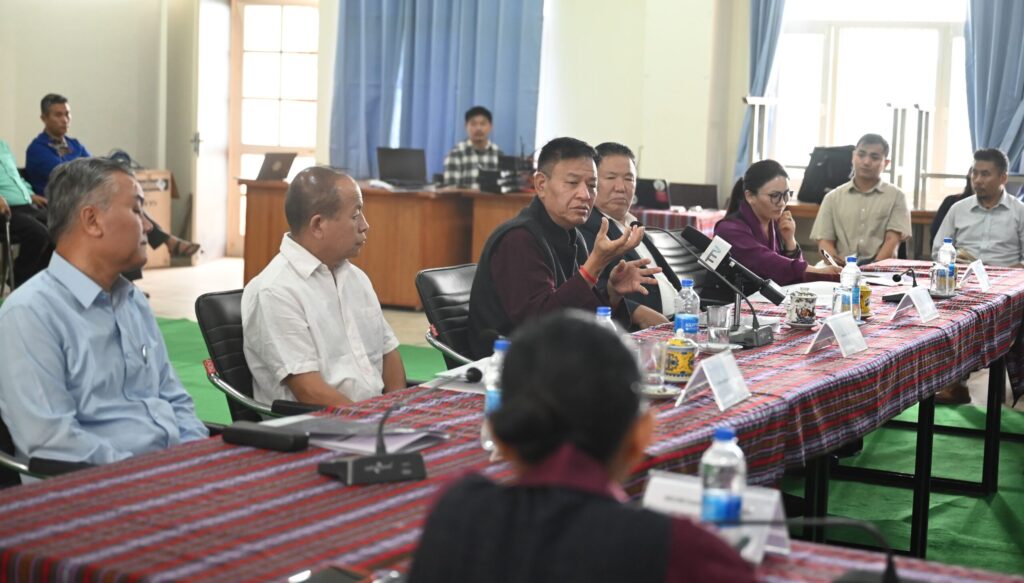
 |
| Members of the audience listen to Kalon Tempa Tsering’s address at the two-day session on Tibet in New Delhi |
Mr
SM Rashid, Pro Vice Chancellor of the university said Tibetans have the
fundamental right to have their own homeland. “The legitimate voice of
the Tibetan people should not die,” Mr Rashid said. “This voice should
be given a platform.”On 27 January evening, students formed a
human chain in solidarity with the Tibetan people and observed a
minute’s silence for the cause of Tibet.On 28 January, Deputy
Editor of Tehelka magazine, Mr Vijay Simha, veteran Indian journalist Mr
Vijay Kranti, and Tibetan writer and activist Tenzin Tsundue spoke at a
panel discussion on ‘Tibetans in Exile: What Lies Ahead?‘. Striking
a positive note on the future of Tibetan exiles, Mr Kranti said Tibet’s
graph has been on the positive rise and will remain so. He said His
Holiness has for the last many decades gradually and intentionally been
introducing a democratic parliamentary system wherein the executive head
of the Central Tibetan Administration in exile is now directly elected.
“This system can operate efficiently in future in His Holiness’
absence,” Mr Kranti said.Mr Tsundue said events in Tibet, China
and interactions between Tibetans and Indians will largely determine the
course of Tibetan struggle in exile. He said the continued repression
in Tibet has only fed and enforced the struggle in exile inspiring a new
generation of Tibetans growing up in exile. Mr Simha, in his
brief presentation, said the Tibetans have legitimate grievances and the
Tibetan cause needs to be upheld. He said Indian media coverage on
Tibet is still limited to Dalai Lama and other human interest stories,
adding, much needs to be done in knowing and understanding the issue
realistically.