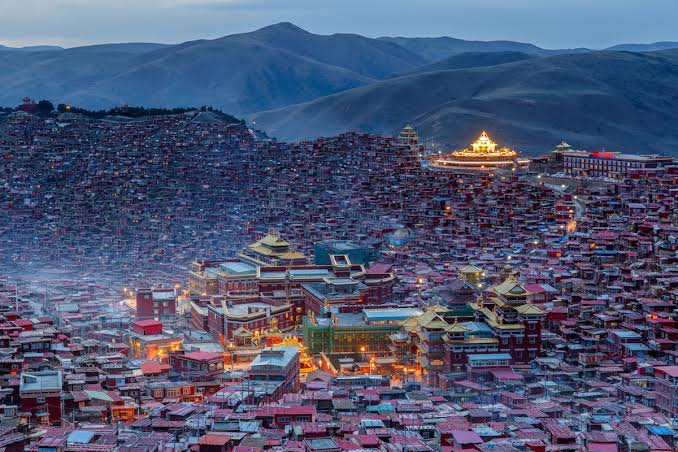
BERLIN: The killing of 22 Tibetans by the Chinese security forces during a peaceful protest outside Kirti monastery on 16 March 2008 was the start of the current cycle of repression in Kirti Monastery and Ngaba area in eastern Tibet, said Kirti Rinpoche. The youngest among the dead was a middle school student, 16-year-old girl Lhundup Tso.
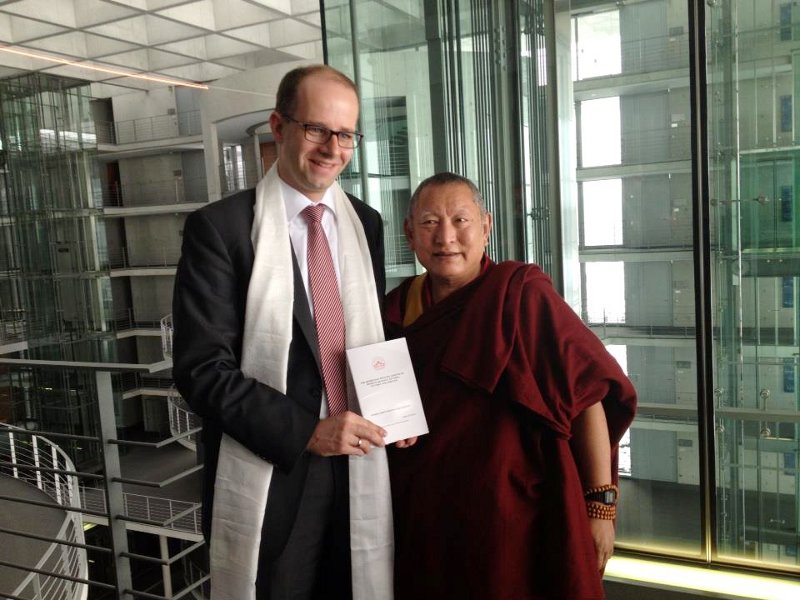
Rinpoche made the above statement during his meetings with Mr. Michael Brand, the Vice Chair of German Parliament’s Human Rights Committee and Mrs. Sabine Bätzing-Lichtenthäler, Co-Chair of the Tibet Group in the German Parliament.
He said people of Ngaba, Rinpoche himself, have suffered for three generations under Communist China. His parents suffered during the Mao’s Long March in Ngaba area in 1935. Mao’s troops ransacked the grains stock and the people for the first time in their history suffered from famine.
Since 2008, Kirti Monastery has been virtually turned into a prison, he said.
Repression, “patriotic re-education” campaigns, and stationing of police within the Kirti Monastery led to the first self-immolation by Tapey on 27 February 2009. The People’s Armed Police personnel stationed nearby opened fire on Tapey. He fell to the ground and the police took his body away. His whereabouts is not known to this day.
Tapey’s self-immolation resulted in further repression in Kirti Monastery.
A total of 109 Tibetans have self-immolated across the three provinces of Tibet. They have called for the return of His Holiness the Dalai Lama and freedom in Tibet. 47 of them were from Ngaba area, of which 17 were Kirti monks. Sadly, 91 of the self-immolators have died.
Kirti Rinpoche said that the causes of the current situation in Tibet are the result of 60 years of China’s polices to destroy Tibetan religion, culture, environment and language. Only a change in China’s policy in Tibet, he said would have an effect on the current tragic situation.
Since last year China has started a new campaign. The Chinese authorities started arresting families, relatives and friends of the Tibetans who have self-immolated. He said that his immediate concern was for their safety. Arrest of families, relatives and friends has not stopped self-immolation in Tibet.
On 31 January 2013, Lobsang Kunchok, 40, of Kirti monastery and Lobsang Tsering, 31, from Ngaba, were sentenced to death with a two-year reprieve and 10-year imprisonment respectively for allegedly inciting Tibetans to self-immolate by a Chinese court. On the same day, six more Tibetans from Labrang, Tibet, have been pronounced equally harsh sentences.
Rinpoche said that the above trials were show case trials without transparency and access to independent lawyers.
Mr. Brand said that the members of the German Parliament’s human rights committee have expressed their concern about the human rights in Tibet to the Chinese government. He said that unless there is a change of policy in Tibet, the present situation will continue. “We are concerned about Tibetan people’s culture and religious rights,” he said.
In the morning, Kriti Rinpoche had a breakfast meeting with journalist from the German newspaper Die Welt of Axel-Springer media group.
During the last three weeks, Rinpoche often quoted Mao Tse-tung who once said, “Wherever there is oppression, there is rebellion.” This is what we are witnessing in Tibet today, he said.
Kirti Rinpoche this evening left for London, the last leg of his three weeklong five nations European visits. He will return to Dharamsala, India,on 23 March.