
Autonomy Is Solution for Tibet, Dalai Lama Says
 |
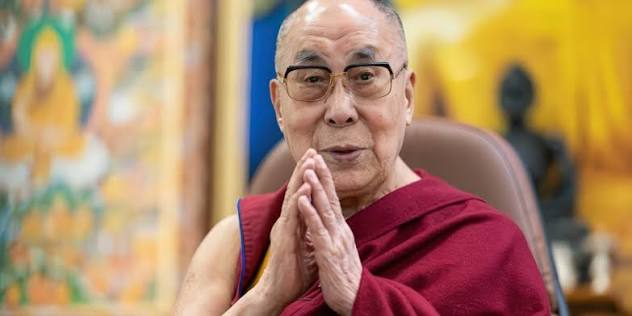
| The Dalai Lama in Dharamsala, India on Monday. He says the Tibetan way of life faces “something like a death sentence” under China’s leadership./Shiho Fukada for The New York Times |
DHARAMSALA, India —
The influx of Han Chinese and the growing restrictions on religious
practice have become the biggest threats to Tibet, which faces
“something like a death sentence” under Chinese rule, said the Dalai Lama, the exiled Tibetan spiritual leader.
The only solution is to allow genuine
autonomy for the six million Tibetans, he said. The regional authority
would make policy on education, religious practice and the use of
natural resources, while Beijing would retain the right to keep
military forces in the region and oversee foreign affairs, he added.
An autonomous Tibetan government would not force out Han Chinese who had already settled in the vast Tibetan plateau in China’s
west, but would place limits on any future migration. “Autonomous
regions should be the native peoples’ majority,” the Dalai Lama said
during an hourlong interview this week.
The Dalai Lama sought to rebut assertions by Chinese officials that the Tibetan government-in-exile’s proposal for autonomy
advocated “ethnic cleansing.” The proposal was presented last October
to the Chinese government, which strongly rejected it. Tibetan leaders
here say they plan to finish another document by June that will clarify
the proposal but not veer from its premise.
“We never thought of seriously asking
the Chinese government to remove the Chinese people or Chinese military
forces,” the Dalai Lama said. “In fact, we made very clear that foreign
affairs and defense are up to the Chinese central government.”
During the meeting in his private
residence in Dharamsala, a Himalayan hill town, the Dalai Lama, nearly
74, spoke in English on a wide range of topics, from his vision of
autonomy to nostalgia for his homeland’s desert climate and deep blue
skies. He chuckled throughout the talk and slapped visitors on the
back.
But he sharply criticized the
continuing crackdown on Tibetans. Since widespread riots and protests
by Tibetans in March 2008, Tibet has become a crucial political and
security concern for China, which took full control in 1951. This past
winter, fearful that protests might erupt again, Chinese soldiers and
paramilitary forces flooded Tibet.
“Our main concern is the Tibetan
people inside Tibet,” the Dalai Lama said. “They are really passing
through difficulty. So mentally, I have some heavy sort of moral
responsibility to serve them, to help them. But meantime, I also have
the feeling of helplessness.”
The Dalai Lama said that the Chinese
government’s practice of rounding up monks and nuns to take part in
“political education” campaigns was partly to blame for the protests
last year. Since then, the stepping up of those campaigns and other
restrictions on religious practice show that the Chinese government is
“now deliberately carrying out some kind of systematic policy to
eliminate Tibetan unity,” he said.
“In the hard-liner Chinese Communist
view, so long as Tibetan unique cultural heritage and Tibetan Buddhist
spirituality remain there, they see that as a source of threat of
separation,” he said.
Chinese officials say that Tibetans
have freedom of religion and that policies in Tibet are aimed at
developing the remote region’s economy. They also contend that the
Dalai Lama supports Tibetan independence and that he fomented the
violence last year.
Lian Xiangmin, a scholar at the China
Tibetology Research Center in Beijing, a government-supported
institution, said that the Dalai Lama’s plan for autonomy went “against
the basic political system of the country.”
The Dalai Lama said that autonomy was
enshrined in the Chinese Constitution, which guarantees the right of
regional self-rule for ethnic minorities. Based on that, he said, the
large area of western China that is predominantly Tibetan — including
Tibet, but also parts of the provinces of Qinghai, Sichuan, Gansu and
Yunnan — should be united under a single Tibetan authority. Chinese
officials have balked at the demand, saying it would mean turning over
one-quarter of China to Tibetan governance.
The Dalai Lama said the flood of
Chinese who move to Tibet for work must be curbed to prevent Tibet from
going down the path of Inner Mongolia, where Han Chinese now far
outnumber Mongolians. But Tibet can benefit economically from remaining
part of China, he said.
“Tibet
materially is very, very backward,” he said. “And every Tibetan wants
to modernize Tibet. So for that reason, remaining within the People’s
Republic of China is in our own interest as far as economic development
is concerned, provided we have full guarantee to preserve our own
culture, our own language, our own spirituality and full protection of
environment.”–The report is reproduced from The New York Times on 29 May 2009.