
DHARAMSHALA: A new study has shown how mutation of a gene 8000 years ago helped Tibetans to thrive at high altitudes. The research, “A genetic mechanism for Tibetan high-altitude adaptation” is published in Nature Genetics.
The research found that the gene, EGLN1, changed by a single DNA base pair about 8000 years ago.
“Today, a relatively short time later on the scale of human history, the vast majority of Tibetans – 88 percent – have the genetic variation, and it is virtually absent from closely related lowland Asians,” said senior author of new research paper, Joseph Prchal, a University of Utah professor of internal medicine.
“These findings help us understand the unique aspects of Tibetan adaptation to high altitudes, and to better understand human evolution,” he said.
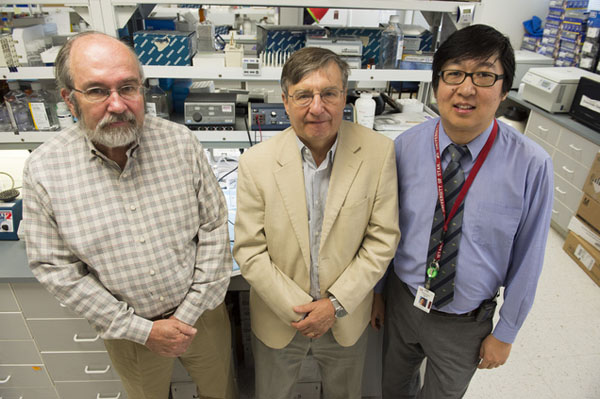
For his research, Prchal enlisted the help of native Tibetan Tsewang Tashi, M.D., an author and clinical fellow at the Huntsman Cancer Institute at the University of Utah. More than 90 Tibetans, both from the US and abroad, volunteered for the study.
Prchal collaborated with experts throughout the world, including co-senior author Peppi Koivunen, Ph.D., from Biocenter Oulu in Finland, to determine that the newly identified genetic variation protects Tibetans by decreasing an aversive over-response to low oxygen. In those without the adaptation, the thin air causes their blood to become thick with oxygen-carrying red blood cells, often causing long-term complications such as heart failure. The EGLN1 variation, together with other unidentified genetic changes, collectively help Tibetans to survive at high altitudes.
Prchal says the research also has broader implications. Because oxygen plays a central role in human physiology and disease, a deep understanding of how high altitude adaptations work may lead to novel treatments for various conditions, including cancer. “There is much more that needs to be done, and this is just the beginning,” he said.
When traveling with Tashi in Asia, Prchal was surprised at how he was able to get Tibetans to grasp the research they were being asked to take part in. Tashi simply helped them realize that their ability to adapt to life at high altitude was unique. “They usually responded by a little initial surprise quickly followed by agreement,” said Tashi. “It was as if I made them realize something new, which only then became obvious.”