China can only gain legitimacy for a role in Tibet from the Tibetan people themselves, by implementing real changes in its policies and behavior towards the Tibetans, Tibet Support Groups say
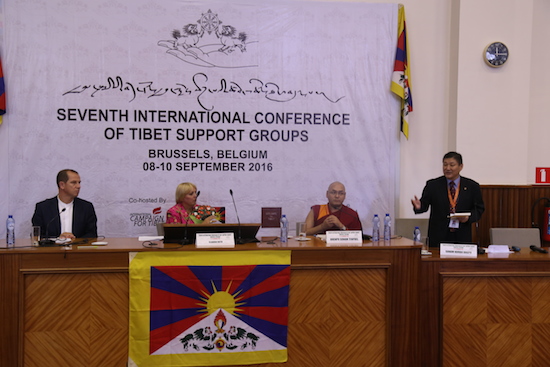
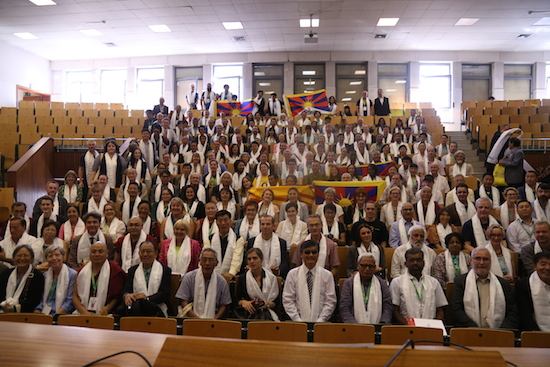
BRUSSELS: The Seventh International Conference of Tibet Support Groups, facilitated by the Department of Information and International Relations (DIIR) concluded successfully on Saturday, 10 September, after three days of intense deliberation and discussions.
Over 250 delegates from Tibet Support Groups based in 50 countries met to examine the current situation in Tibet, especially the political, human rights and environmental developments, and drew up plans for coordinated action to amplify the worldwide Tibet movement.
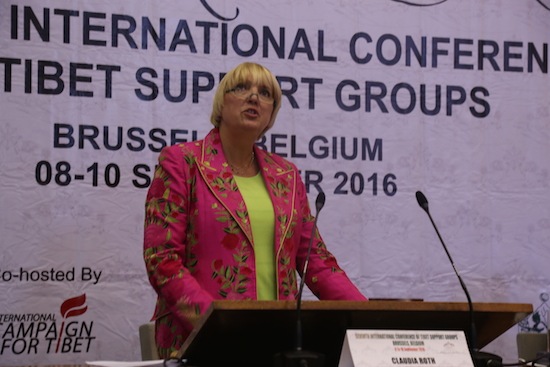
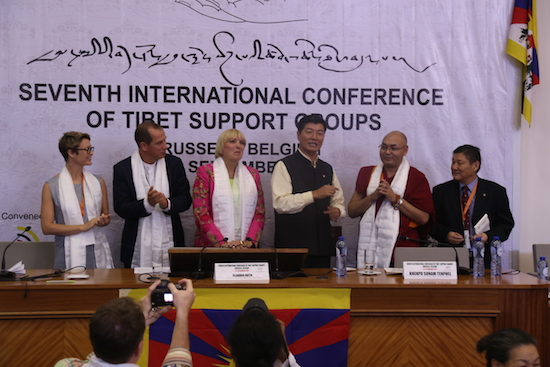
The chief guest at the concluding session of the conference was Ms Claudia Roth, Vice President of German Bundestag. Other guests at the session include Mr Csaba Sogor, member of the European Parliament, Tibetan political leader Sikyong Dr Lobsang Sangay, Speaker Khenpo Sonam Tenphel of the Tibetan Parliament and Mr Sonam Norbu Dagpo, Secretary of international relations at the Department of Information and International Relations.
In her address Ms Claudia Roth, Vice President of German Bundestag, said: “Please feel assured that my party – the Green Party in Germany – and so many people in Europe stand at the side of Tibet, when it comes to fighting climate change and also what is now 57 years of non-violent resistance by the Tibetan people.
This is why gathering like this at the 7th International Tibet Support Group conference is of paramount importance to fight for justice.
Today Tibetans are recognised as victim of what can only be described as reckless power politics. The Tibetan non-violent struggle has turned into a symbol of peace, therefore and for many other reasons I would like to take opportunity to express my most profound respect and gratitude to Tenzin Gyatso the 14th Dalai Lama.
Let the people in Tibet live in freedom, give them the power to decide upon their own destinies and give Tibetan culture the opportunity to thrive and flourish.
Of course this message goes primarily to the leaders in Beijing who don’t want to hear a thing about the Tibetan people’s right.”
During the three-day conference, the TSG members expressed its complete and continuing solidarity with the non-violent struggle of the Tibetan people for freedom and restoration of their fundamental human rights.
They also expressed great concern at the devastating impact of China’s policies on Tibet’s fragile and globally vital environment, notably the damming of Asia’s rivers, destructive mining practices and coercive settlement of Tibetan pastoral nomads.
Placing the responsibility of the crisis in Tibet on China and their failed policies, the TSGs said the Chinese government should implement real changes in its policies and behavior towards the Tibetans and resume dialogue with Tibetan representatives to arrive at a mutually beneficial agreement.
They further called on governments and the international community to resist Chinese pressure to endorse China’s claim to Tibet and urged them to persuade China’s leaders to abandon the shameless precondition.
“We reaffirm our commitment to support His Holiness the Dalai Lama and the Central Tibetan Administration leadership’s persistent call for earnest dialogue to resolve the Tibetan issue,” the TSGs said.
“We will further strengthen our efforts to press the international community to persuade the Chinese leadership to resume dialogue and will continue our dedication until a satisfactory solution has been achieved,” they added.
The three-day conference also outlined a series of Action Plans to be carefully considered and developed including joint and individual action by governments on violation of religious freedom, legal action in national courts on the basis of universal jurisdiction, action on language rights at the United Nations, list the 1959 Tibetan national uprising among the UNESCO’s heritage of Memories of the World, to press all affected countries in particular the PRC to enter into a water-sharing agreement regarding the waters originating from the Tibetan plateau, etc.