South Tyrol, Italy: The inaugural Tibetan Youth Empowerment Programme concluded on 18 January 2026 after three intensive days of training, bringing together approximately 25 young Tibetan activists from eight countries to develop concrete advocacy strategies for the Tibet movement in 2026.
The programme, which ran from 16-18 January 2026, aimed to equip future Tibetan leaders with essential skills and resources to advocate for Tibet at both grassroots and political levels. Participants hailed from France, Italy, Belgium, Germany, Switzerland, Austria, the Netherlands, and the United Kingdom.
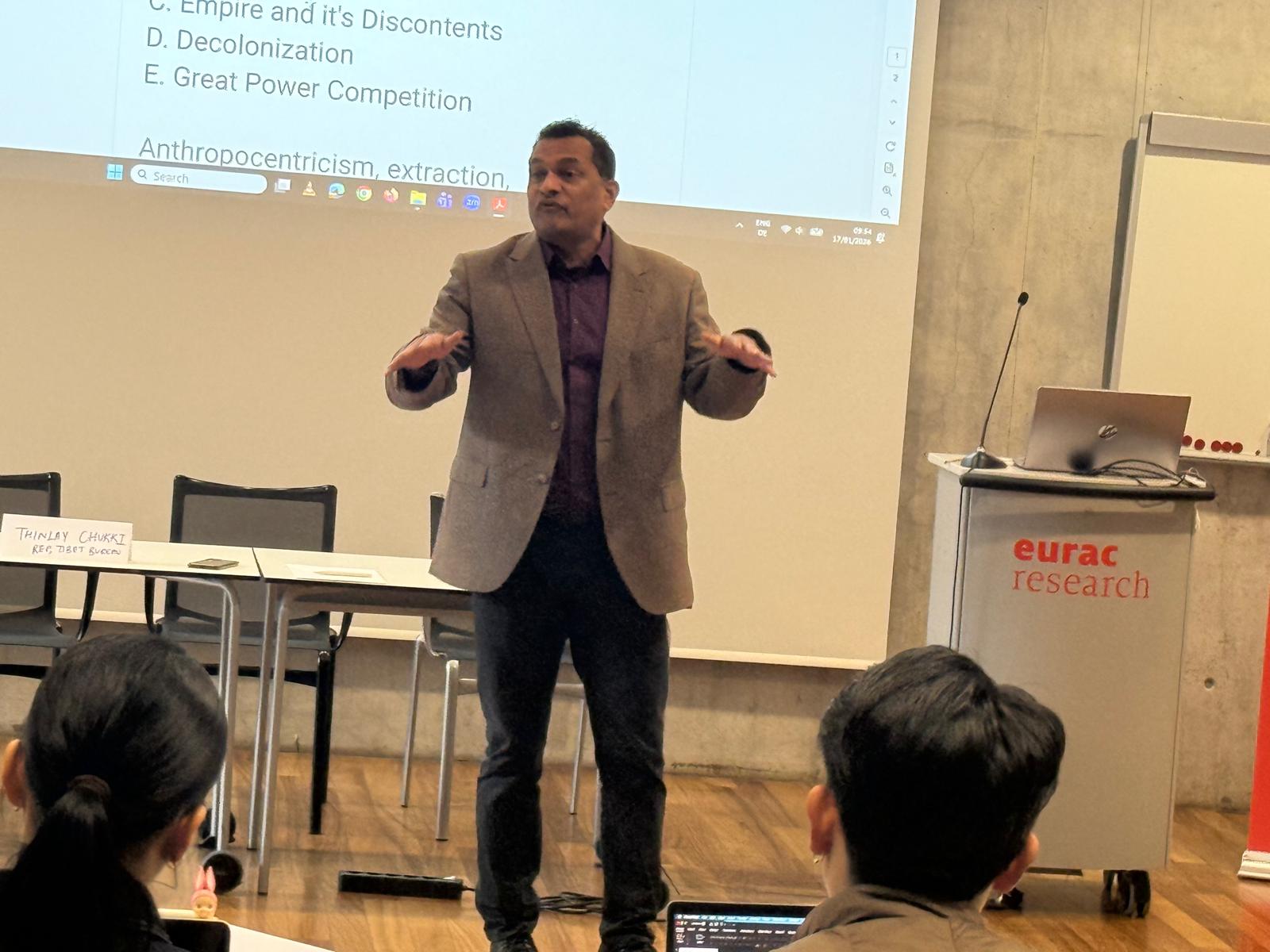
The programme’s second day featured four substantive presentations addressing Tibet’s current situation and international legal frameworks. Tenzin Kunkhen, Research Associate of the Human Rights Desk at the Department of Information and International Relations, opened the morning session with a sobering assessment of deteriorating human rights conditions in Tibet.
Kunkhen outlined how Tibetans continue to face punishment for expressing their cultural identity, including showing faith in His Holiness the Dalai Lama, advocating for Tibetan language education, maintaining contact with the diaspora community, and protesting Chinese government repression. He called upon Tibetan youth to “ignite within themselves a renewed sense of commitment towards the Tibetan cause” and become strong advocates for voiceless Tibetans inside Tibet, honouring the resilience of those who continue preserving Tibetan language, culture, religion, and environment despite relentless oppression.
The programme featured distinguished international legal experts who provided insights into global justice mechanisms. Professor Elvira Redondo-Rodríguez of Kingston University (UK) discussed the multilateral system’s capacity to respond to calls for justice, highlighting the International Court of Justice’s role in handling contentious cases between UN member states.
She noted that over 200 cases have been entered into the ICJ’s General List as of late 2025, with many filed by Global South nations alleging violations including genocide, environmental damage, and territorial disputes. Recent active cases include South Africa vs. Israel, Nicaragua vs. Germany, Ukraine vs. Russian Federation, the Gambia vs. Myanmar, and Armenia vs. Azerbaijan, among others.
Joshua Castellino spoke on “People, States and Nations: International Law and the Case of Tibet,” while Professor Francesco Palermo of the University of Verona presented a case study on South Tyrolean autonomy advocacy, offering practical lessons from another region’s successful political movement.
In afternoon sessions, participants divided into regional groups to develop realistic, achievable advocacy action plans for 2026. On the final day, each team presented detailed proposals outlining specific campaigns, target audiences, timelines, funding sources, and strategies for regular virtual coordination.
A significant outcome of the training was the formation of a Voluntary Tibet Advocacy Group in Italy by three programme participants, representing a concrete step toward sustained activism.
Additional Secretary Tenzin Lekshay provided feedback on the presentations, urging participants to focus on three key principles: Idea, Innovation, and Implementation.
The programme concluded with expressions of appreciation from Representative Thinlay Chukki, Additional Secretary Tenzin Lekshay, Günther Cologna (Asia Expert and former trainer at Eurac Research), and Nyima (Vice President of the Tibetan Association in Italy). All speakers praised the success of this maiden programme and called for similar initiatives in the future.
Participants received khataks (traditional white Tibetan scarves) in recognition of their active participation and commitment to Tibet advocacy. The training ended with group photographs, reflecting the new friendships formed and commitments made to maintain connections built during the programme.
The three-day gathering represents an important milestone in the Central Tibetan Administration’s ongoing efforts to strengthen youth leadership, enhance advocacy skills, and reinforce the global Tibet movement for future generations.
As part of the comprehensive training programme, participants were presented with a documentary screening showcasing more than 30 years of support and friendship by the Italy Tibet Support Group. The screening was organised through the initiative of Claudio Cardelli, president of L’associazione Italia-Tibet, who screened a documentary movie on the important role it played in inviting His Holiness to Italy on the multiple occasions and providing incredible reception throughout the visits. His documentary provided valuable historical context and practical insights drawn from three decades of friendship, advocacy work, demonstrating the power of sustained grassroots movements and the importance of building long-term relationships with support networks in host countries. This session served to inspire the young participants by invoking in them a heart-warming feeling knowing loyal and true friends of Tibetan movement based on love and friendship.
Throughout the programme, Thupten Tsering (Coordinator, Office of Tibet France), Tenzin Phuntsok (EU Advocacy Officer, Office of Tibet Brussels), and Tenzin Kunga (Office of Tibet London) attended the programme, accompanying participants from their respective jurisdictions and actively took part in the group discussions in drafting action plans for the regions in their respective jurisdictions. Sangay Kyab, the Chinese Liaison Officer of the Tibet Bureau Geneva, accompanied Representative Thinlay Chukki and played a significant part in ensuring the successful implementation of the programme.
– Report filed by the Tibet Advocacy Section, DIIR, CTA