|
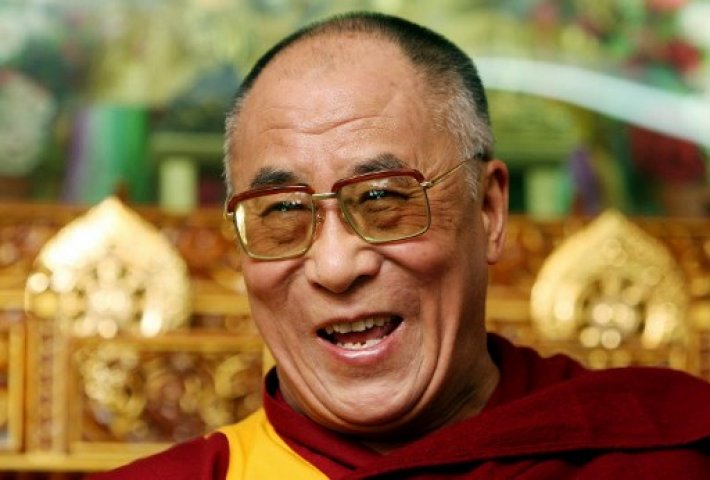
His Holiness the Dalai Lama’s Birthday celebrated in Delhi
[Thursday, 8 July 2010, 5:07 p.m.]
New Delhi, July 7, 2010: A symposium titled Celebrating the Dalai Lama was held at India Habitat Center yesterday to celebrate the personality, philosophy, and teachings of His Holiness the Dalai Lama was attended by a diverse group of distinguished personalities - among them were writers, artists, journalists, academics, activists, spiritual personalities and diplomats. Former Foreign Secretary of India, Mr. Kanwal Sibal in his talk called His Holiness “a living bond between India and Tibet” and said His Holiness can be a reconciliatory force between India and China. “Dalai Lama could be the political, spiritual, economic and transit bridge between India and China,” Mr. Sibal said, adding reconciliation between Tibet and China can open door for reconciliation between India and China. “Let the Dalai Lama open this door,” he said. Mr. Sibal said he celebrates Dalai Lama as a “great spiritual leader”, as “a peacemaker”, and as a “great exile” who having left his homeland 51 years ago has tirelessly worked for his people in Tibet as well as in exile and has remarkably maintained the unity of the Tibetan Diaspora. “His steadfast approach to non-violence is in marked contrast to the violence we witness around us,” Mr. Sibal said. “He is possibly the most powerful and respected spiritual voice.” Noted journalist and editor of The Sunday Guardian Mr. MJ Akbar said from His Holiness he learnt how to rise above one’s experiences and look for solutions based on non-violence and compassion. “It took me a long time to realize his message,” he said, “because at first I couldn’t understand how one can be serene and peaceful in the face of violence.” Mr. Akbar was referring to a seminar he had attended right after covering a riot in early 1990s and had questioned quite angrily the compassion-themed speech of His Holiness. Non-violence, Mr. Akbar said, is not the absence of violence but the presence of what Gandhi termed soul-force or atma-bal. This powerful exercise of inner strength in demanding something from the state which the state do not possess - that is humanity - leaves the oppressors perplexed, he said. Referring to the curious names such as “splittist” or “slave-owner” China use in attacking the person of His Holiness, Mr. Akbar said it is extraordinary that a nation which has become the biggest slave-owner of the capitalist world should treat His Holiness as slave-owner. For former ambassador Dalip Mehta, His Holiness is a passionate environmentalist and a pragmatic politician who continues to seek solution with China through his Middle Way approach. “He personifies a statesman who having had his temporal power also introduced democracy in his own community,” said Mr. Mehta. India has a special place in His Holiness’ heart, Mr. Mehta said, as it is India where Tibetan civilization has survived. “Tibetans brought Buddha’s message of compassion and non-violence back to India where Buddha received his enlightenment,” he added. Noted classical dancer Ms. Sonal Mansingh using various Sanskrit epithets compared the spirituality, goodness, humanity and kindness of His Holiness to legendary Indian gods like Vishnu and Shiva. “Like the neelakantha Shiva, His Holiness has drunk so much poison of hatred and suffering in exile but he has never let it affect his basic goodness,” Ms. Mansingh said, adding God has willed His Holiness to be the barrier between enemies of humanity and the rest of the world. Former Solicitor-General of India Mr. Soli J. Sorabjee in his opening remarks said His Holiness has always stuck to his compassionate and non-violent approach in preserving cultural rights and religious freedom of his people despite heavy odds and constant vilifications. “He has worked with kings but has not lost touch with the common people,” he added. Mr. Sorabjee chaired the symposium which was held at Gulmohar Hall of India Habitat Center. Well-known documentary filmmaker Mr. Rajiv Mehrotra touched on the human dimensions of His Holiness as a simple Buddhist monk, as a spiritual leader engaged in dialogue with modern science, and his commitment to interfaith dialogue. “He is the living embodiment of human attainment”, said Mr. Mehrotra, adding it gives hope for others to apply spiritual teachings in one’s daily life and not just confine them to abstract scriptural contents. “He teaches us to think eons, think bigger, and think larger.” The symposium organized by the Bureau of His Holiness the Dalai Lama was held on the occasion of the 75th birthday of His Holiness. Later in the evening, over 300 people among them Indian leaders and foreign ambassadors attended a dinner reception where Mr. Inder Malik, former Liaison officer for His Holiness during the early 1960s was received by Mr. Tempa Tsering, representative of His Holiness in New Delhi. While raising a toast in His Holiness’ honor, Mr. Malik recalled how working with His Holiness for four years had made him a better human being. Guests at the reception took keen interest in a photo exhibition on His Holiness – presented by Tibet Museum - that was held in tandem with the dinner reception. In the morning, a function was organized by the settlement office of the Samyeling Tibetan settlement to mark His Holiness’ birthday at the TCV Tibetan Day School. The highlight of the program was the planting of 75 saplings – marking His Holiness’ 75 fruitful years – near the Tibetan settlement by guests and local Tibetans. India’s leading TV news channel, NDTV, covered this environmental initiative and broadcasted it the next morning on its popular Greenathon program.
--Report filed by Tsering Tsomo of Bureau of His Holiness the Dalai Lama in New Delhi |