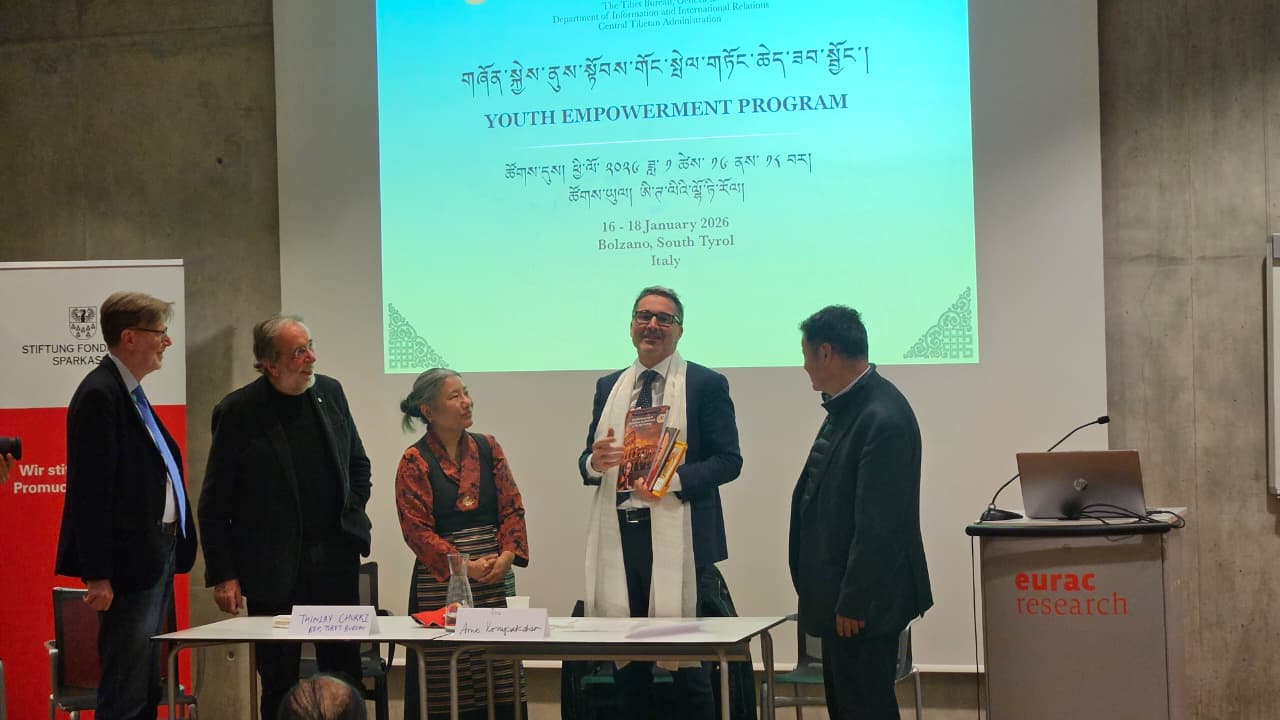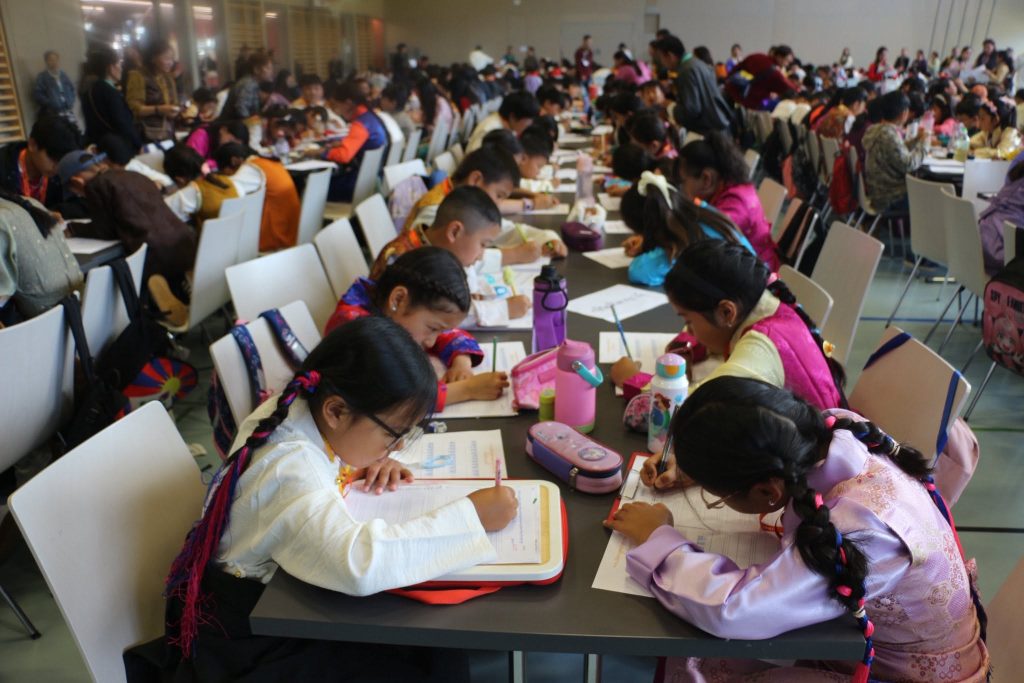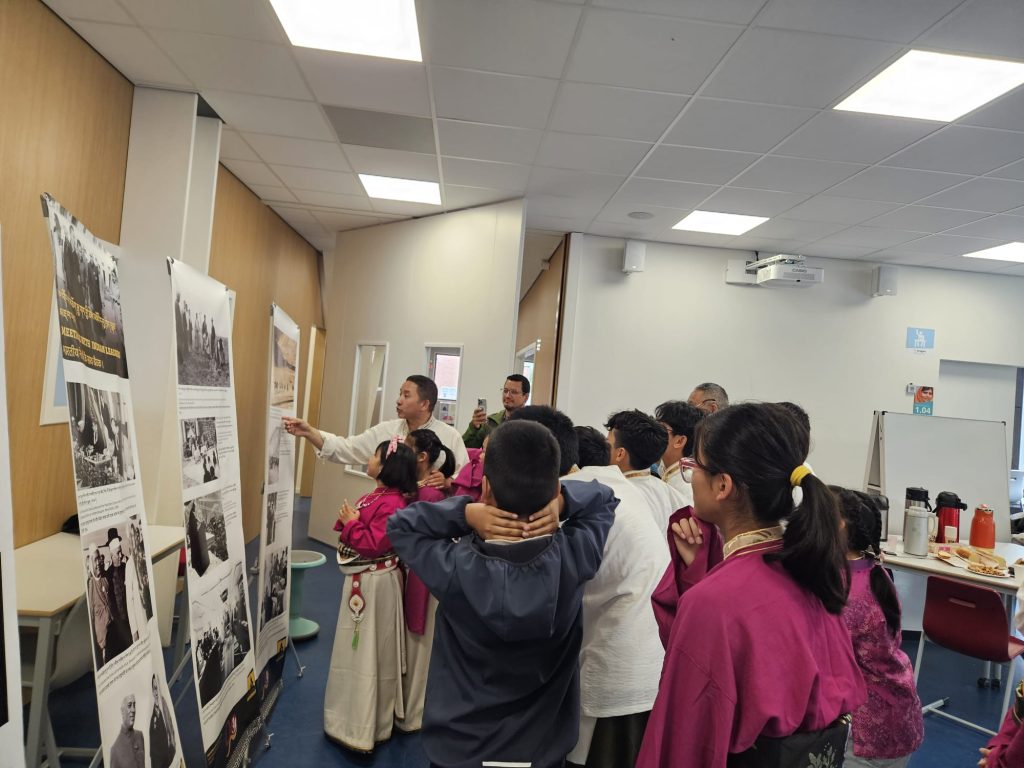

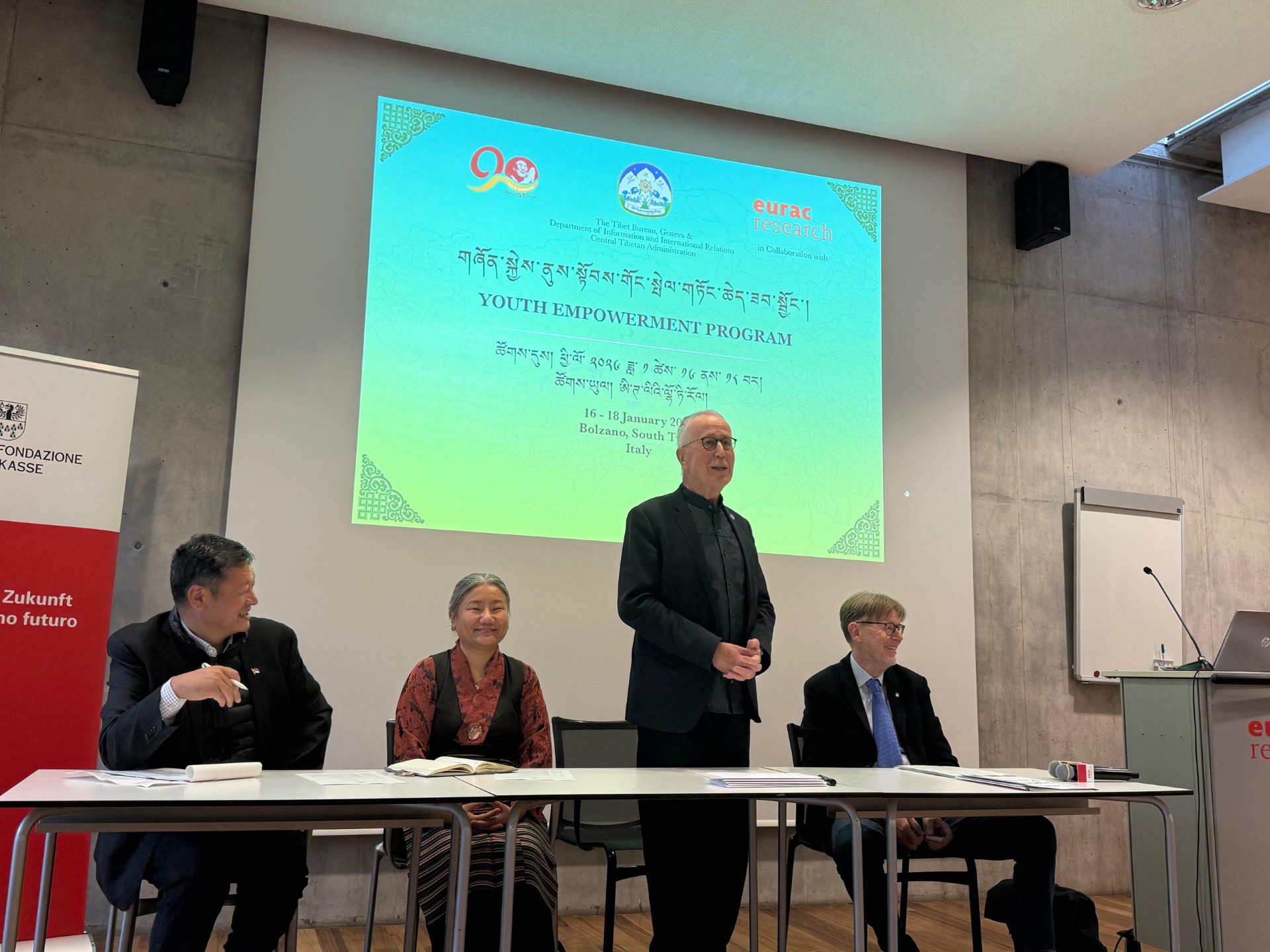
Bolzano, South Tyrol, Italy: The three-day Tibetan Youth Empowerment Programme commenced on 16 January 2026 at the Eurac Research Centre in South Tyrol, bringing together approximately 25 young Tibetan participants from eight countries. The programme, scheduled from 16-18 January, is jointly organised by the Tibet Bureau Geneva and the Department of Information and International Relations of the Central Tibetan Administration, in collaboration with the Eurac Research Centre.
The inaugural session began at 9:30 am in the Eurac Research Centre auditorium, with distinguished speakers addressing critical issues facing the Tibetan community and exploring models of autonomy and self-governance.
Professor Roland Psenner, President of Eurac Research Centre, opened the programme by drawing parallels between South Tyrol’s historical struggle and Tibet’s current situation. He noted that the Eurac building itself was constructed 90 years ago by fascists to promote their ideology, during a time when local people were prohibited from using their own language and culture. Professor Psenner assured attendees that Tibet would remain a core issue for Eurac in the years to come.
Thinlay Chukki, Representative of His Holiness the Dalai Lama at the Tibet Bureau in Geneva, delivered the welcome address, emphasising that the programme represents “the passing of the baton from one generation to the new generation of Tibetans.” She highlighted youth empowerment as a top priority, ensuring young Tibetans are prepared to continue the movement for Tibet. She also drew attention to the critical situation of one million Tibetan children forcibly enrolled in colonial-style boarding schools, where they face cultural assimilation.
Dr. Gunther Cologna, expert on South Asia, a long-time Tibet friend and co-organiser of the programme, spoke about the three-decade relationship between Eurac and the Tibetan cause.
Tenzin Lekshay, Spokesperson and Additional Secretary of the Department of Information and International Relations, explained the Middle Way Policy as a “win-win situation where both sides and their aspirations are considered,” contrasting it with today’s geopolitical climate that focuses on one-sided victories. He emphasised that Tibetans are not fighting for Tibet alone, but for the betterment of the entire world and world peace.
In an extensive session, Thinlay Chukki addressed the complex issue of reincarnation and freedom of religion, focusing on advocacy strategies. She stressed a crucial point: “You don’t need to convince the world that reincarnation is real. You need to convince the world that Tibetans have the right to decide their own spiritual future.” The session equipped participants with rights-based framing to address hostile questions and Chinese state claims regarding the succession of His Holiness the Dalai Lama.
The afternoon sessions featured presentations on autonomy by Sergei Constantin, who covered conceptual issues including territorial and non-territorial autonomy, and Marc Roggla, who presented South Tyrol’s successful autonomy model. South Tyrol, where German, Italian, and Ladin language groups coexist, achieved its current autonomous status through the 1972 Second Statute of Autonomy, providing a practical example of minority self-governance within a sovereign nation.
The programme concluded with a special visit from His Excellency Arno Kompatscher, President of South Tyrol, who spent nearly an hour engaging with the Tibetan youth. He answered questions about South Tyrol’s autonomous status, the challenges faced in achieving autonomy, and expressed sympathy for Tibet’s situation, providing participants with firsthand insights into successful autonomy governance.
As a gesture of appreciation, speakers were presented with traditional Tibetan scarves, copies of “Voice for the Voiceless,” a 2026 calendar celebrating the 90th birthday of His Holiness the Dalai Lama, and the autobiography of His Holiness the Dalai Lama.
The programme’s success was made possible through the dedicated assistance of Nyima Dhondup, Vice President of the Tibetan Association Italy, and Tenzin, who received the guests from the Department of Information and International Relations and remained throughout the programme to ensure its smooth operation.
The programme continues through 18 January, with further sessions planned to empower young Tibetans with advocacy skills and knowledge to advance the Tibetan cause and movement.
– Report filed by the Tibet Advocacy Section, DIIR, CTA