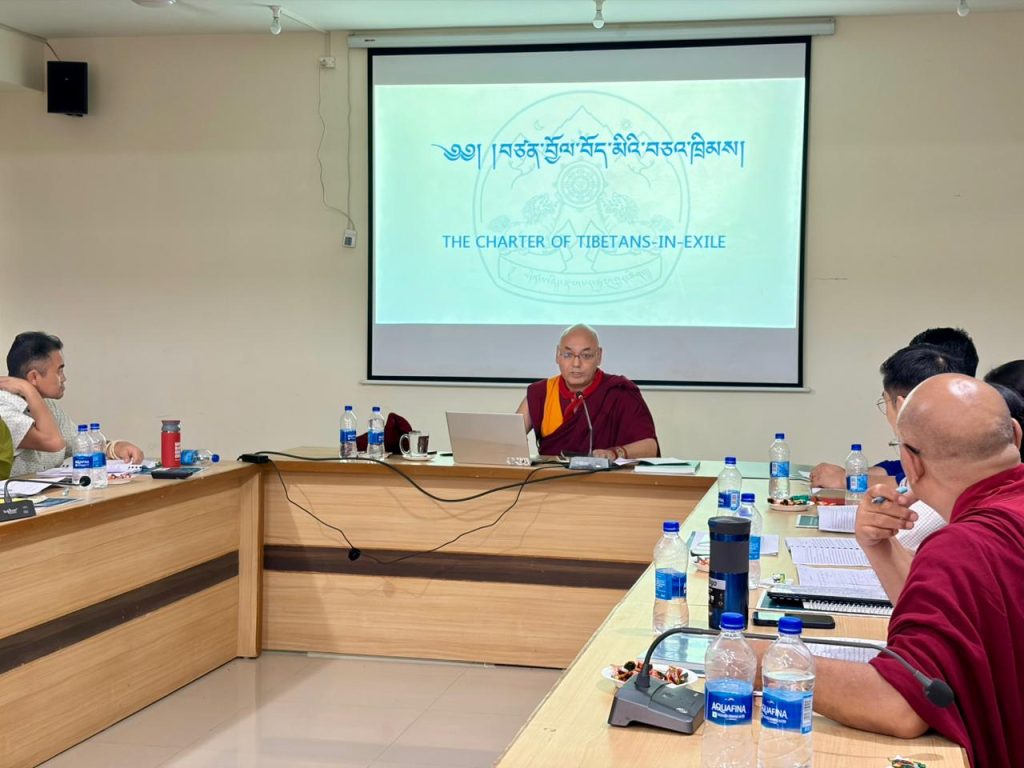


The team of researchers of Environment and development desk of DIIR successfully concluded its month-long awareness programme among the monastic and lay Tibetan communities in the five settlements in southern India.
On Saturday, 11 August around 90 people of Mundgod Doeguling’s Camp 4 were informed about the environment and development issues inside Tibet with the help of visual aids. While the youngsters looked on with great awe, elders were filled with emotions as they learned about the degrading environmental situation of their homeland. In the past few decades, the vast Tibetan Plateau experienced severe consequences of climate change and China’s failed policies.
This Saturday’s gathering in Mundgod Doeguling marked the final leg of talks to raise awareness program in south India. The month-long program was well received by people from different walks of life and was well attended by a total of around 5,800 people in five major Tibetan settlements in south India including Bylakuppe Lugsung Samdupling, Bylakuppe Dickyi Larsoe, Hunsur Rabgyeling, Kollegal Dhondenling and Mundgod Doeguling.
Around 4500 monks and nuns were also educated during this awareness program. Some of major monasteries including Sera Monastery, Tashi Lhunpo Monastery, Gyurmed Monastery, Dzongkar Choede Monastery, Ganden Monastery and Drepung Monastery in different settlements were also covered. In some of the monasteries, monks approached to share concerns of environmental degradation in their hometown back in Tibet.
A total of 31 separate talks were held in different camps and monasteries during this intensive awareness program. “This has been an arduous yet thought-provoking trip so far, as we made every effort to hold separate meetings for each monastery and settlement camps instead of a large single gathering of our community members together. This way we were not only able to reach out to a larger audience but also had some interesting and candid discussions.” said Jigme Norbu, one of resource persons of the programme.
Tibetan plateau has been facing multi-faceted environmental concerns including melting of glaciers; degradation of permafrost layer; drying up of lakes; impact on river hydrology; degradation of grassland and removal of Tibetan nomads; and Chinese government’s policies to exploit Tibet for its natural resources and large-scale commercialisation.